Blick in den Breisgau — History & Facts
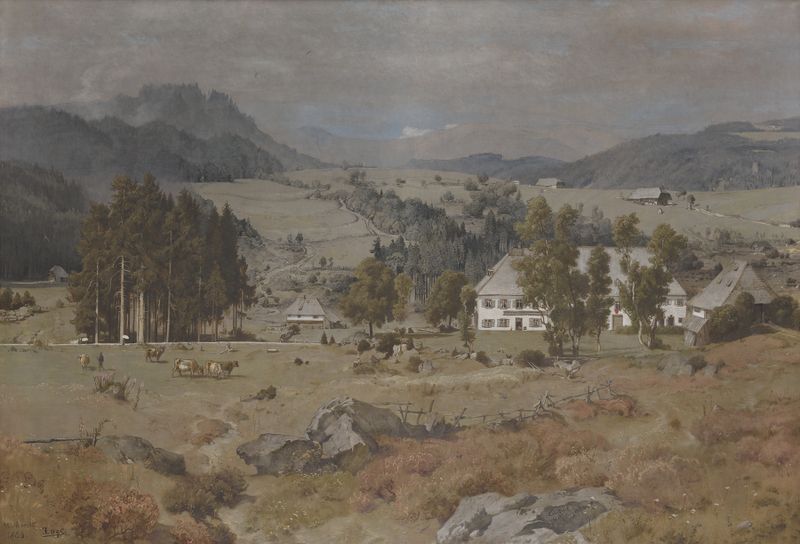
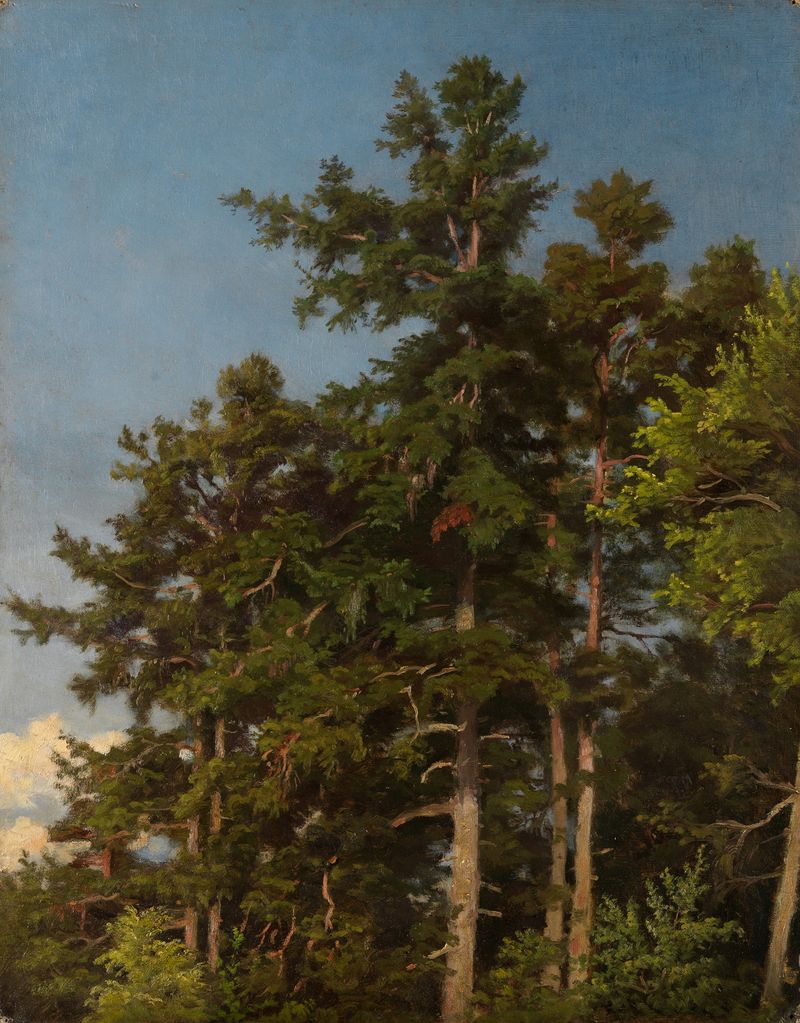
Is this a mirror — or a memory? In Blick in den Breisgau, the vivid hues and soft brushstrokes capture a world filled with both possibility and nostalgia, reflecting a landscape caught between the familiar and the revolutionary. Look to the foreground where rolling hills unfold beneath a soft blue sky, inviting the gaze to wander. Notice how the sunlight filters through the gentle clouds, casting warmth over the undulating terrain. The palette is rich with earthy tones — greens and browns mingle beautifully, while splashes of ochre suggest the promise of harvest.
The composition draws the eye deeper into the scene, where distant mountains rise like silent witnesses to the unfolding drama beneath them. Yet, hidden within this pastoral tranquility lies an undercurrent of tension. The meticulous attention to detail in the foreground contrasts sharply with the hazy outlines of the hills, suggesting a world caught between clarity and obscurity. The vibrant landscape may symbolize the hope of a new era, while the muted background hints at the challenges that lie ahead.
This duality reflects the revolutionary spirit of the time, where nature itself seems to hold its breath, anticipating change. In 1869, Lugo was in a transitional period of his career, navigating the tension between romanticism and realism. This work, created in Germany amidst a backdrop of political upheaval, illustrates not only his growth as an artist but also the broader societal shifts occurring across Europe. As revolutions stirred in various nations, the artist captured the essence of this pivotal moment through the serene yet charged landscape of the Breisgau.