Baumstumpf am Wegrand — History & Facts
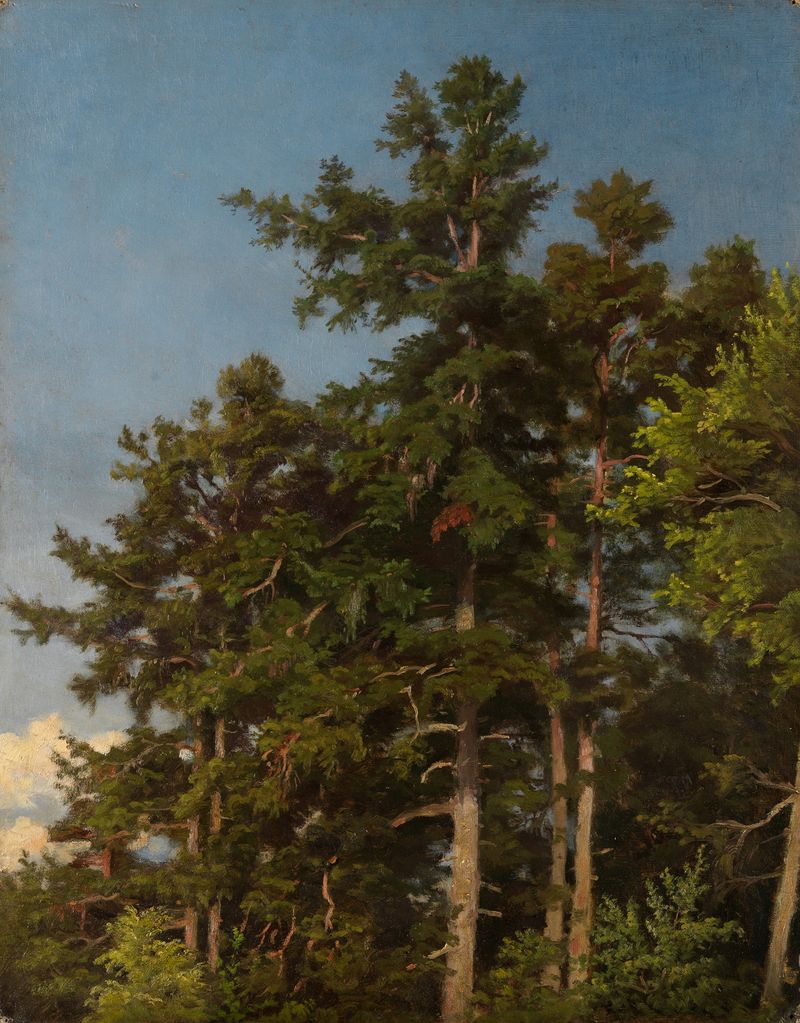
Can paint confess what words never could? In Baumstumpf am Wegrand, the viewer discovers a moment of reflection captured in a solitary stump, a remnant of nature’s lifecycle, whispering stories beneath the layers of oil and canvas. Look closely at the stump’s textured surface, where earthy browns and greens blend seamlessly. Notice the light filtering through the leaves, casting dappled shadows that dance across the wood. This interplay of light and shadow invites you to explore the contours of the stump, revealing its knots and scars, each telling a tale of resilience.
The background fades softly, drawing your eye inward toward this solitary figure, evoking a sense of stillness and contemplation. The painting embodies themes of transience and memory. The stump, once a thriving tree, signifies loss and decay, yet it stands firm, a testament to endurance. Surrounding flora, painted with tender strokes, offers contrast, representing life in juxtaposition to the lifeless stump.
This duality evokes an emotional tension that resonates with our own journeys, prompting reflections on what remains after something precious is gone. Created in the late 19th century, this work emerged during a transformative time in the art world, marked by a shift toward realism and intimate portrayals of nature. Emil Lugo, working in Germany, sought to capture the essence of the natural landscape, reflecting the changing perceptions of the environment. The period also witnessed a burgeoning interest in the psychological depth of landscapes, inviting viewers to engage with the emotional narratives beneath the surface.