Tannen und Unterholz — History & Facts
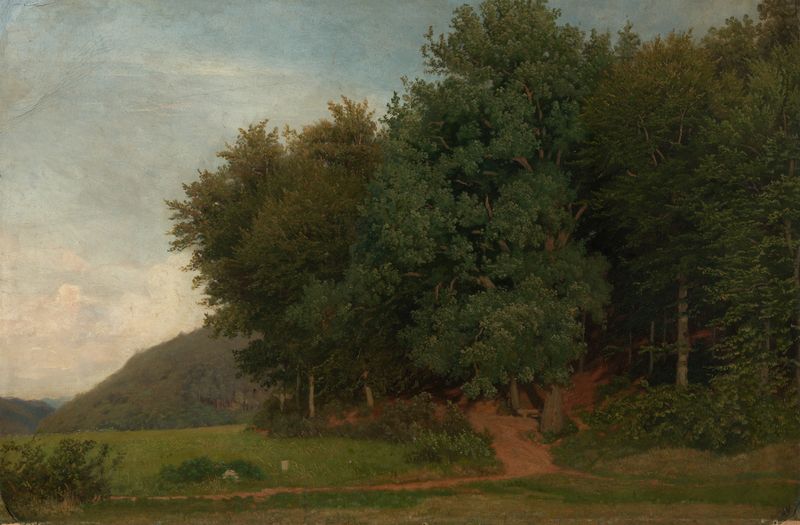
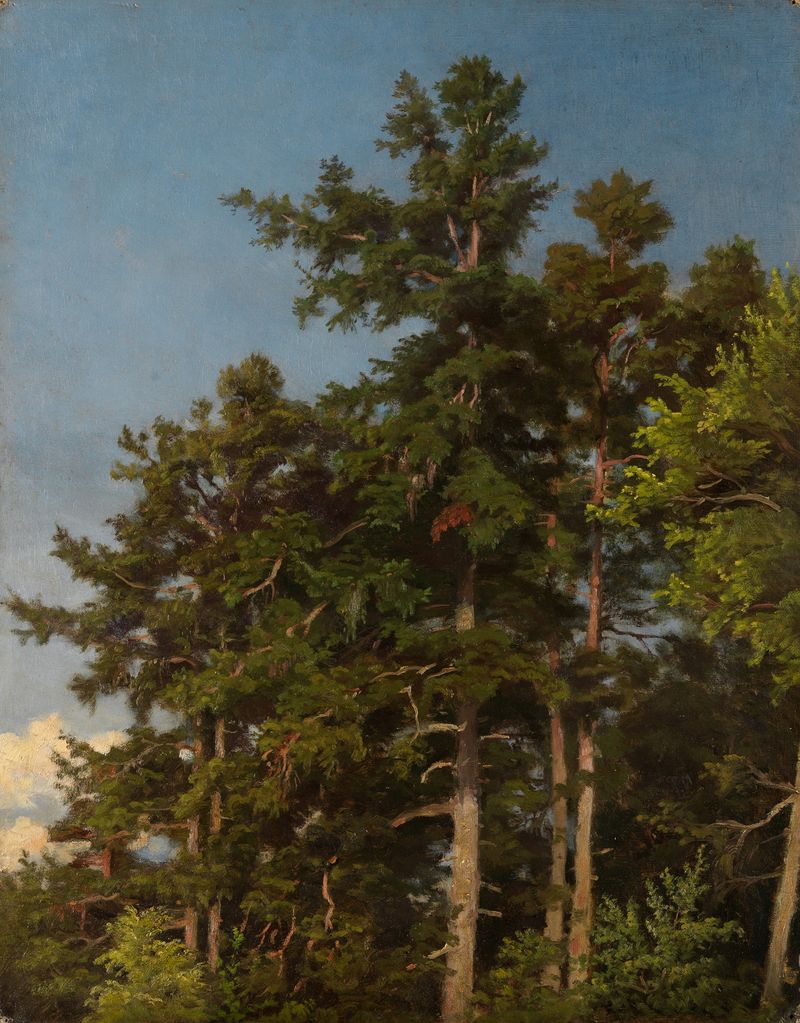
Did the painter know this moment would outlive them? In Tannen und Unterholz, the tranquility of the forest emerges as an eternal testament to nature’s transformative power, captured in verdant hues and intricate textures. Look to the lower left at the delicate underbrush, a tapestry of muted greens and browns that invites the eye to wander deeper. Notice how light filters through the towering trees above, casting dappled shadows that dance across the ground, creating a dynamic interplay between darkness and illumination. The composition is balanced yet organic, evoking a sense of serenity, with each layer of foliage meticulously rendered to evoke depth and dimensionality. Within this peaceful scene lies an emotional tension of metamorphosis—a whisper of life and decay.
The sturdy trunks stand firm, yet the soft foliage surrounding them hints at the impermanence of existence, suggesting growth entwined with aging. The contrast between the robust trees and the fragile understory embodies nature’s cycle, reflecting the profound relationship between strength and vulnerability. Painted around 1860, this work emerged during a period of significant change for Emil Lugo, who was exploring the depths of landscape painting in Germany. At this time, the Romantic movement was gaining momentum, emphasizing the beauty of the natural world and its emotional resonance.
Lugo's focus on the forest's serene yet complex majesty mirrored the era's fascination with nature's transformative and enduring qualities, a poignant reflection of his own artistic journey.