Landschaftsstudie — History & Facts
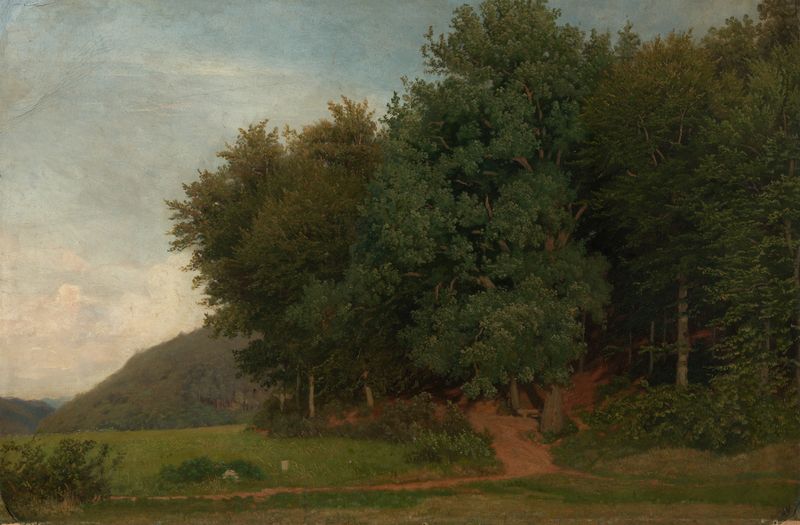
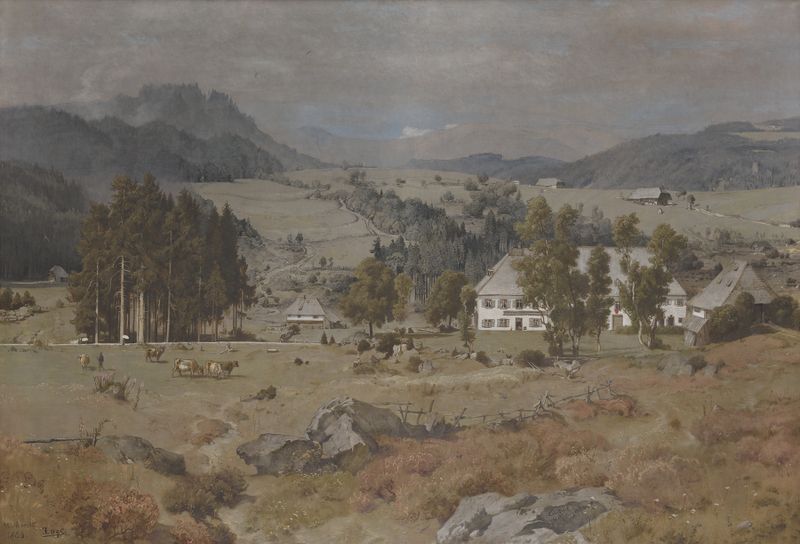
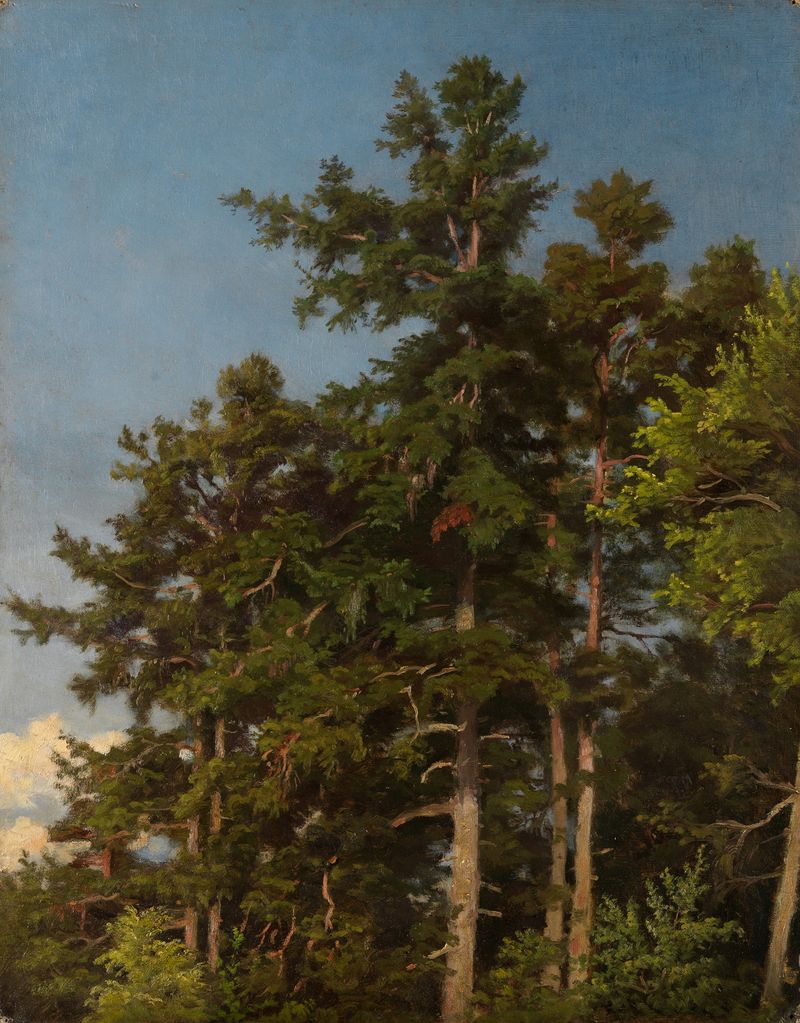
Who listens when art speaks of silence? In a world brimming with noise, there exists a quiet melancholy that resonates through the strokes of a masterful hand. Look to the left at the horizon, where a delicate interplay of soft blues and muted greens meld seamlessly into one another. The painter’s brush captures the essence of a tranquil landscape, inviting the viewer to traverse the gentle undulations of the terrain. Notice how the subtle gradation of light casts soft shadows, lending depth to the rolling hills and the solitary trees scattered throughout.
The composition feels both expansive and intimate, a testament to the artist’s deft command of color and form. Within this serene scene lies a profound tension between the vibrancy of nature and the stillness that envelops it. The absence of figures suggests a world untouched and solitary, invoking a sense of longing for connection. The quietude hints at stories untold — perhaps of solitude or reflection, where one finds solace in the embrace of the land.
Each brushstroke whispers of a deeper narrative, encouraging contemplation on life’s transient beauty and inevitable sorrow. Created in 1869, this piece emerged during a pivotal time in Emil Lugo's career, as he sought to establish his voice in the evolving realms of art. He painted this landscape amidst societal shifts and the burgeoning Romantic movement, which celebrated the sublime and personal experiences with nature. This context informed Lugo's approach, allowing him to explore the emotional depths inherent in tranquil scenes, positioning him within a dialogue that would shape art for years to come.