Autumn Evening in the Black Forest — History & Facts
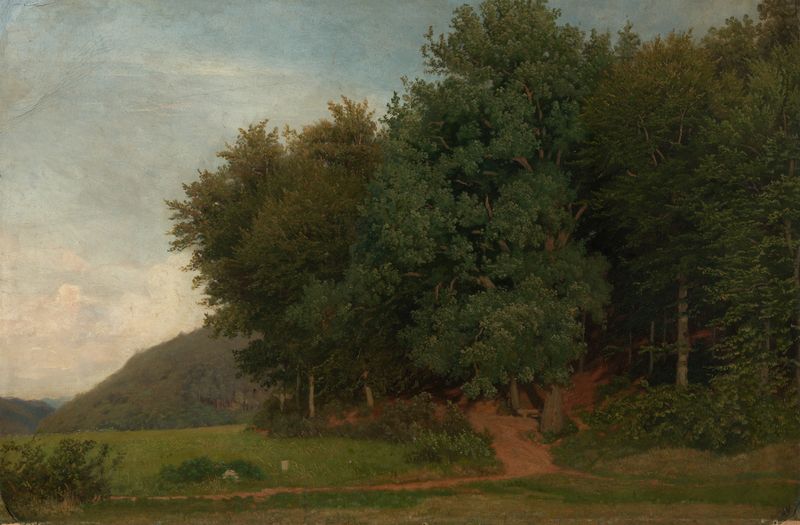
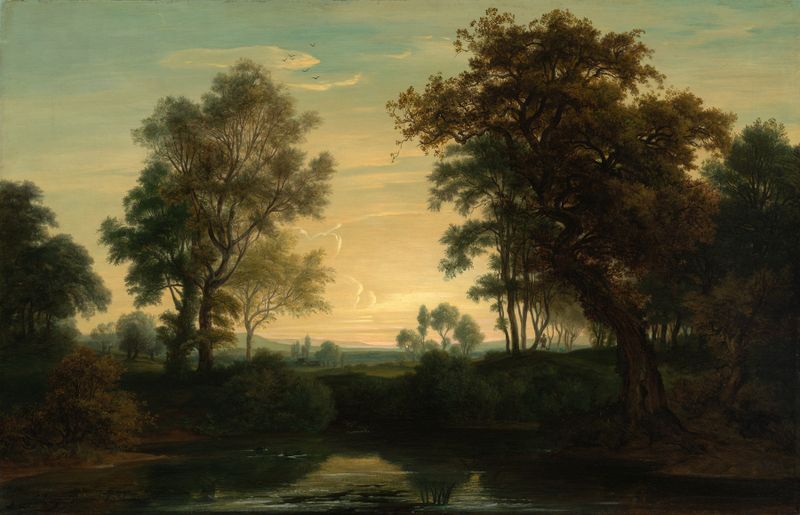
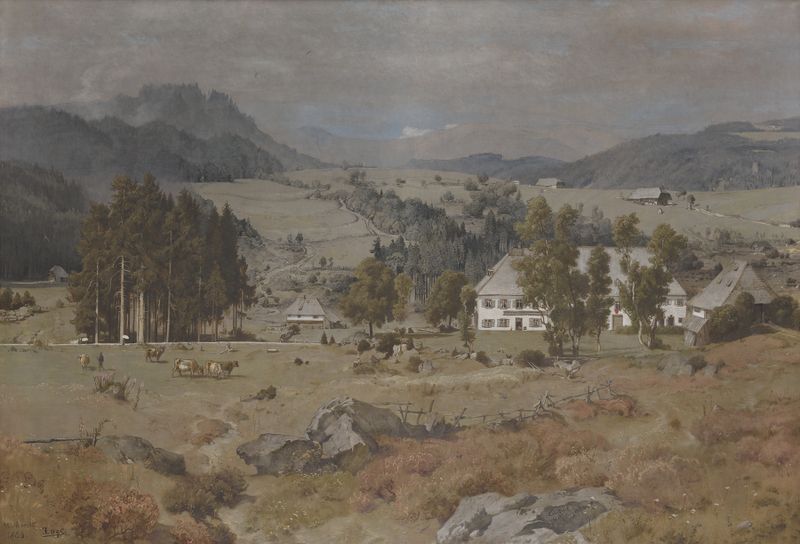
It offers beauty that transcends the visible, a moment that invites us to pause and reflect on nature's quiet allure. Look to the left at the vibrant hues of amber and gold, where the branches of ancient trees stretch like skeletal hands over a carpet of fallen leaves. The artist employs a warm palette, blending ochres and russets that breathe life into the autumn scenery. Notice how the light filters through the foliage, casting ethereal shadows that dance playfully across the forest floor, hinting at secrets hidden within the underbrush. Yet, within this captivating portrayal lies an undercurrent of melancholy.
The beautiful yet fleeting nature of autumn speaks to the transience of life itself, each fallen leaf a testament to time's passing. The juxtaposition of vibrant colors against the somber, quiet atmosphere evokes a sense of reflection—a reminder that beauty often lies in impermanence. As the forest embraces the twilight, there’s an emotional tension between the allure of the scene and the inevitable decay that follows. Emil Lugo painted this piece in 1894 during a period marked by transitions in his personal life and the broader art world.
Living in a time when Impressionism was gaining momentum, Lugo sought to capture the fleeting moments of nature, aligning with contemporary movements while also forging his unique style. This work reflects both his artistic evolution and the changing landscapes of his own experiences, where the beauty of nature became a serene refuge amidst life's complexities.