Amphoridea (Echinoderms) — History & Facts
What first arrests the eye in Amphoridea (Echinoderms) is its uncanny marriage of scientific precision and decorative rhythm. Each form seems to hover between the familiar and the alien, their symmetry and pattern inviting close inspection. The central figure, rising like a vase with feathery arms, anchors a composition where every organism radiates its own logic, yet all are bound together by a shared geometry.
The light, stark and even, carves each surface into high relief, making the creatures’ armor and filigree unmistakably tactile. This is a pageant of life as seen through the lens of order, where the smallest detail—a hexagonal plate, a curling tendril—signals both function and beauty. Created in 1904 for the legendary Kunstformen der Natur, this plate reflects a moment when art and science were in lively conversation. Ernst Haeckel, both biologist and artist, sought not merely to catalog the natural world but to reveal its hidden harmonies, often for a broad audience of scholars and laypeople alike.
Such images were more than illustrations; they were arguments for the unity of nature, and for the idea that even the most humble marine life—here, the echinoderms—deserved the same attention as the grandest oil painting. Little is recorded about the specific journey of this plate, but its place in the collection is a testament to an era when scientific inquiry and visual delight were inseparable. Look again, and see how knowledge itself can be a form of wonder.
More Artworks by Ernst Haeckel
Filicinae (Ferns)
Ernst Haeckel
Siphoneae (Green Algae)
Ernst Haeckel

Cirripedia (Barnacles)
Ernst Haeckel

Actiniae (Sea Anemones)
Ernst Haeckel
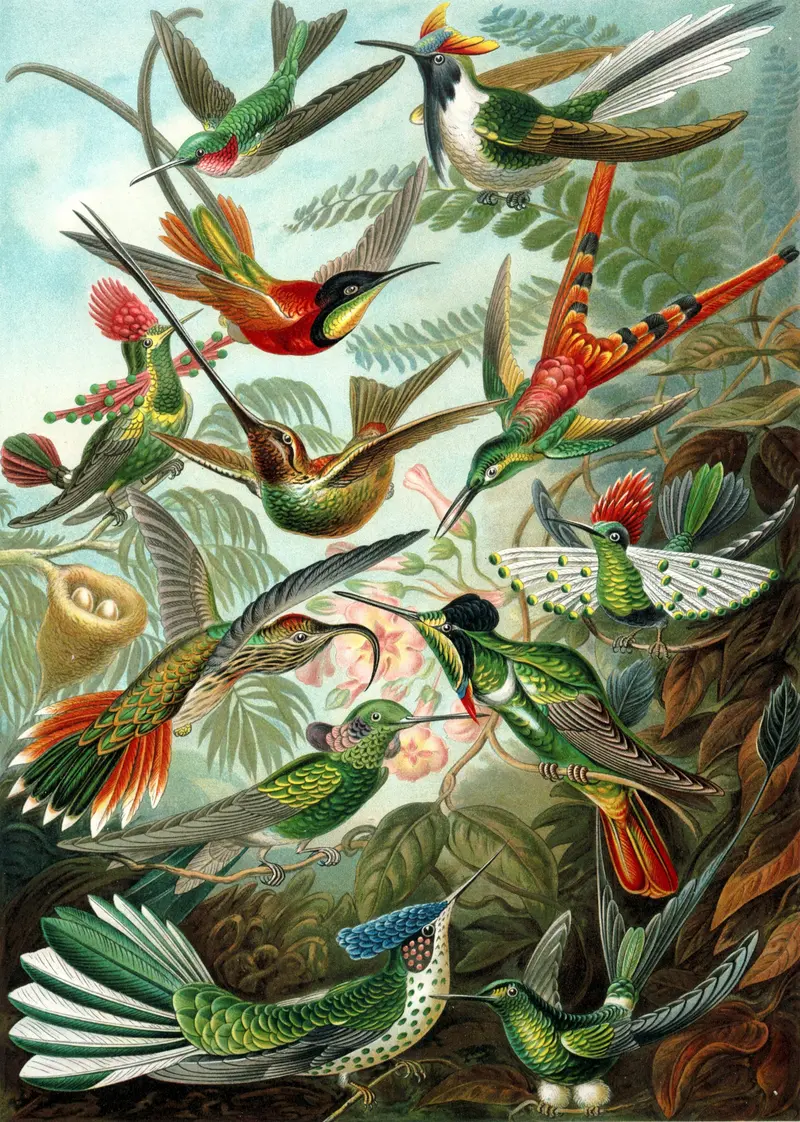
Trochilidae (Hummingbirds)
Ernst Haeckel
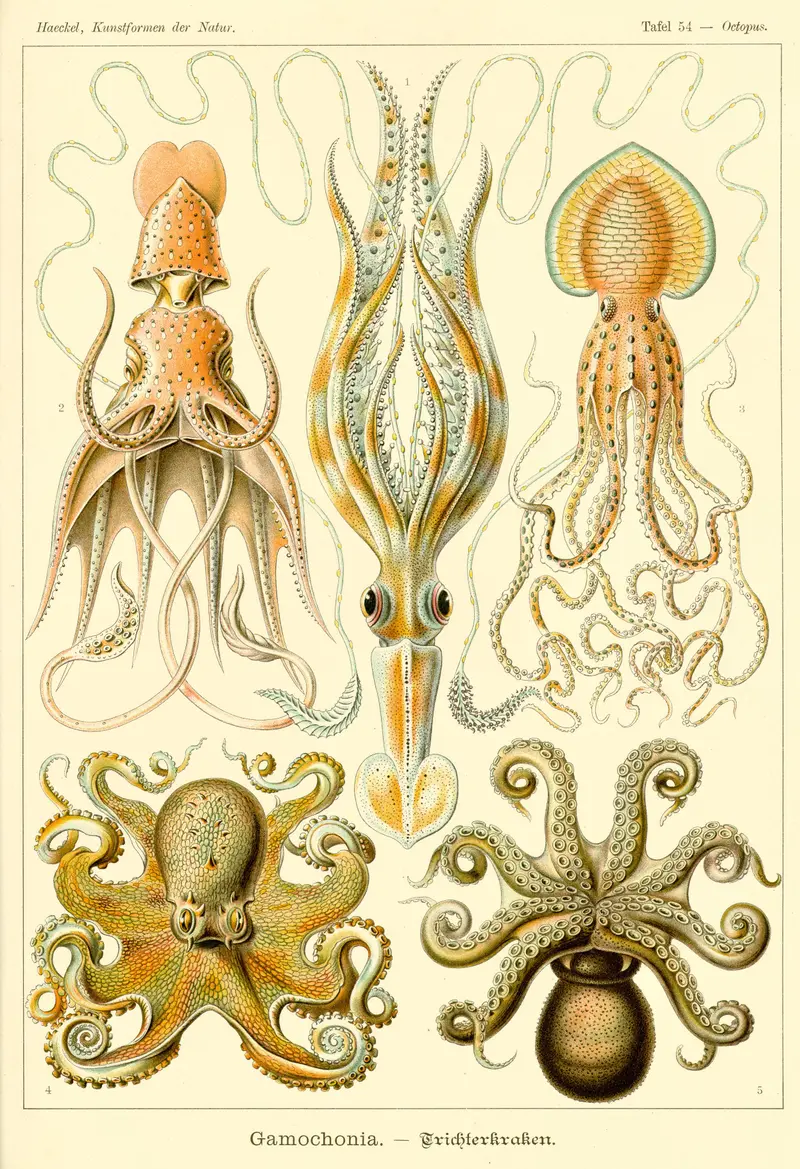
Gamochonia (Cephalopods)
Ernst Haeckel
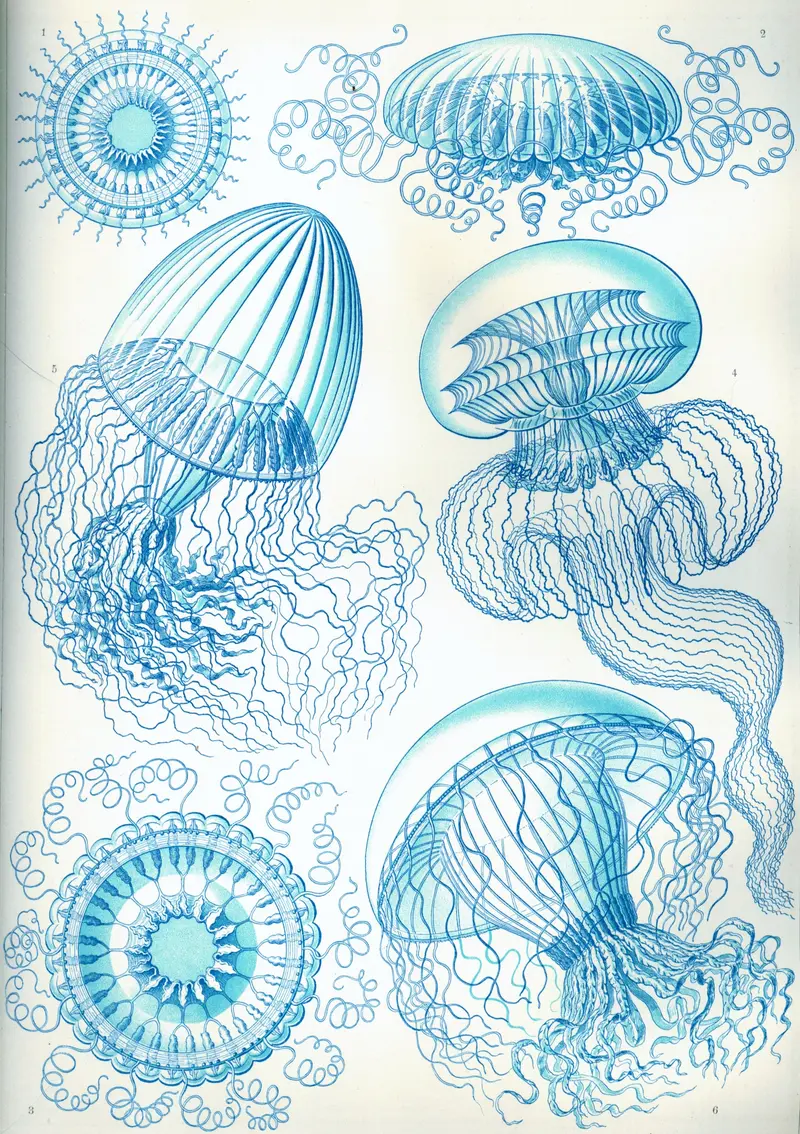
Leptomedusae (Jellyfish)
Ernst Haeckel
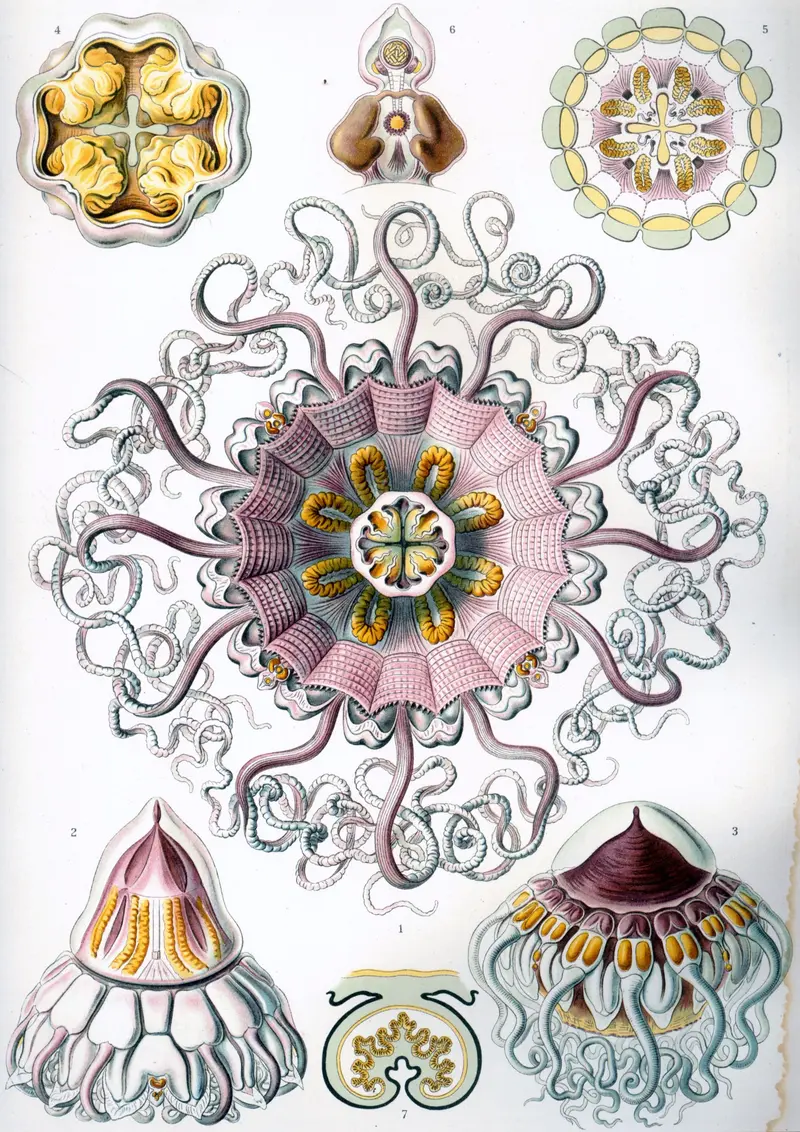
Peromedusae (Jellyfish)
Ernst Haeckel
Chaetopoda (Bristle Worms)
Ernst Haeckel
Copepoda (Copepods)
Ernst Haeckel