
Ansicht aus Italien — History & Facts
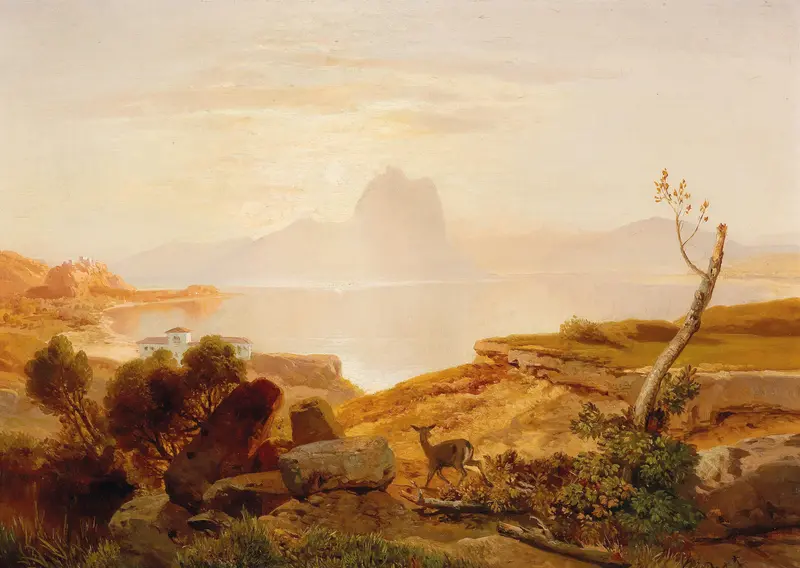
A sense of hush and spaciousness draws the viewer first—the way the light pours across the clearing, catching the dust beneath the pines and setting the distant mountains aglow. The angled trees, their trunks twisted by Mediterranean winds, frame a world that feels both open and intimate. A lone woman in a red kerchief stands at the edge of the shade, her gaze lost to the bright water, while a horse-drawn cart waits in the filtered light, its driver pausing as if to listen to the silence.
The sweep of blue in the bay leads the eye toward the pale, clustered buildings across the water, their forms softened by distance. Every element in Ansicht aus Italien by Albert August Zimmermann seems chosen to slow the moment, to invite the viewer to linger in the calm between journeys. Painted by 1888, this landscape belongs to a tradition that flourished in the nineteenth century, when artists and collectors alike were captivated by the sunlit vistas of southern Europe. Works like this, often commissioned or purchased by northern travelers, offered a vision of Italy as both picturesque and timeless—a place of gentle labor and luminous air.
The genre thrived on contrasts: the everyday and the idyllic, the local and the universal. While history has kept few traces of this particular painting’s path, its presence today in a Viennese auction collection reminds us how such images once traveled far from the landscapes they depict, carrying with them the dreams and longings of a changing world. Let your eye rest again on the water’s edge, and imagine the stories that might begin beneath those leaning pines.
More Artworks by Albert August Zimmermann
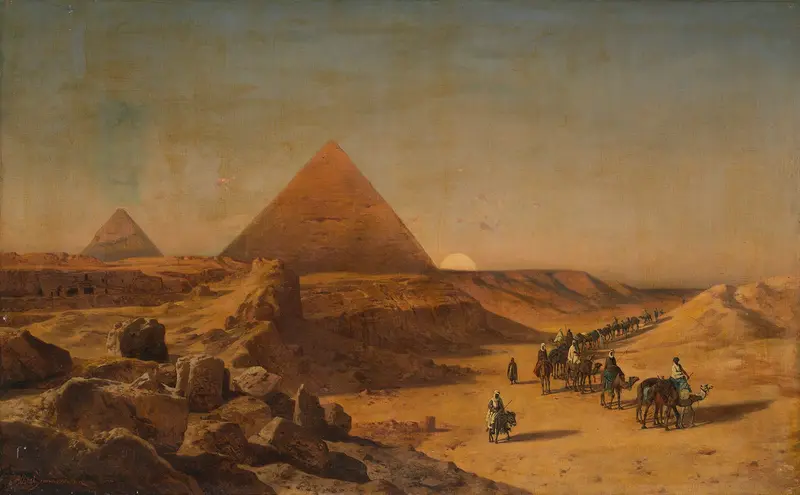
Pyramids
Albert August Zimmermann

Schwäbische Alb
Albert August Zimmermann
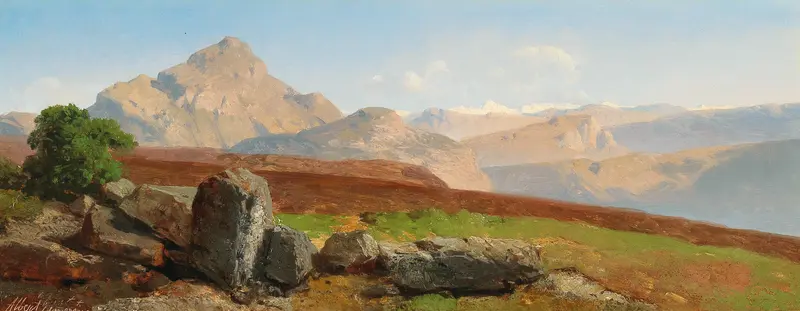
Mountain Landscape
Albert August Zimmermann
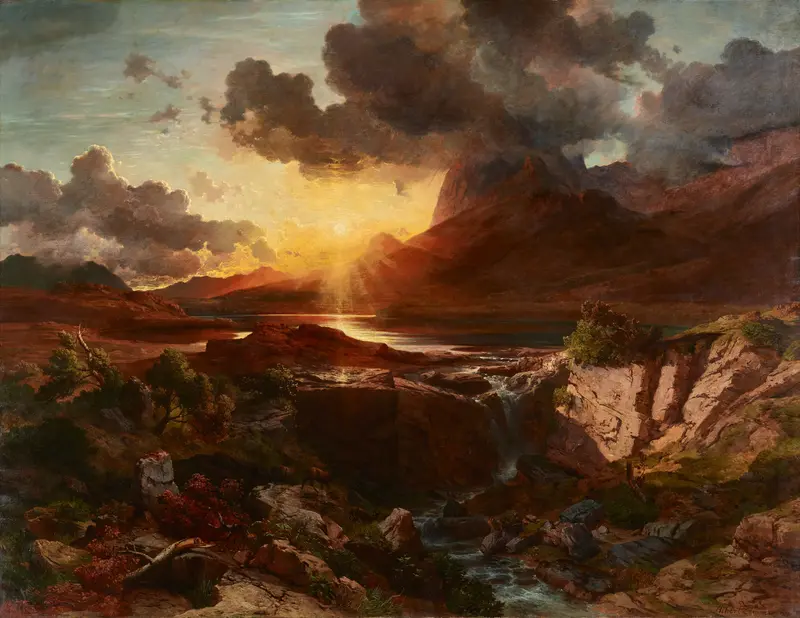
Sonnenuntergang am Hintersee in Berchtesgaden 13 Österreichische Galerie Belvedere
Albert August Zimmermann
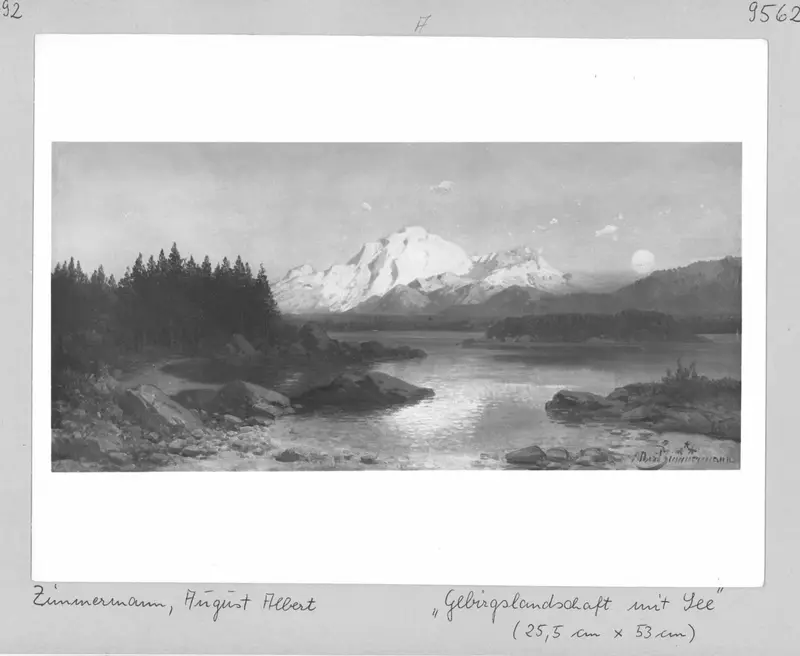
Mountain-landscape with lake
Albert August Zimmermann
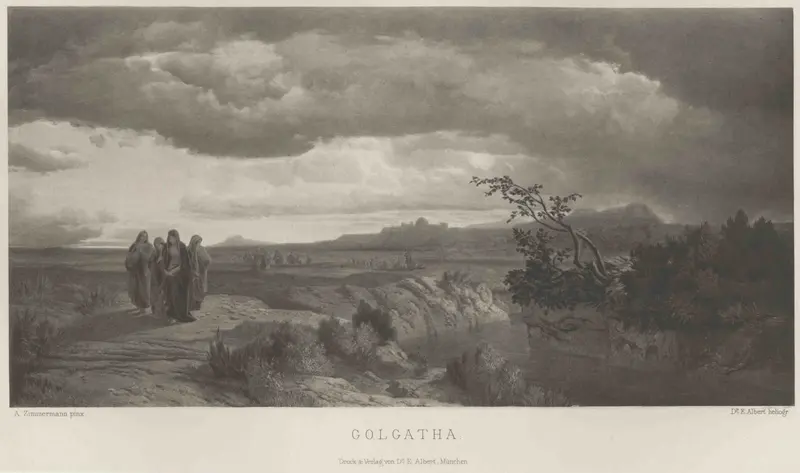
Golgatha
Albert August Zimmermann
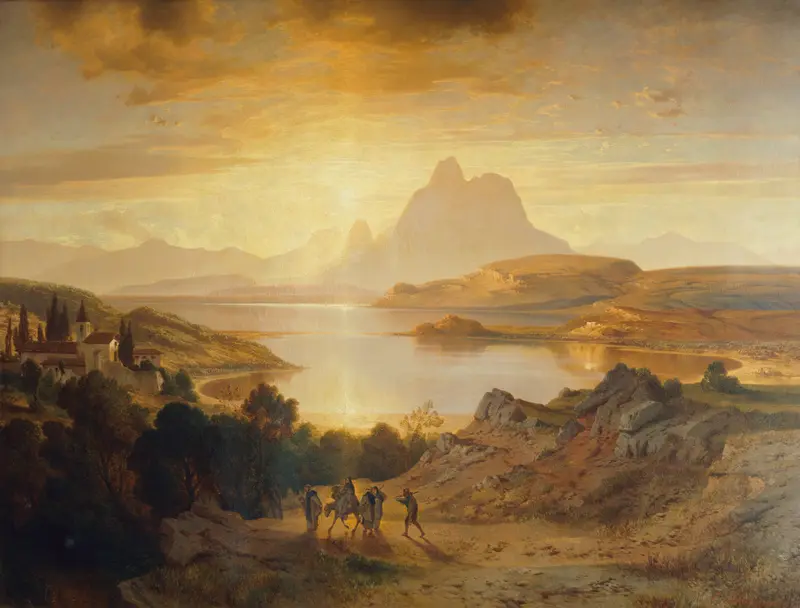
Lago di Lugano 65 Österreichische Galerie Belvedere
Albert August Zimmermann
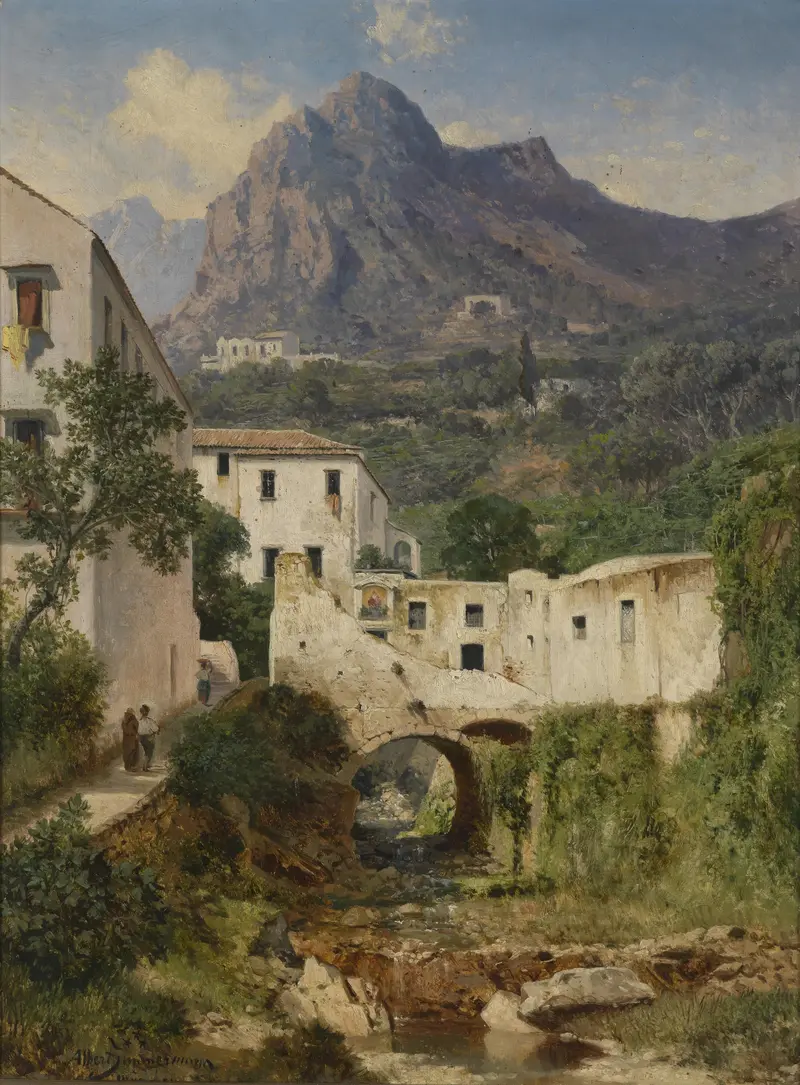
Mühltal bei Amalfi
Albert August Zimmermann
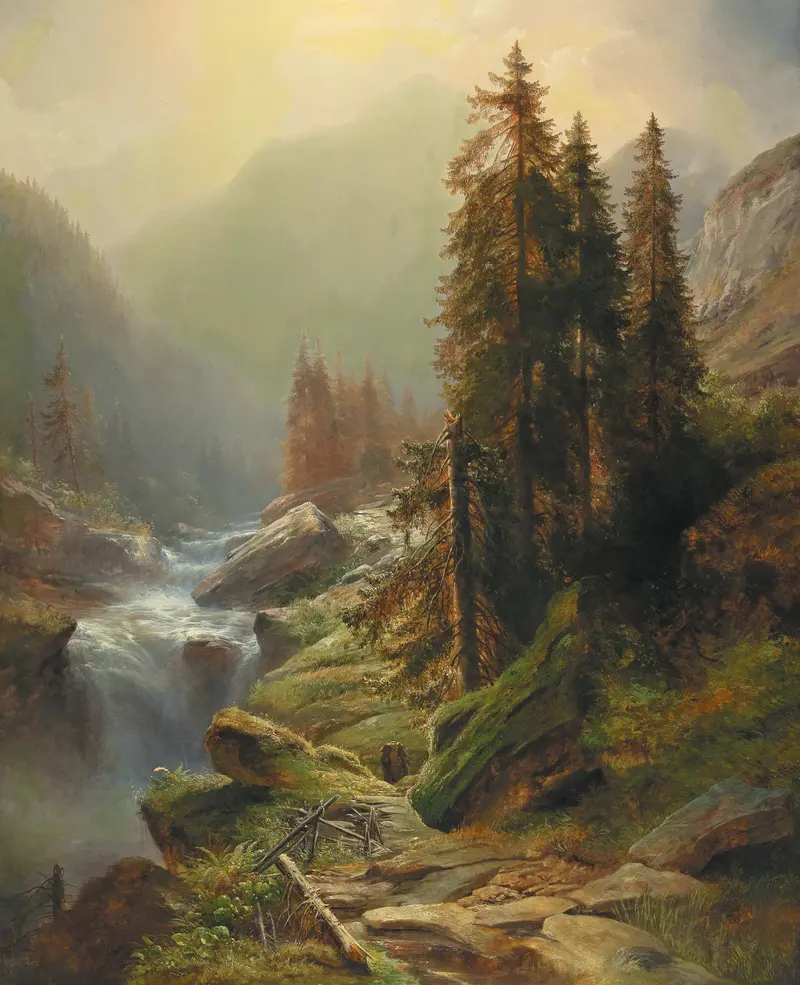
Large Mountain Landscape
Albert August Zimmermann
Partie am Como See
Albert August Zimmermann
More Landscape Art

The Starry Night
Vincent van Gogh

View of Delft
Johannes Vermeer

Water Lilies
Claude Monet

The Grand Canal, Venice, looking north-west from the Ca' Corner to the Ca' Contarini degli Scrigni, with the campanile of Santa Maria della Carità
Canaletto

Windsor Castle
Canaletto

The Grand Canal looking North-East from the Palazzo Dolfin-Manin to the Rialto Bridge
Canaletto