
Ansicht von Neuss mit St. Quirinus-Münster — History & Facts
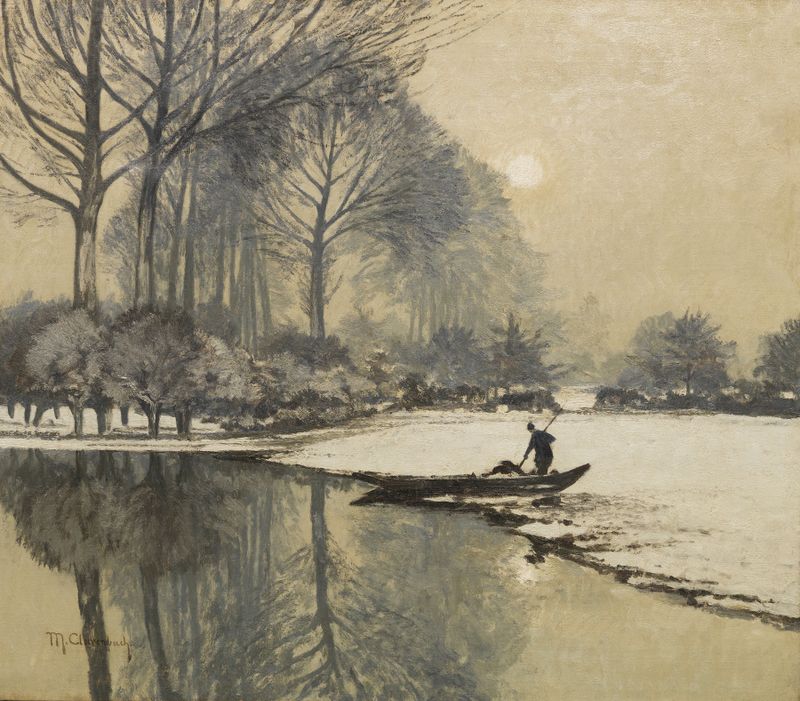
In a dreamscape where reality blurs, we find ourselves drawn into a tranquil moment captured by a skilled hand. Each brushstroke whispers secrets of longing and wonder, inviting us to traverse the threshold of imagination. Look to the left at the majestic silhouette of St. Quirinus-Münster, its steeples rising like the aspirations of townsfolk below.
The soft hues of dawn’s light caress the building, creating a serene interplay of golds and blues that breathe life into the canvas. Notice how the gentle rhythm of the clouds mirrors the calm waters of the river, reflecting not just the scenery, but an ethereal connection to a world that feels both distant and intimate. As you absorb the scene, subtle contrasts emerge—between the steadfast structure of the church and the ephemeral clouds above, between the earthly landscape and the dreamlike quality of the sky. This duality invokes a sense of peace, yet hints at a yearning for something beyond the horizon.
Each tiny figure scattered along the riverbank seems lost in their own thoughts, embodying the universal search for meaning amidst the serene beauty of their surroundings. In 1900, when this work was created, Max Clarenbach was finding his voice within the vibrant artistic movements sweeping through Germany. Living in the midst of a nation embracing modernity, he applied a distinctly romantic lens to his surroundings, blending realism with a dreamlike essence that resonated with the spirit of the time. This painting reflects not only his personal journey as an artist but also the collective hope and introspection of a society on the brink of change.
More Artworks by Max Clarenbach
Browse all →
Winter an der Erft
Max Clarenbach

Bäume im Nebel
Max Clarenbach

Winterlandschaft
Max Clarenbach

Nordseestrand – Vlissingen
Max Clarenbach

Winterlandschaft am Niederrhein, bei Wittlaer
Max Clarenbach

Flussufer
Max Clarenbach

Meereslandschaft
Max Clarenbach
Winterlandschaft mit Kahnfischer
Max Clarenbach

Niederrhein – Treibeis
Max Clarenbach

Der Rhein bei Düsseldorf mit Blick auf die Schnellenburg
Max Clarenbach





