
Anthomedusae (Jellyfish) — History & Facts
What first seizes the eye in Anthomedusae (Jellyfish) is the sense of intricate order emerging from apparent chaos—a living architecture rendered with scientific precision and a flourish of imagination. The central medusa, crowned with a dome of stippled translucence, unfurls a tangle of tentacles that spiral outward like the filigree of an elaborate chandelier. Each curling strand is studded with tiny, bead-like structures, hinting at the complexity of these delicate creatures.
Around this main figure, cross-sections and close-ups reveal the inner workings and varied forms of related species, their anatomy laid bare in a palette of coral reds and cool greys. The composition leads the viewer in a slow spiral, drawing attention to the symmetry and repetition that nature so often hides beneath the surface. This image belongs to a world where art and science were not rivals, but partners in the quest to understand and celebrate life's diversity. Created in 1904 for Kunstformen der Natur, this plate is a testament to the era’s fascination with cataloguing the wonders of the natural world—an age when explorers, naturalists, and artists alike were captivated by the hidden geometries of marine life.
Such illustrations were not merely decorative; they were intended for both the scientist’s desk and the public’s imagination, bridging the gap between technical accuracy and visual delight. While the precise journey of this particular work remains obscure, its presence in the celebrated collection of Kunstformen der Natur ensures it continues to spark curiosity, inviting each viewer to marvel at the strange beauty of the unseen ocean.
More Artworks by Ernst Haeckel
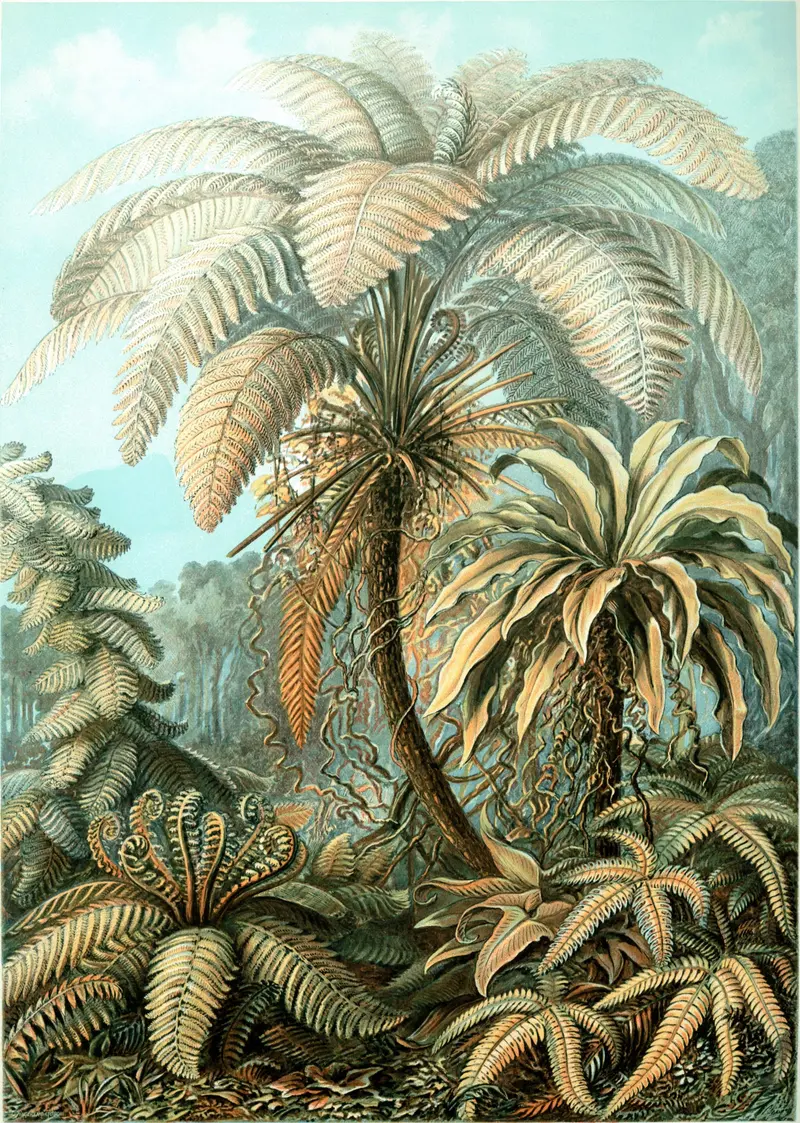
Filicinae (Ferns)
Ernst Haeckel
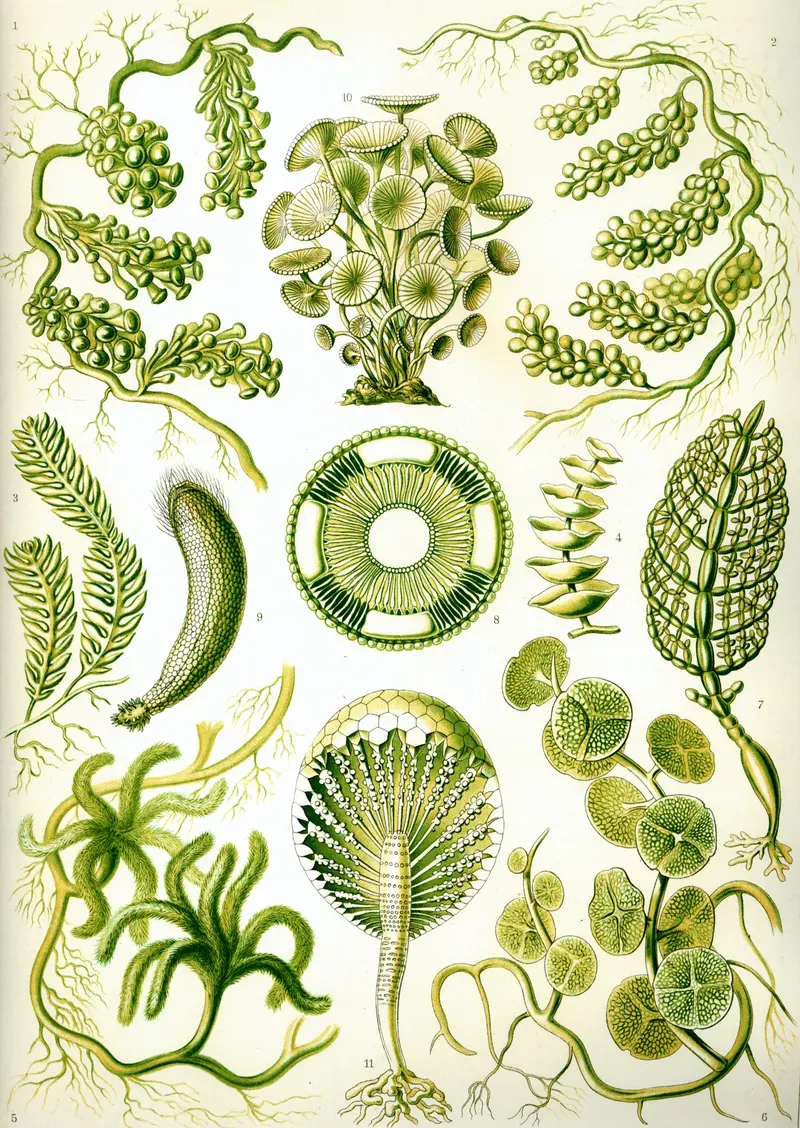
Siphoneae (Green Algae)
Ernst Haeckel

Cirripedia (Barnacles)
Ernst Haeckel

Actiniae (Sea Anemones)
Ernst Haeckel
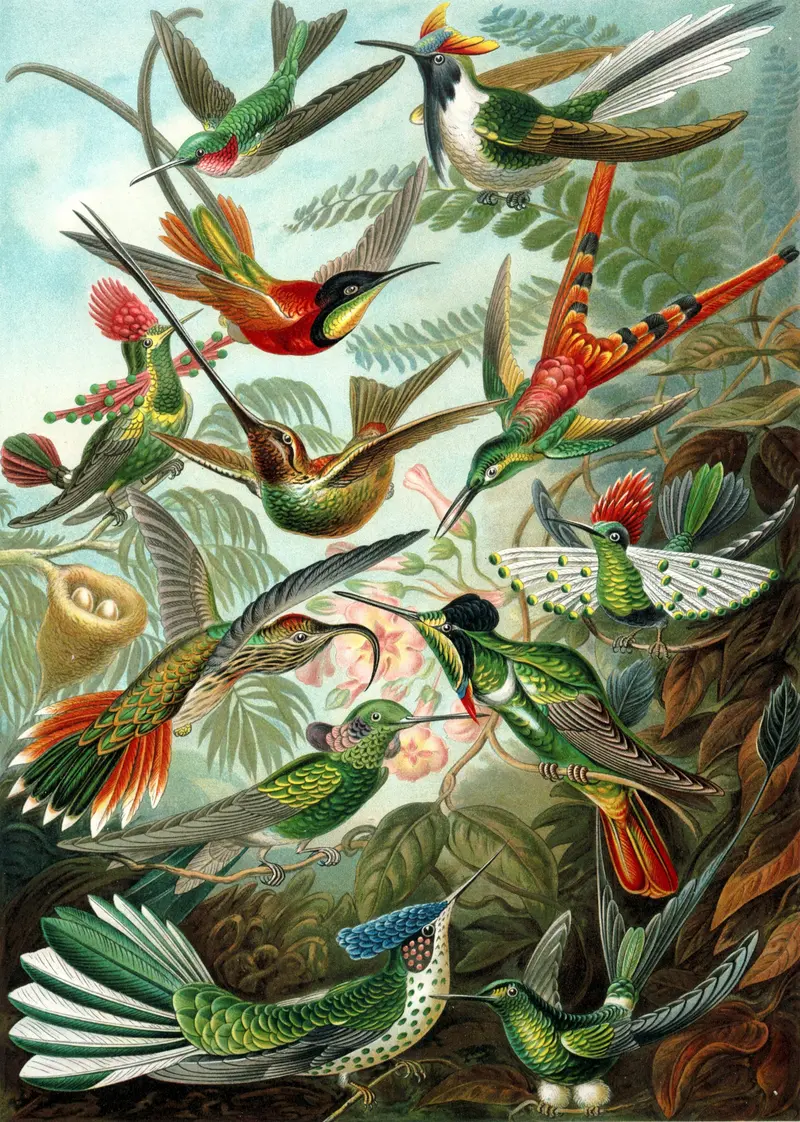
Trochilidae (Hummingbirds)
Ernst Haeckel
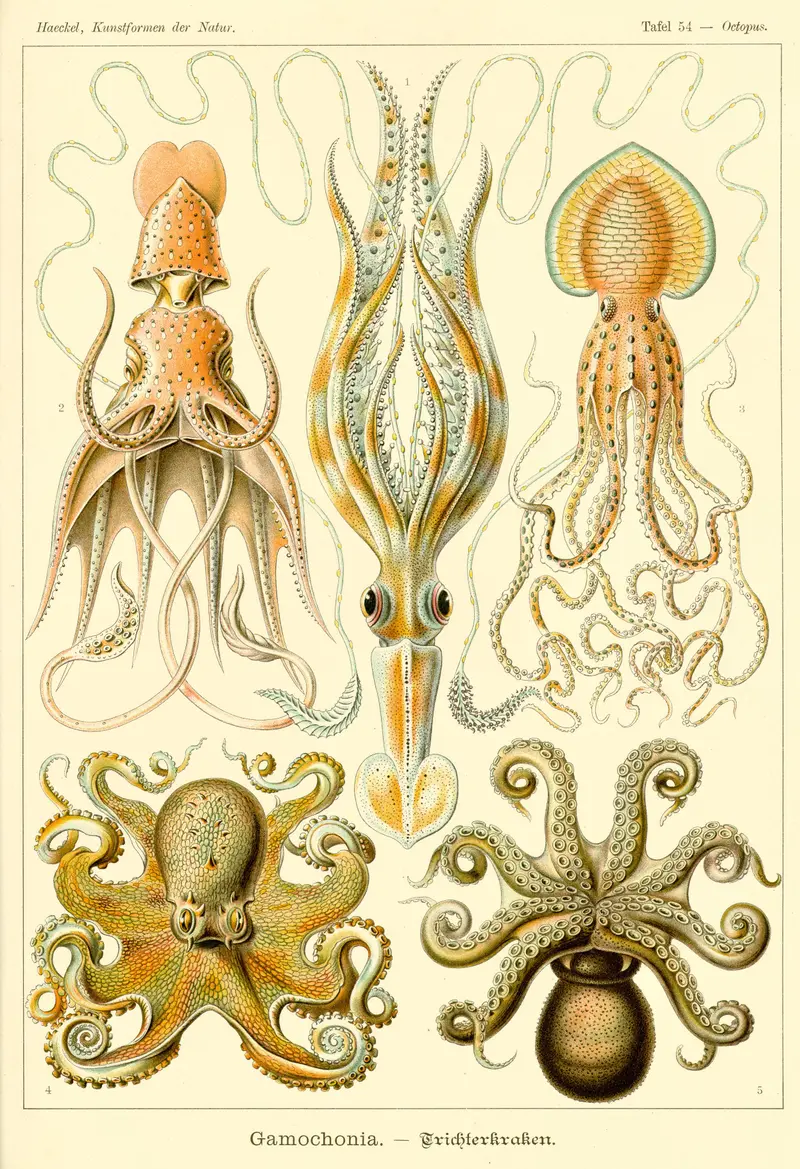
Gamochonia (Cephalopods)
Ernst Haeckel
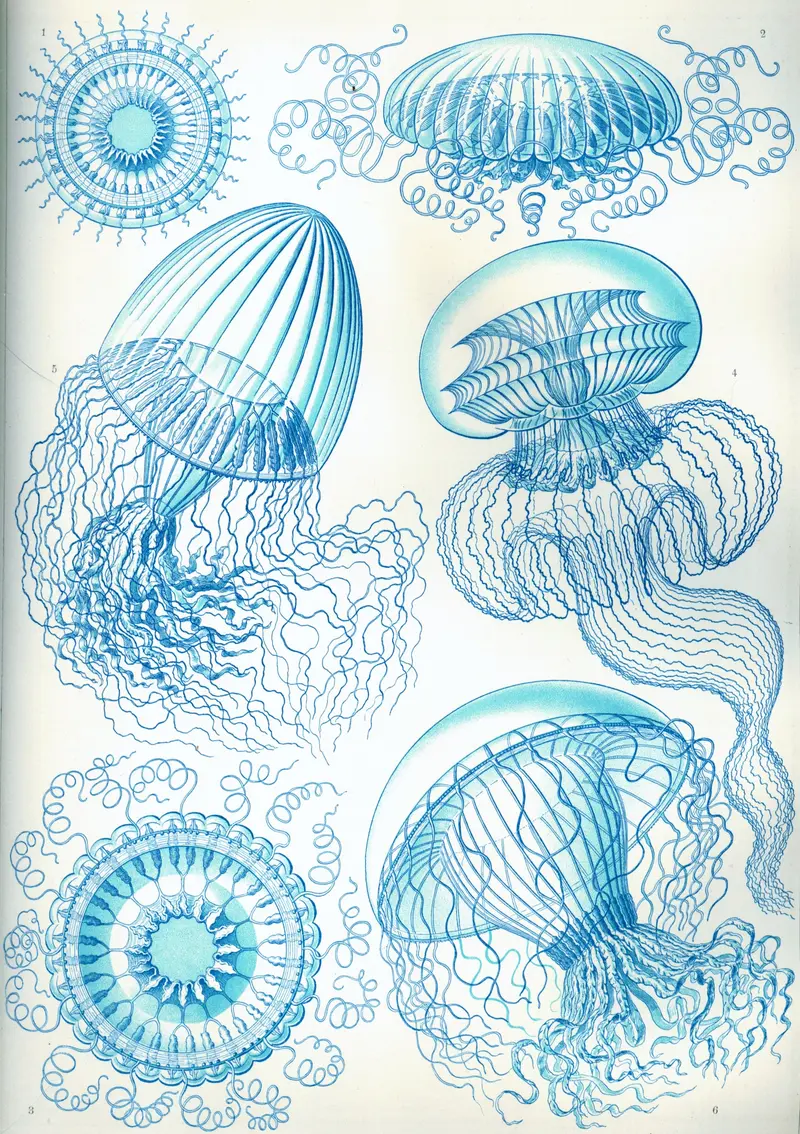
Leptomedusae (Jellyfish)
Ernst Haeckel
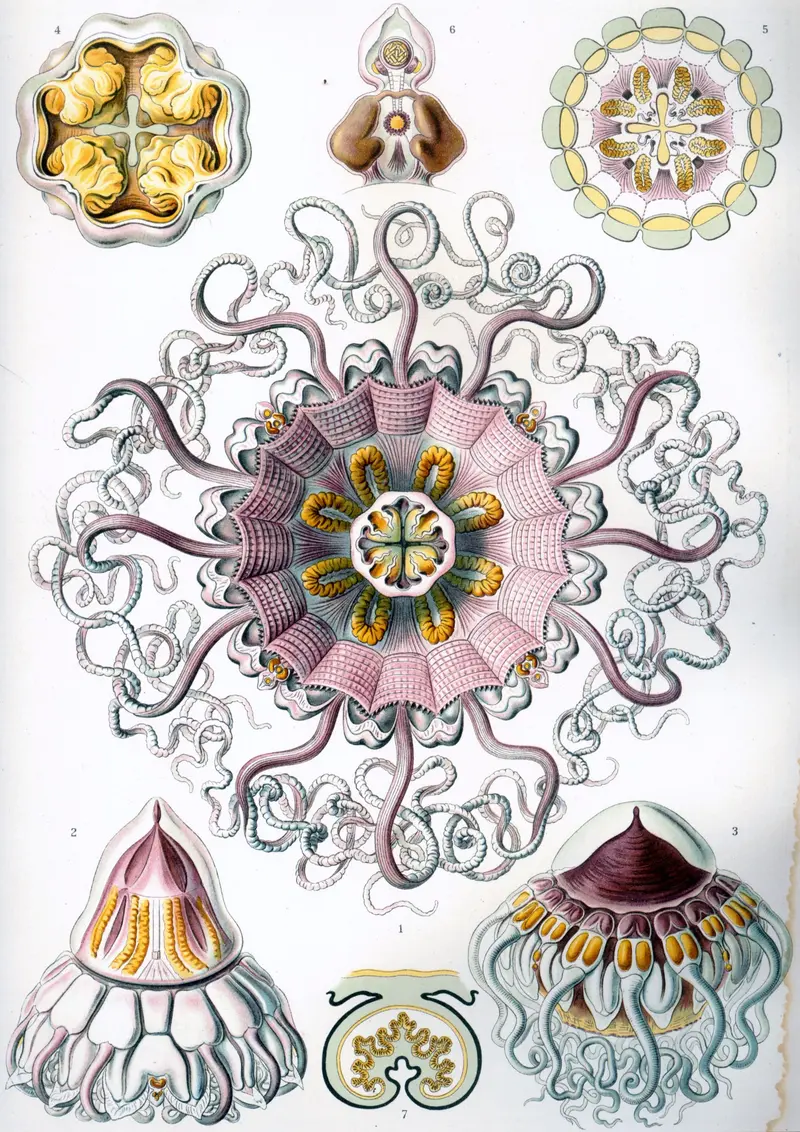
Peromedusae (Jellyfish)
Ernst Haeckel
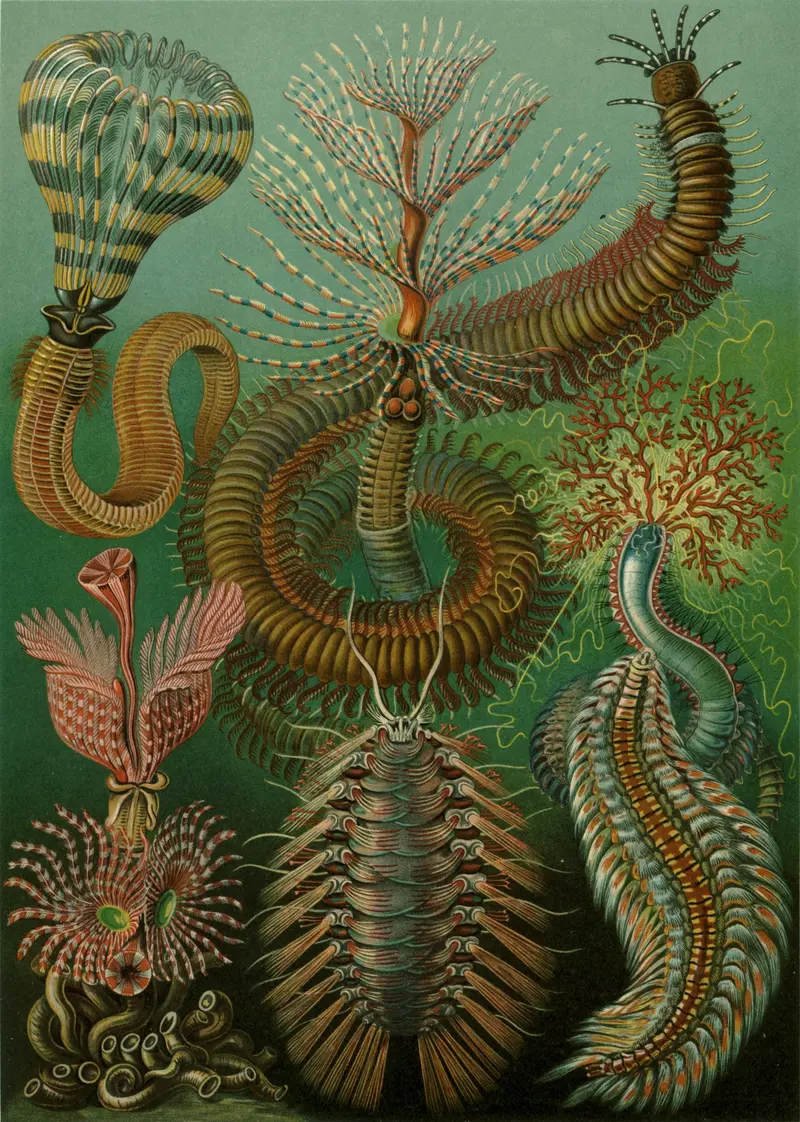
Chaetopoda (Bristle Worms)
Ernst Haeckel
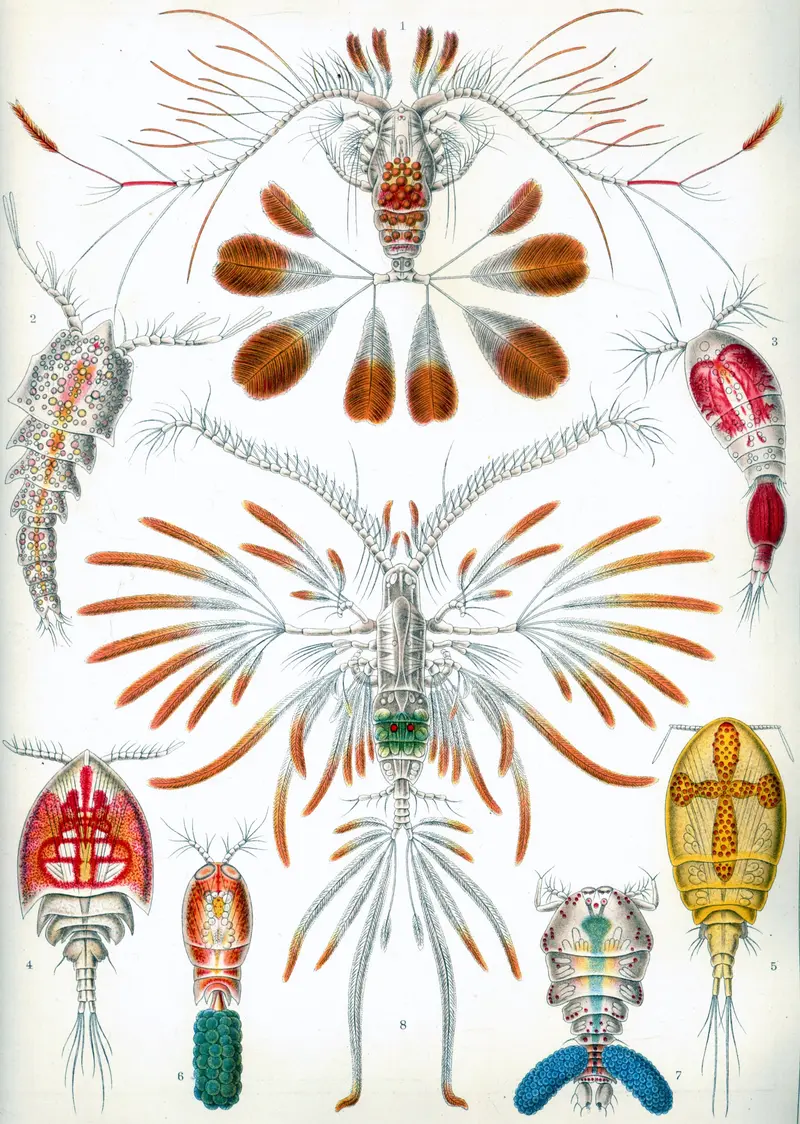
Copepoda (Copepods)
Ernst Haeckel





