
April Love — History & Facts
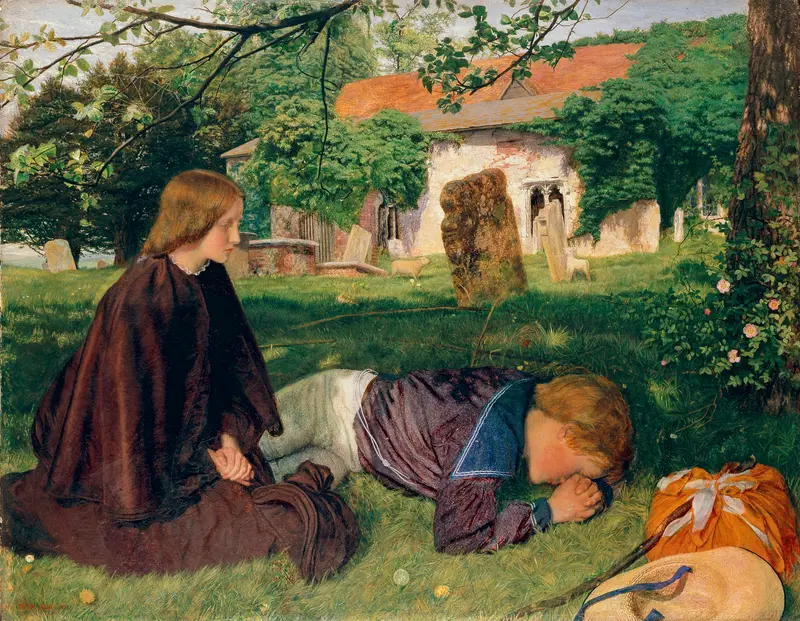
What holds the eye here is not just the rich violet of the young woman's skirt, but the way she seems caught between two worlds: the lush, sunlit garden behind her and the shadowed archway she leans against. Her hand clutches a sheer scarf at her throat, as if to steady herself or hold back words. The fallen rose petals at her feet hint at something just ended or about to change, while the ivy curling up the stonework suggests time creeping forward, indifferent to the drama of a single afternoon.
Light falls softly on her face, illuminating a look of uncertainty or longing—her gaze turned away from the viewer, lost in thought or memory. Painted between 1855 and 1856, April Love by Arthur Hughes belongs to a world enthralled by the language of flowers and the poetry of fleeting emotion. In mid-nineteenth-century Britain, artists of the Pre-Raphaelite circle—of which Hughes was a part—sought to capture the intensity of youthful feeling and the beauty of nature with jewel-like precision. Such works were often made for private patrons, eager for scenes that mingled romance with moral reflection.
Today, the painting is preserved in the Tate collection and can be explored through Google Arts & Culture, where the delicate tension of its moment continues to invite new stories from each viewer who lingers before it.
More Artworks by Arthur Hughes

Cecily Ursula, aged three years
Arthur Hughes
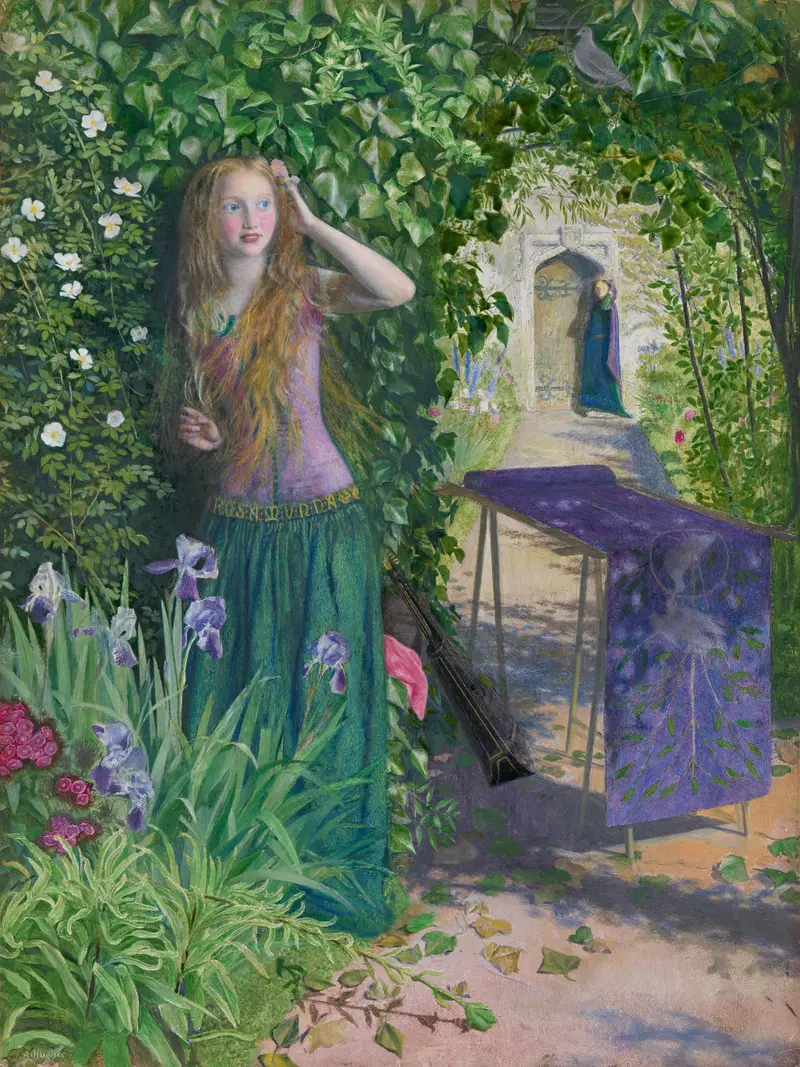
Fair Rosamund
Arthur Hughes
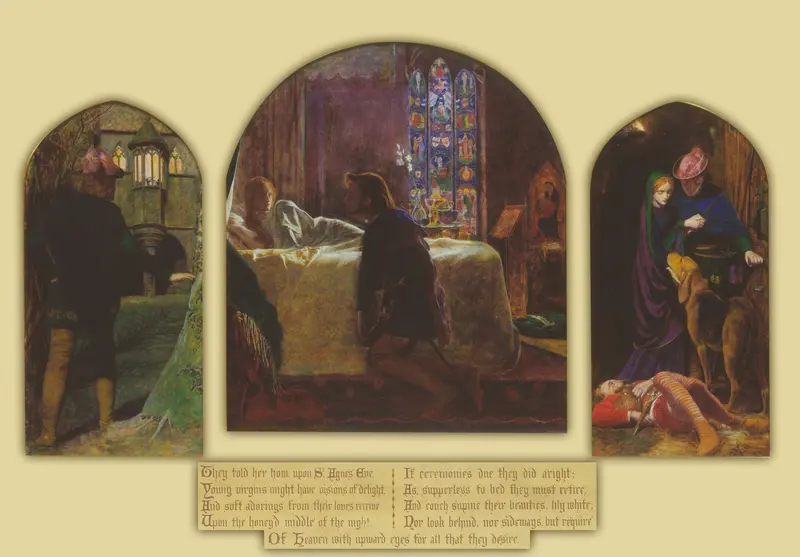
The Eve of St Agnes
Arthur Hughes
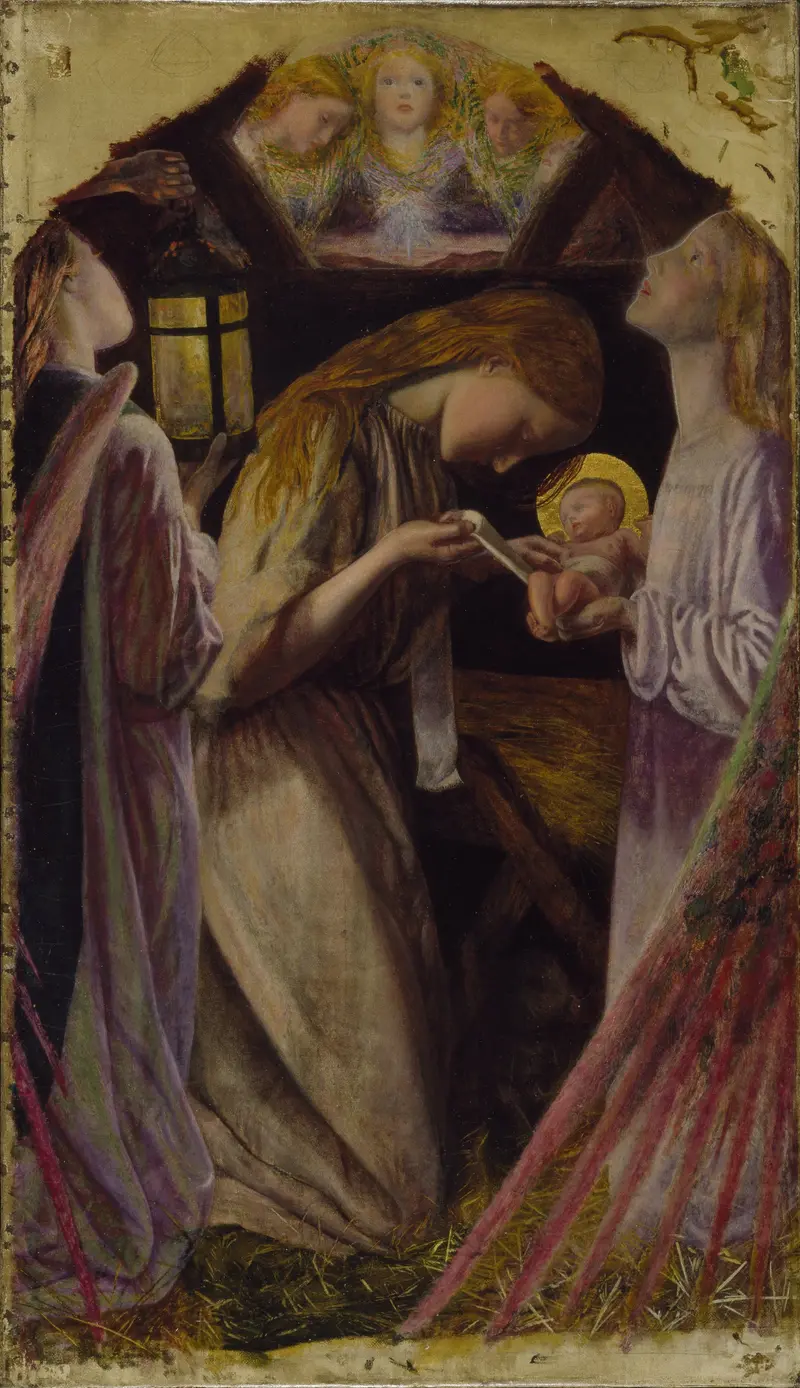
The Nativity
Arthur Hughes
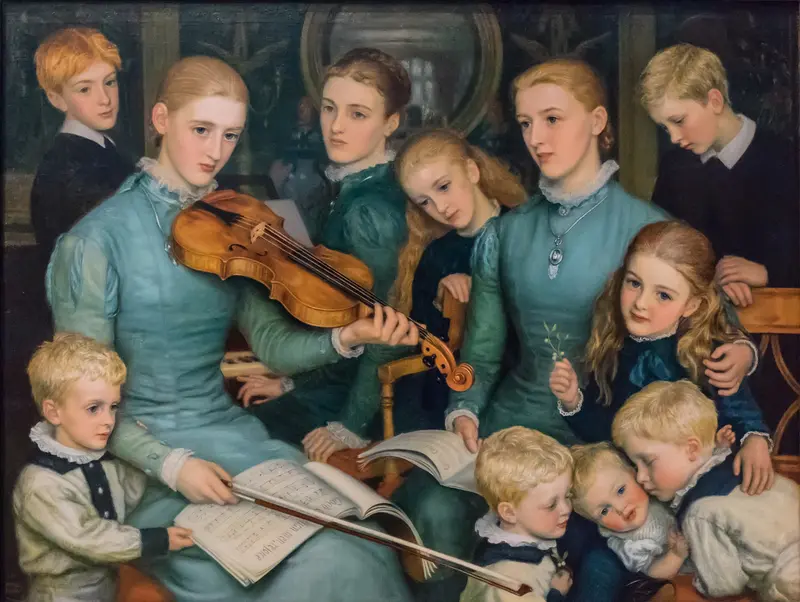
A Christmas Carol at Bracken Dene
Arthur Hughes
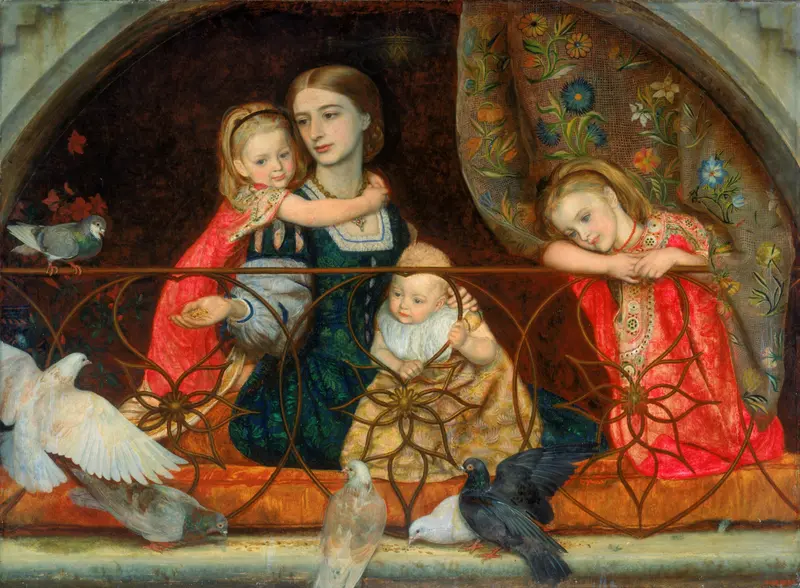
Mrs Leathart and Her Three Children
Arthur Hughes
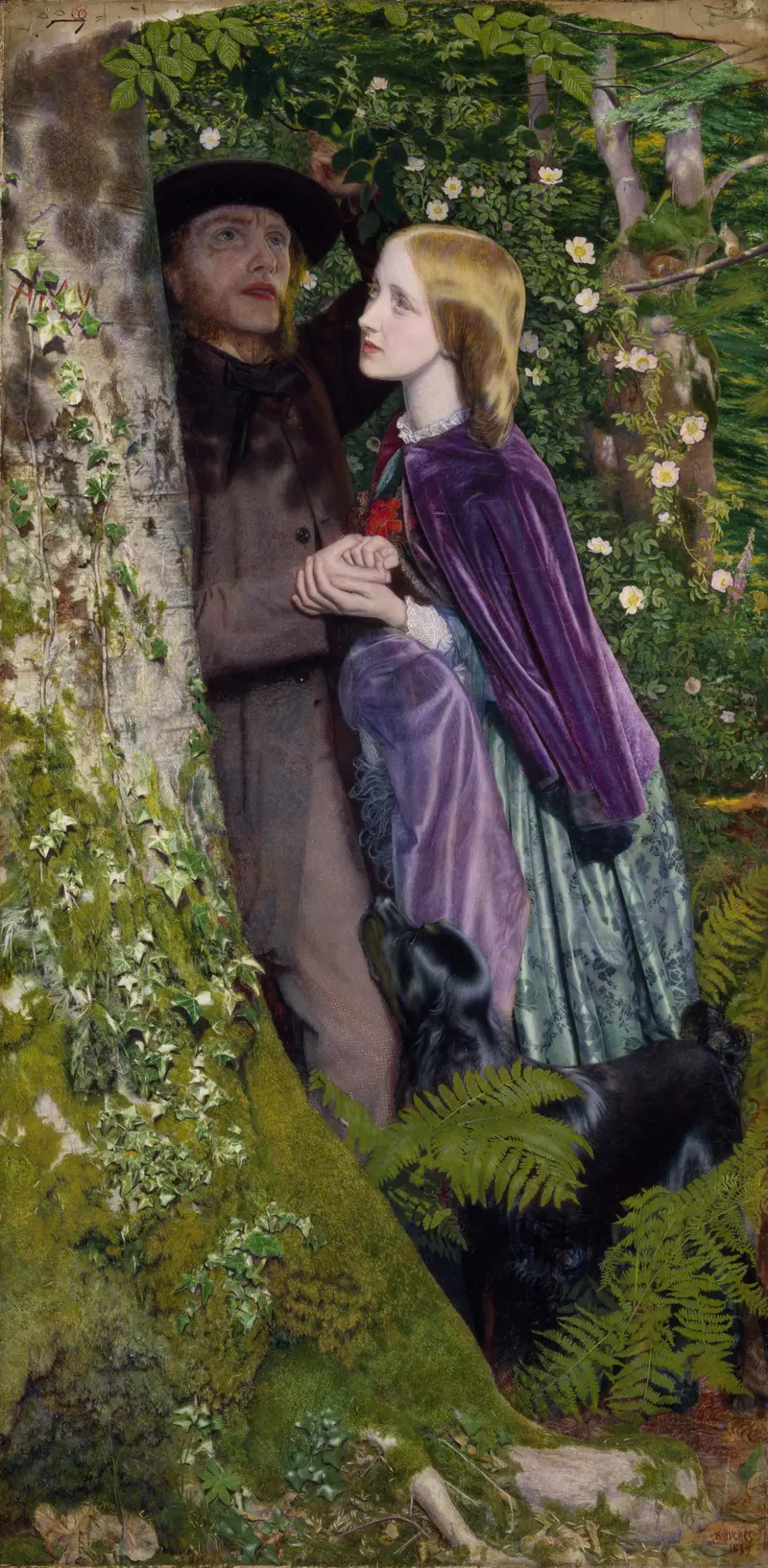
The Long Engagement
Arthur Hughes
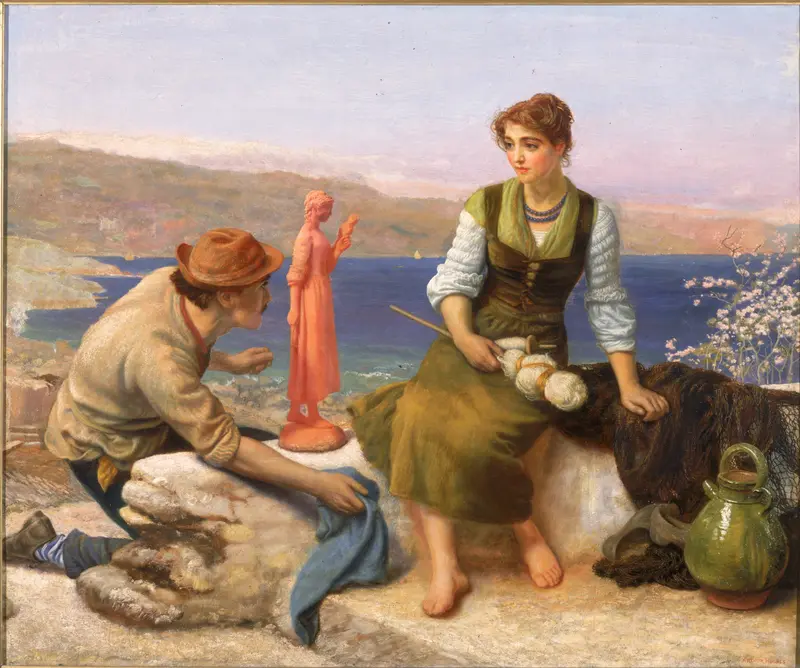
The Potter's Courtship
Arthur Hughes
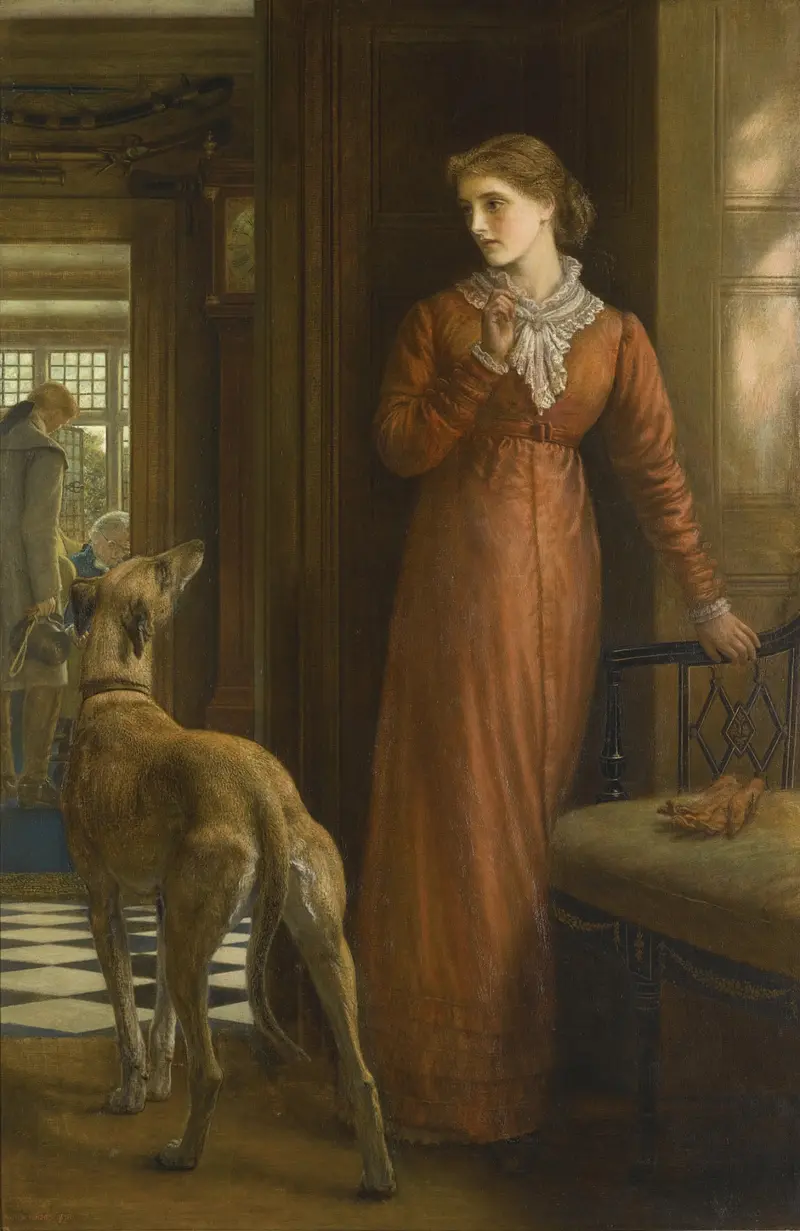
Uncertainty
Arthur Hughes
Home from Sea
Arthur Hughes



