
Home from Sea — History & Facts
What first draws the eye in Home from Sea is not the lush green of the churchyard or the dappled sunlight on the grass, but the quiet drama between the two young figures at its heart. The boy, dressed in a sailor’s suit, buries his face in his hands, his body curled in grief beside a weathered gravestone. His sister kneels close, her hands clasped, her gaze steady and full of silent concern.
The artist leads us gently from the boy’s sorrow to the delicate details surrounding them: dew-tipped spider webs, wild dog roses, and drifting dandelion seeds—each a fleeting thing, underscoring the fragility of the moment. The palette is lush but grounded, the light soft yet precise, giving every leaf and blade of grass its own story. Painted in 1862 by Arthur Hughes, this work belongs to the world of the Pre-Raphaelites, a group determined to restore truth and intensity to British art. Their fascination with nature’s minutiae and emotional candor is everywhere in this scene, from the careful rendering of the churchyard’s flora to the rawness of the children’s grief.
The painting’s origins stretch back to an earlier version, where only the boy mourned at his mother’s grave—a detail that echoes the Victorian era’s preoccupation with loss and memory. The addition of the sister, for whom Hughes’s own wife posed, deepens the sense of shared sorrow and resilience. In the quiet company of these two figures, the painting invites us to linger, to notice the small, passing beauties that surround even the most private moments of mourning.
More Artworks by Arthur Hughes

Cecily Ursula, aged three years
Arthur Hughes

April Love
Arthur Hughes
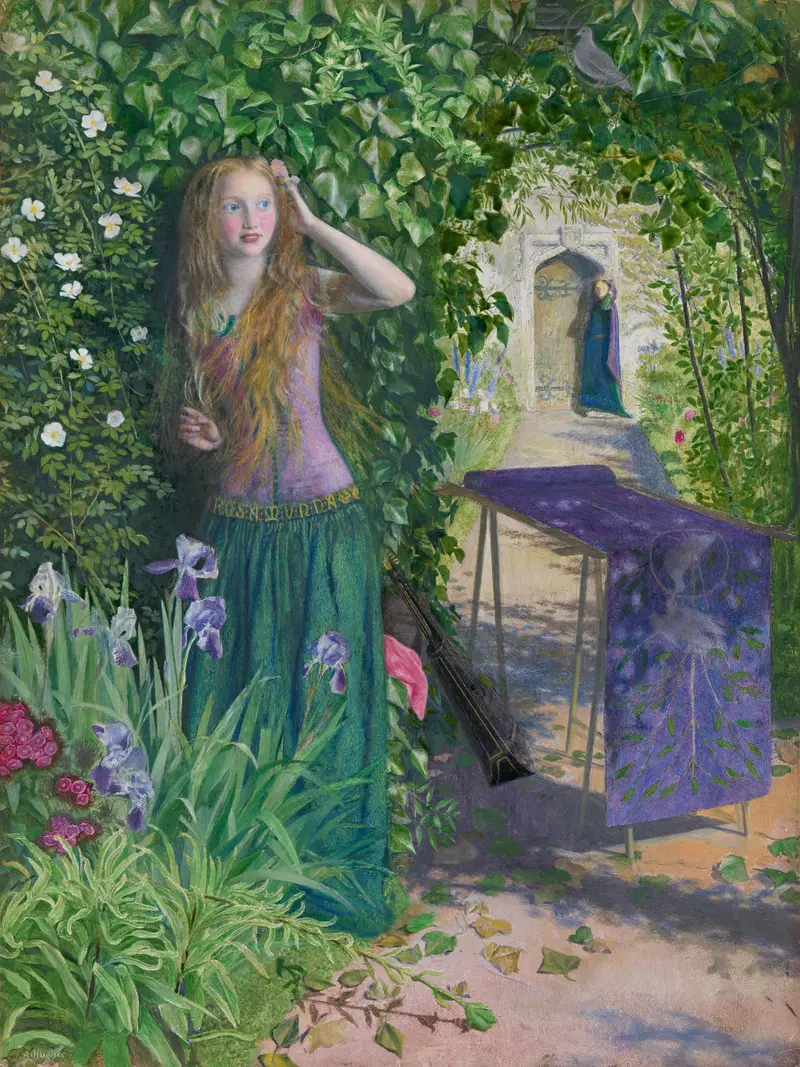
Fair Rosamund
Arthur Hughes
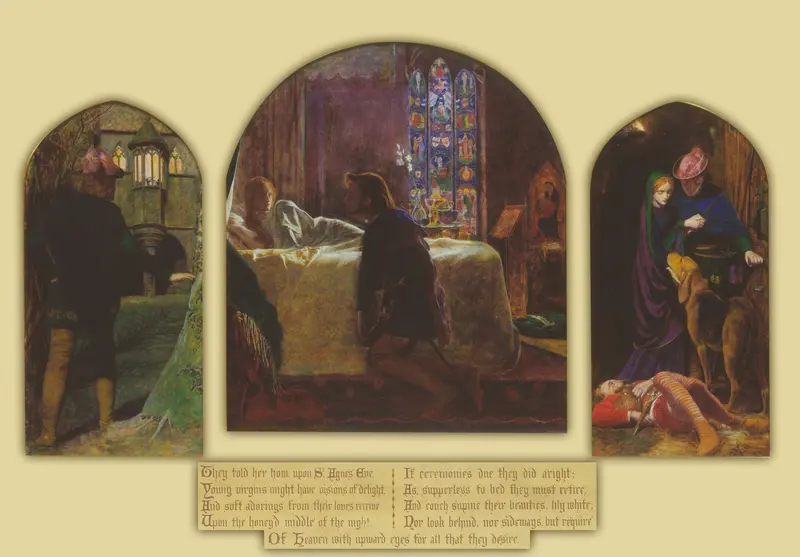
The Eve of St Agnes
Arthur Hughes
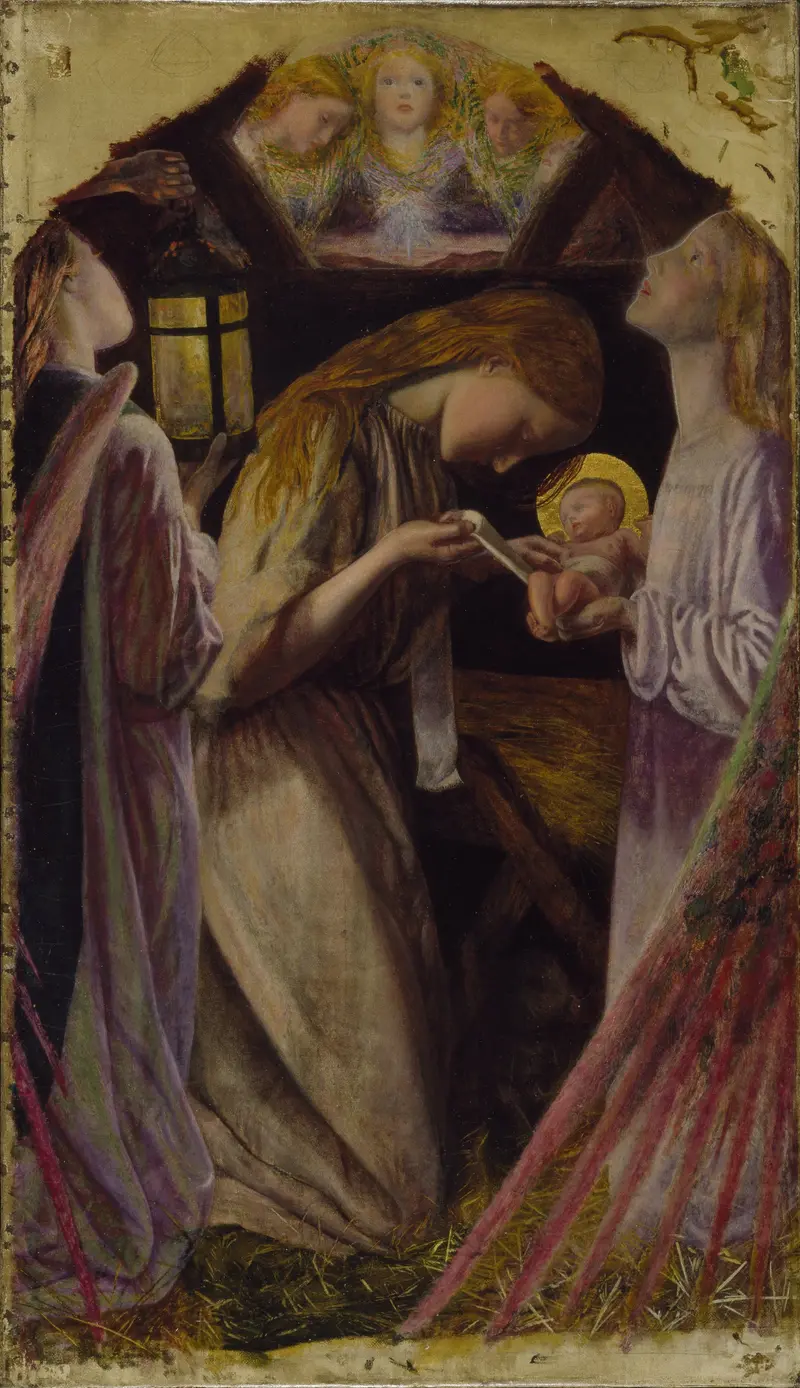
The Nativity
Arthur Hughes
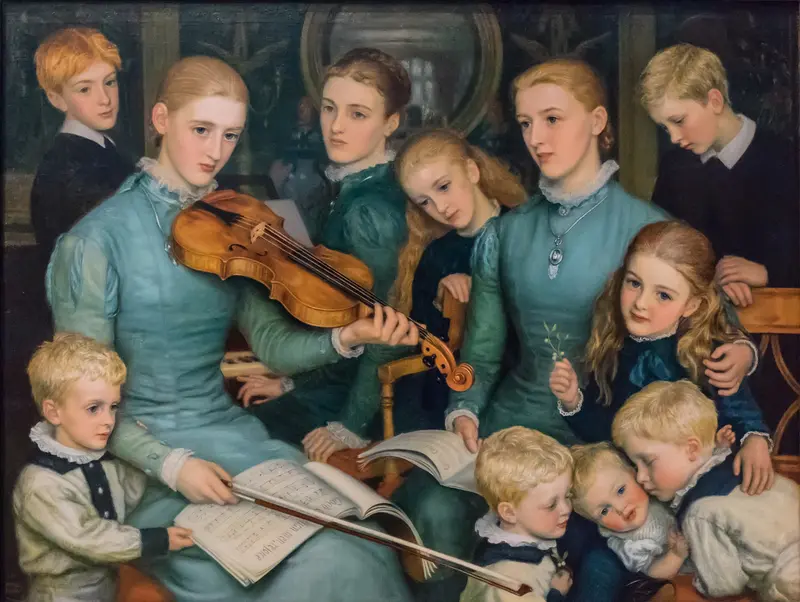
A Christmas Carol at Bracken Dene
Arthur Hughes
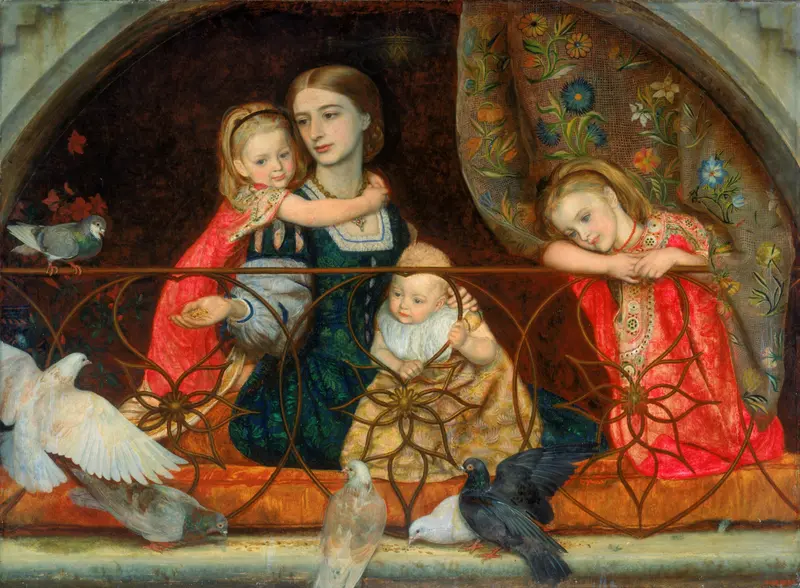
Mrs Leathart and Her Three Children
Arthur Hughes
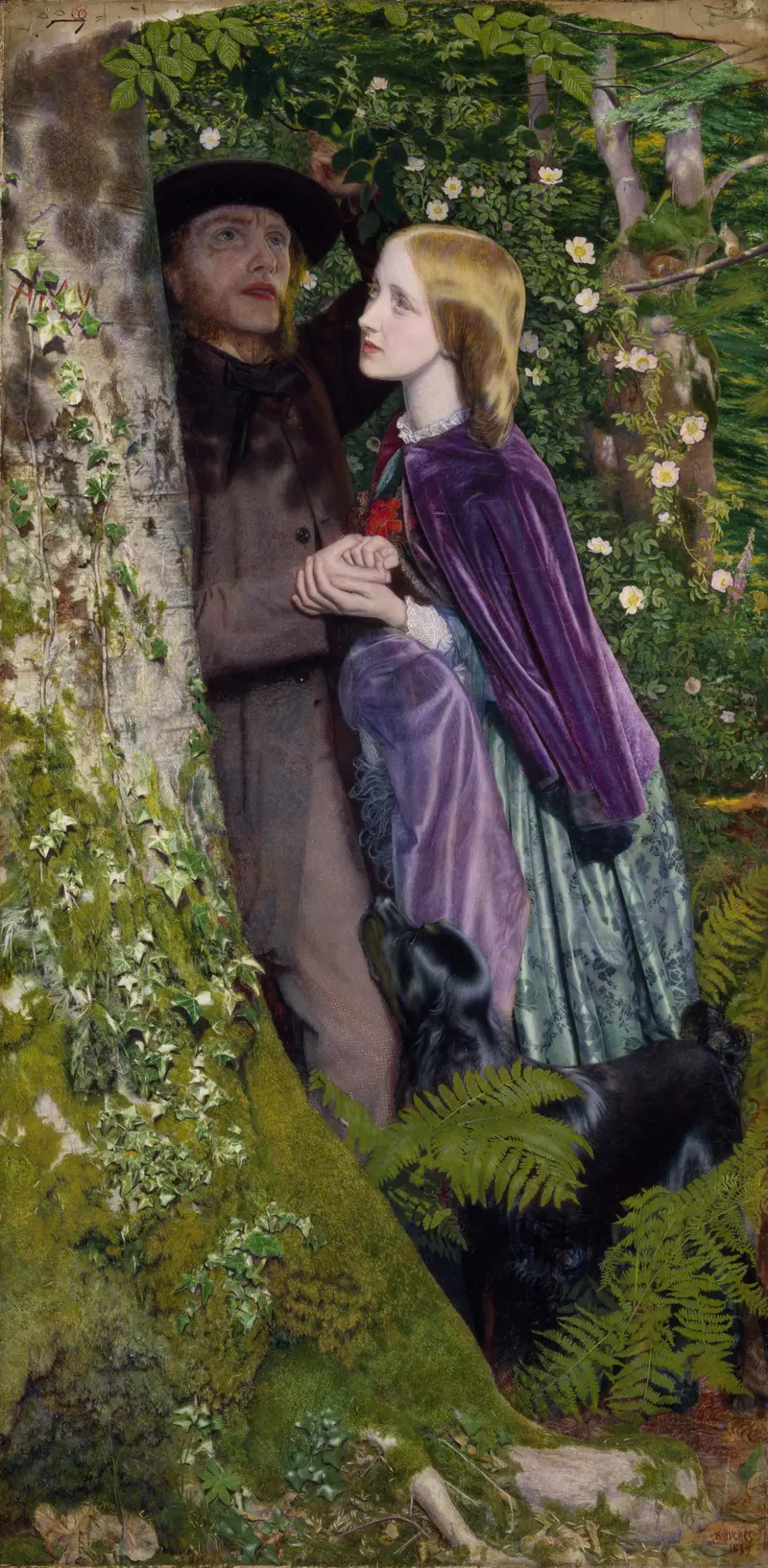
The Long Engagement
Arthur Hughes
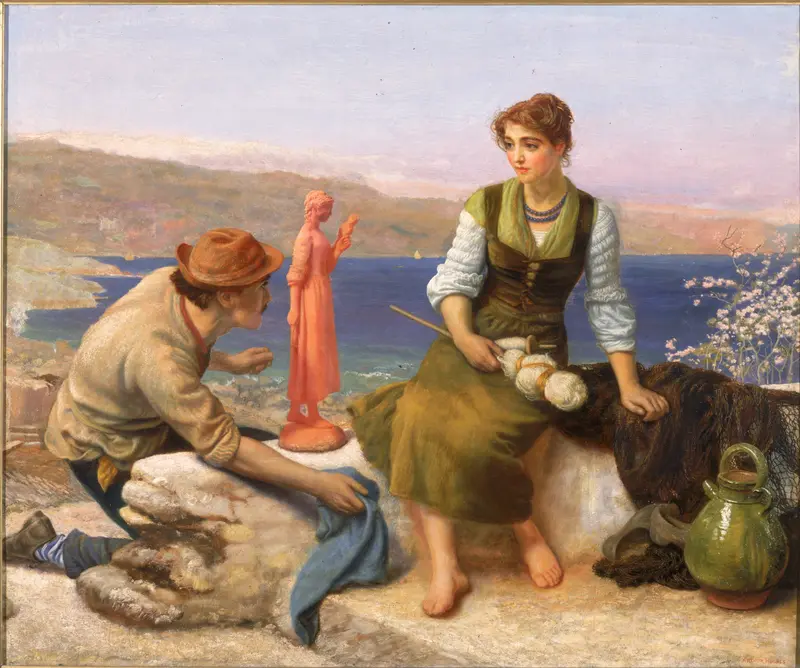
The Potter's Courtship
Arthur Hughes
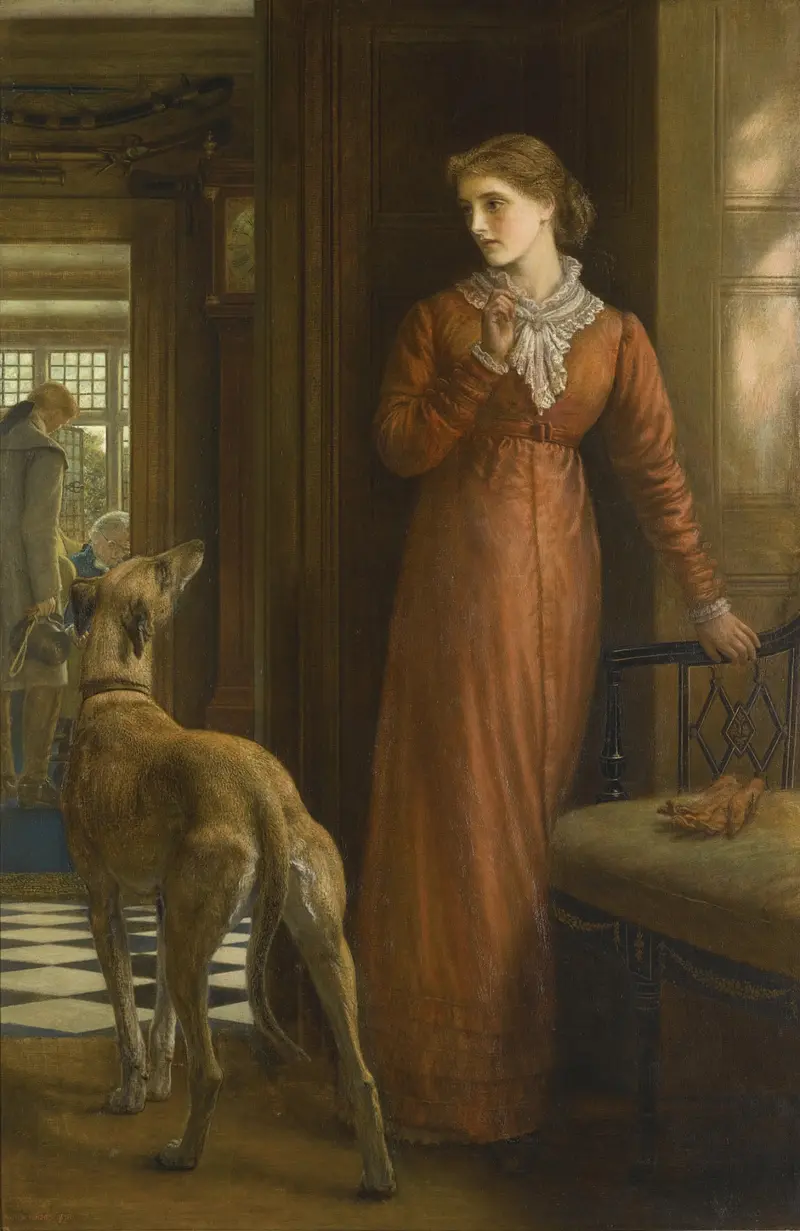
Uncertainty
Arthur Hughes
More Genre Scene Art

Banquet of the Officers of the St George Civic Guard
Frans Hals

Rembrandt and Saskia in the Scene of the Prodigal Son
Rembrandt van Rijn

Bal du moulin de la Galette
Pierre-Auguste Renoir

Quadrille at the Moulin Rouge
Henri de Toulouse-Lautrec

A Burial at Ornans
Gustave Courbet

When Will You Marry?
Paul Gauguin