
The Eve of St Agnes — History & Facts
A hush of anticipation lingers in this triptych, as if the air itself is holding its breath. The central panel draws the eye first: a young woman, her hair a pale halo against the pillow, sits upright in bed, startled yet transfixed by the kneeling figure who leans in from the shadows. The stained glass window behind her glows with jewel-like color, casting a mosaic of light that transforms the chamber into a stage for secrecy and longing.
Every gesture is deliberate—the woman's tense posture, the man's cautious advance, the careful placement of hands and eyes—each detail a thread in the tapestry of suspense. The panels to left and right are quieter but charged with meaning: a furtive approach beneath a lit turret, a guarded exit with a loyal hound and a fallen figure, all orchestrated to heighten the sense of a night where fate hangs in the balance. Painted in 1856, this work belongs to a world where artists and poets alike were captivated by medieval romance and the supernatural. The triptych format, with its pointed arches and narrative sequence, echoes altarpieces of centuries past, yet here it serves a secular, even rebellious, story—one of young love daring the boundaries of family and tradition.
Such scenes were beloved by the Pre-Raphaelite circle, who sought to revive the color, detail, and emotional intensity of early Renaissance art. Arthur Hughes was among those drawn to literary subjects and luminous, intricate surfaces. The painting’s presence in the Tate collection, as documented by Google Arts & Culture, places it within the lineage of British art that both honors and questions the past.
Let your eyes linger on the stained glass, the folds of fabric, the watchful dog—each element is a clue, and the story is yours to finish.
More Artworks by Arthur Hughes

Cecily Ursula, aged three years
Arthur Hughes

April Love
Arthur Hughes
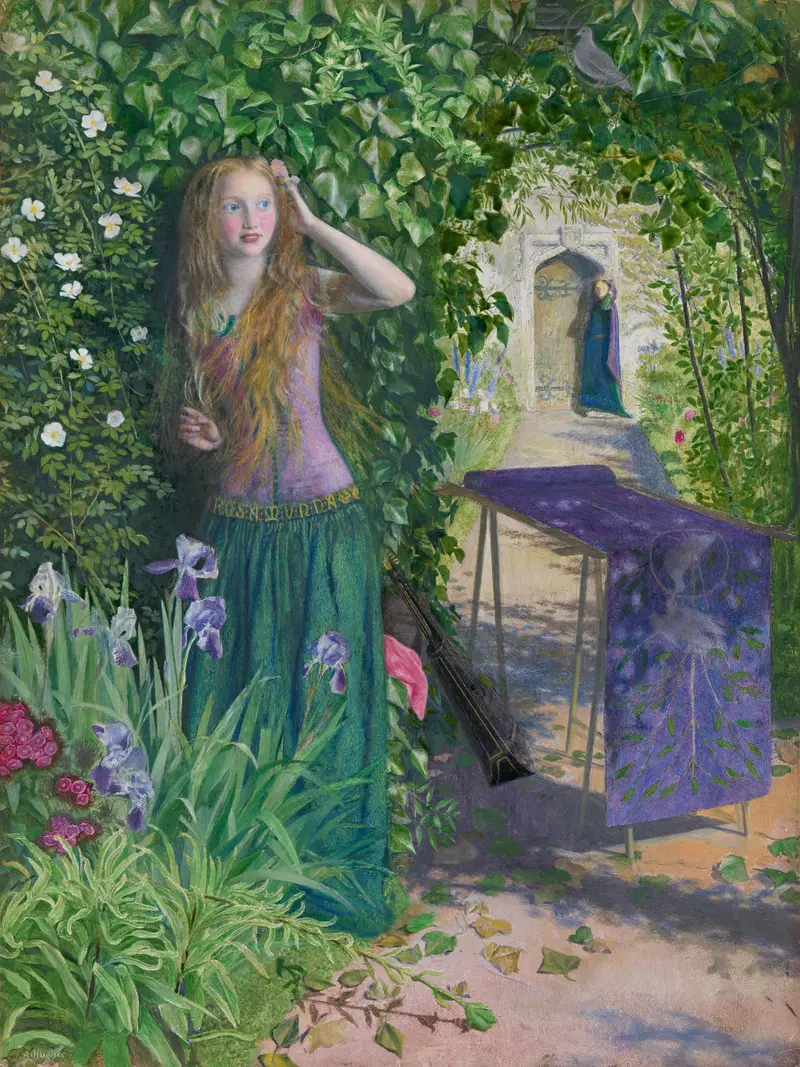
Fair Rosamund
Arthur Hughes
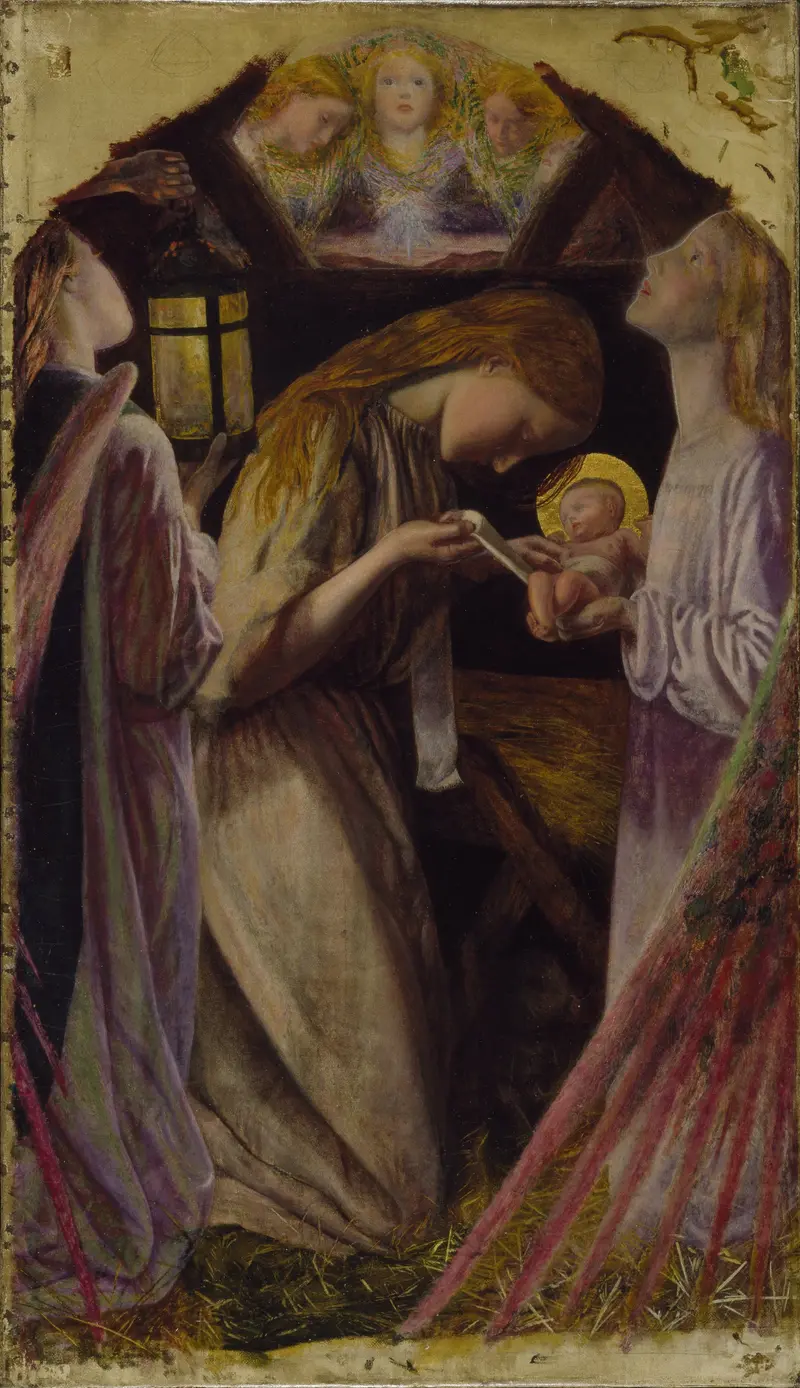
The Nativity
Arthur Hughes
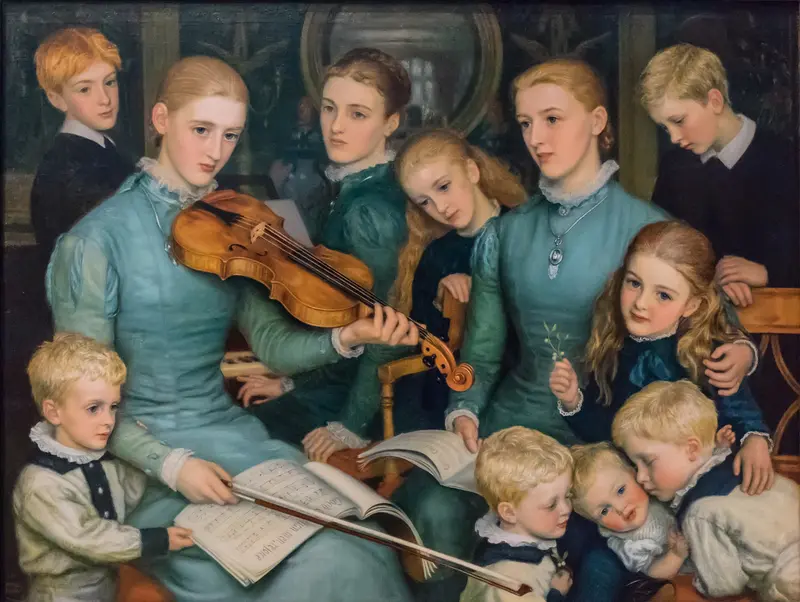
A Christmas Carol at Bracken Dene
Arthur Hughes
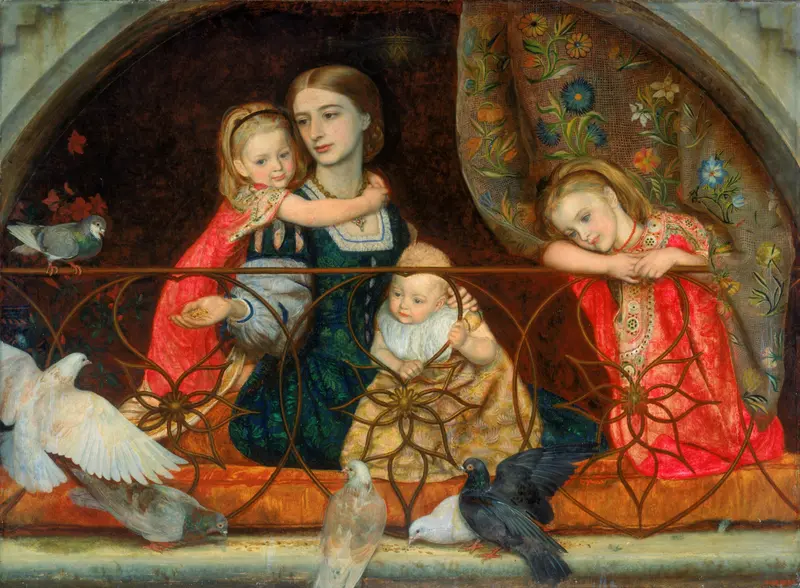
Mrs Leathart and Her Three Children
Arthur Hughes
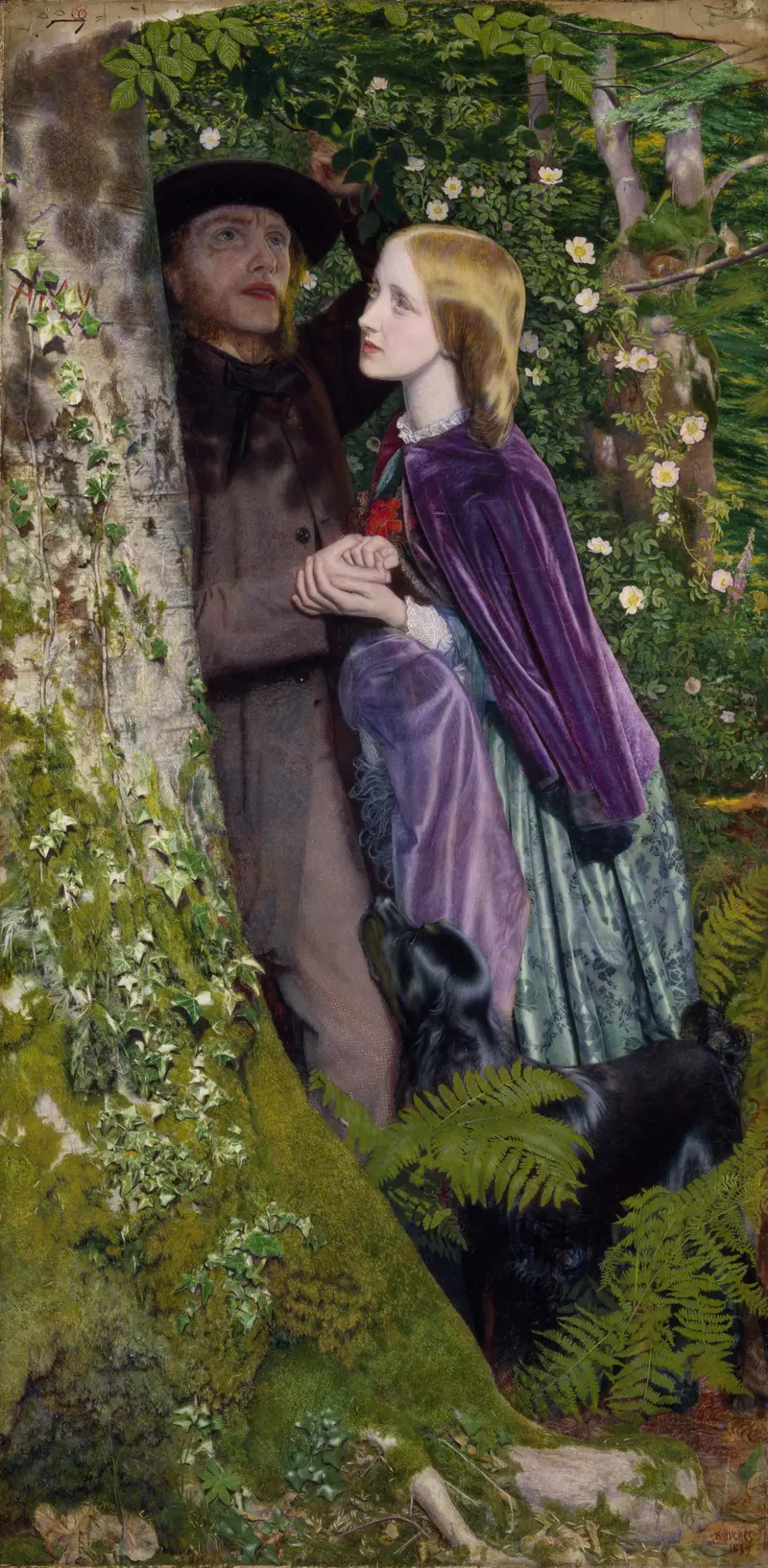
The Long Engagement
Arthur Hughes
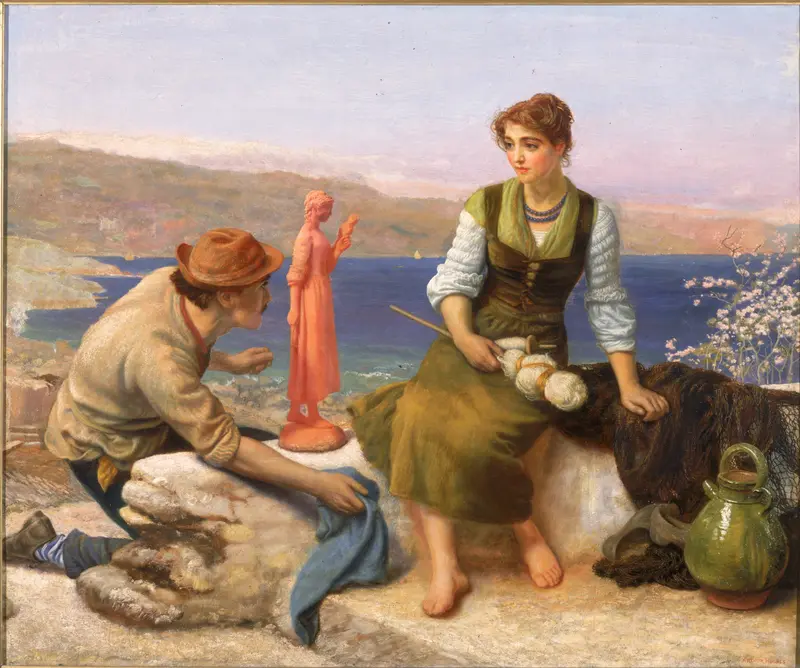
The Potter's Courtship
Arthur Hughes
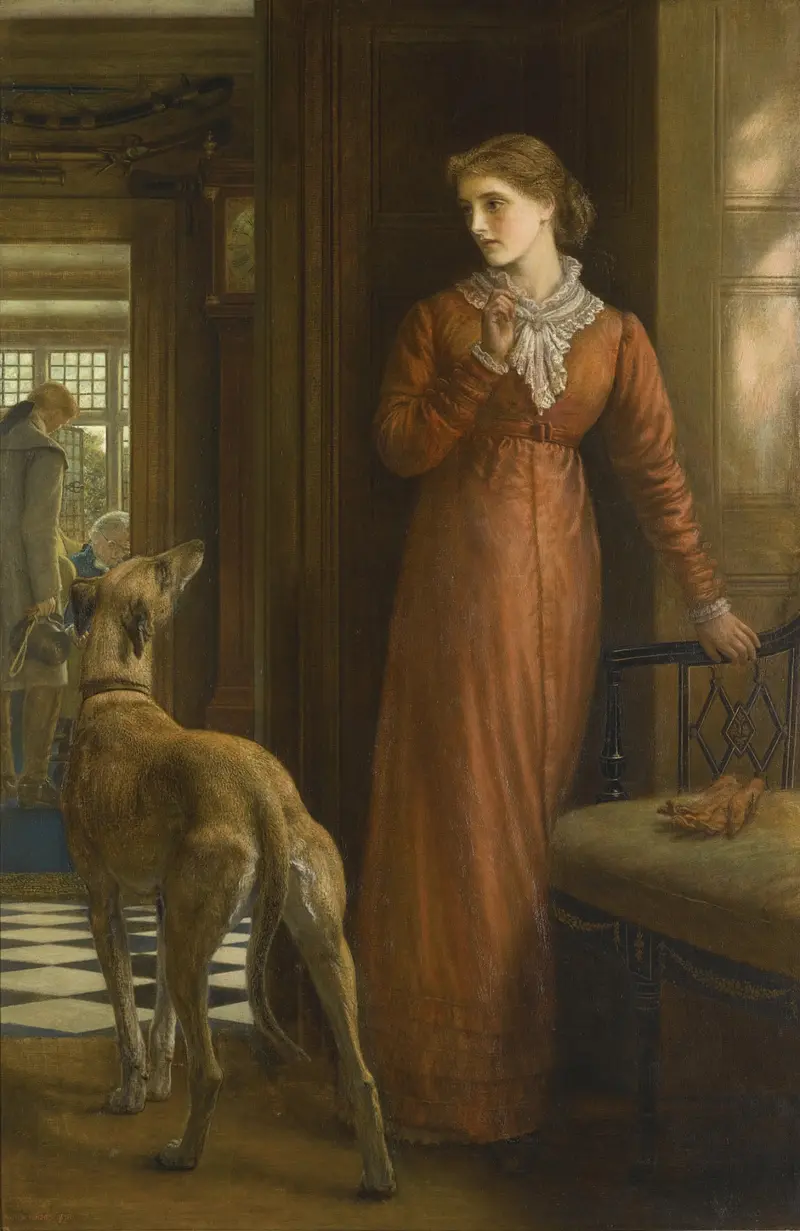
Uncertainty
Arthur Hughes
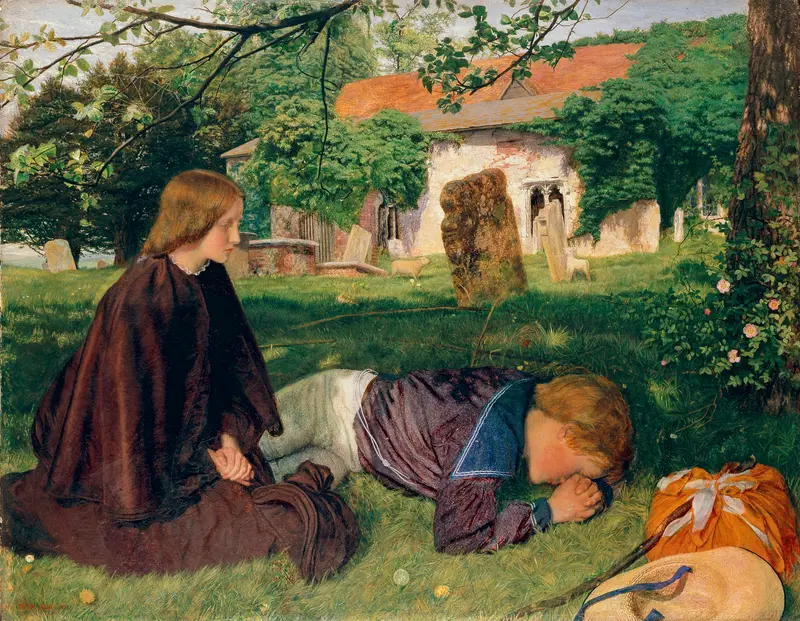
Home from Sea
Arthur Hughes



