
Architect’s Dream — History & Facts
In the quiet realms of artistic creation, the weight of legacy looms large, shaping what is left behind. Look to the bottom right corner of the canvas, where a small figure stands amidst an expansive landscape, gazing up at towering structures that seem to touch the sky. The architecture, rendered in ethereal light, is a blend of what is imagined and what is possible, hinting at both grandeur and fragility. Notice how the palette transitions from deep earth tones to luminous blues and whites, evoking feelings of aspiration and reverie, while the soft brushwork suggests the fleeting nature of dreams that linger in the mind. As you explore the painting, reflect on the juxtaposition between the solidity of the built environment and the impermanence of the human experience.
The majestic structures signify civilization's yearning for immortality, yet the solitary figure reminds us of our transient existence. This duality invites contemplation on what we leave behind—a yearning for permanence in a world filled with change and uncertainty. In the mid-19th century, while residing in the burgeoning art community of New York, the artist rendered this work during a pivotal moment in American art history. His landscapes were characterized by a deep respect for nature and an exploration of divine beauty.
Amidst the growing industrialization, he sought to reconcile humanity's ambition with nature's grandeur, ultimately leaving a legacy that framed the American experience in the context of both beauty and existential reflection.
More Artworks by Thomas Cole
Browse all →
View from Mount Holyoke, Northampton, Massachusetts, after a Thunderstorm—The Oxbow
Thomas Cole
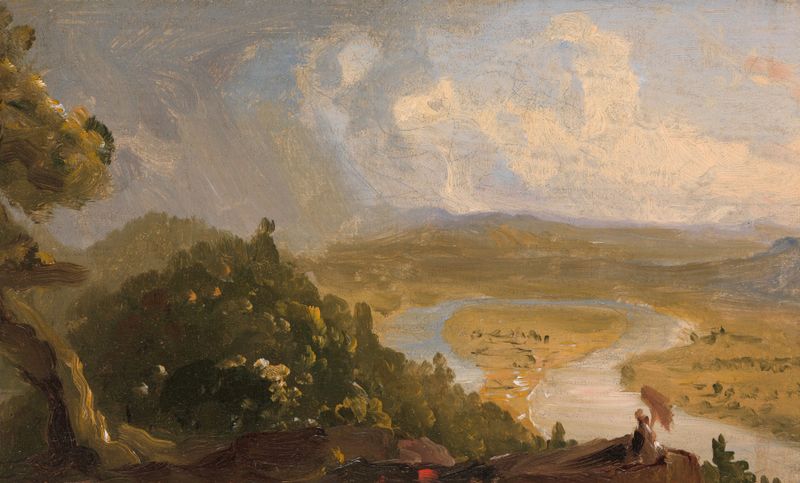
Sketch for View from Mount Holyoke, Northampton, Massachusetts, after a Thunderstorm (The Oxbow)
Thomas Cole
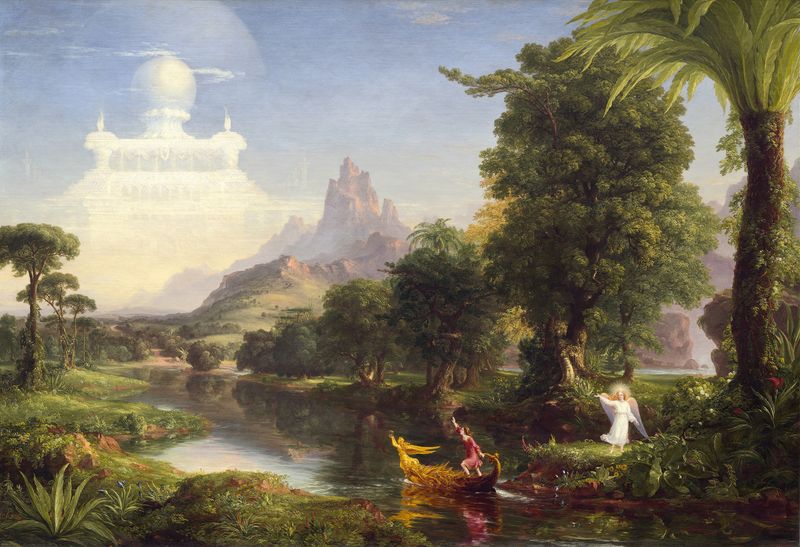
The Voyage of Life – Youth
Thomas Cole
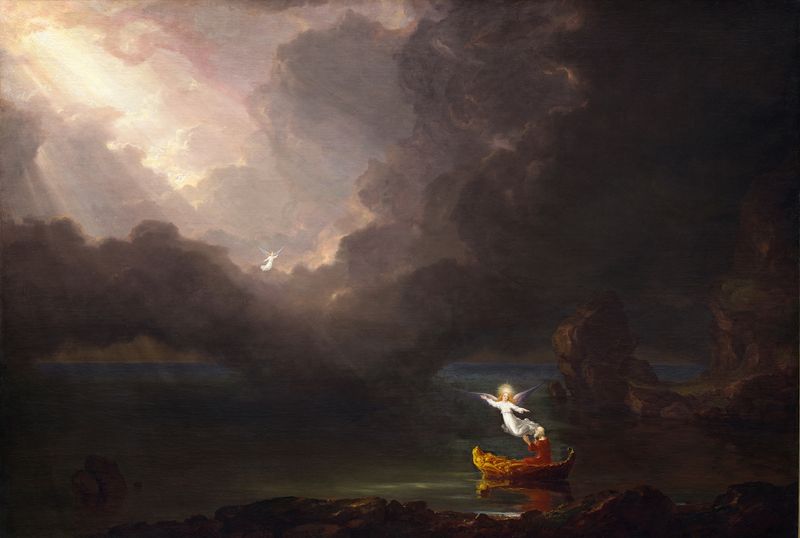
The Voyage of Life – Old Age
Thomas Cole
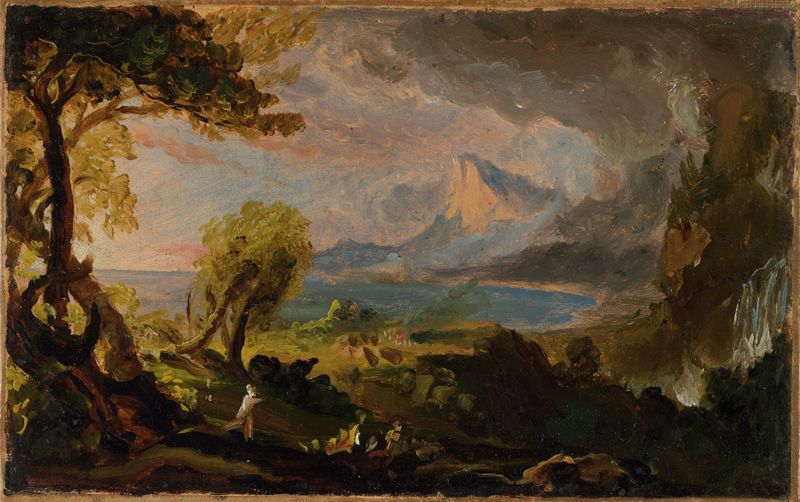
The Course of Empire–The Savage State
Thomas Cole

Landscape
Thomas Cole

New England Scenery
Thomas Cole

Sunrise in the Catskills
Thomas Cole
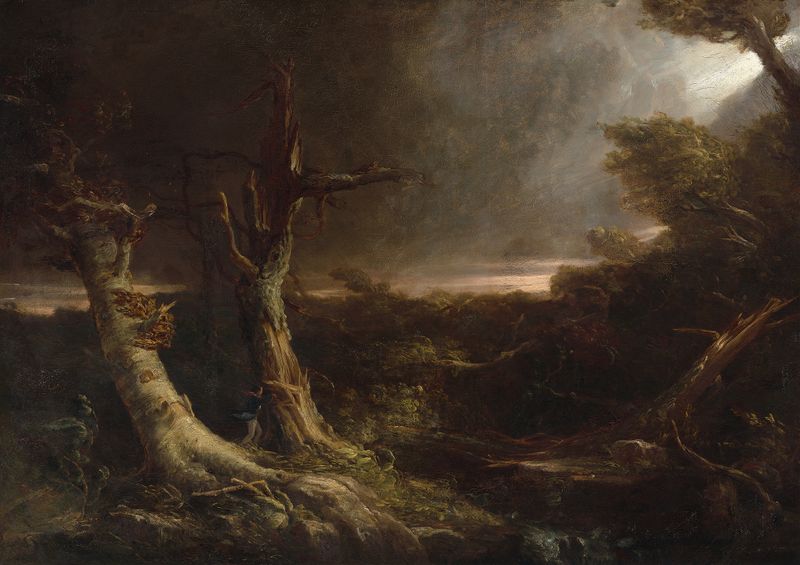
Tornado in an American Forest
Thomas Cole
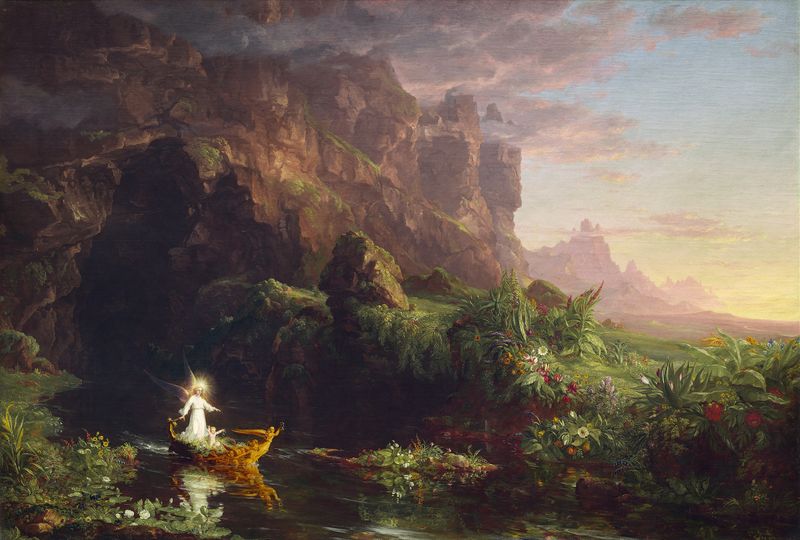
The Voyage of Life – Childhood
Thomas Cole





