
Architektonisches Capriccio; Tempelruine und Figurenstaffage — History & Facts
In the quiet corridors of art, echoes of bygone eras linger, waiting to be rediscovered. Look to the center of the composition, where ancient ruins rise like solemn sentinels against a muted sky. The meticulously rendered temple structure, weathered and crumbling, commands attention, inviting the eye to trace its intricate details. Notice how the soft hues of ochre and gray contrast with the vibrant greens of surrounding foliage, creating a serene yet melancholic atmosphere.
The careful balance of light and shadow enhances the sense of depth, drawing viewers into a world where history whispers through the silence. The juxtaposition of decay and life speaks volumes about the impermanence of human endeavors. Small figures scattered throughout the scene serve as reminders of humanity's fleeting presence amidst the grandeur of nature and time. Their stillness accentuates the surrounding silence, urging us to reflect on the legacy we leave behind.
Each brushstroke captures a moment where the past and present collide, revealing the tension between memory and oblivion. Victor-Jean Nicolle painted this work during a period of artistic exploration that emphasized classical themes and landscapes. Active in the late 18th to early 19th century, Nicolle drew inspiration from his travels in Italy, where he encountered the romantic allure of ancient ruins. This artwork reflects a time when artists sought to blend reality with imagination, creating idealized representations that resonate with the viewer's sense of nostalgia.
More Artworks by Victor-Jean Nicolle
Browse all →
Fontana di Trevi, gezien vanuit het Westen
Victor-Jean Nicolle
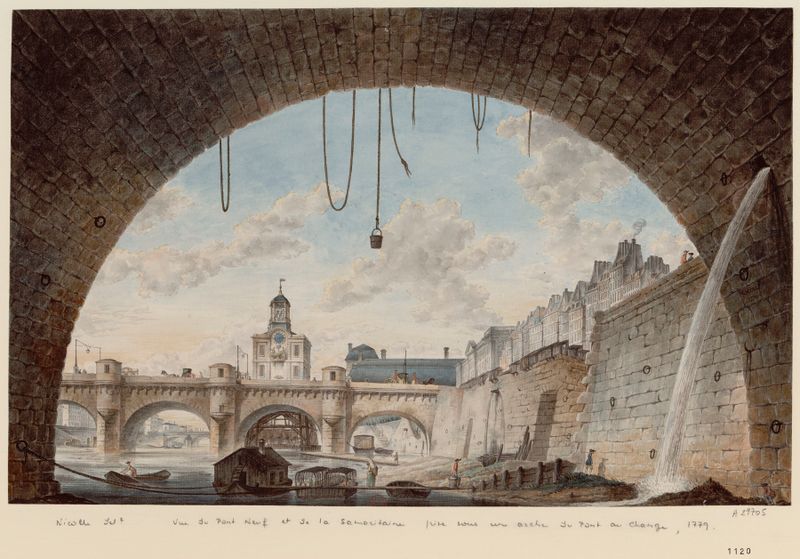
Vue du Pont Neuf et de la Samaritaine prise sous une arche du Pont au Change
Victor-Jean Nicolle
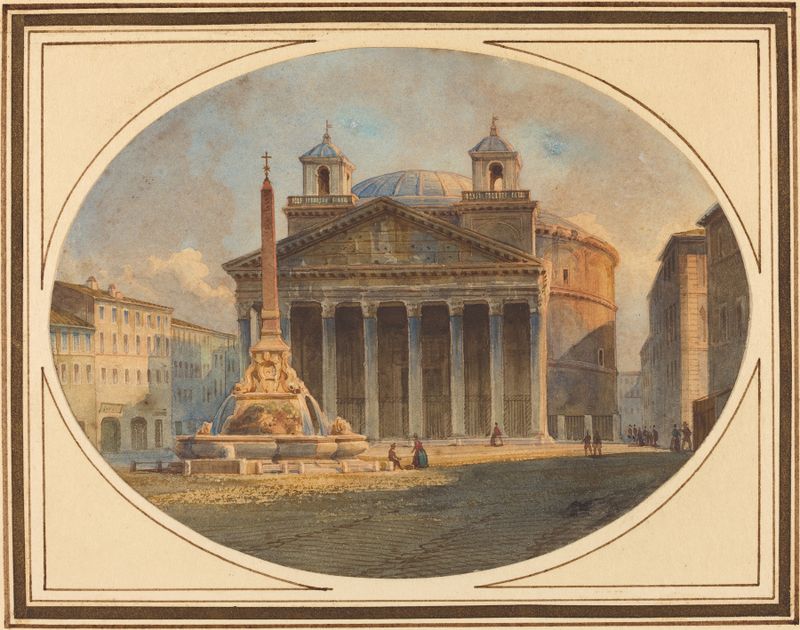
The Pantheon
Victor-Jean Nicolle
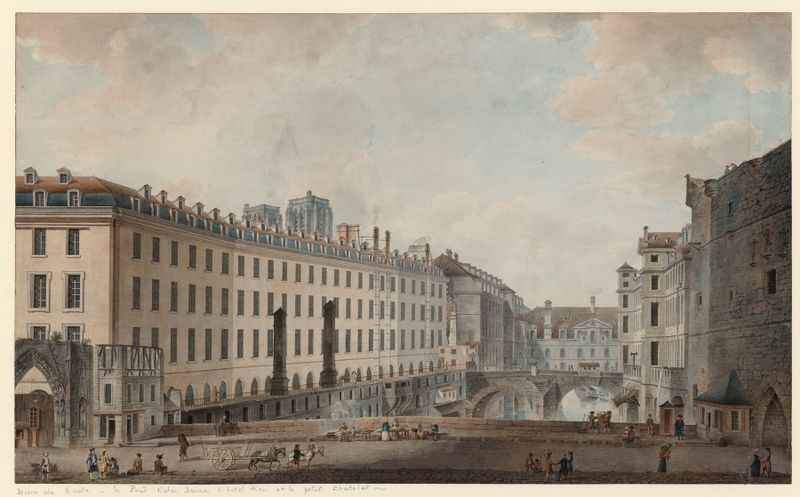
Le Pont au Double, l’Hôtel-Dieu et le Petit Châtelet
Victor-Jean Nicolle
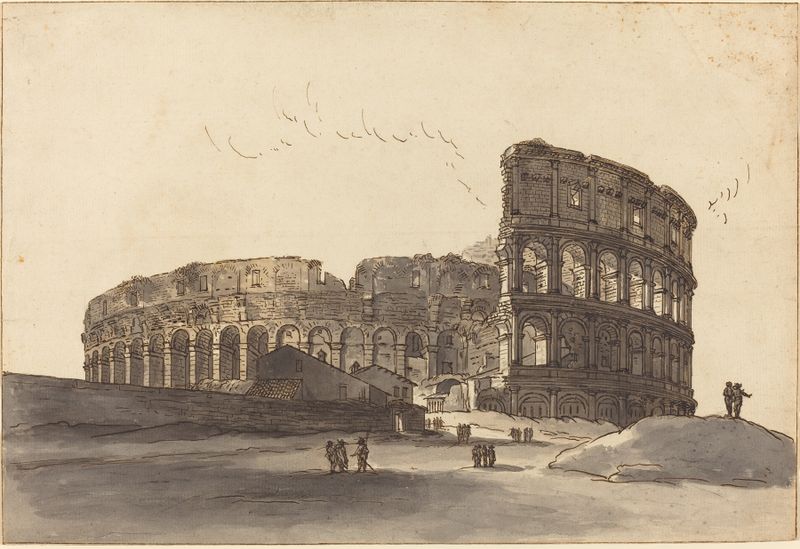
The Colosseum
Victor-Jean Nicolle
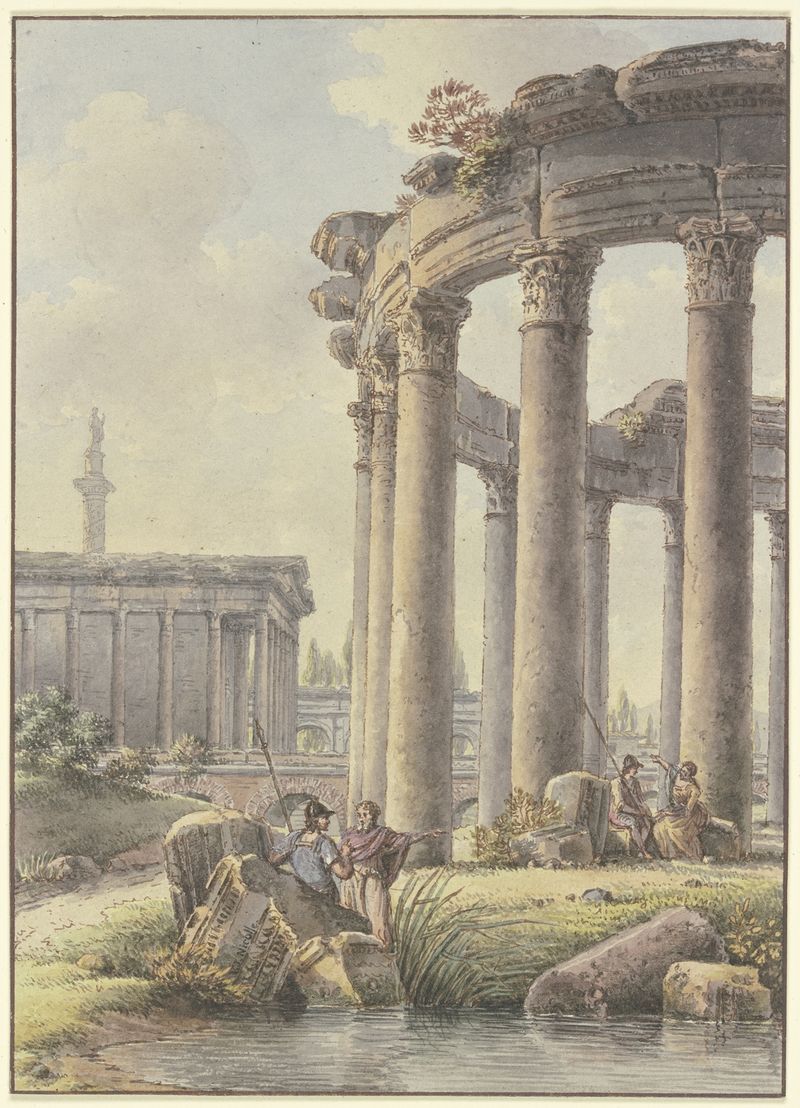
Architektonisches Capriccio; Ruinen eines Rundtempels, im Hintergrund die Trajansäule
Victor-Jean Nicolle
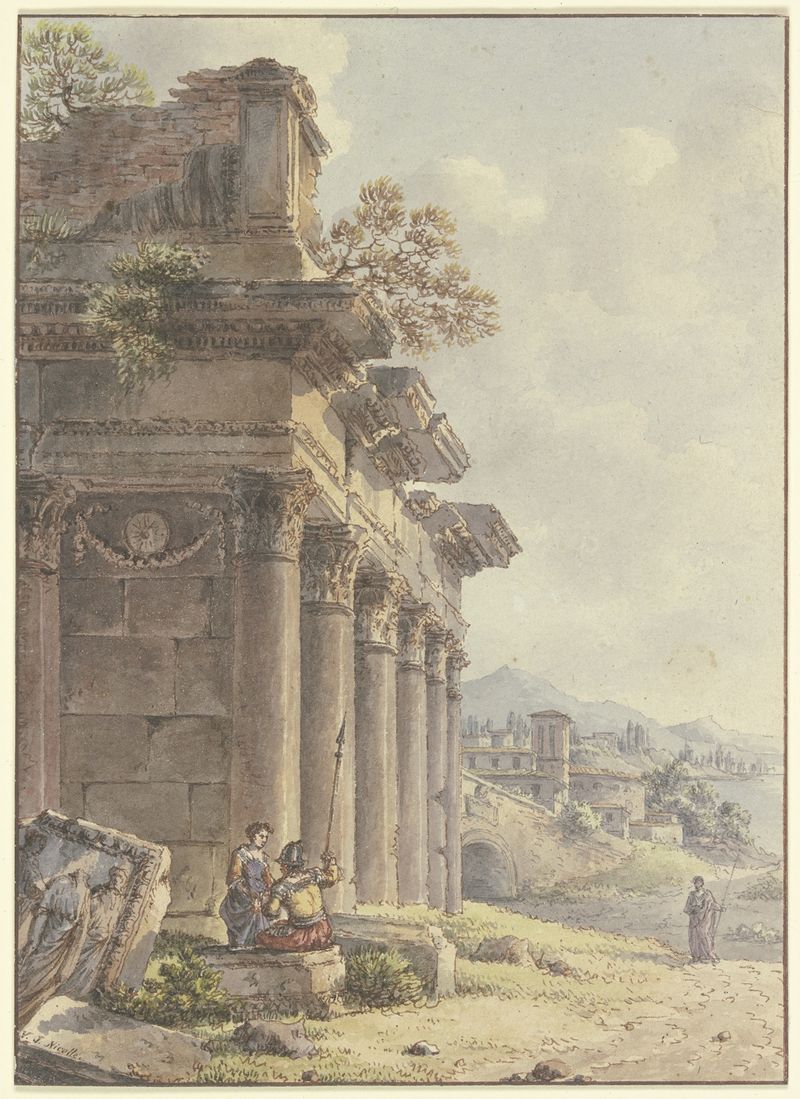
Architektonisches Capriccio; Ruinen einer Tempelfassade, im Hintergrund Landschaft mit Gebäuden und Seebucht
Victor-Jean Nicolle
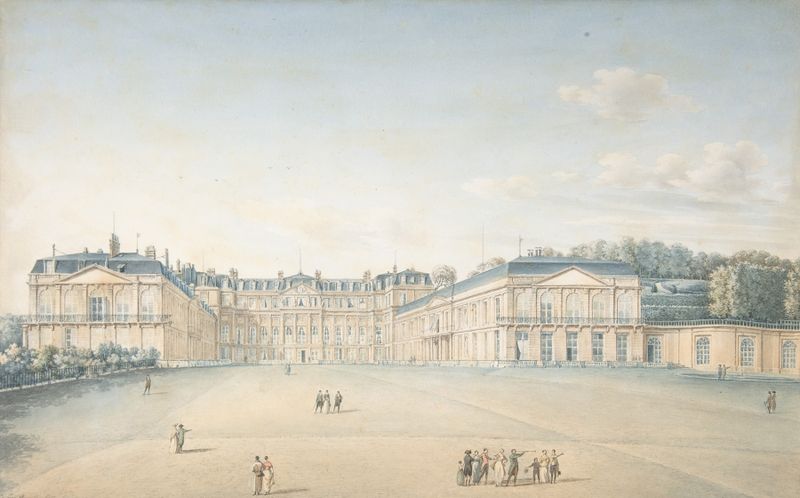
Courtyard of the Chateau de Saint-Cloud
Victor-Jean Nicolle

The Tiber at the Outskirts of Rome
Victor-Jean Nicolle
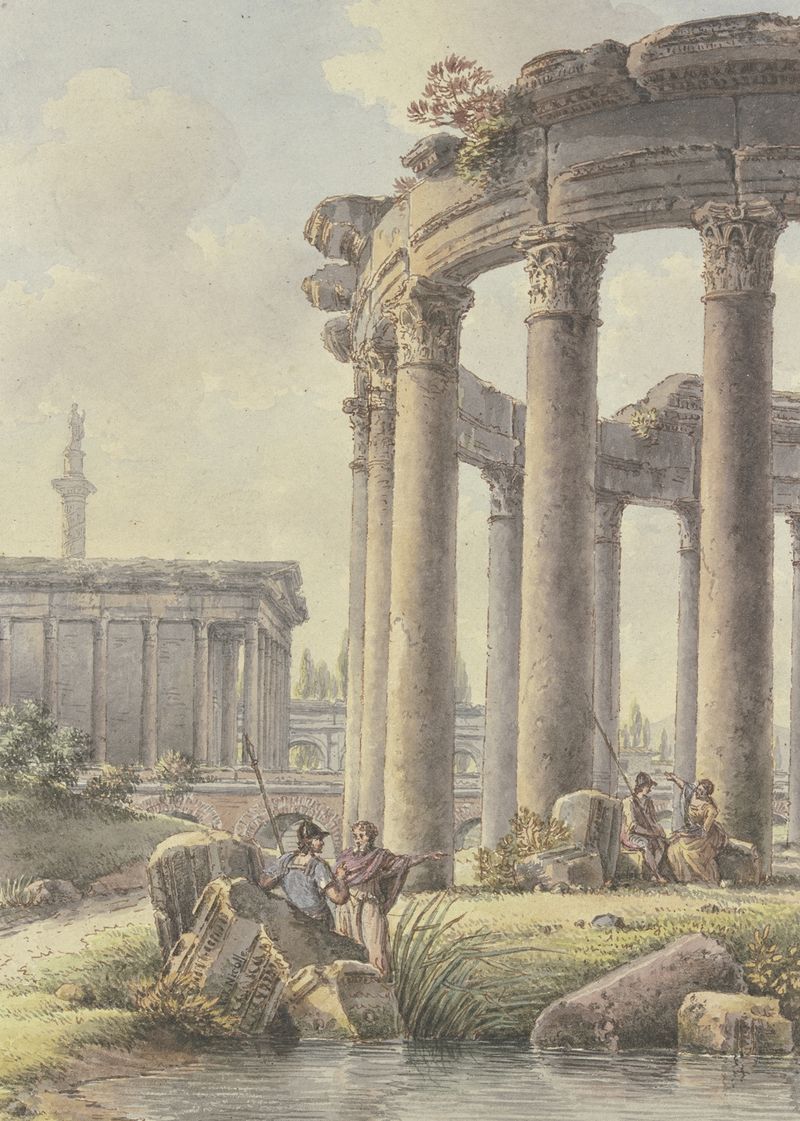
Architektonisches Capriccio, Ruinen eines Rundtempels, im Hintergrund die Trajansäule
Victor-Jean Nicolle
More Architecture Art
Browse all →
The statue of Liberty
Frédéric Auguste Bartholdi

View of Houses in Delft, Known as ‘The Little Street’
Johannes Vermeer

View of Houses in Delft, Known as ‘The Little Street’
Johannes Vermeer

The Cathedral in Rouen. The portal, Grey Weather
Claude Monet

The yellow house
Vincent van Gogh

The Church in Auvers-sur-Oise, View from the Chevet
Vincent van Gogh