
Fontana di Trevi, gezien vanuit het Westen — History & Facts
Can paint confess what words never could? The interplay of light and shadow in Fontana di Trevi, gezien vanuit het Westen speaks volumes, revealing layers of emotion often left unspoken. Look to the foreground, where the rushing water captures the shimmering light, creating a tapestry of reflections that dance across the surface. The vibrant brushwork imbues the stone architecture with warmth, while the cool tones of the pool contrast sharply, inviting viewers to immerse themselves in the scene. The artist’s choice of perspective draws the eye upward, leading to the imposing statues that seem to converse with the sky, seamlessly bridging the earthly and the divine. Within this masterpiece lies a dialogue between history and ephemerality.
The cascading water, forever flowing yet perpetually still in its painted form, hints at the passage of time and our fleeting moments. The intricate detailing of each figure evokes a sense of reverence, while the overall composition gestures towards the interconnectedness of humanity and nature, inviting contemplation on our own reflections and desires. Victor-Jean Nicolle painted this scene between 1787 and 1811, during a period when the neoclassical movement was flourishing in Europe. Living in Rome during this time, he was influenced by the grandeur of the city's architecture and the rich history encapsulated within its streets.
This work stands as both a testament to his skill and a reflection of an era enamored with the past yet yearning for the future.
More Artworks by Victor-Jean Nicolle
Browse all →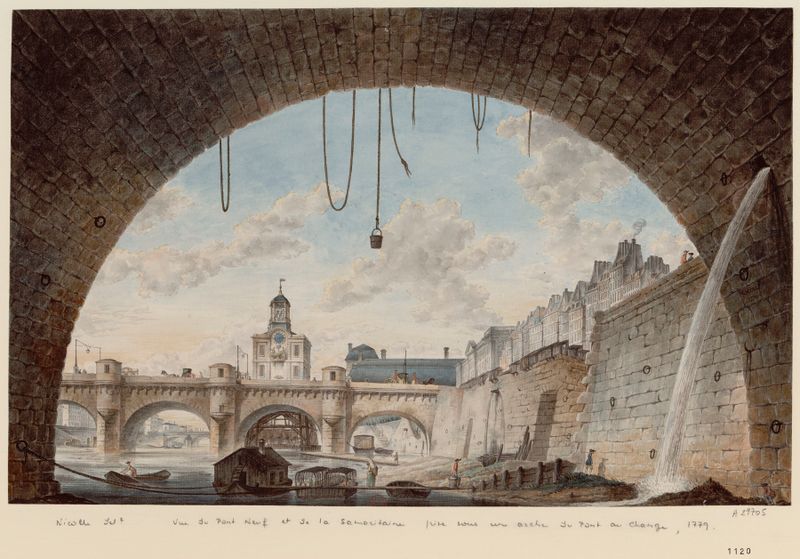
Vue du Pont Neuf et de la Samaritaine prise sous une arche du Pont au Change
Victor-Jean Nicolle
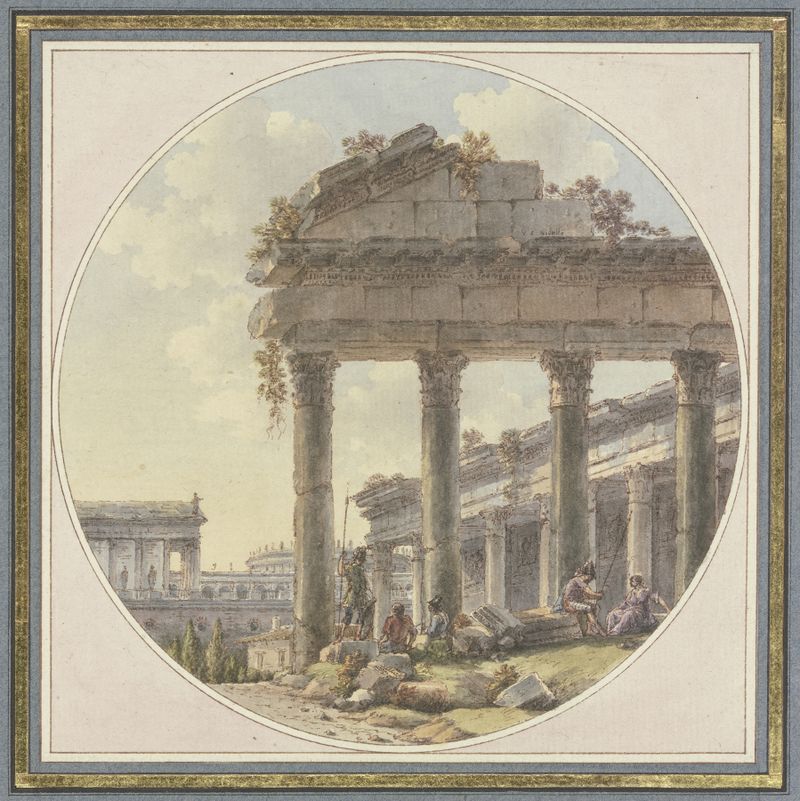
Architektonisches Capriccio; Tempelruine und Figurenstaffage
Victor-Jean Nicolle
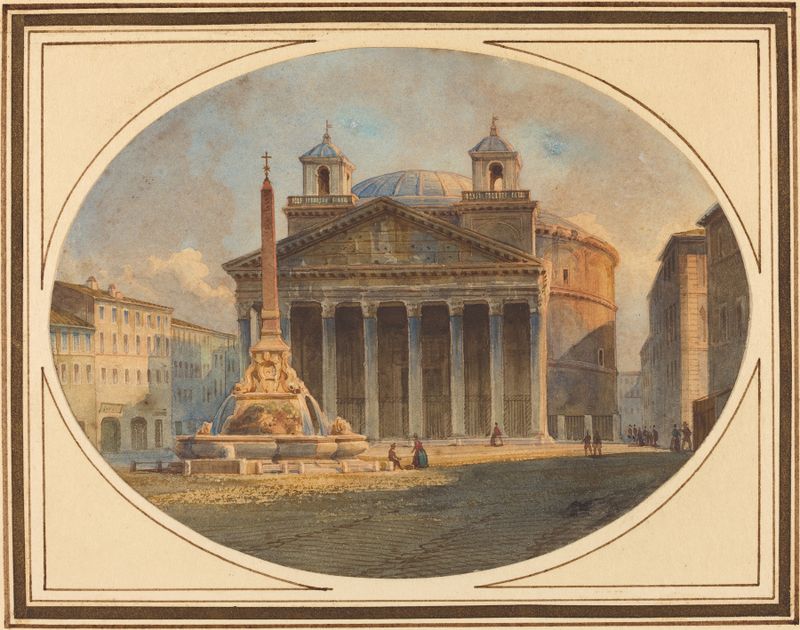
The Pantheon
Victor-Jean Nicolle
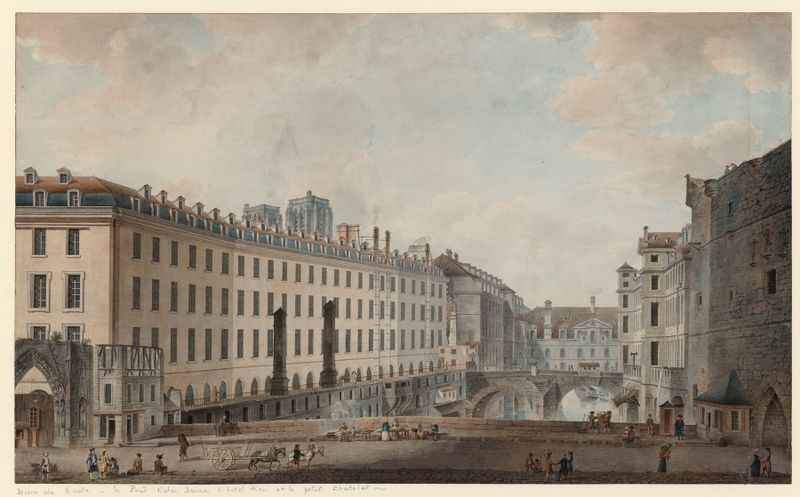
Le Pont au Double, l’Hôtel-Dieu et le Petit Châtelet
Victor-Jean Nicolle
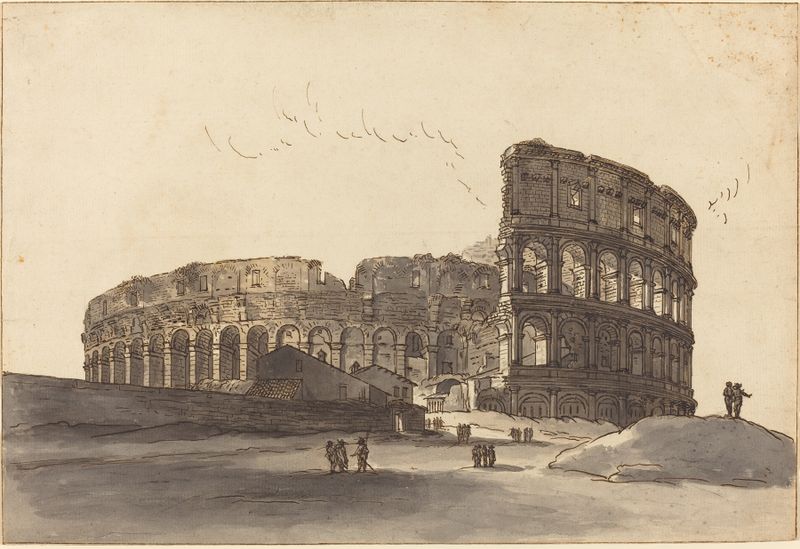
The Colosseum
Victor-Jean Nicolle
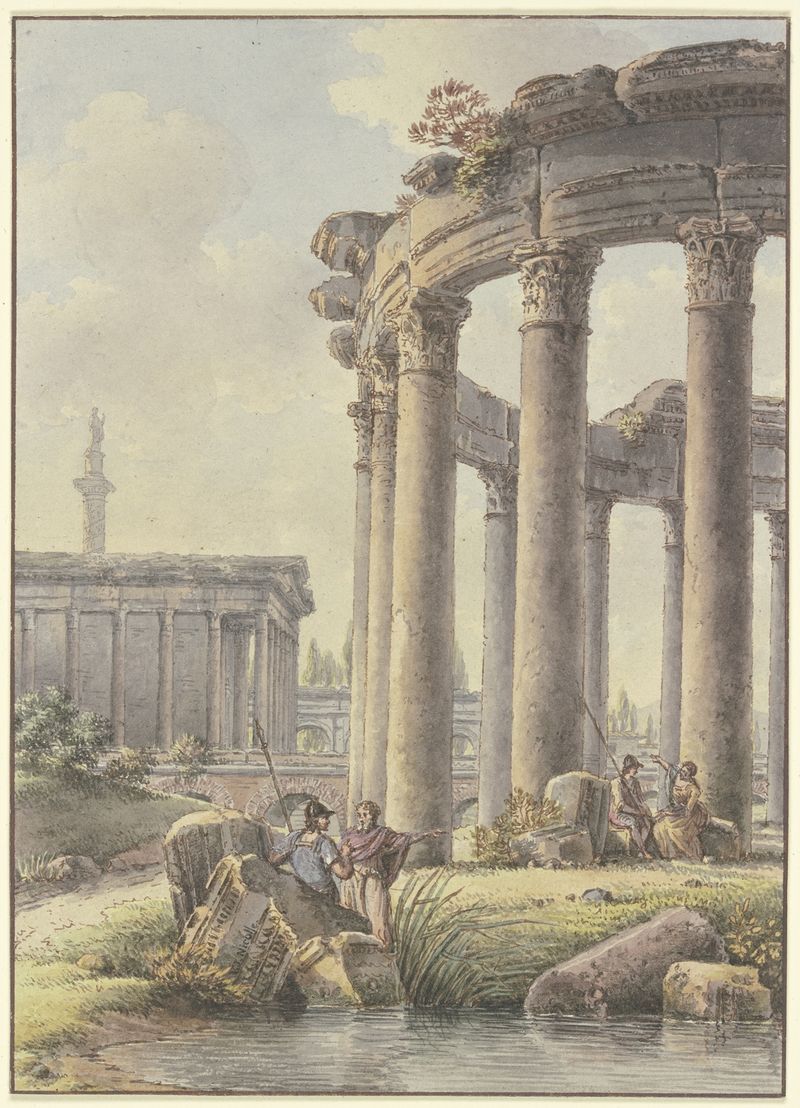
Architektonisches Capriccio; Ruinen eines Rundtempels, im Hintergrund die Trajansäule
Victor-Jean Nicolle
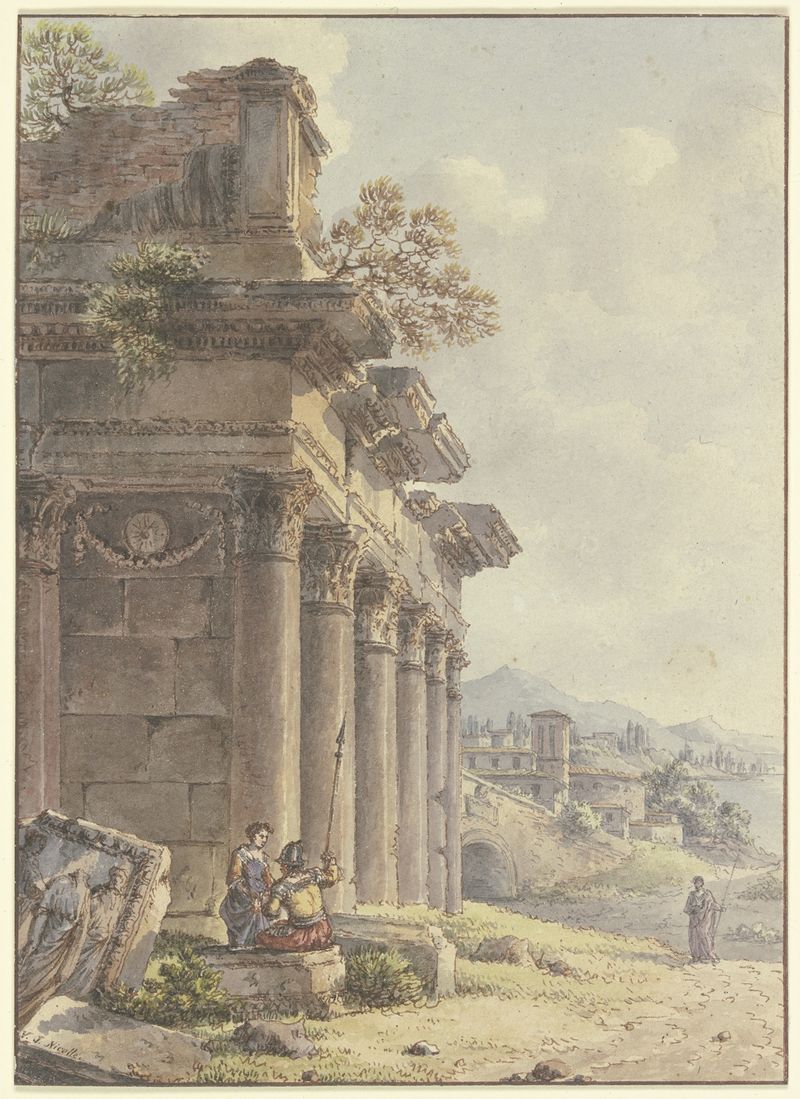
Architektonisches Capriccio; Ruinen einer Tempelfassade, im Hintergrund Landschaft mit Gebäuden und Seebucht
Victor-Jean Nicolle
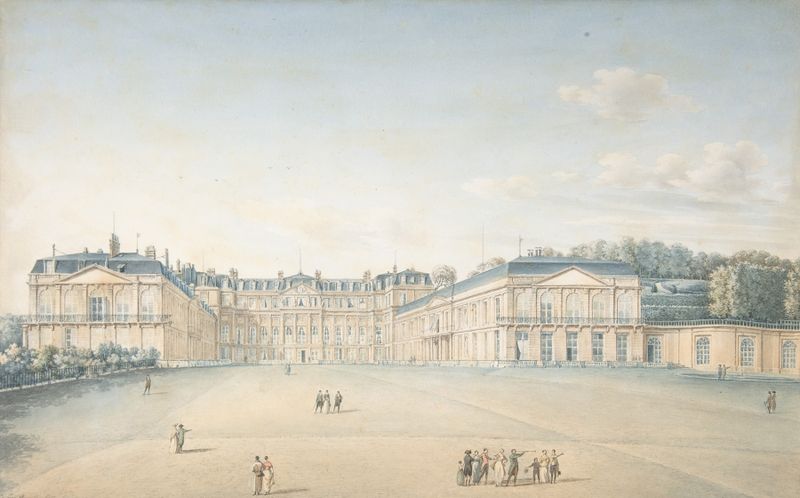
Courtyard of the Chateau de Saint-Cloud
Victor-Jean Nicolle

The Tiber at the Outskirts of Rome
Victor-Jean Nicolle
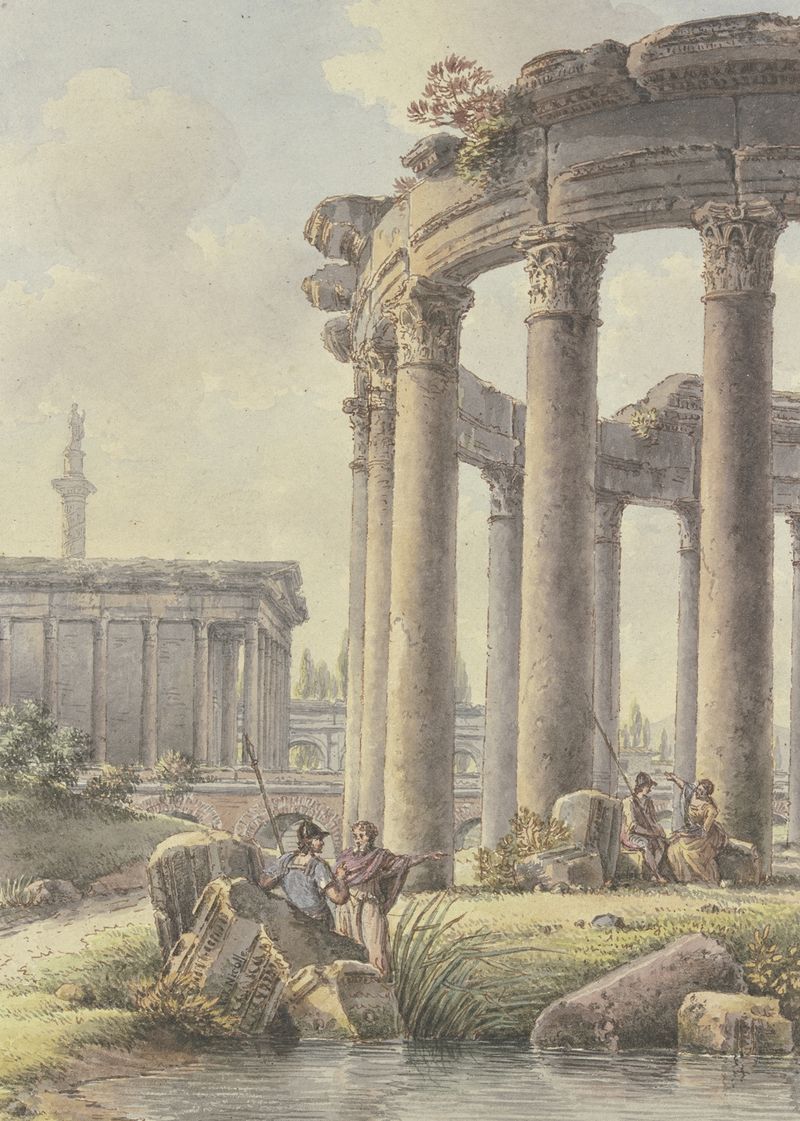
Architektonisches Capriccio, Ruinen eines Rundtempels, im Hintergrund die Trajansäule
Victor-Jean Nicolle
More Architecture Art
Browse all →
The statue of Liberty
Frédéric Auguste Bartholdi

View of Houses in Delft, Known as ‘The Little Street’
Johannes Vermeer

View of Houses in Delft, Known as ‘The Little Street’
Johannes Vermeer

The Cathedral in Rouen. The portal, Grey Weather
Claude Monet

The yellow house
Vincent van Gogh

The Church in Auvers-sur-Oise, View from the Chevet
Vincent van Gogh