
Arrival of the Guests — History & Facts
What draws the eye first in Arrival of the Guests is the careful choreography of anticipation: figures pause at the threshold of a stately house, horses held at rest, while a lone woman waits at the doorway, poised to greet her visitors. The scene is arranged with a storyteller’s sense for suspense—no one is yet inside, and the moment is all about arrival, expectation, and the rituals of welcome. Aert van der Neer’s palette is gentle but clear, with the cool blue of the sky opening into a vast, almost theatrical landscape, setting the drama of human encounter against the calm of nature.
The great tree at center, gnarled and sheltering, anchors the composition and seems to lean toward the house, as if echoing the guests’ movement. Every gesture is purposeful: the riders dismounting, the figures in conversation, the subtle tilt of heads and hands, all signaling the social choreography of the Dutch Golden Age. This is a world shaped by the rhythms of travel and hospitality, painted at a time when the Dutch landscape genre flourished as a mirror of national pride and daily life. In the 17th century, scenes like this were prized by a rising middle class eager to see their own values—order, civility, and connection—reflected on their walls.
Aert van der Neer is best known for his atmospheric moonlit rivers and winter scenes, but here he turns his attention to the rituals of arrival, capturing not just a place but a social moment. The painting’s oval format, unusual and intimate, invites the viewer to step closer, to become a silent guest at this gathering. Now part of the Toledo Museum of Art’s collection, the work stands as a quiet record of both a vanished world and the enduring pleasures of anticipation—inviting us to linger, to imagine the welcome that is about to unfold.
More Artworks by Aert van der Neer

A Moonlit River Landscape With Figures Standing By A Gate, A Village Beyond
Aert van der Neer
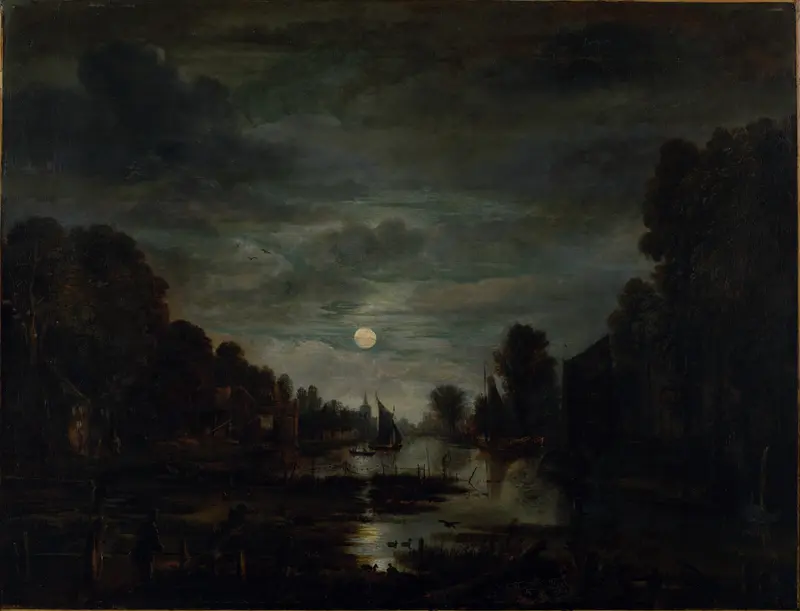
River Landscape in Moonlight
Aert van der Neer
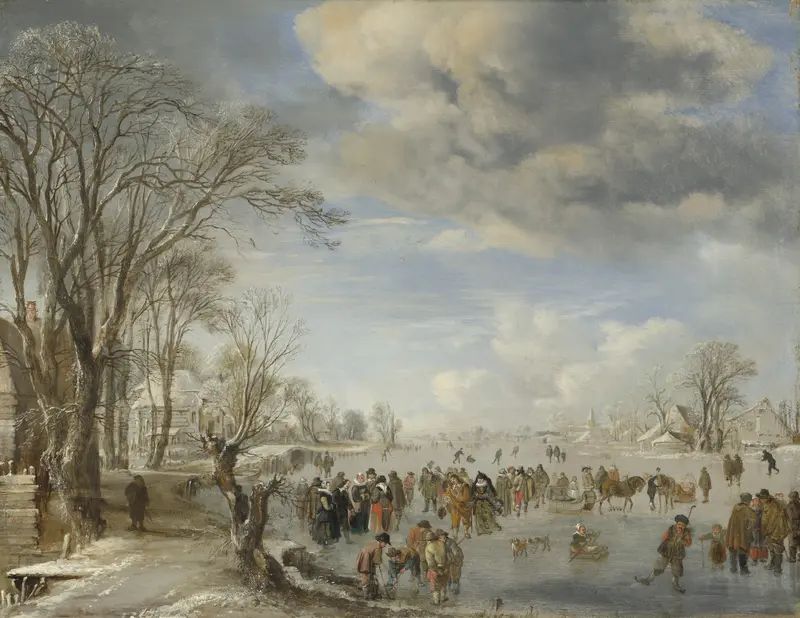
Winter in Holland – Skating Scene
Aert van der Neer

River Landscape
Aert van der Neer
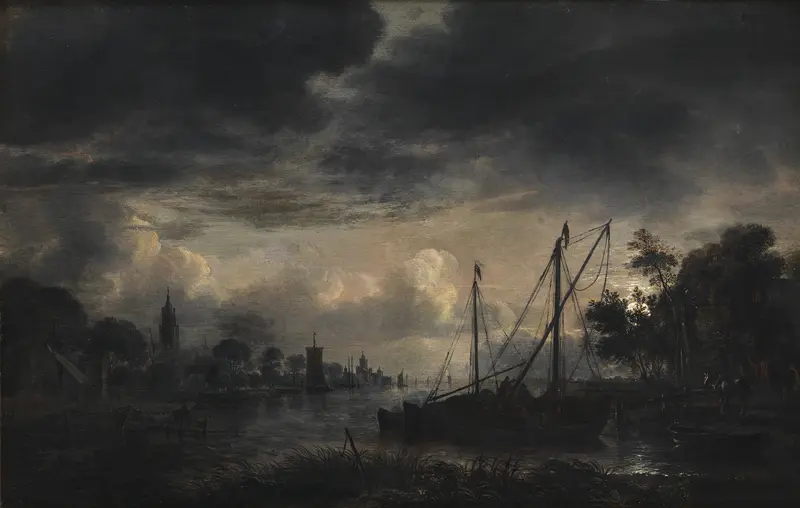
River Landscape in Moonlight
Aert van der Neer
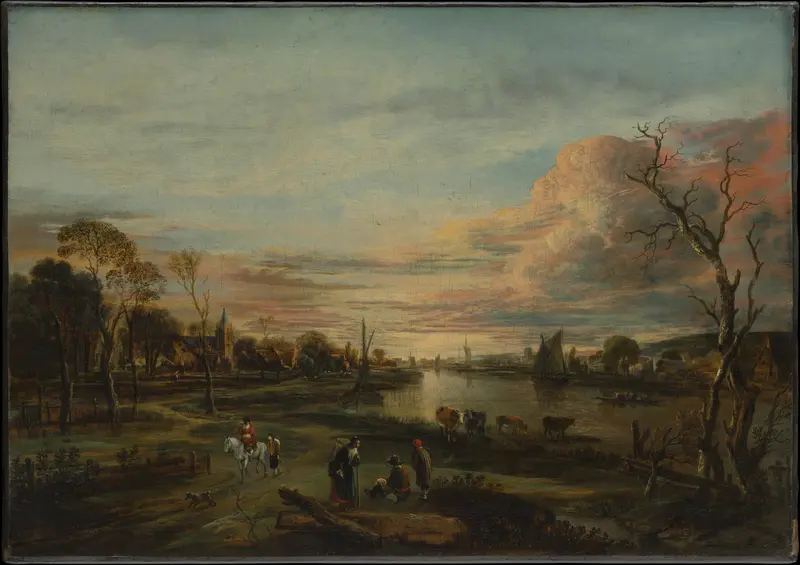
Landscape at Sunset
Aert van der Neer
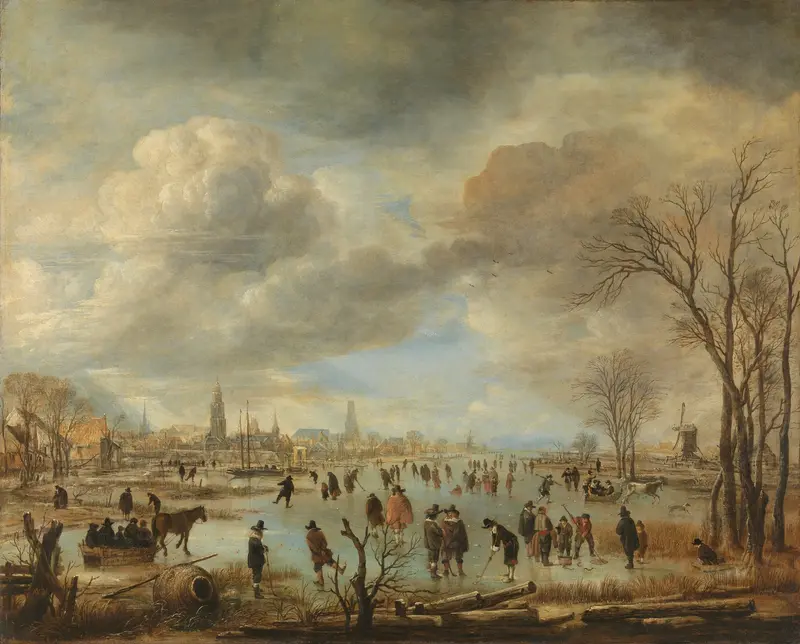
Winter Landscape near a Town with Kolf Players and Horse-Drawn Sleighs
Aert van der Neer

Winter Landscape with Skaters on a Frozen River
Aert van der Neer
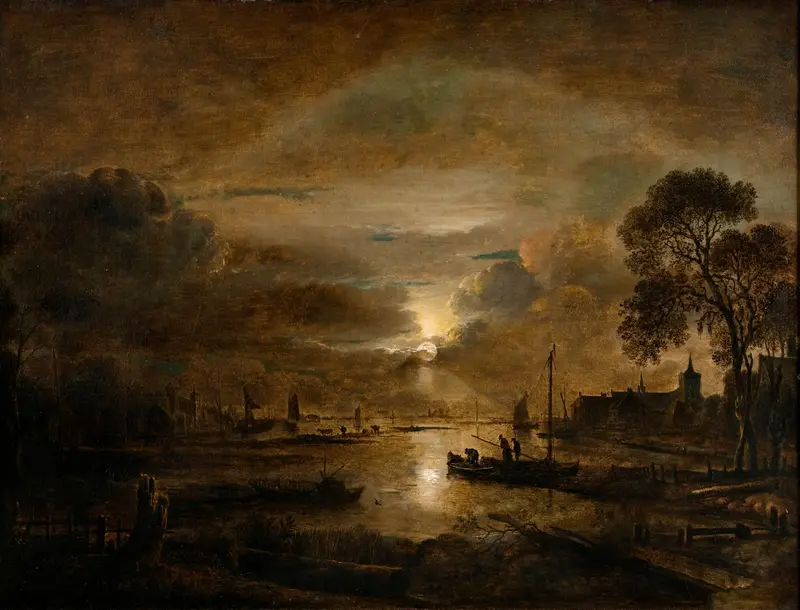
Moonlight at a Dutch River
Aert van der Neer
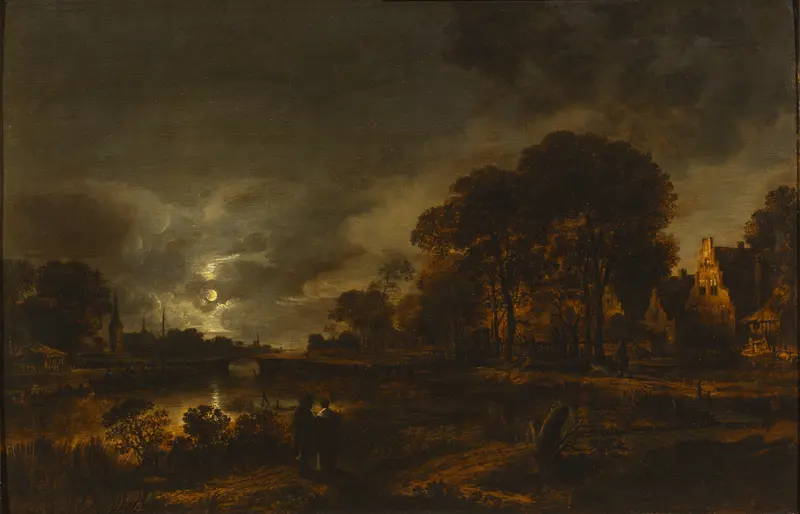
Moonlight Landscape
Aert van der Neer
More Genre Scene Art

Banquet of the Officers of the St George Civic Guard
Frans Hals

Rembrandt and Saskia in the Scene of the Prodigal Son
Rembrandt van Rijn

Bal du moulin de la Galette
Pierre-Auguste Renoir

Quadrille at the Moulin Rouge
Henri de Toulouse-Lautrec

A Burial at Ornans
Gustave Courbet

When Will You Marry?
Paul Gauguin