
Artists’ festival in Cervara — History & Facts
In the void that often surrounds creative souls, moments of profound emptiness can lead to unexpected beauty. How do we navigate the silence between our thoughts and our actions? Focus on the expansive canvas, where swathes of color intertwine like the whispers of forgotten dreams. Notice how the vibrant hues of red and gold leap forward, drawing your attention to the spirited figures at the center of the festival.
The subtle interplay of light and shadow enhances the emotional weight of each figure, suggesting joy intertwined with a hint of melancholy. It is as if the artist has captured not just a celebration but also the underlying solitude that can exist in a crowd. Delve into the expressions of the attendees, a mix of exuberance and introspection, revealing the duality of human experience. The empty background evokes a sense of isolation amidst the festivity, suggesting that even in moments of connection, there can be an invisible barrier.
This contrast serves to highlight the deeper emotional currents flowing beneath the surface, where joy can coexist with an undercurrent of longing. Carl Morgenstern painted this piece in 1837 while living in Germany. During this period, he was immersed in the Romantic movement, which sought to express emotion and individualism in art. The festival in Cervara, a picturesque Italian town, may have inspired him to explore the vibrant interplay of community and solitude.
As the world around him shifted, with the rise of industrialization and changing social dynamics, he captured a moment that reflects both celebration and the human condition's inherent loneliness.
More Artworks by Carl Morgenstern
Browse all →
Südliche Küstenlandschaft
Carl Morgenstern

Im Park von Ariccia
Carl Morgenstern

Seelandschaft Cefalù, Sicily
Carl Morgenstern

View of Frankfurt on the Main
Carl Morgenstern
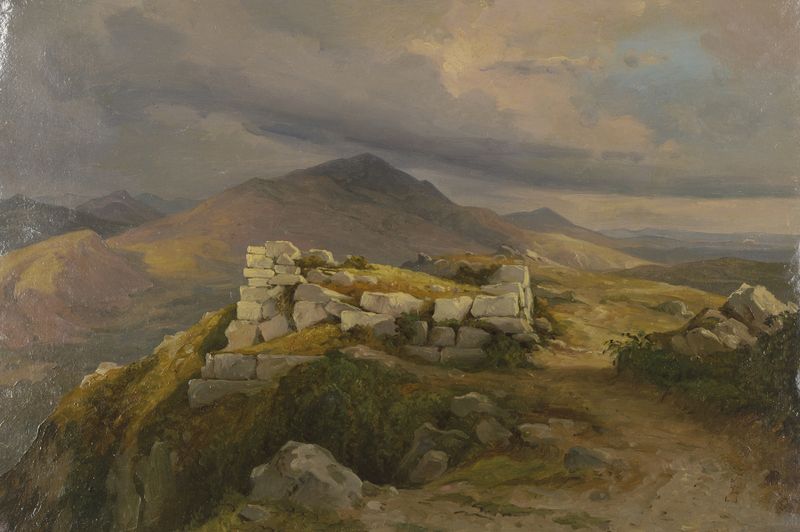
Eine Zyklopenmauer bei Civitella, dem heutigen Bellegra
Carl Morgenstern
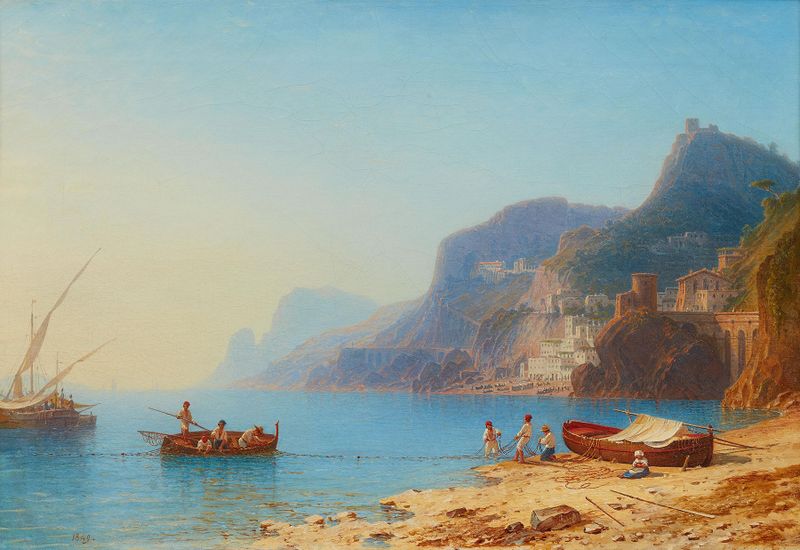
Ansicht von Villafranca (Villefranche-sur-Mer) bei Nizza
Carl Morgenstern

View of Mainz on the Rhine
Carl Morgenstern
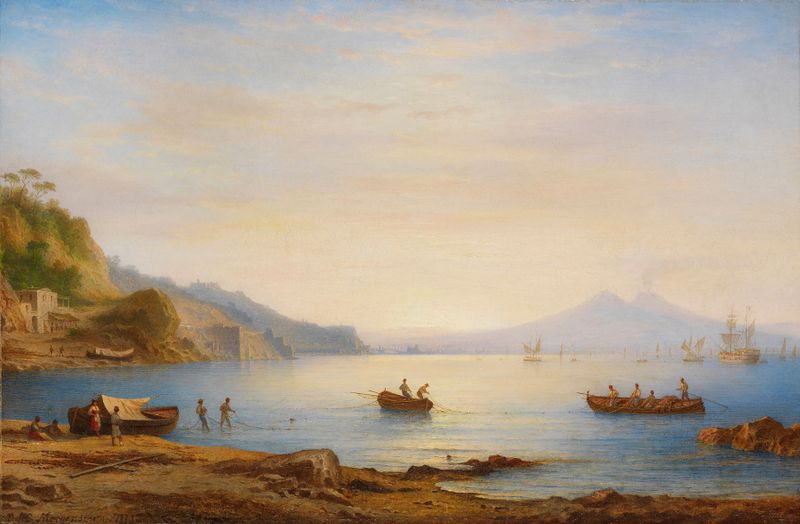
Bucht vor Neapel mit Blick auf den Vesuv
Carl Morgenstern
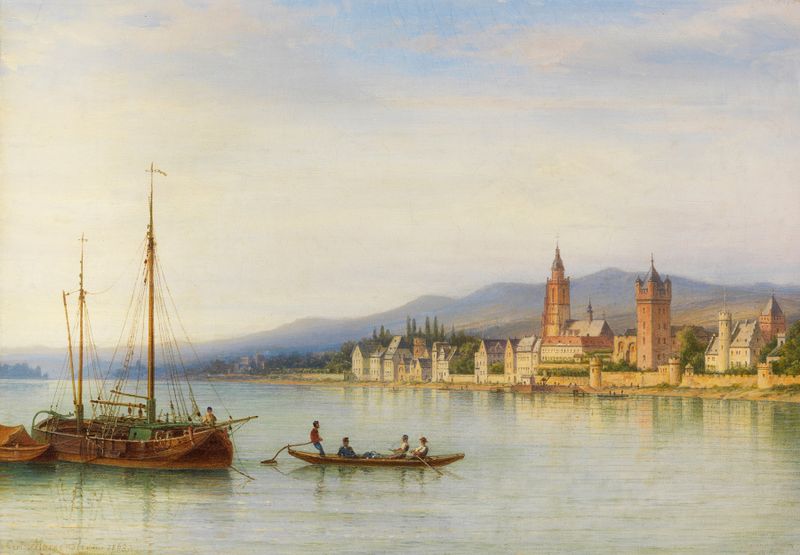
Eltville am Rhein
Carl Morgenstern
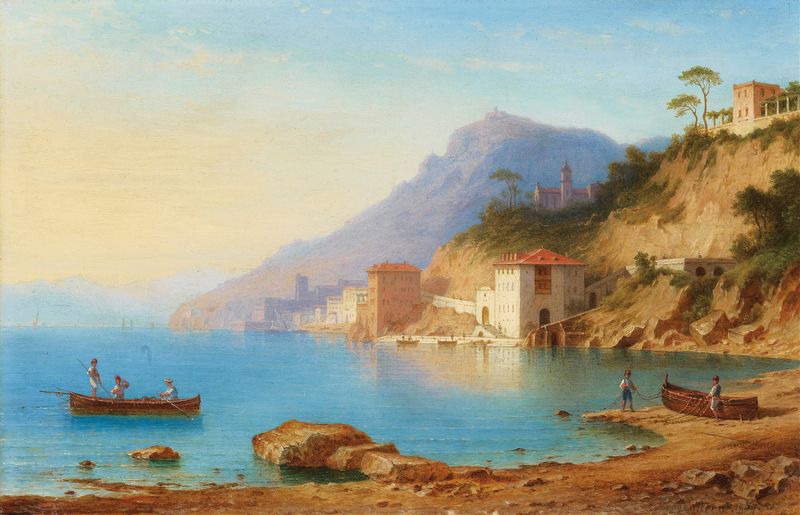
View of the Amalfi coast
Carl Morgenstern





