
Artists Returning from the Salon — History & Facts
In the delicate interplay between the visible and the unseen, faith emerges as a silent witness to the artists’ journey. Look to the left at the group of figures, cloaked in their rich, dark garments, their expressions a blend of contemplation and hope. The muted palette of browns and grays allows the subtle contrasts to breathe life into their faces, while the brushwork captures the fine details of their attire, evoking a sense of authenticity. Notice how the light, soft and diffused, washes over them, inviting us to share in their intimate moment of reflection as they emerge from the Salon. Here, the tension lies between the artists’ aspirations and the realities they face.
The distance between them and the viewer symbolizes the gulf often felt in the pursuit of artistic recognition. Each figure, with their unique posture and gaze, tells a story of faith in their craft, even as the uncertainty of reception looms large. The shadows cast across the cobblestones hint at both the burden of expectation and the hope for validation, intertwining doubt and devotion. In 1877, Buhot painted this piece against the backdrop of a burgeoning art scene in Paris, where salons dictated trends and acceptance was fraught with challenge.
Struggling to carve his own path within this competitive landscape, he sought to capture the essence of the artist’s experience, blending personal narrative with broader artistic themes. This moment was pivotal as it not only reflected his own life but also resonated with the changing tides of impressionist thought surrounding him.
More Artworks by Félix Hilaire Buhot
Browse all →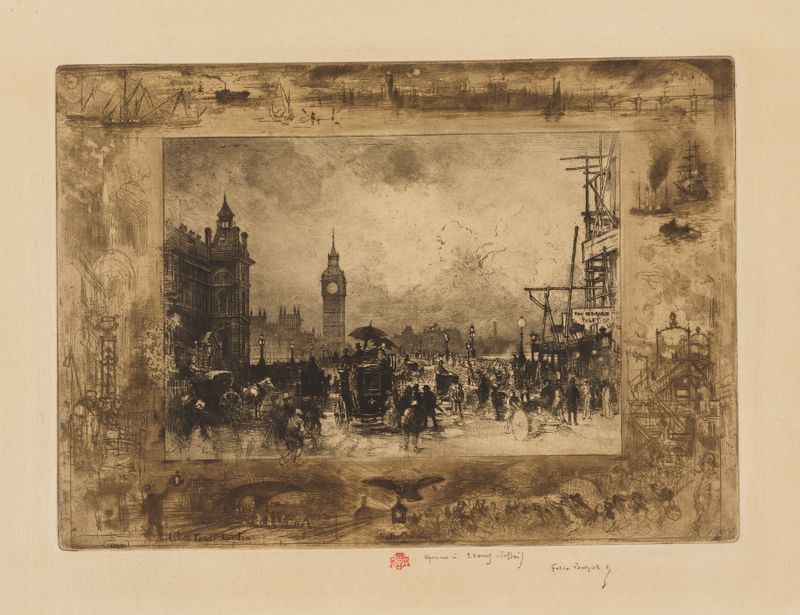
Westminster Bridge, or Westminster Clock Tower
Félix Hilaire Buhot
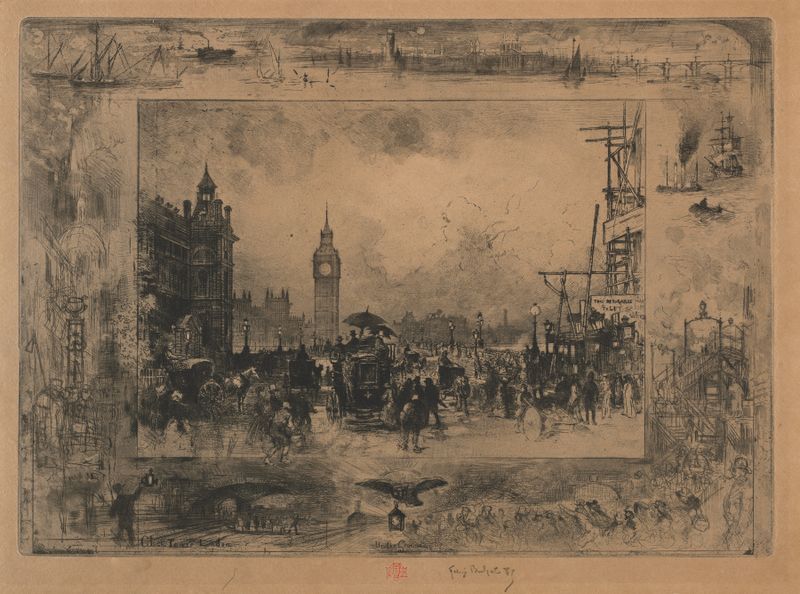
Westminster Bridge, or Westminster Tower
Félix Hilaire Buhot
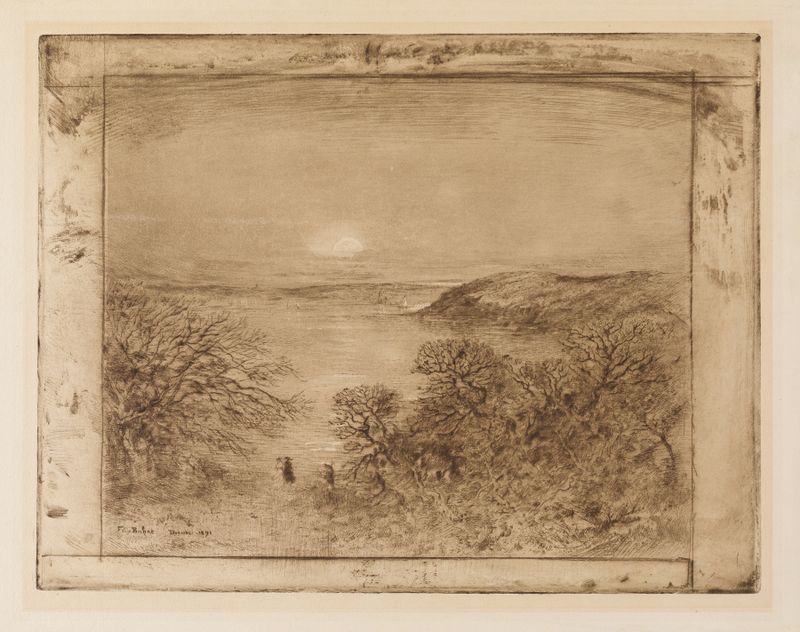
Moonrise at Dinard
Félix Hilaire Buhot
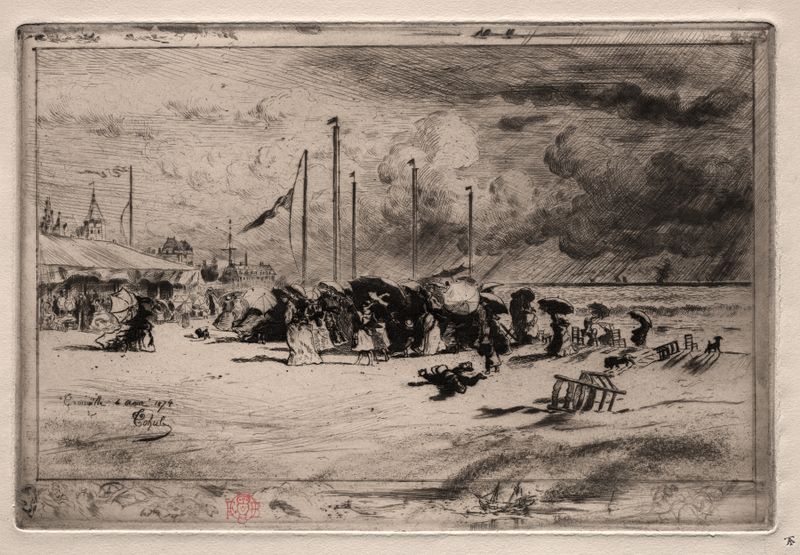
A Squall at Trouville
Félix Hilaire Buhot
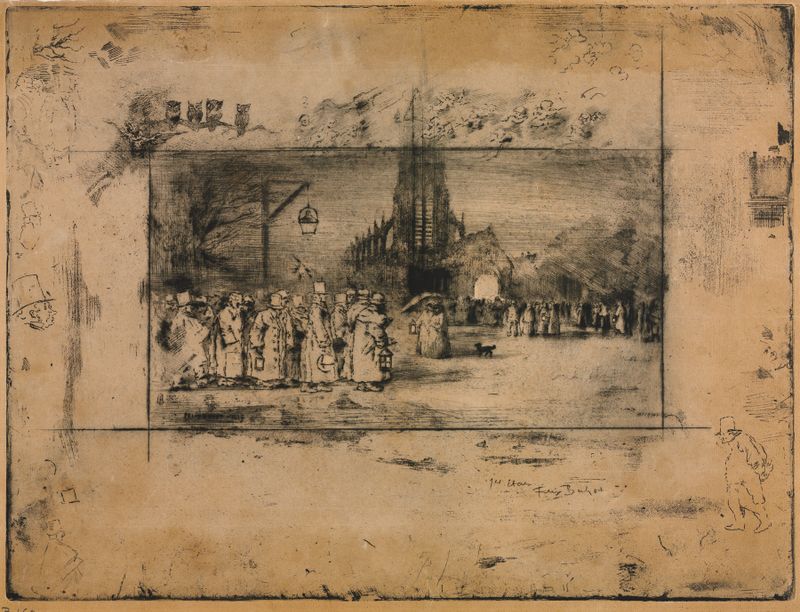
The Midnight Mass
Félix Hilaire Buhot
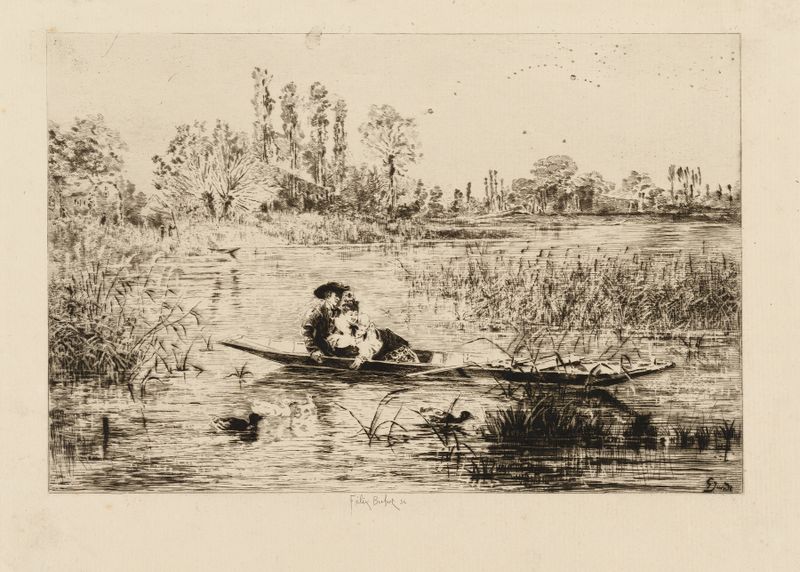
On the Thread of the Water
Félix Hilaire Buhot
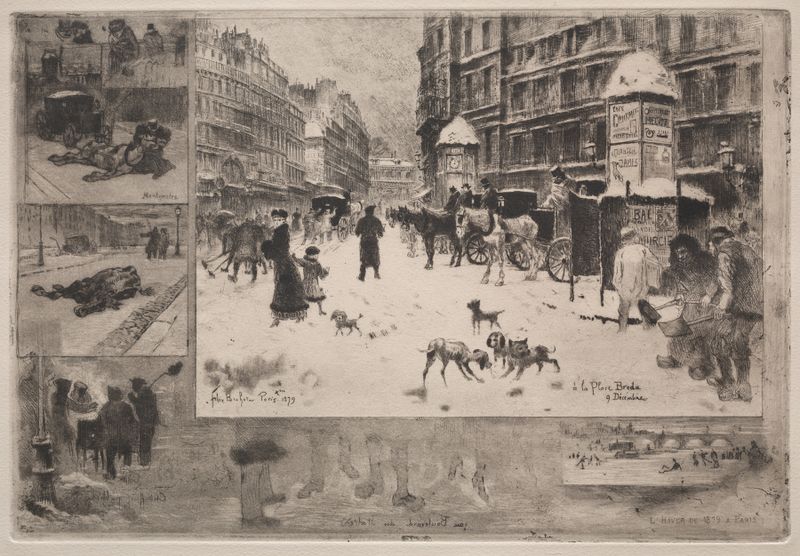
Winter in Paris
Félix Hilaire Buhot
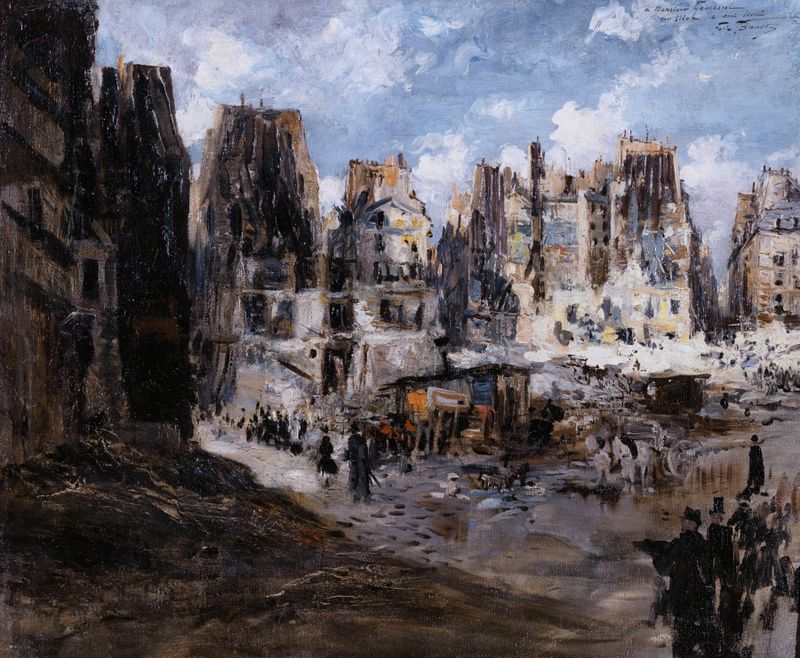
Le percement de l’avenue de l’Opéra.
Félix Hilaire Buhot
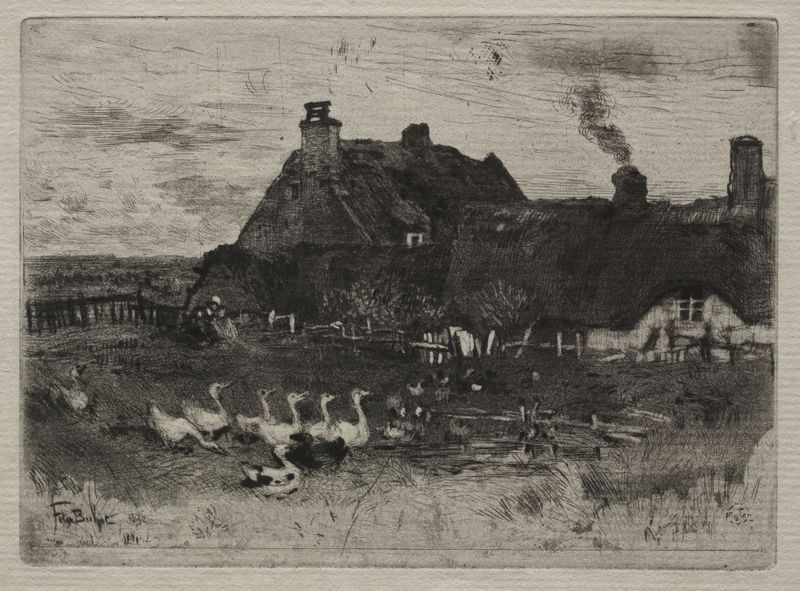
Thatched Cottages
Félix Hilaire Buhot
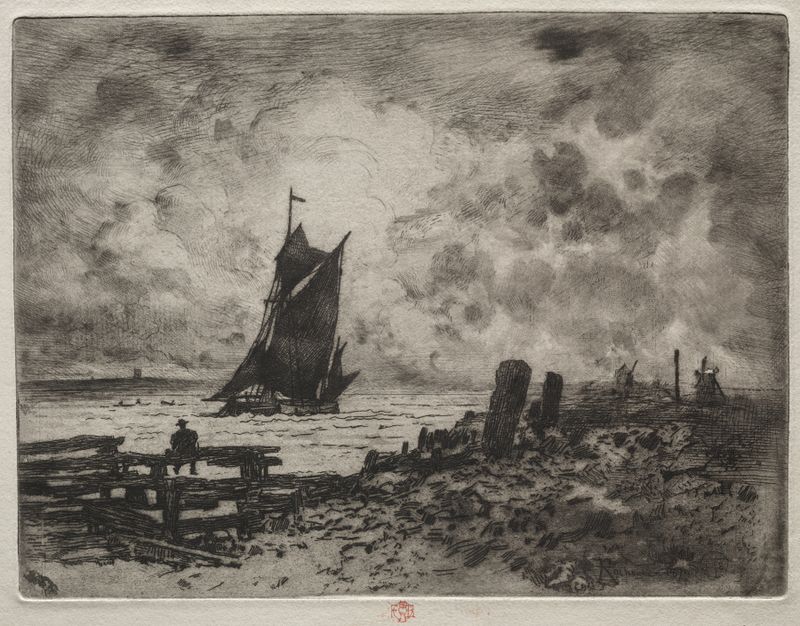
The Little Marine; Souvenir of Medway
Félix Hilaire Buhot





