
Le percement de l’avenue de l’Opéra. — History & Facts
In the delicate interplay of light and shadow, the essence of a moment captured transcends the boundaries of mere observation, transforming into a reservoir of collective memory. Look closely at the foreground, where the luminous strokes illuminate the bustling scene, revealing figures caught in the gentle embrace of a Parisian afternoon. The careful layering of colors creates a sense of depth; milky whites and soft yellows mix harmoniously, evoking the warmth of sunlight filtering through the trees. A vibrant splatter of red in a passerby’s scarf draws your eye, inviting you into the heart of the action, while the elongated shadows hint at the passage of time, grounding the scene in reality. Yet, beneath this bright exterior lies a subtle tension.
The juxtaposition of the rigid architecture against the fluid movement of pedestrians speaks to the contrast between progress and tradition — the city’s heartbeat against its historical roots. Notice how the distant figures appear blurred, suggesting the relentless pace of life in urbanity, while the crisp detail of the foreground invites contemplation. This duality reflects the artist's keen observation of the world, urging viewers to confront the ephemeral nature of existence. During the creation of this piece in 1878, the artist was immersed in the vibrant transformations of Paris, influenced by the rise of Impressionism.
Buhot's work reflects the optimism and dynamism of a city undergoing immense change, where the promise of modernity clashed with the lingering vestiges of the past. It was a time when the streets were not only a canvas for art but a stage for life itself, full of possibilities and fleeting moments.
More Artworks by Félix Hilaire Buhot
Browse all →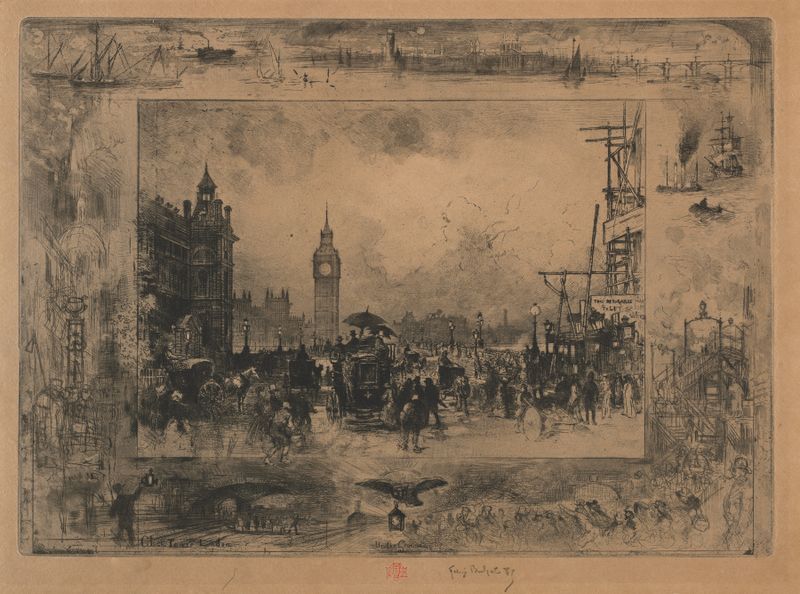
Westminster Bridge, or Westminster Tower
Félix Hilaire Buhot
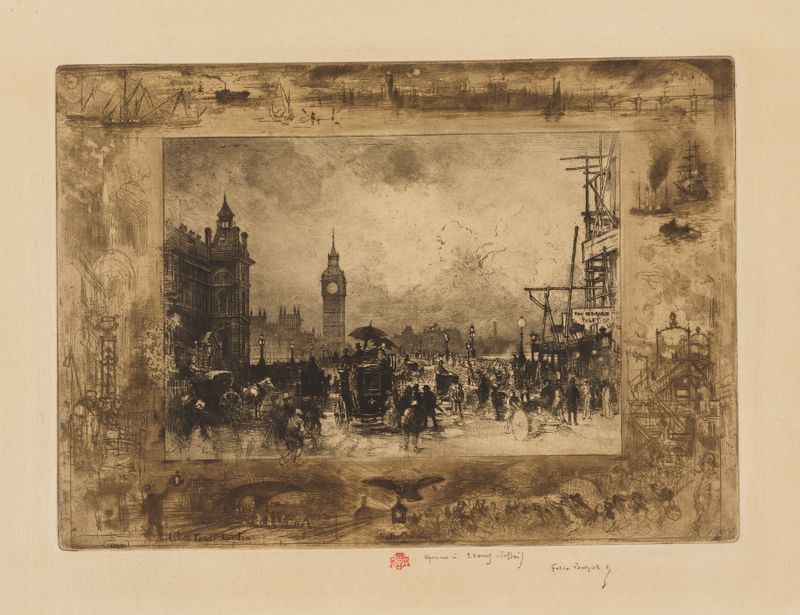
Westminster Bridge, or Westminster Clock Tower
Félix Hilaire Buhot
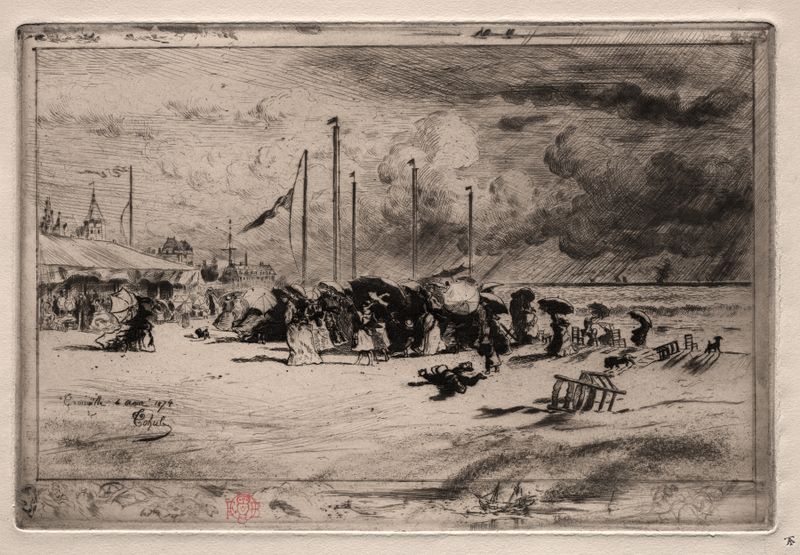
A Squall at Trouville
Félix Hilaire Buhot
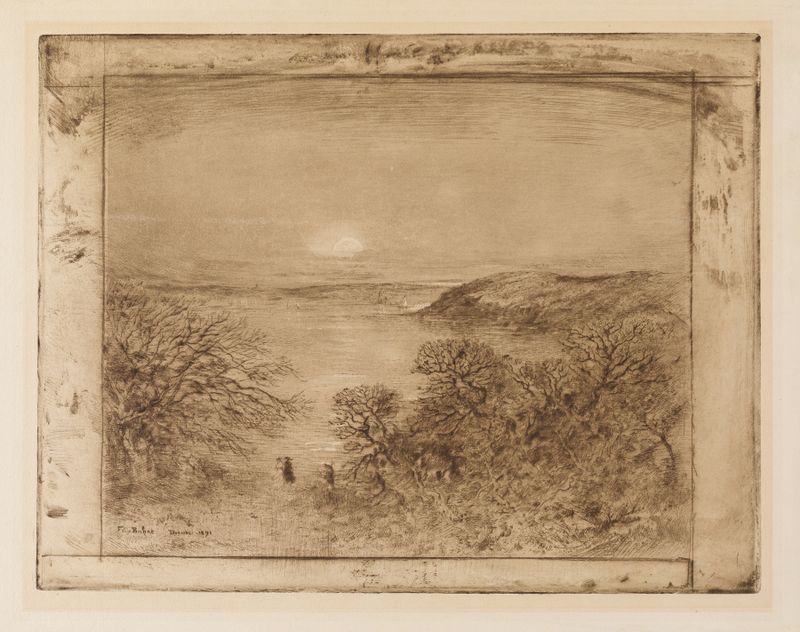
Moonrise at Dinard
Félix Hilaire Buhot
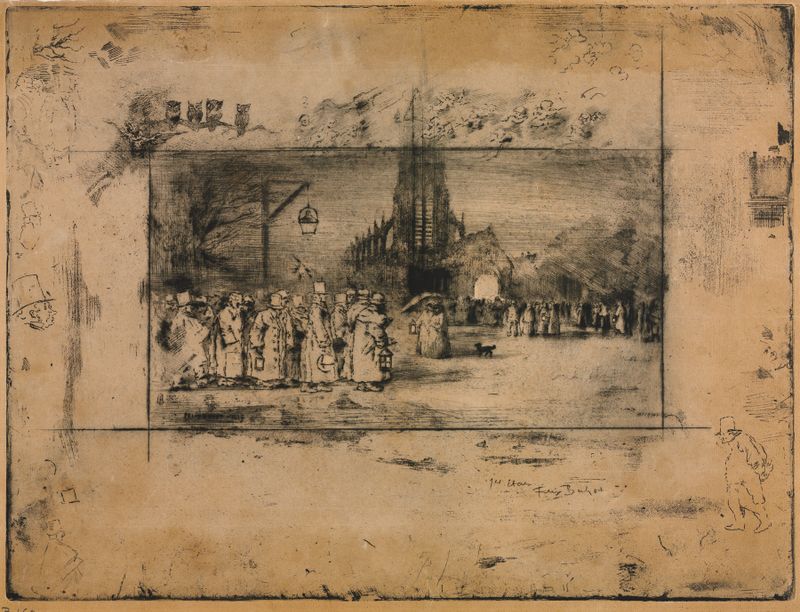
The Midnight Mass
Félix Hilaire Buhot
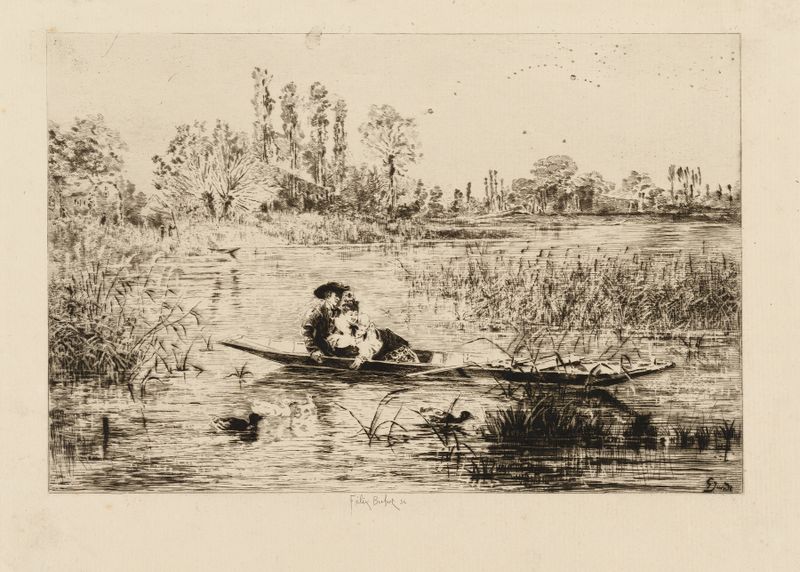
On the Thread of the Water
Félix Hilaire Buhot
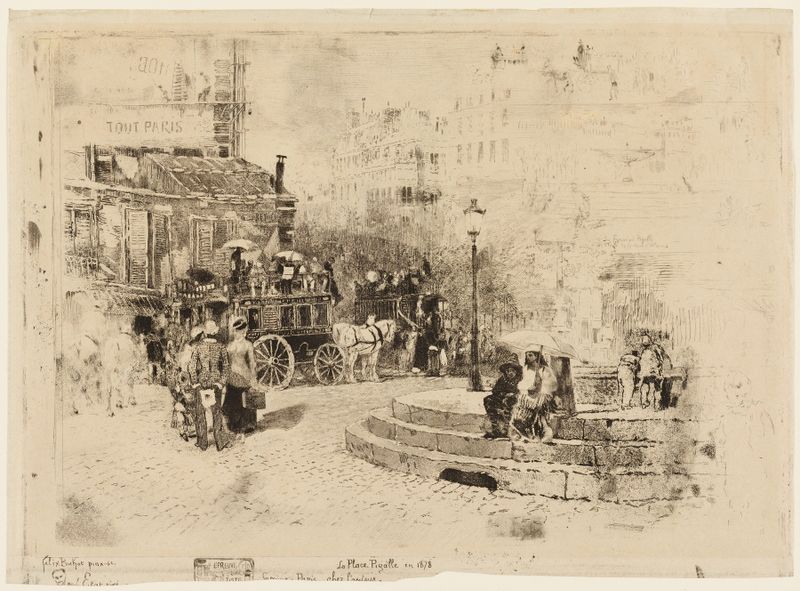
The Place Pigalle in 1878
Félix Hilaire Buhot
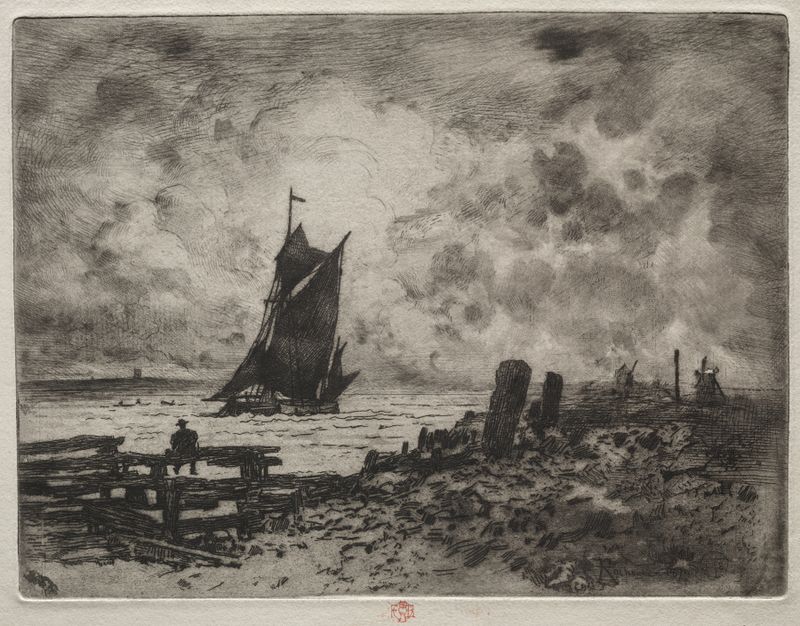
The Little Marine; Souvenir of Medway
Félix Hilaire Buhot
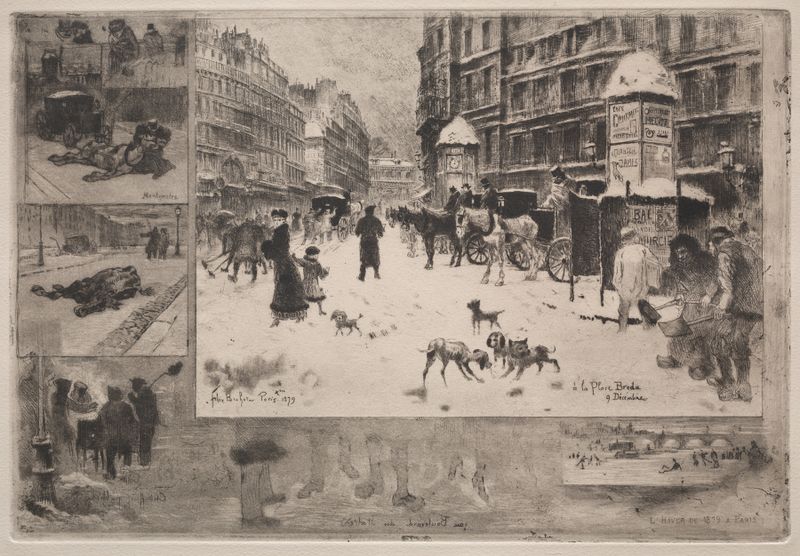
Winter in Paris
Félix Hilaire Buhot
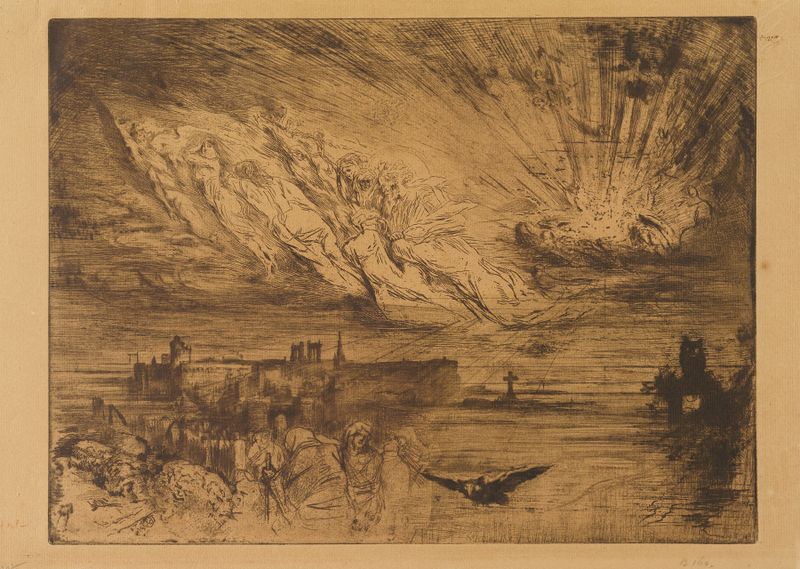
Spirits from the Cities of the Dead
Félix Hilaire Buhot





