Ascomycetes (Sac Fungi) — History & Facts
What first seizes the eye in Ascomycetes (Sac Fungi) is the sense of otherworldly architecture: each fungal form, rendered with almost mathematical precision, seems to hover between the botanical and the fantastical. The image draws you in with its luminous contrasts—delicate filaments and bulbous fruiting bodies glow against a black field, each structure unfurling in a unique rhythm. Some forms radiate outward like snowflakes or sea creatures, while others curl and cluster, their patterns hinting at hidden symmetries.
The careful arrangement invites the viewer to move from one specimen to the next, discovering the intricate differences in texture and shape: the branching arms, the latticed spheres, the coiled tendrils. This is a vision of nature as both engineer and artist, where every detail is purposeful, every curve a clue to function. Created in 1904 for the celebrated Kunstformen der Natur, this plate by Ernst Haeckel stands at the crossroads of science and art in the early twentieth century. The period saw a surge of interest in cataloguing the natural world, with artists and scientists alike striving to reveal the underlying order of life.
Such works were not merely illustrations but statements of wonder and ambition, intended for both the scientific community and the general public. Haeckel’s images, including this study of ascomycete fungi, became icons of the era’s belief in the unity of art and biology—each plate a testament to the complexity that could be found in even the smallest forms. The world that produced this image was one of discovery, where the microscope opened new realms and artists like Haeckel transformed observation into visual poetry.
Let your gaze linger: every line here is an invitation to look closer.
More Artworks by Ernst Haeckel
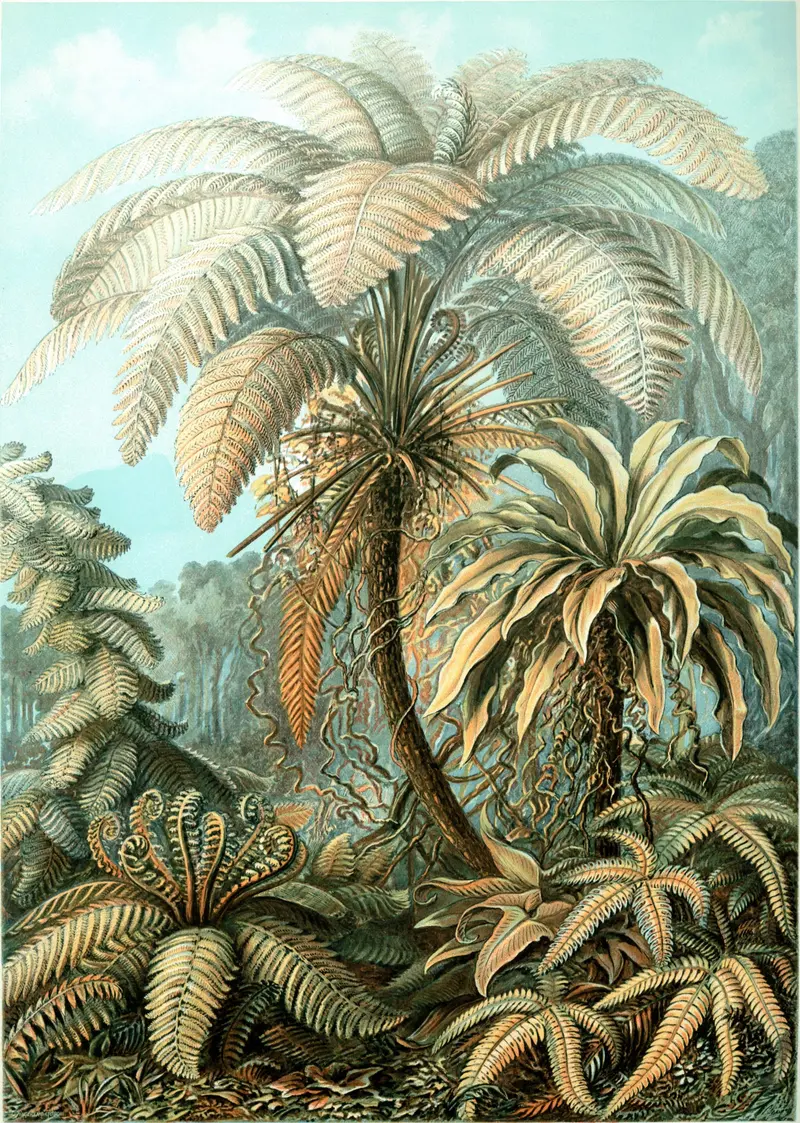
Filicinae (Ferns)
Ernst Haeckel
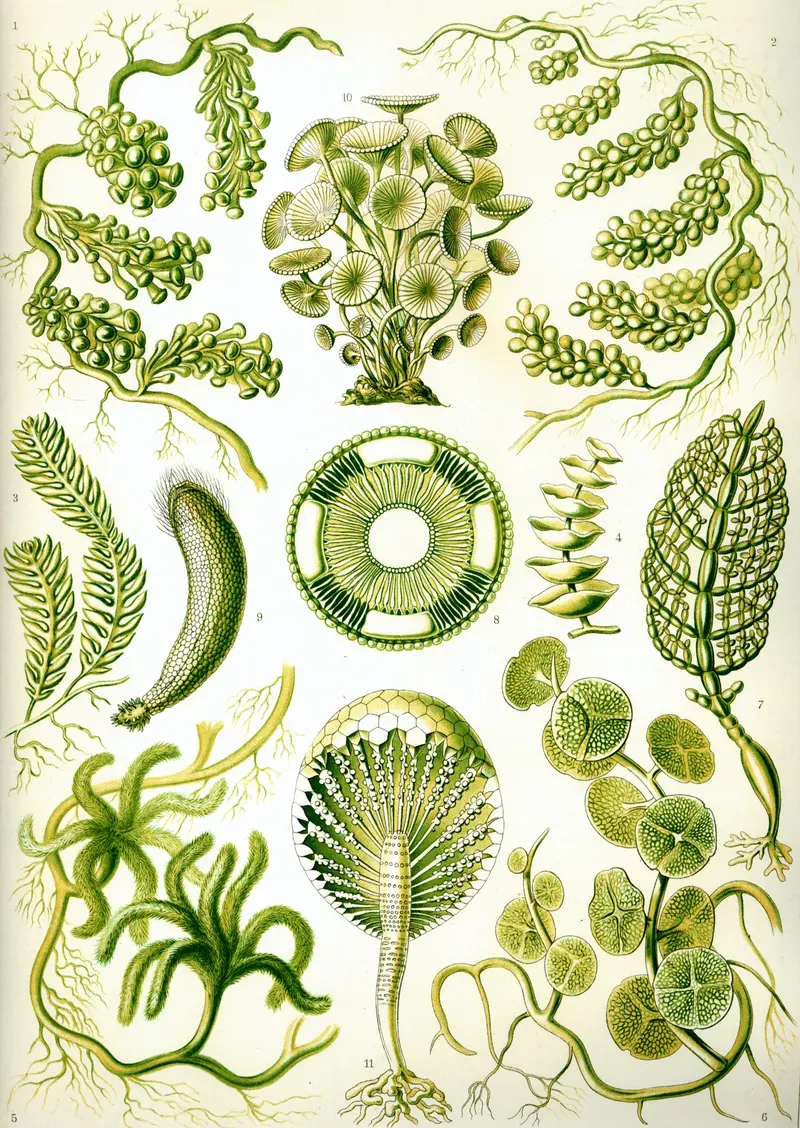
Siphoneae (Green Algae)
Ernst Haeckel

Cirripedia (Barnacles)
Ernst Haeckel

Actiniae (Sea Anemones)
Ernst Haeckel
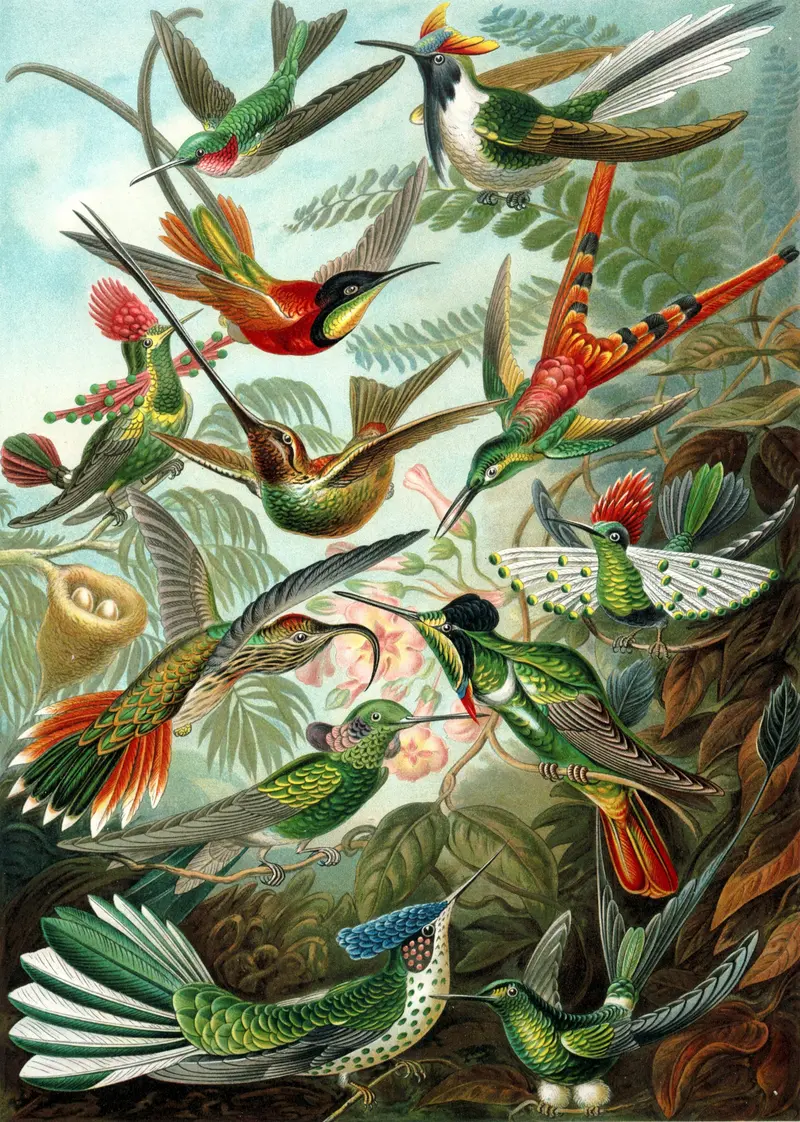
Trochilidae (Hummingbirds)
Ernst Haeckel
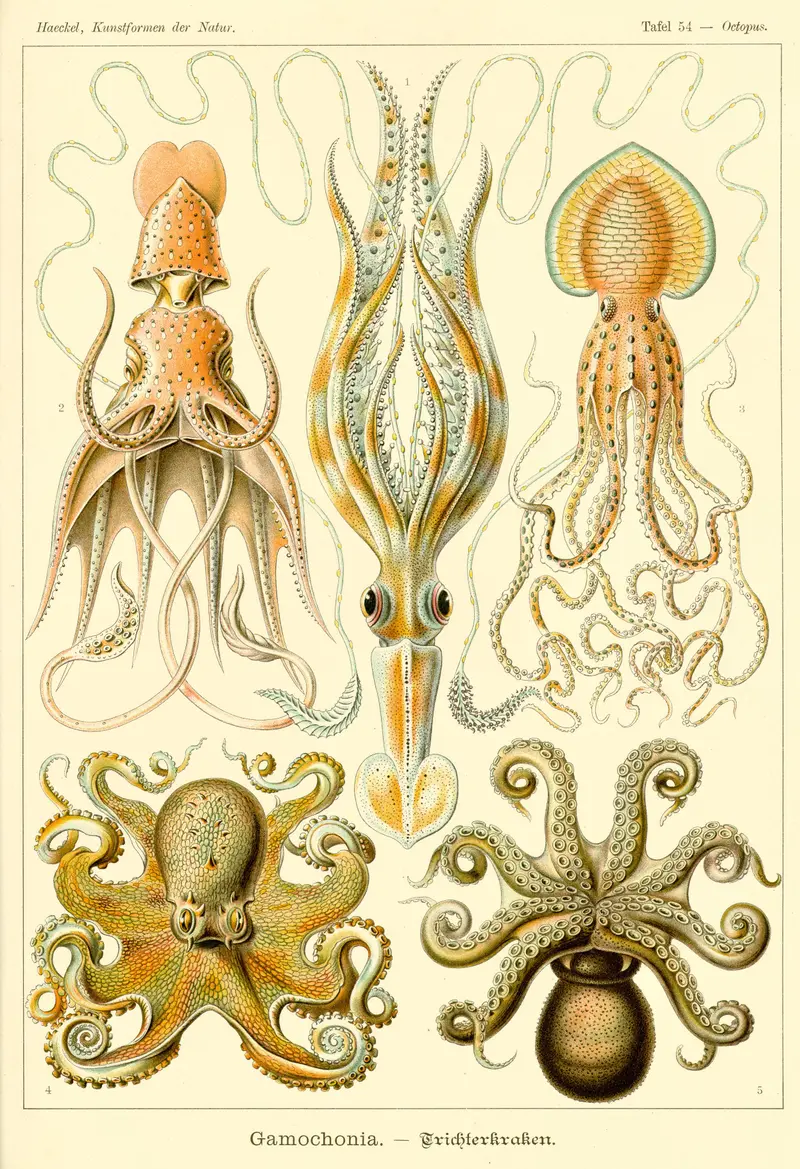
Gamochonia (Cephalopods)
Ernst Haeckel
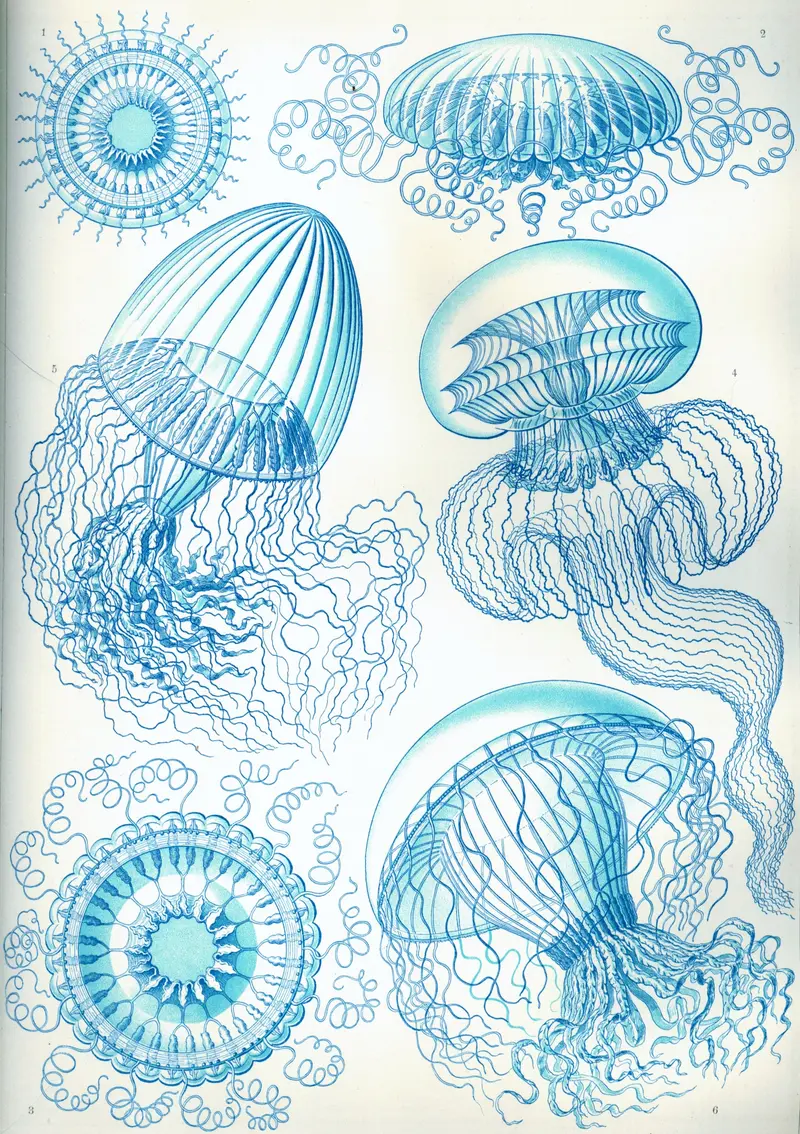
Leptomedusae (Jellyfish)
Ernst Haeckel
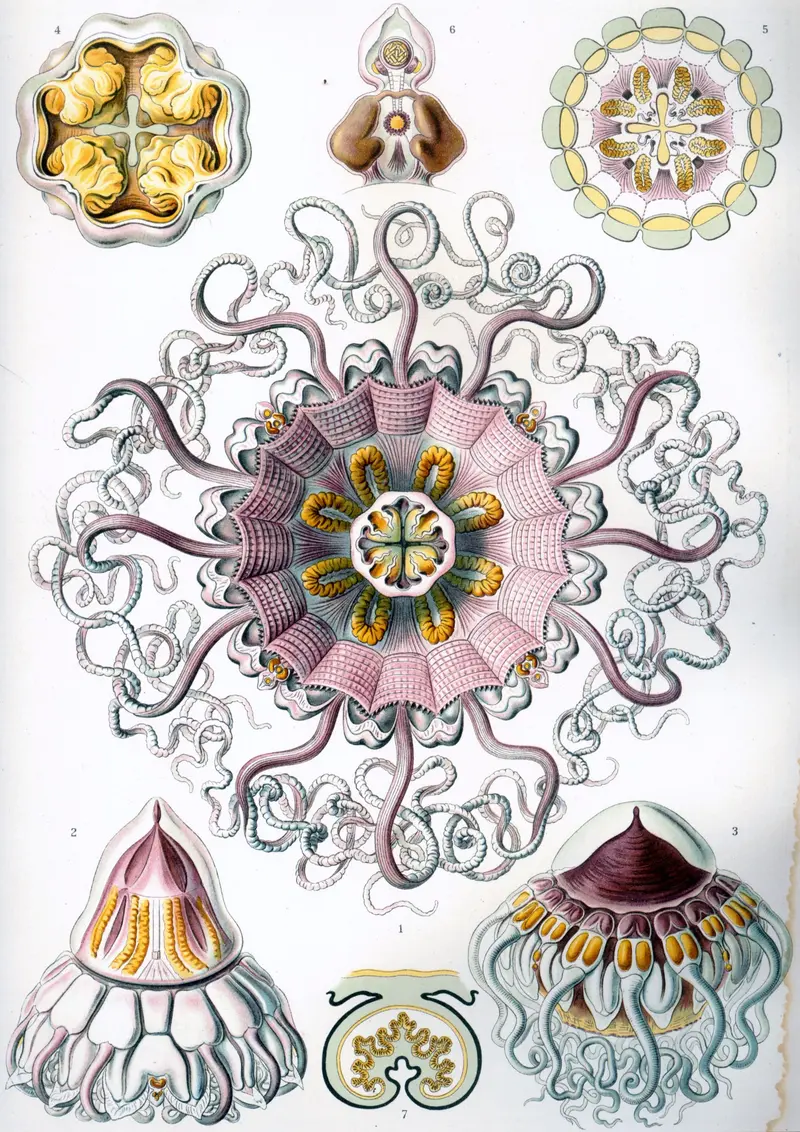
Peromedusae (Jellyfish)
Ernst Haeckel
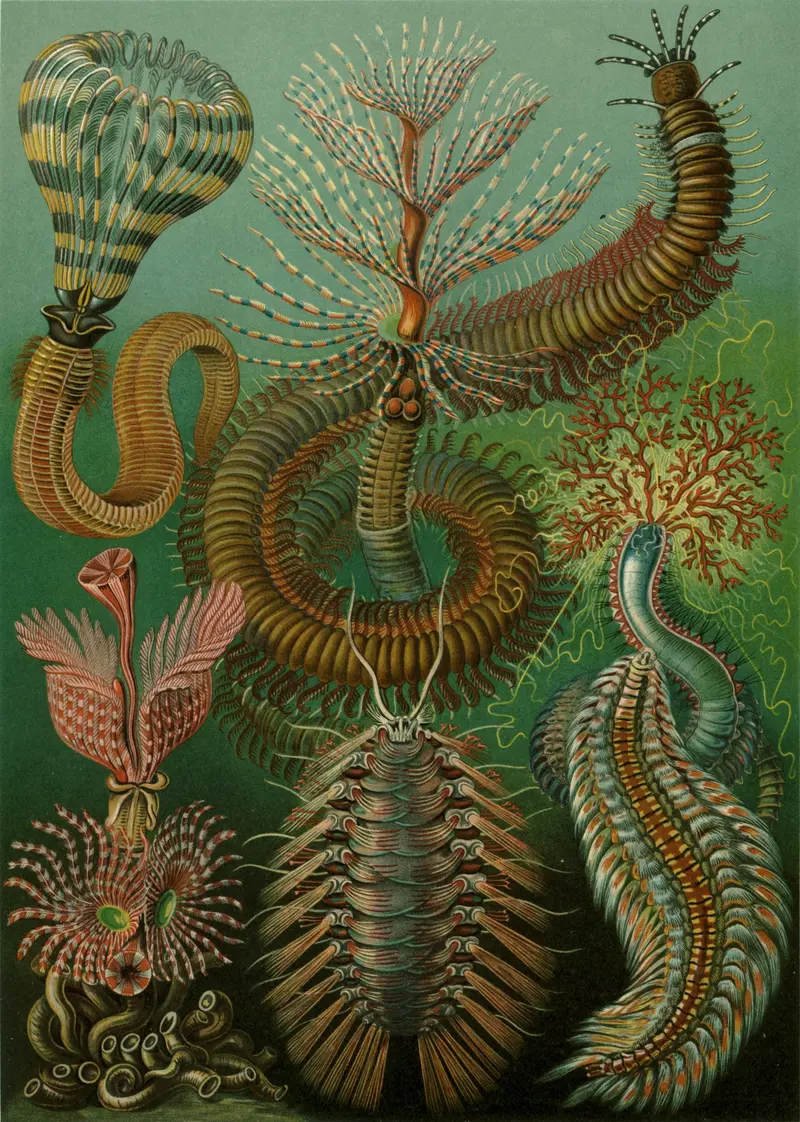
Chaetopoda (Bristle Worms)
Ernst Haeckel
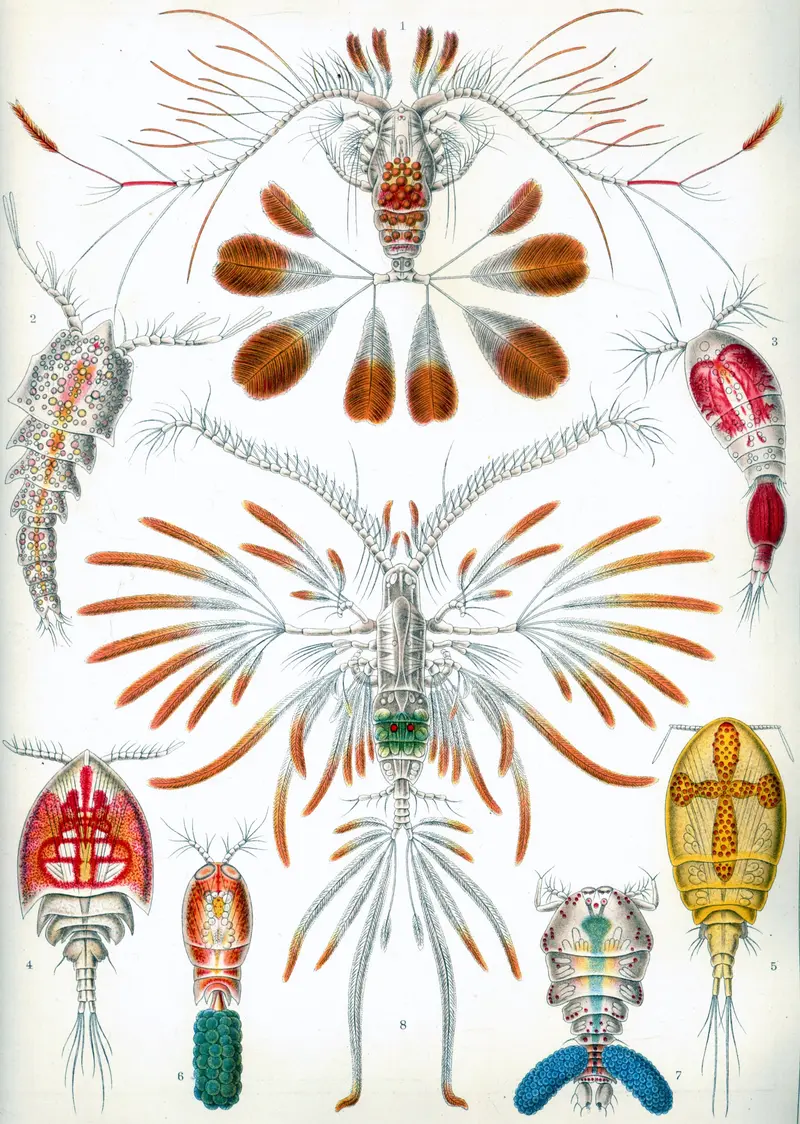
Copepoda (Copepods)
Ernst Haeckel