
Aubette Ciné-Dancing: Final Color Design for a Wall — History & Facts
Aubette Ciné-Dancing: Final Color Design for a Wall was created by Theo van Doesburg between February and October 1927 using pencil and gouache on a heliographic print. This work was produced as part of van Doesburg’s contribution to the decoration of the Aubette building in Strasbourg, a significant project in his career that brought together artists associated with the De Stijl movement. The drawing represents a finalized color scheme for one of the walls in the Ciné-Dancing, an entertainment venue within the Aubette complex. The design features a geometric composition dominated by large diamond and rectangular shapes arranged in a horizontal frieze.
The palette is restrained, with areas of white, grey, yellow, black, and turquoise, each separated by pale linear bands that define the forms. The lower section shows architectural elements, possibly furniture or structural features, rendered in beige and outlined with black. The technique is precise, with flat areas of color and sharp edges, characteristic of van Doesburg’s approach to architectural decoration and abstract design. The Aubette project was commissioned by the Horn brothers and is recognized as a major collaborative work of the late 1920s, involving Theo van Doesburg, Sophie Taeuber-Arp, and Jean Arp.
The building’s interior was conceived as a total work of art, integrating painting, architecture, and design. This specific design is preserved in the Geheugen van Nederland collection, documenting van Doesburg’s process in developing the Aubette’s visual identity.
More Artworks by Theo van Doesburg
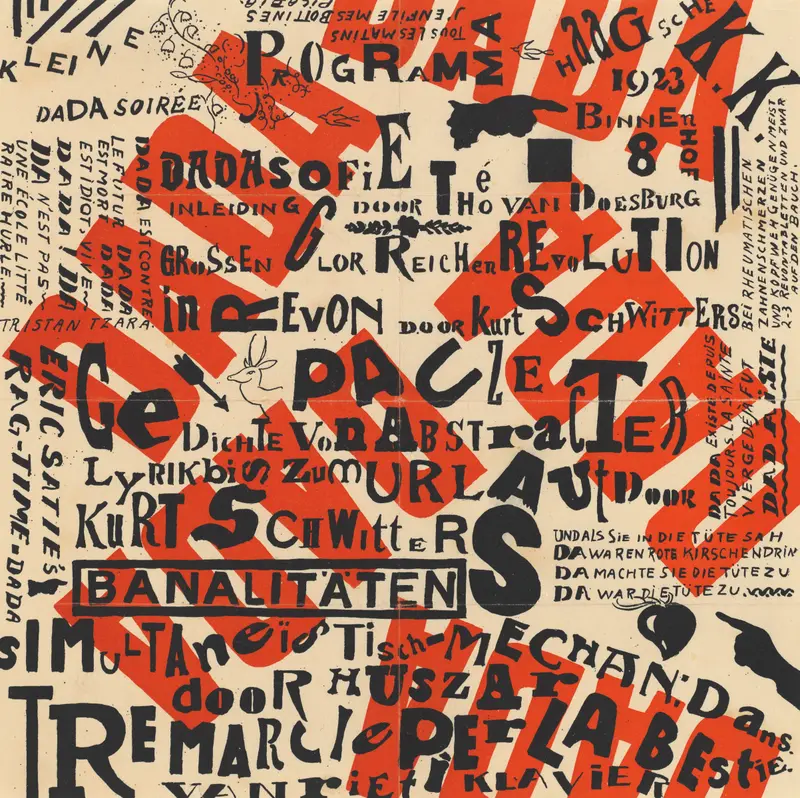
Kleine Dada Soirée (Small Dada Evening)
Theo van Doesburg
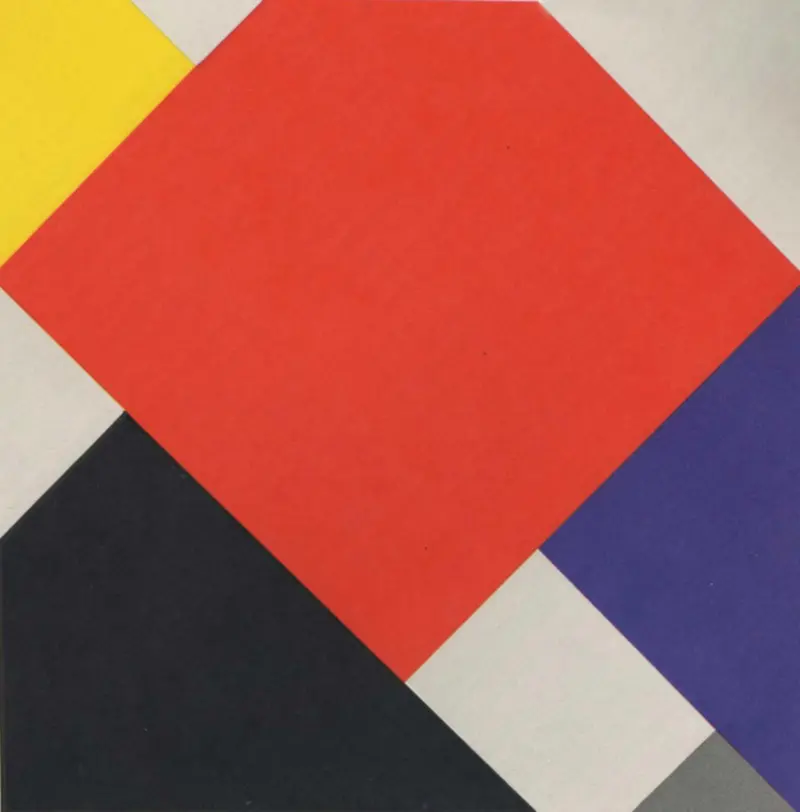
Counter-Composition V
Theo van Doesburg
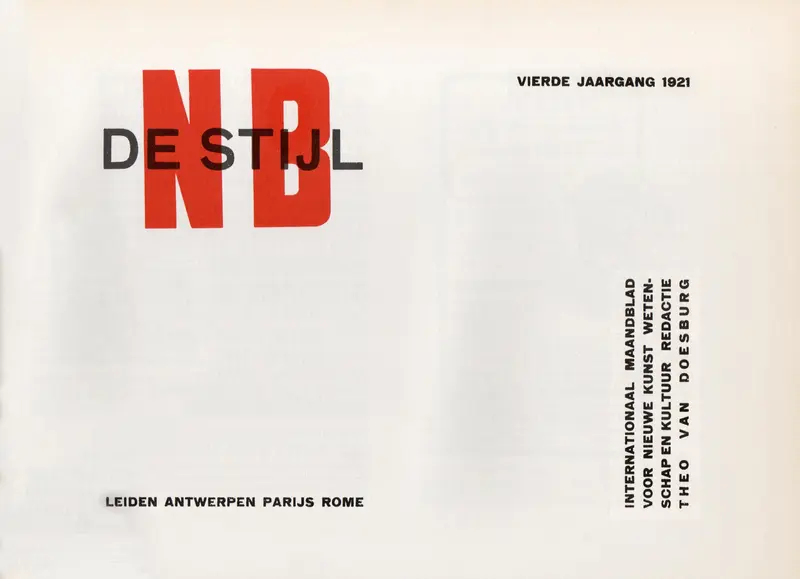
De Stijl, vol. 4, no. 2 (cover)
Theo van Doesburg
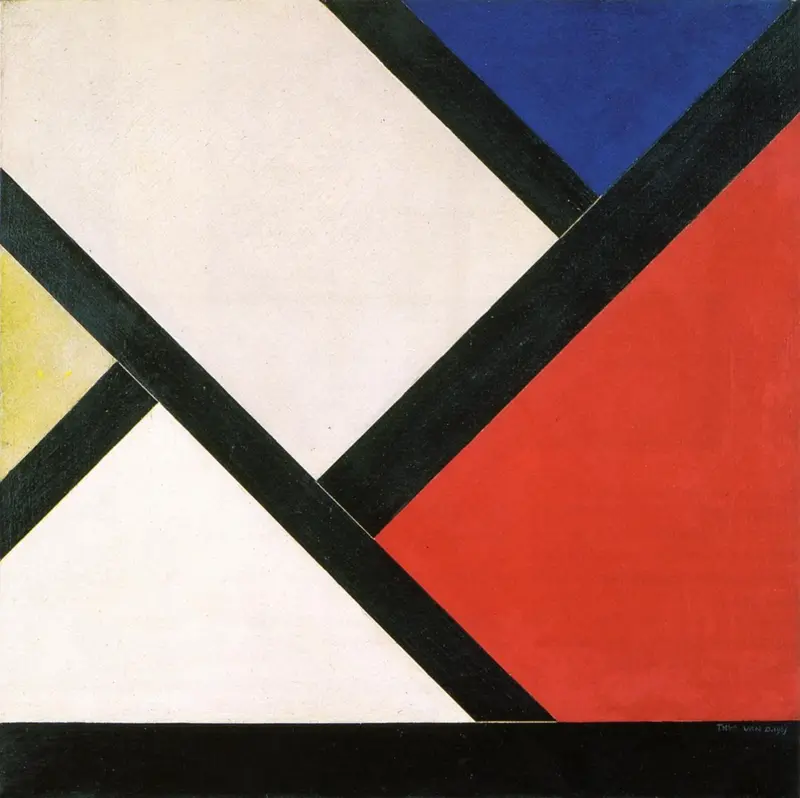
Counter-Composition XIV
Theo van Doesburg
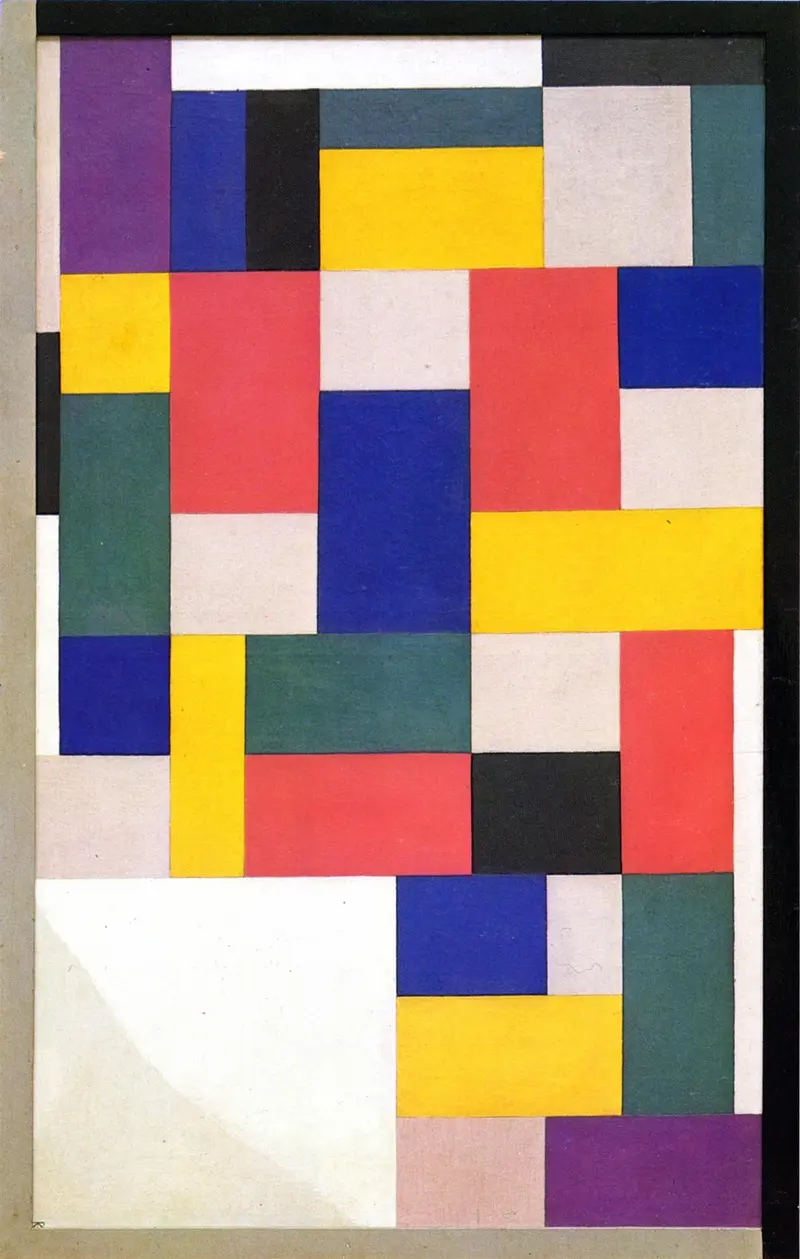
Pure Painting
Theo van Doesburg
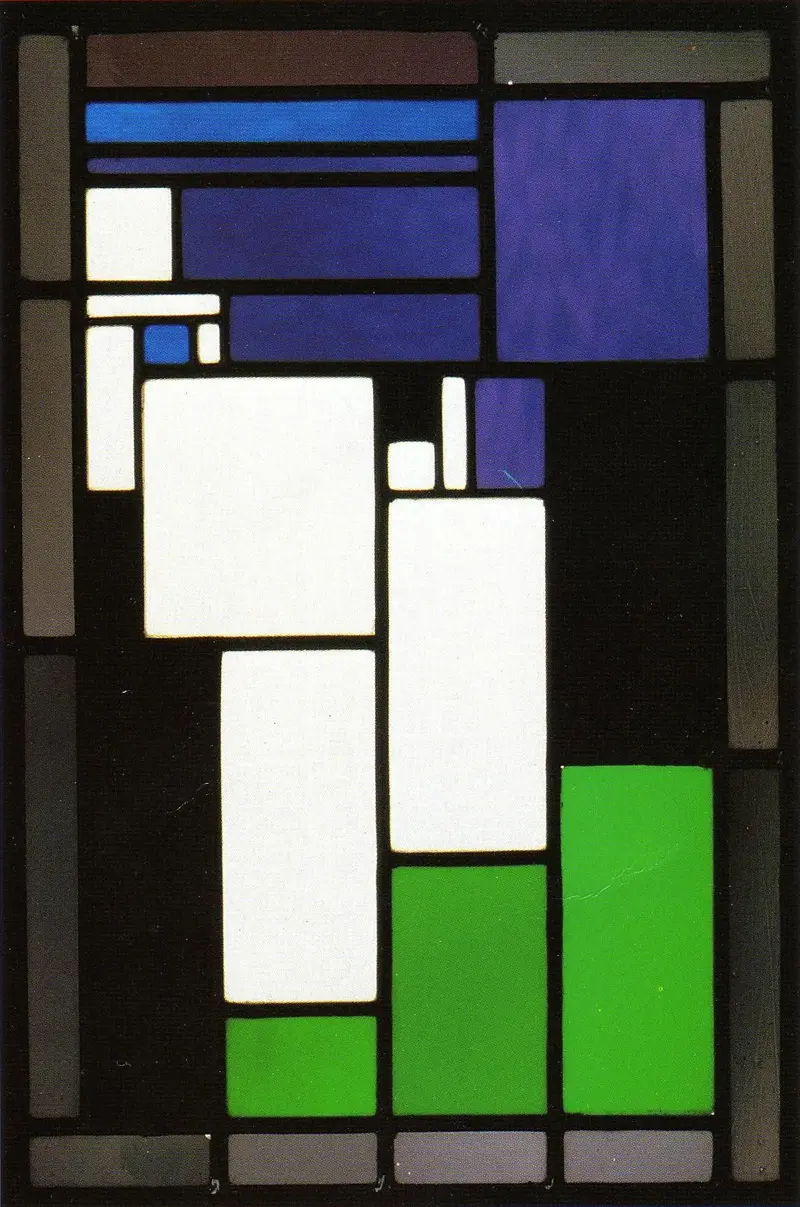
Stained-Glass Composition: Female Head
Theo van Doesburg
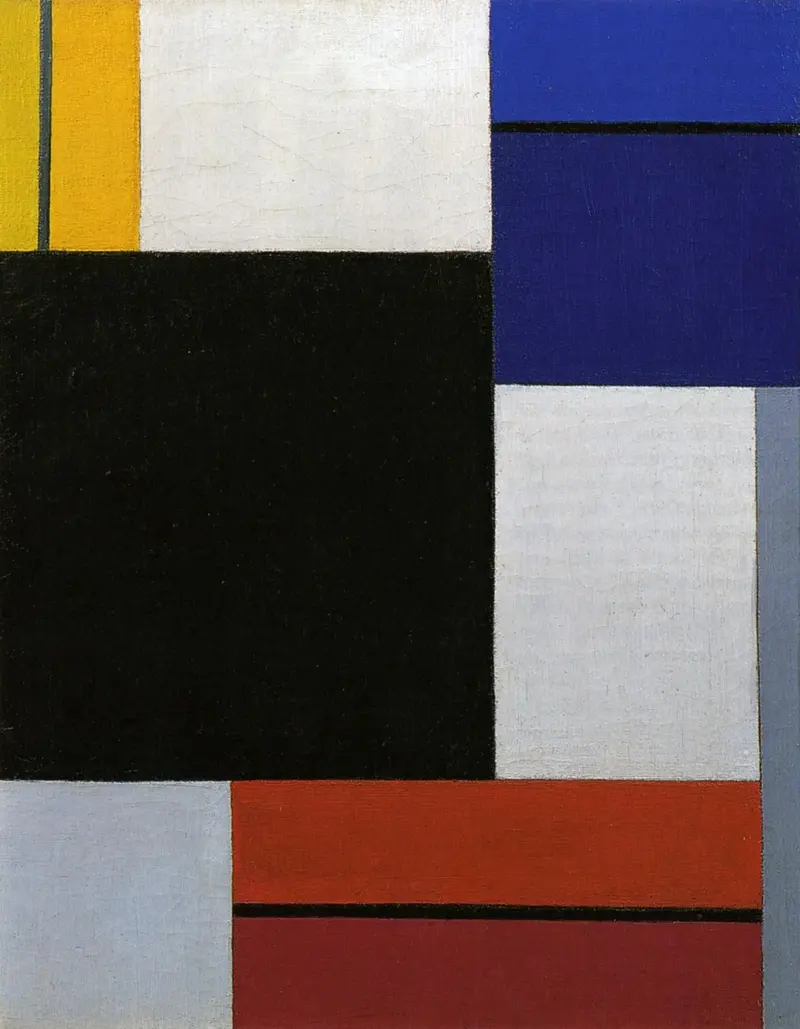
Composition XXI
Theo van Doesburg
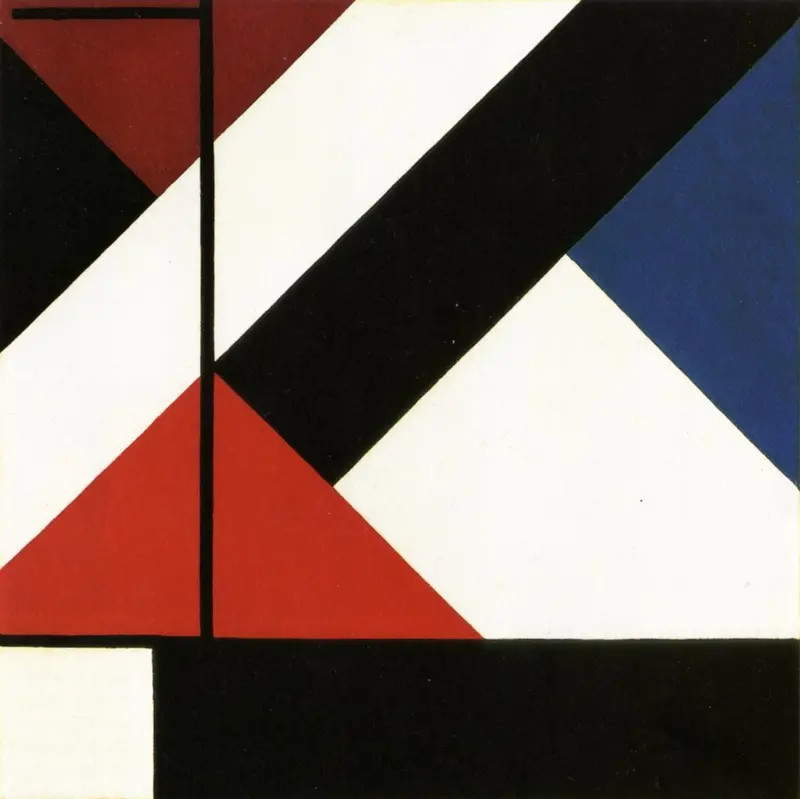
Simultaneous Counter-Composition
Theo van Doesburg
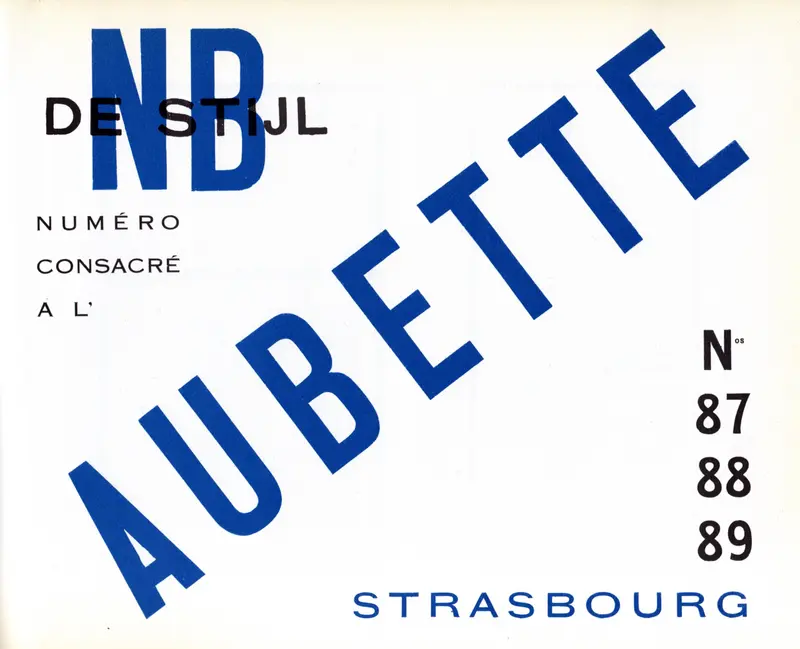
De Stijl, nos. 87–89: Aubette Issue (cover)
Theo van Doesburg
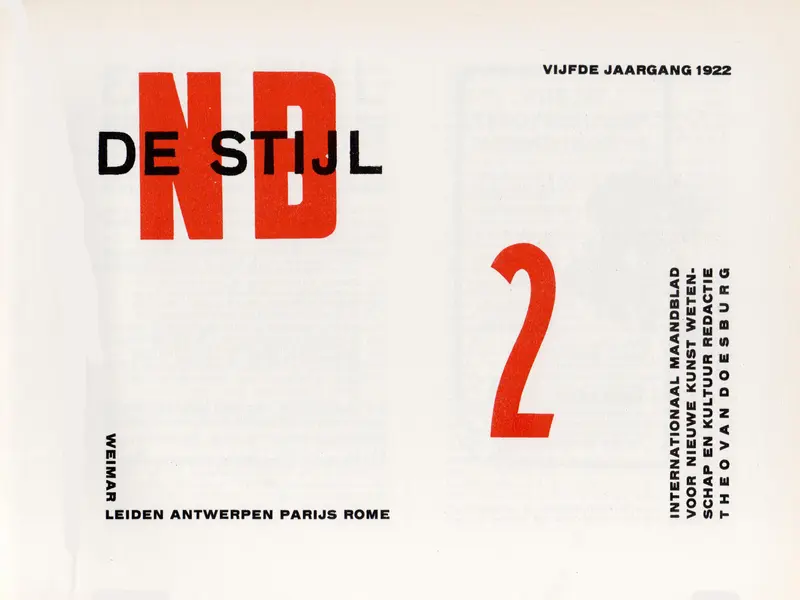
De Stijl, vol. 5, no. 2 (cover)
Theo van Doesburg




