Counter-Composition XIV — History & Facts
Counter-Composition XIV is an abstract oil painting created in 1925 by Theo van Doesburg. The work belongs to a series of counter-compositions produced during a pivotal period in the artist’s career, reflecting his engagement with geometric abstraction and the principles of the De Stijl movement. The painting demonstrates van Doesburg’s exploration of dynamic equilibrium through the use of diagonal lines and primary colors. The composition consists of intersecting black bars that divide the canvas into distinct geometric fields.
Areas of solid red, blue, yellow, and white are arranged asymmetrically, with each color occupying a sharply defined space. The use of flat, unmodulated color and the absence of representational imagery emphasize the painting’s non-objective character. The diagonal orientation of the elements distinguishes this work from earlier, more rectilinear compositions by the artist. Counter-Composition XIV was painted during van Doesburg’s mature period, when he was actively developing the theory of Elementarism, which advocated for the use of diagonal lines to create greater dynamism in abstract art.
The work is documented in the catalogue raisonné by Els Hoek (2000), but specific details about its early provenance, patronage, or exhibition history are not recorded here. The painting remains an important example of van Doesburg’s contribution to early twentieth-century abstraction.
More Artworks by Theo van Doesburg
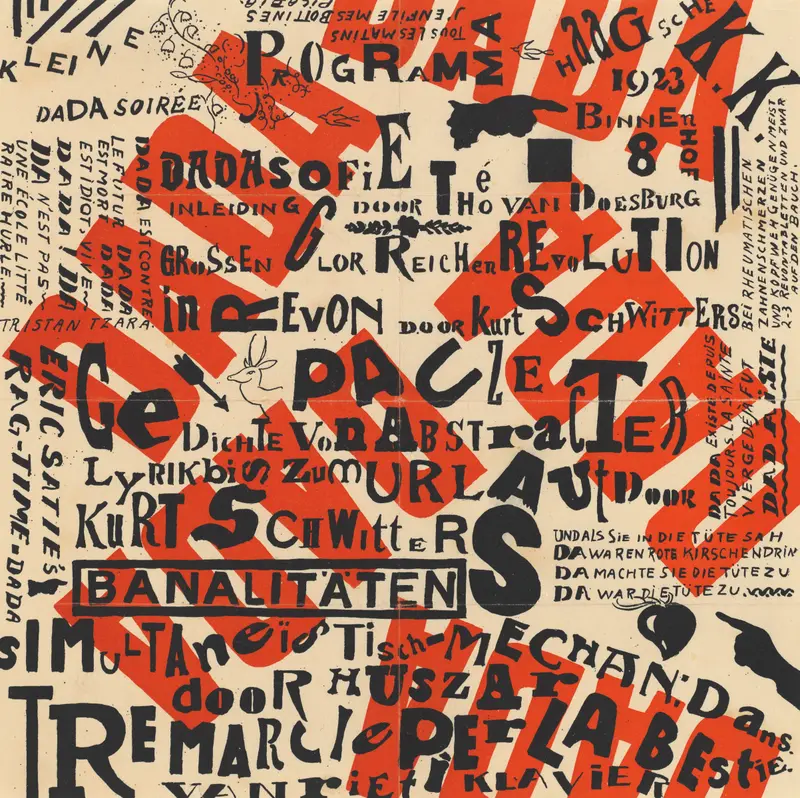
Kleine Dada Soirée (Small Dada Evening)
Theo van Doesburg
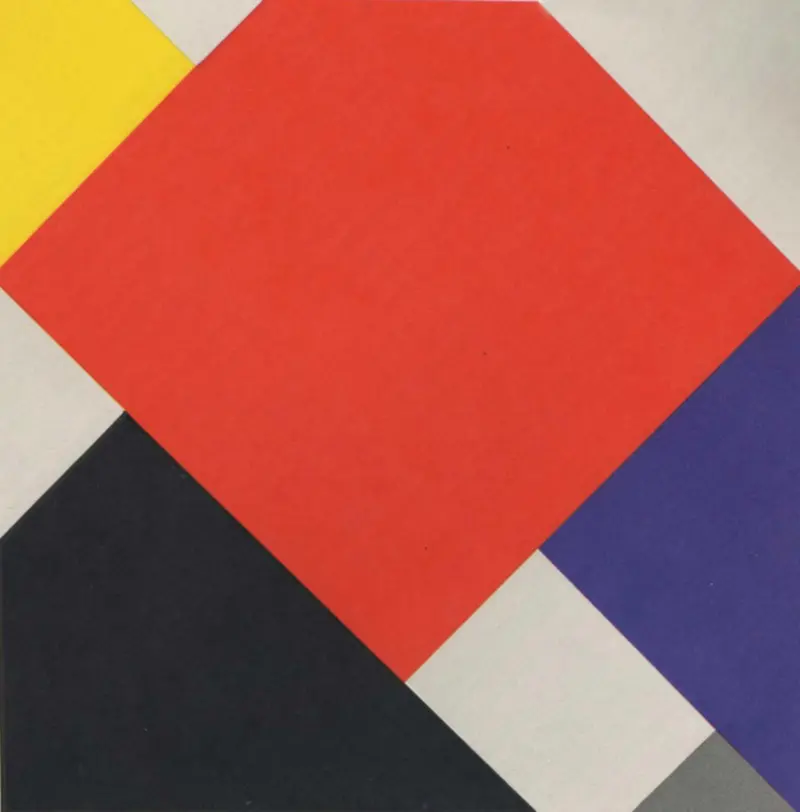
Counter-Composition V
Theo van Doesburg
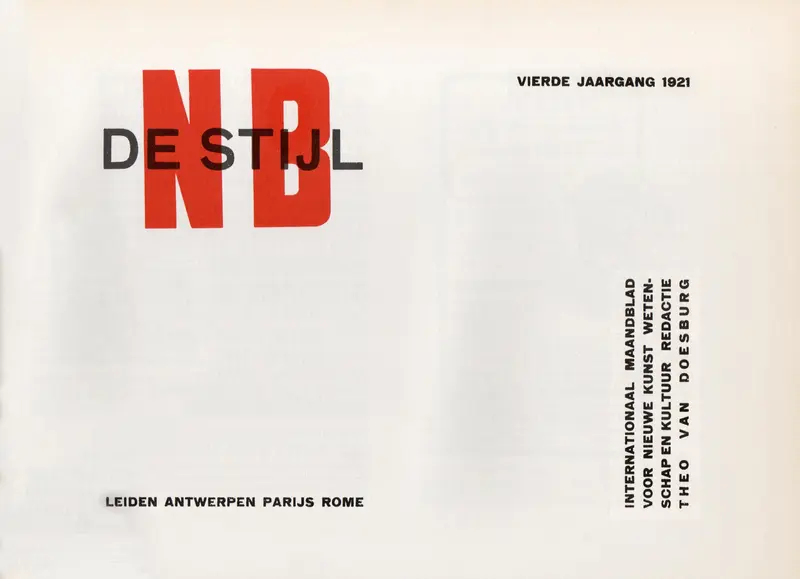
De Stijl, vol. 4, no. 2 (cover)
Theo van Doesburg
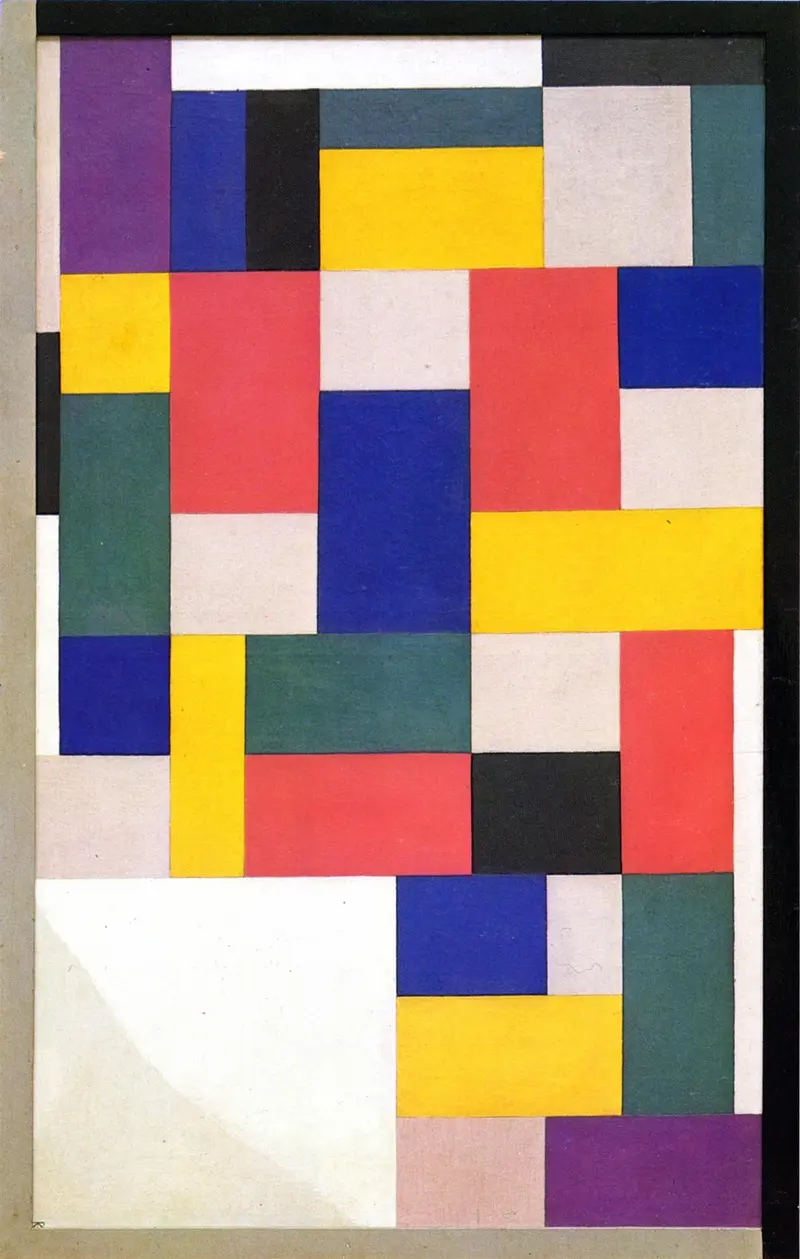
Pure Painting
Theo van Doesburg
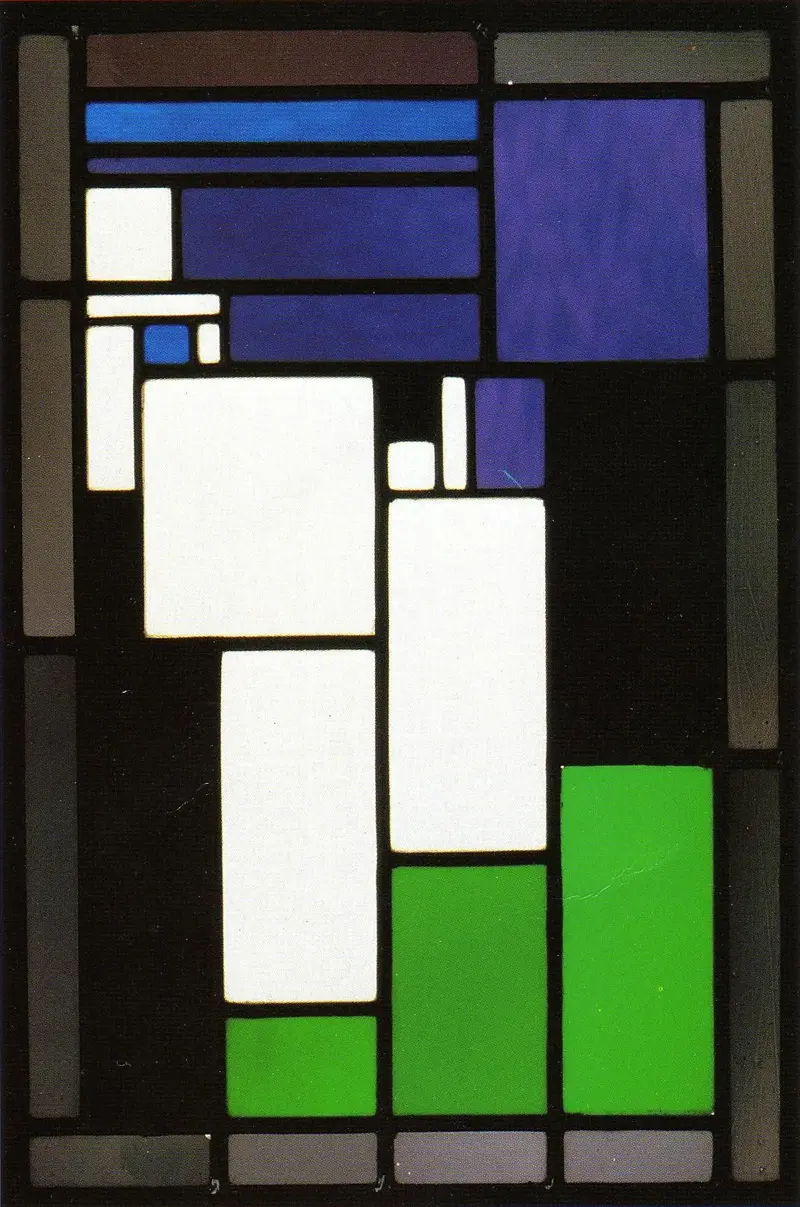
Stained-Glass Composition: Female Head
Theo van Doesburg
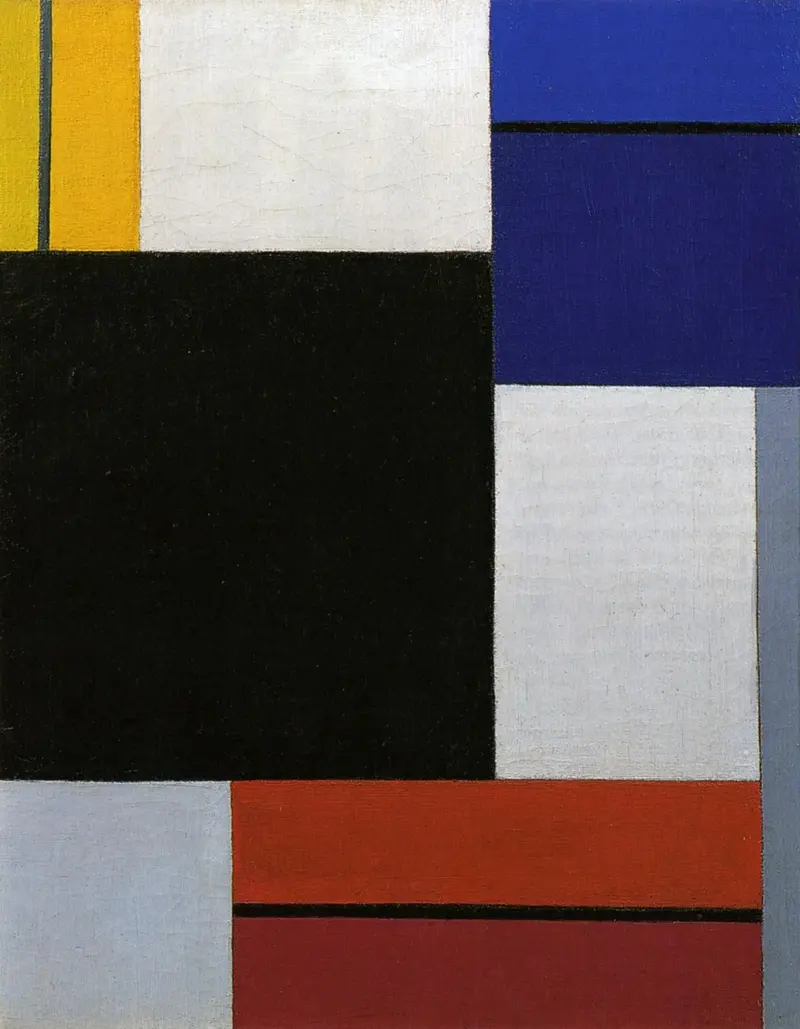
Composition XXI
Theo van Doesburg
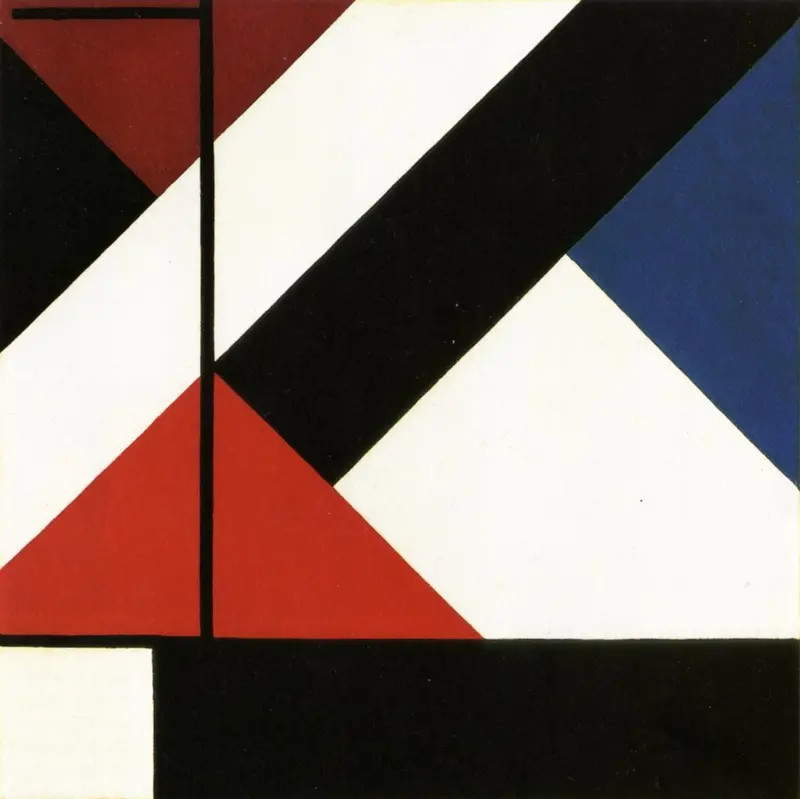
Simultaneous Counter-Composition
Theo van Doesburg
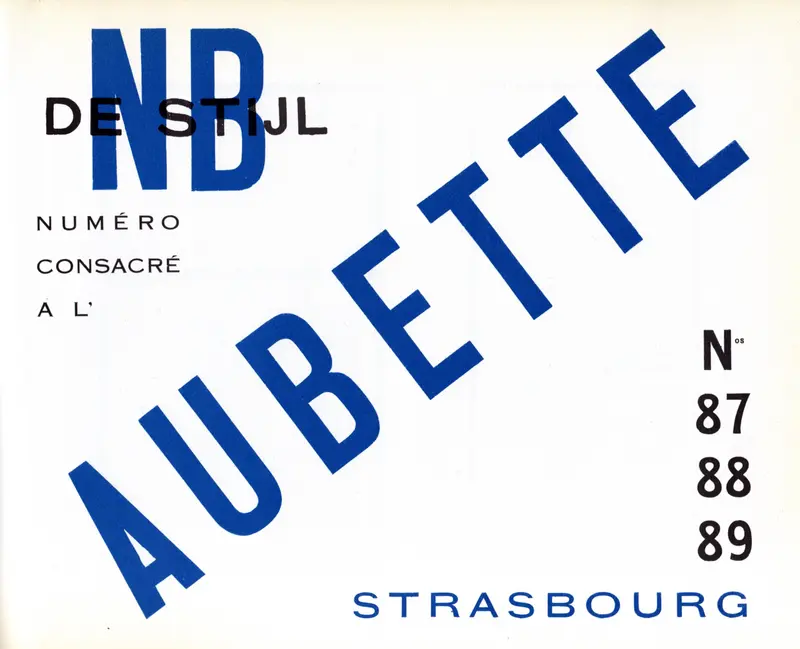
De Stijl, nos. 87–89: Aubette Issue (cover)
Theo van Doesburg
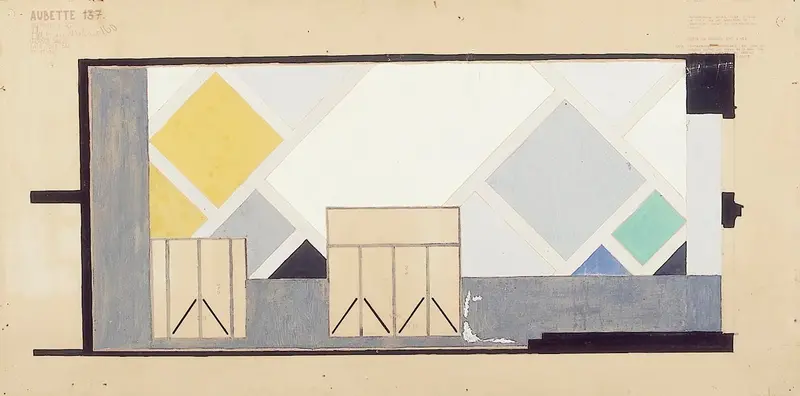
Aubette Ciné-Dancing: Final Color Design for a Wall
Theo van Doesburg
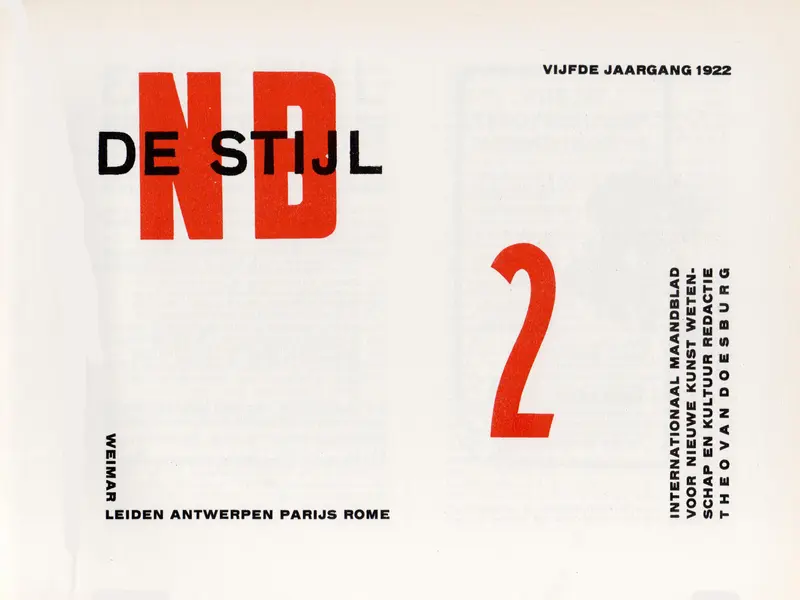
De Stijl, vol. 5, no. 2 (cover)
Theo van Doesburg