Pure Painting — History & Facts
Pure Painting by Theo van Doesburg was created between 1 May 1920 and 7 July 1920, using oil on canvas. The work consists of a grid-like arrangement of rectangles and squares in a variety of colours, including red, blue, yellow, purple, green, black, and white. The composition is strictly geometric, with each coloured area sharply delineated by straight edges, and the overall structure is framed by bands of black and grey along the edges. The painting is an example of early twentieth-century geometric abstraction, characteristic of the De Stijl movement with which Theo van Doesburg was closely associated.
The use of flat, unmodulated colour and the absence of any representational elements reflect the movement’s emphasis on pure form and colour as the basis for a new visual language. This work was reproduced in H.L.C. Jaffé’s 1983 publication on Theo van Doesburg, where it is listed as illustration 52 on page 63.
More Artworks by Theo van Doesburg
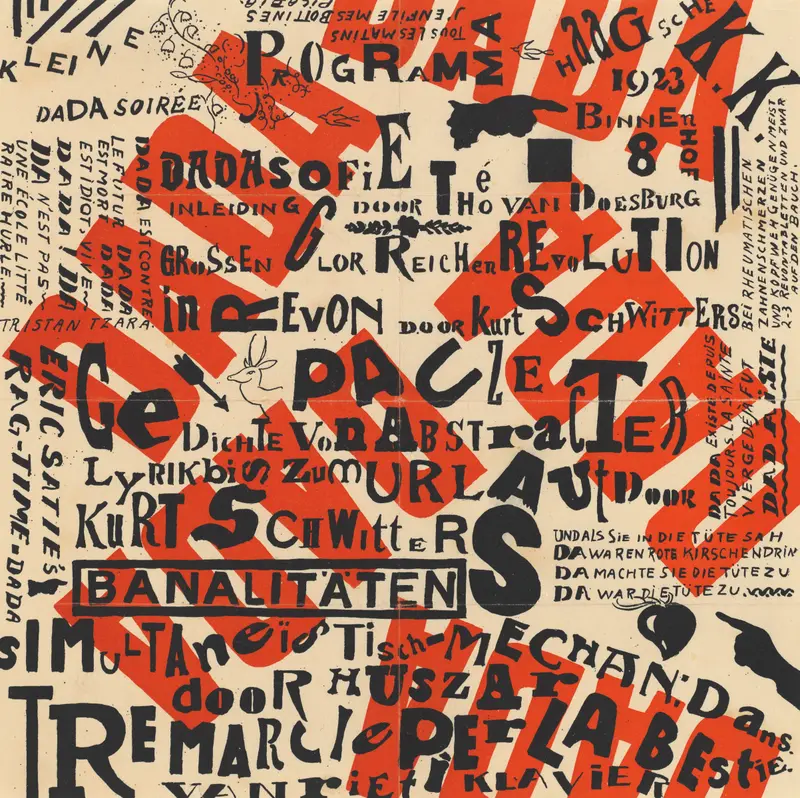
Kleine Dada Soirée (Small Dada Evening)
Theo van Doesburg
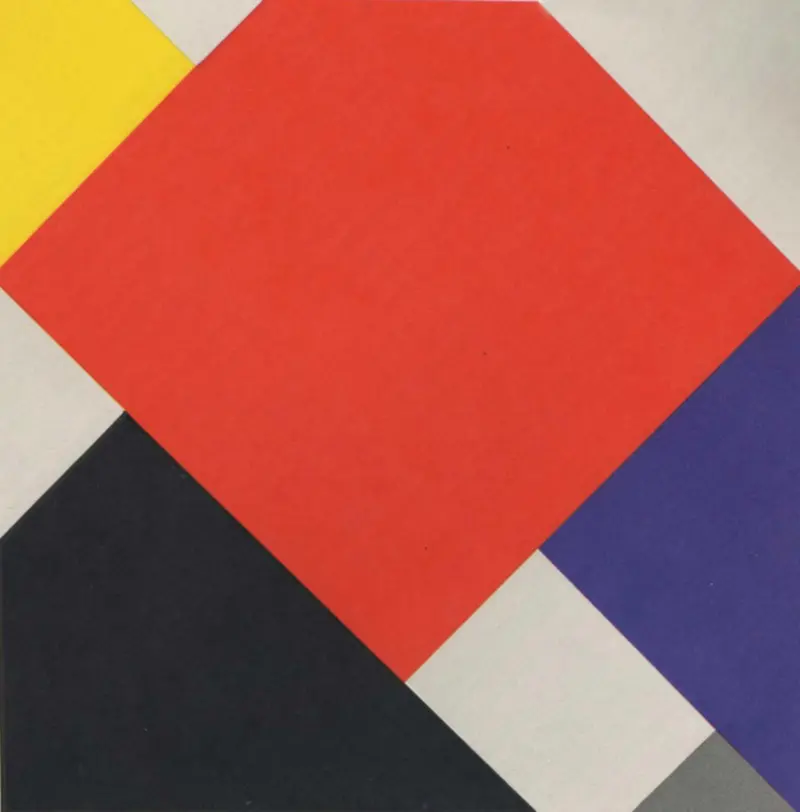
Counter-Composition V
Theo van Doesburg
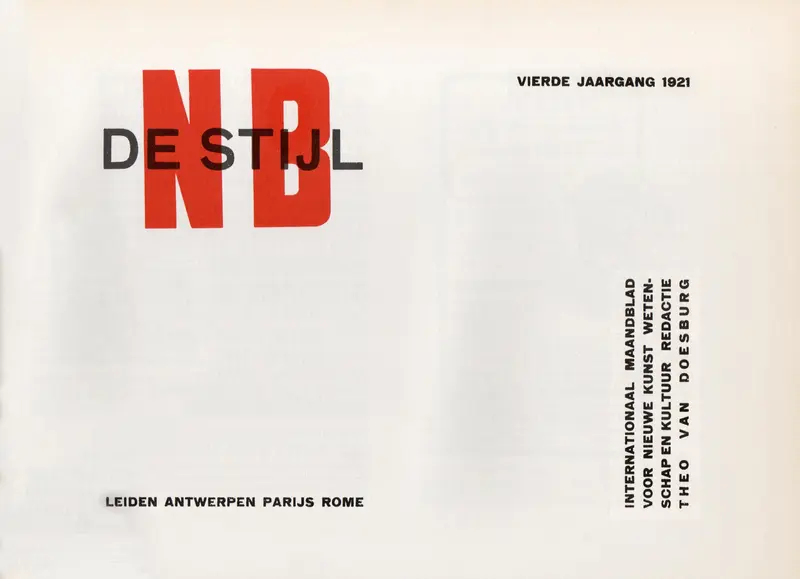
De Stijl, vol. 4, no. 2 (cover)
Theo van Doesburg
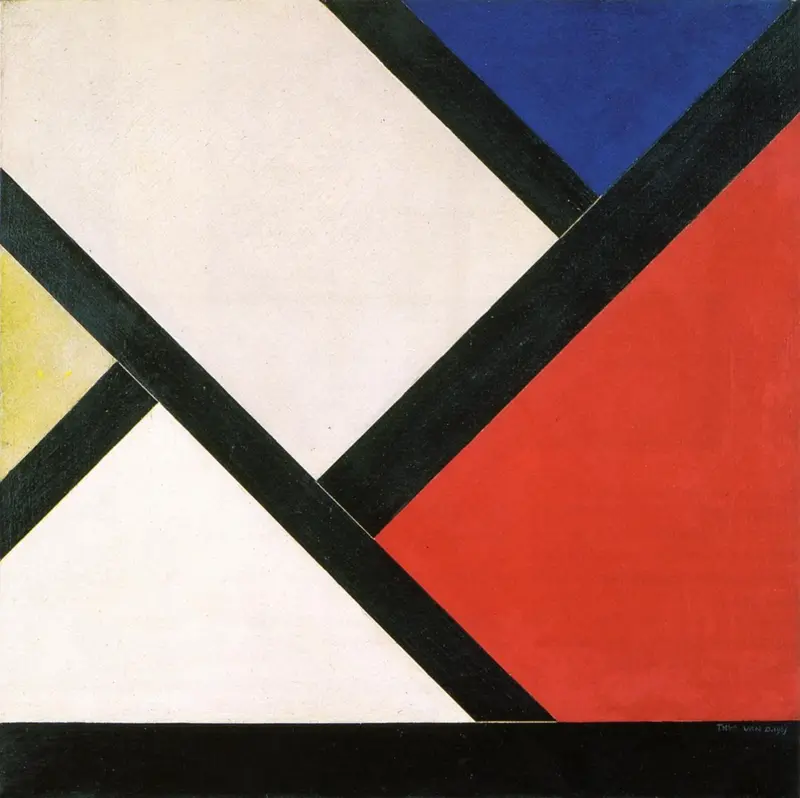
Counter-Composition XIV
Theo van Doesburg
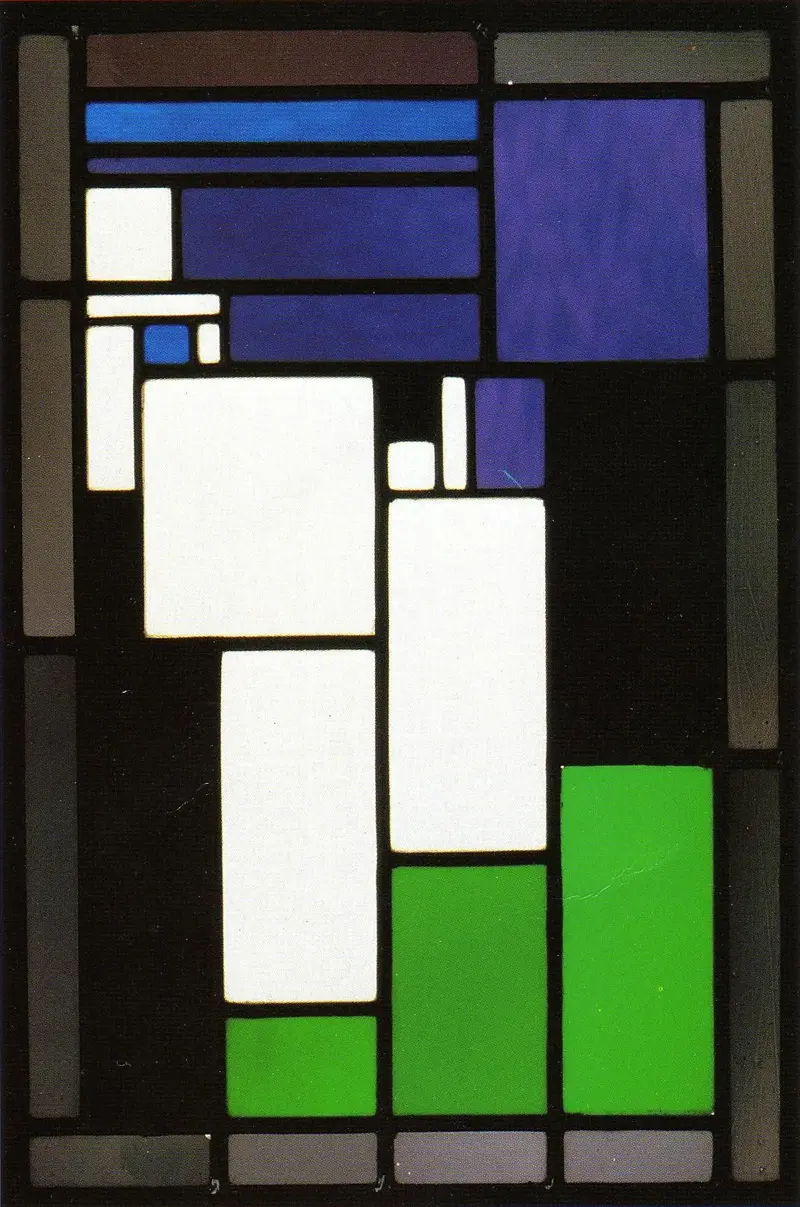
Stained-Glass Composition: Female Head
Theo van Doesburg
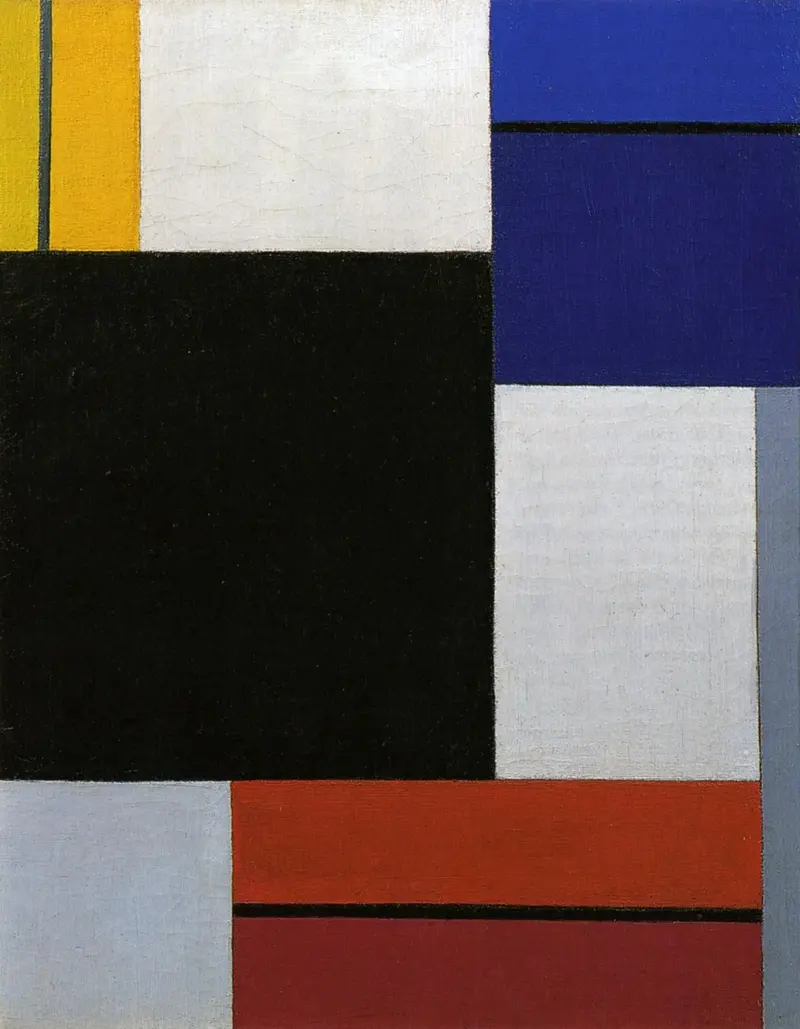
Composition XXI
Theo van Doesburg
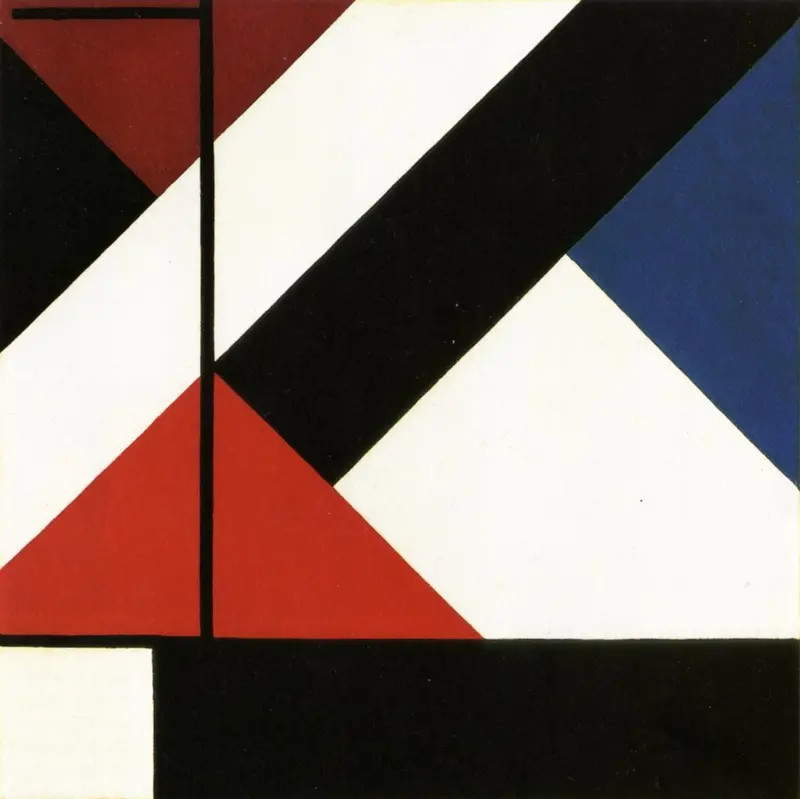
Simultaneous Counter-Composition
Theo van Doesburg
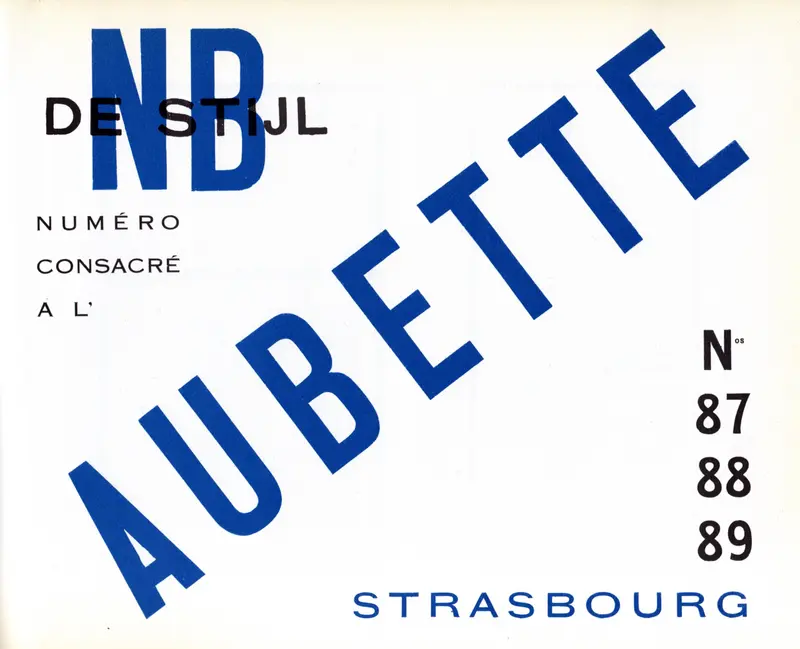
De Stijl, nos. 87–89: Aubette Issue (cover)
Theo van Doesburg
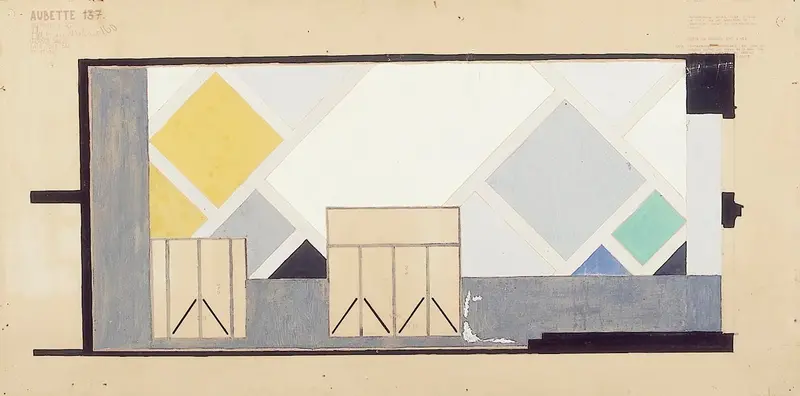
Aubette Ciné-Dancing: Final Color Design for a Wall
Theo van Doesburg
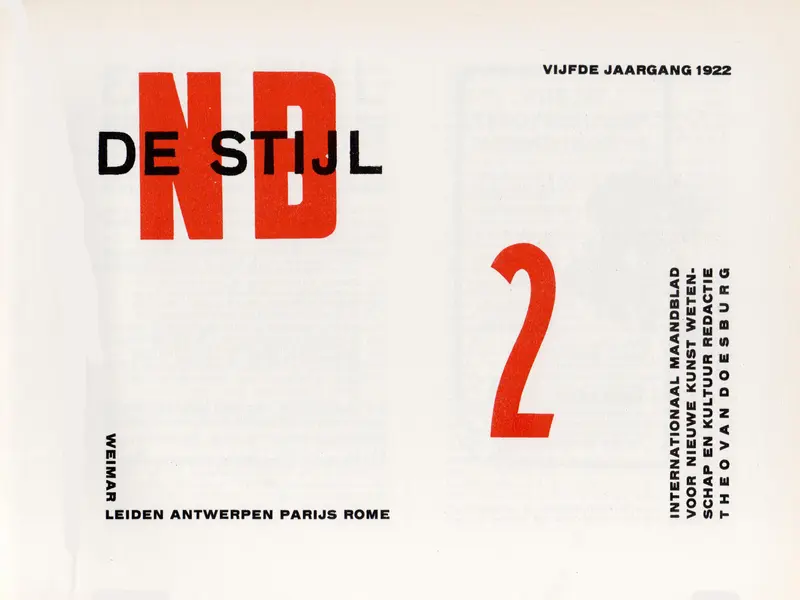
De Stijl, vol. 5, no. 2 (cover)
Theo van Doesburg