Stained-Glass Composition: Female Head — History & Facts
Stained-Glass Composition: Female Head by Theo van Doesburg is a geometric stained glass work created between May and July 1917. The composition is made up of rectangular panels in hues of blue, green, white, and grey, arranged within a black framework. The design uses a grid structure, with blocks of color placed in a vertical and horizontal alignment.
No representational features are visible; the forms are entirely abstract, with color fields distributed asymmetrically across the surface. This work was made during a period when Theo van Doesburg was closely associated with the development of the De Stijl movement in the Netherlands. Stained glass was a medium that several De Stijl artists explored as a way of expressing their theories of abstraction and harmony. The piece is dated to 1917 and is associated with a postcard in its current documented collection.
The simplified geometric language and use of primary and secondary colors reflect the movement’s interest in universal visual principles.
More Artworks by Theo van Doesburg
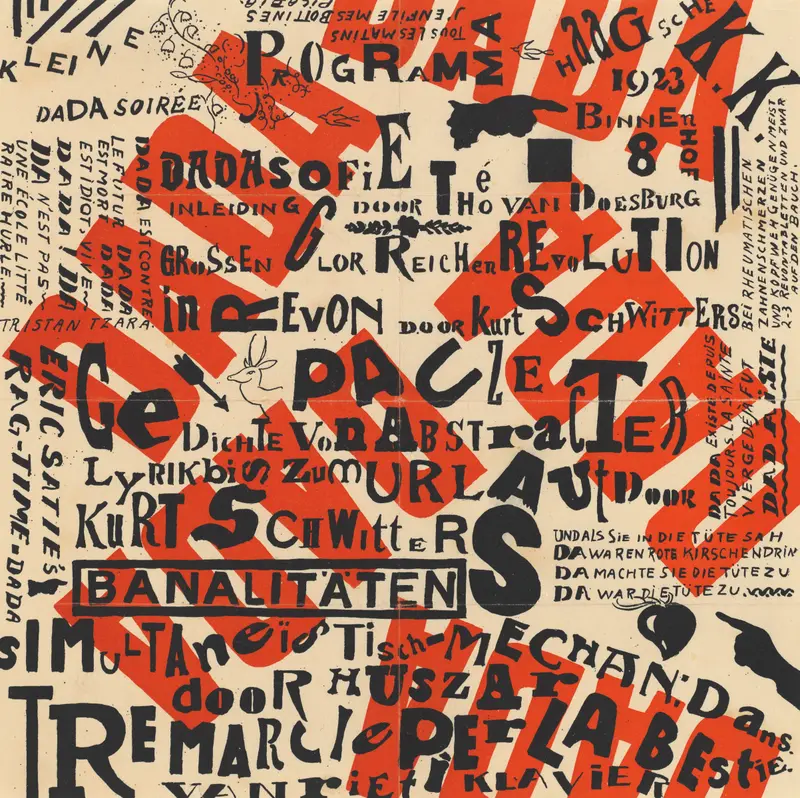
Kleine Dada Soirée (Small Dada Evening)
Theo van Doesburg
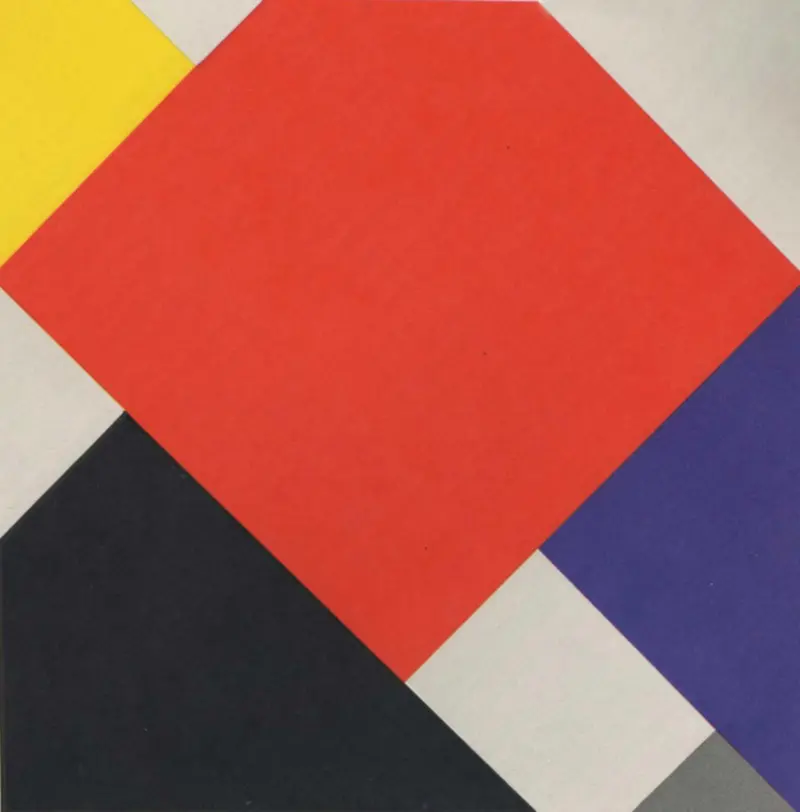
Counter-Composition V
Theo van Doesburg
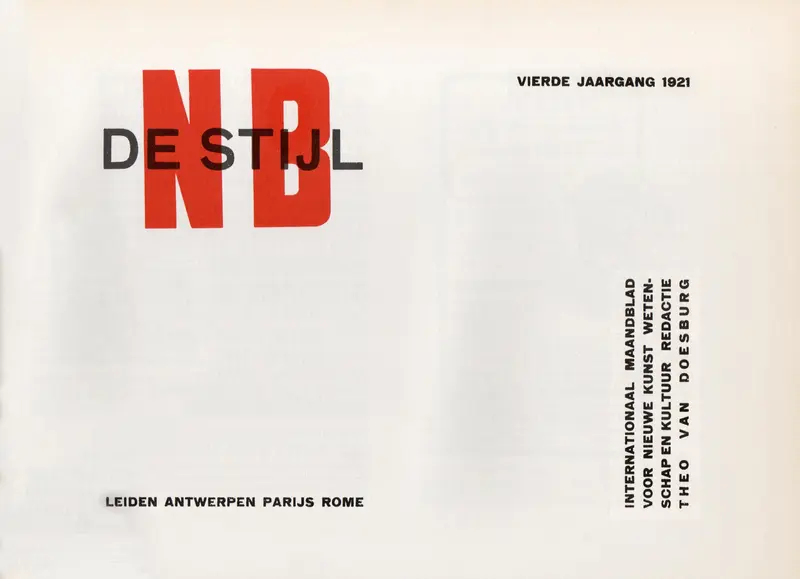
De Stijl, vol. 4, no. 2 (cover)
Theo van Doesburg
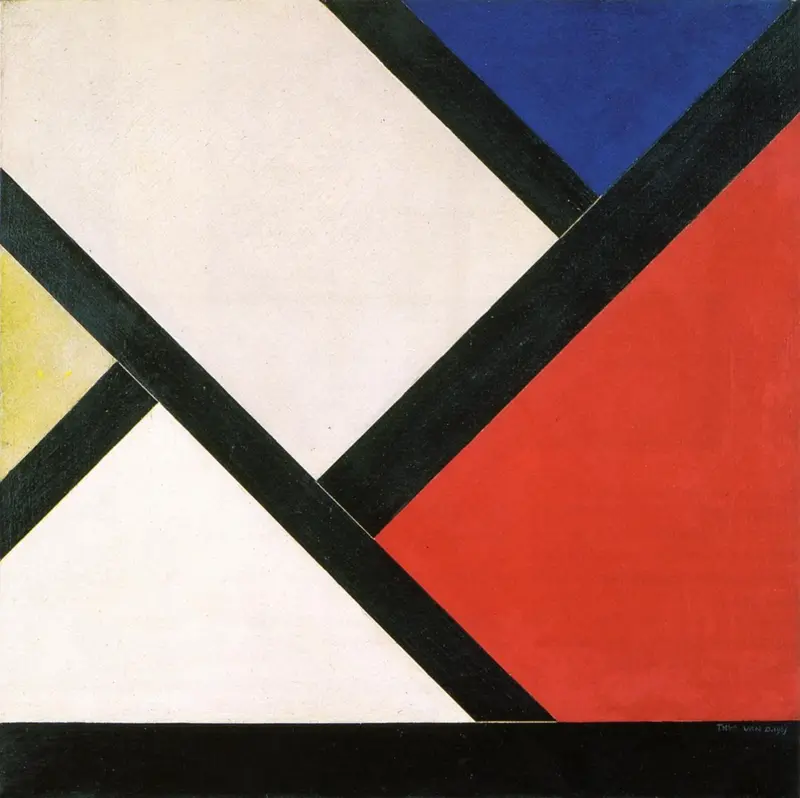
Counter-Composition XIV
Theo van Doesburg
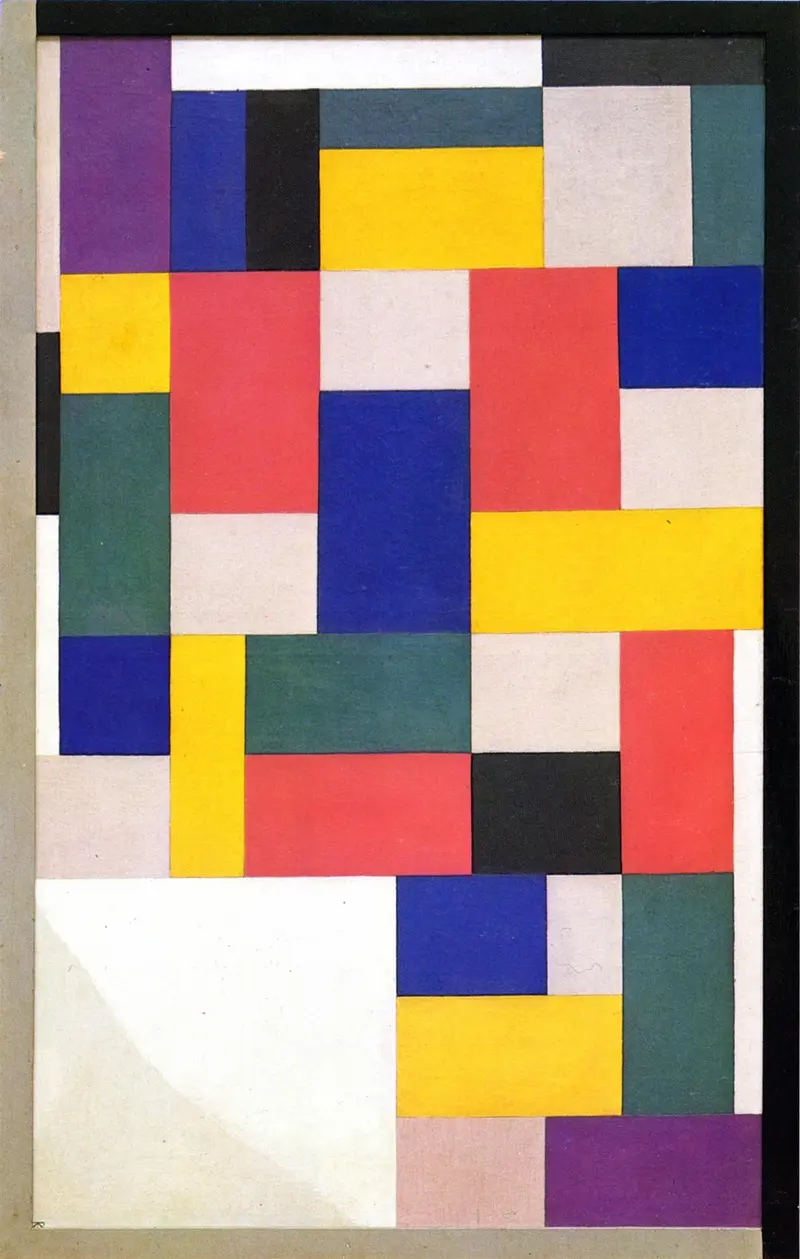
Pure Painting
Theo van Doesburg
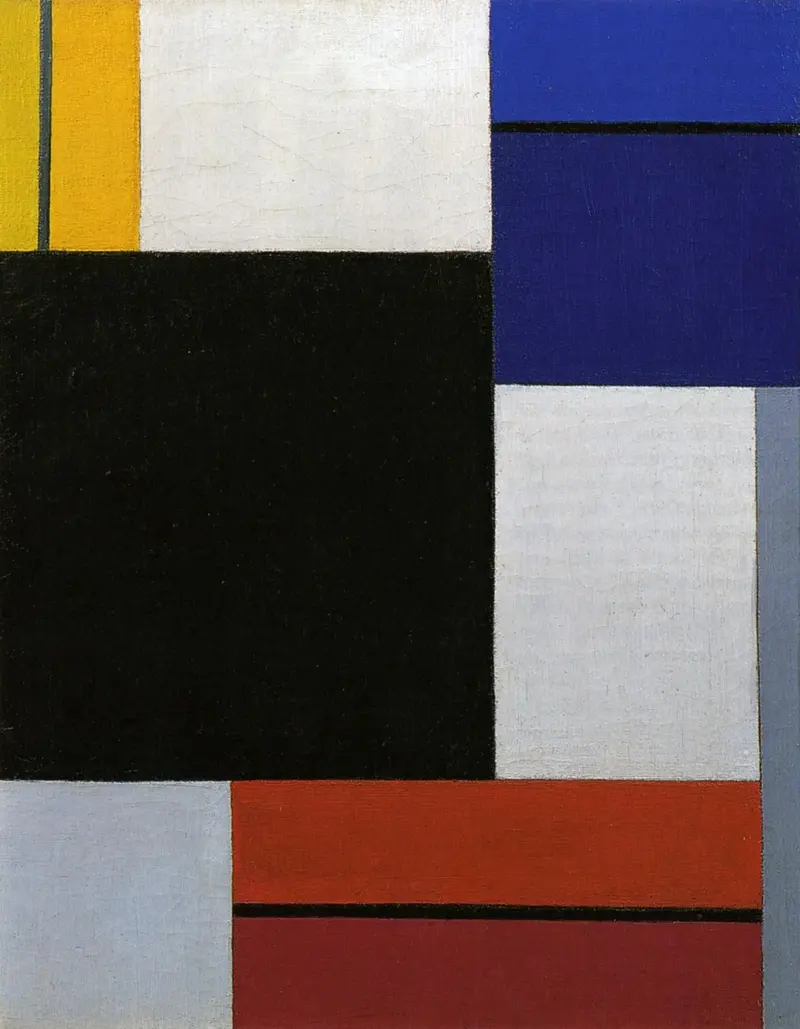
Composition XXI
Theo van Doesburg
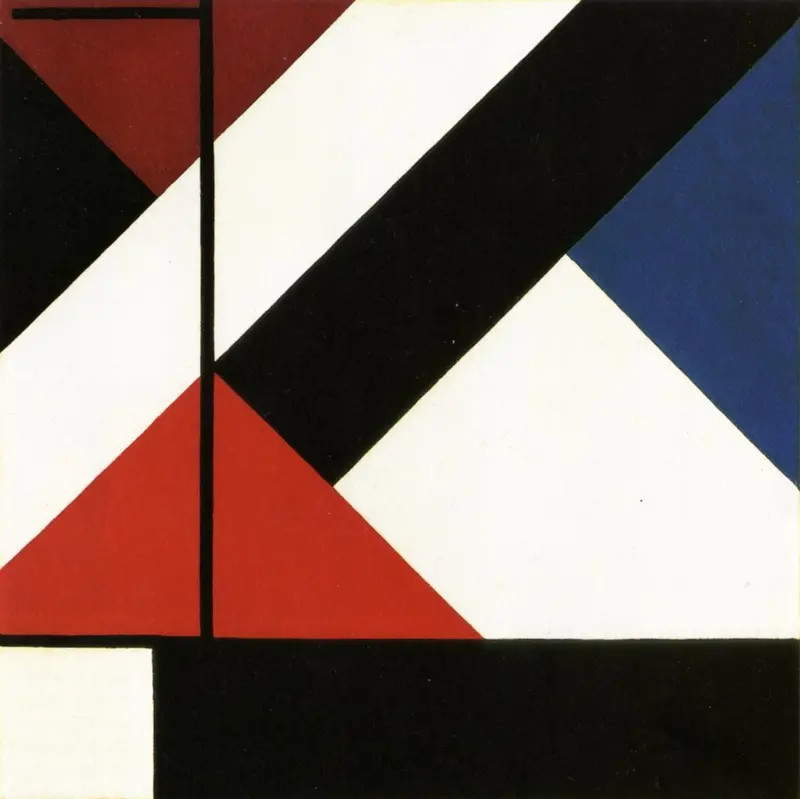
Simultaneous Counter-Composition
Theo van Doesburg
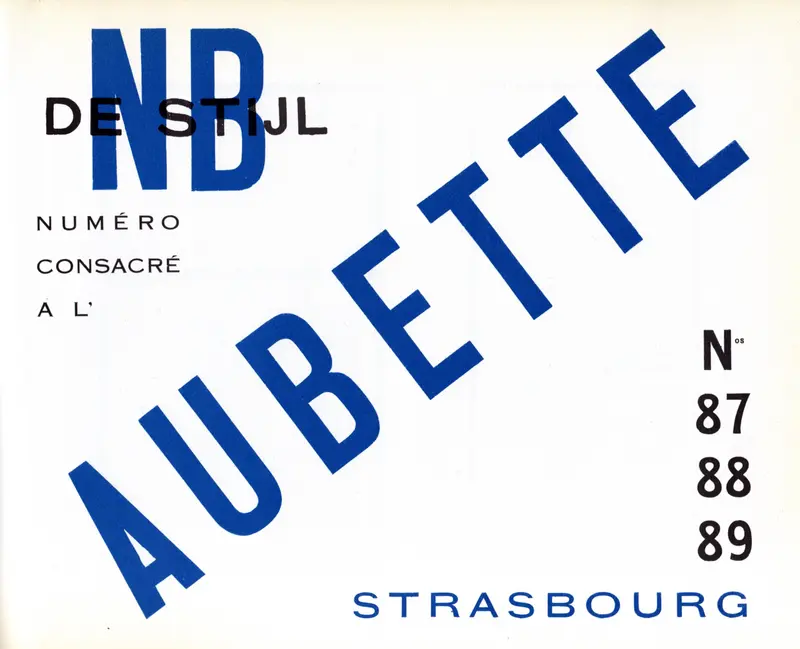
De Stijl, nos. 87–89: Aubette Issue (cover)
Theo van Doesburg
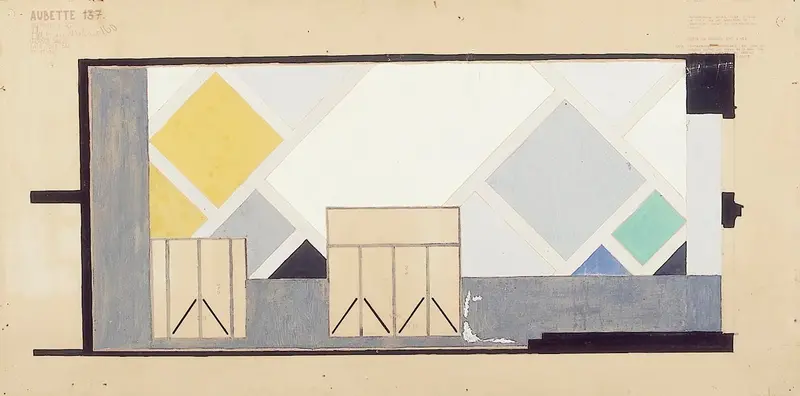
Aubette Ciné-Dancing: Final Color Design for a Wall
Theo van Doesburg
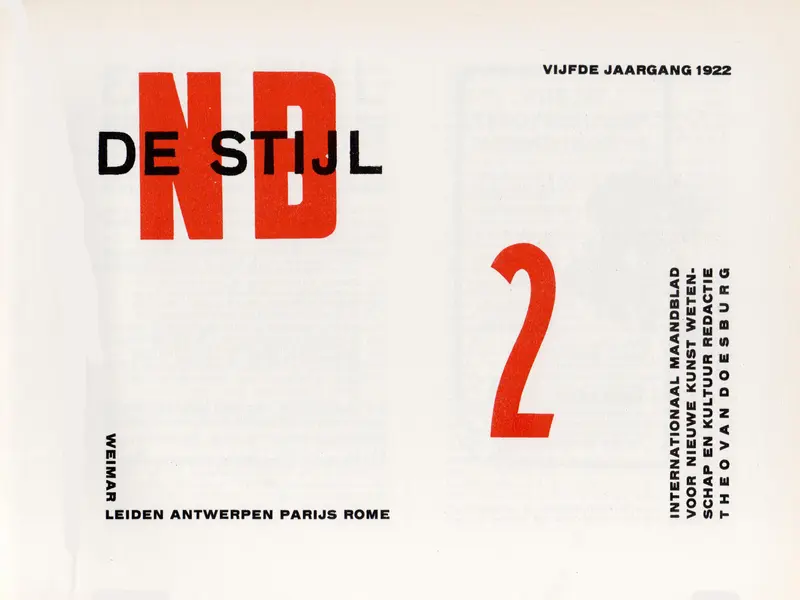
De Stijl, vol. 5, no. 2 (cover)
Theo van Doesburg