
Ausziehende Hirten mit ihrer Herde in südlicher Berglandschaft — History & Facts
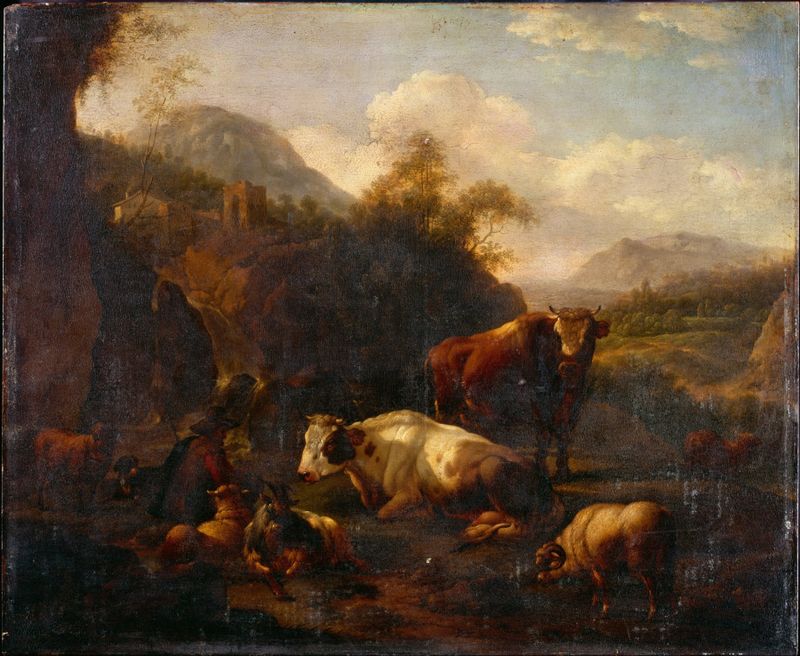
When did color learn to lie? In the hands of a master, hues can evoke both the warmth of truth and the chill of deception, revealing deeper narratives beneath the surface. Look to the lush green expanse that unfurls before you, where the herdsmen and their flock meander through a vibrant southern landscape. Notice how the gentle undulations of the hills cradle the figures, guiding your gaze toward the contrasting earthy tones of the shepherd’s garments. The light bathes the scene in a soft glow, highlighting the harmonious relationship between man and nature, while shadows linger in the folds of the terrain, hinting at untold stories. Yet, as you delve deeper, the composition unfolds complexities: the shepherd’s hands, strong yet weathered, reflect a life of toil, while the sheep, clusters of white against the verdant backdrop, symbolize innocence amidst the chaos of existence.
This duality speaks to the tension within rural life—both idyllic and fraught with struggle. The serene scene captures not just a moment, but also a profound reflection on the passage of time and the inevitable change that colors truth. In the late 17th century, Roos painted this work during a time of flourishing Baroque art in the Netherlands. Living in a period marked by both artistic innovation and social upheaval, he found inspiration in landscapes that juxtaposed beauty with the realities of rural labor.
Ausziehende Hirten mit ihrer Herde in südlicher Berglandschaft emerged from this context, encapsulating his ability to convey the complex truths of human existence through the lens of nature.
More Artworks by Johann Heinrich Roos
Browse all →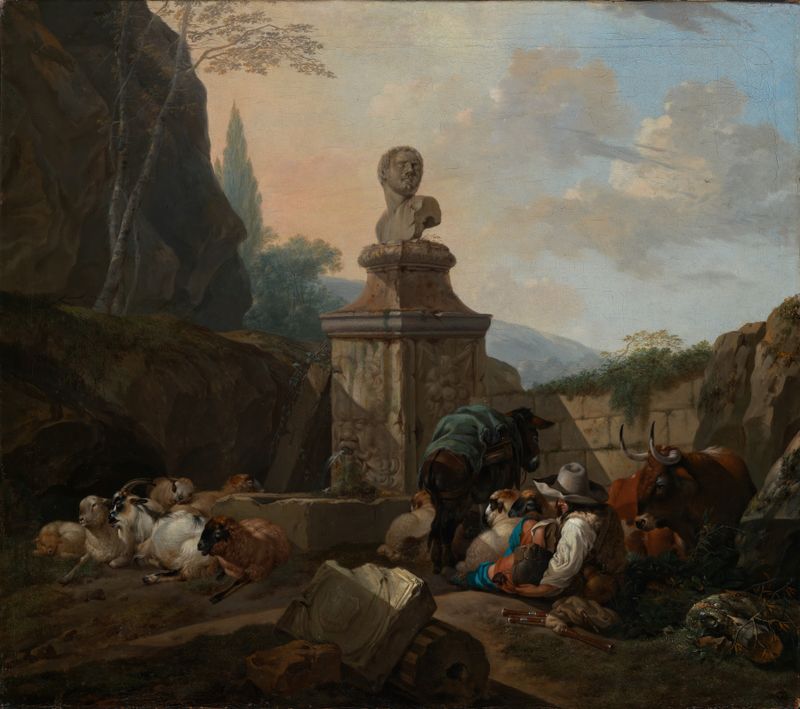
Ruhender Hirt und Herde an römischem Brunnen
Johann Heinrich Roos
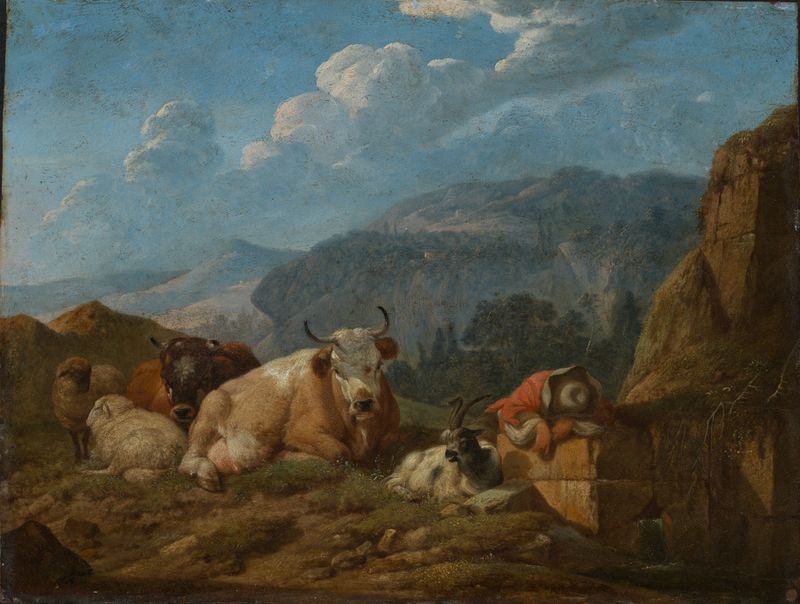
Italienische Berglandschaft
Johann Heinrich Roos
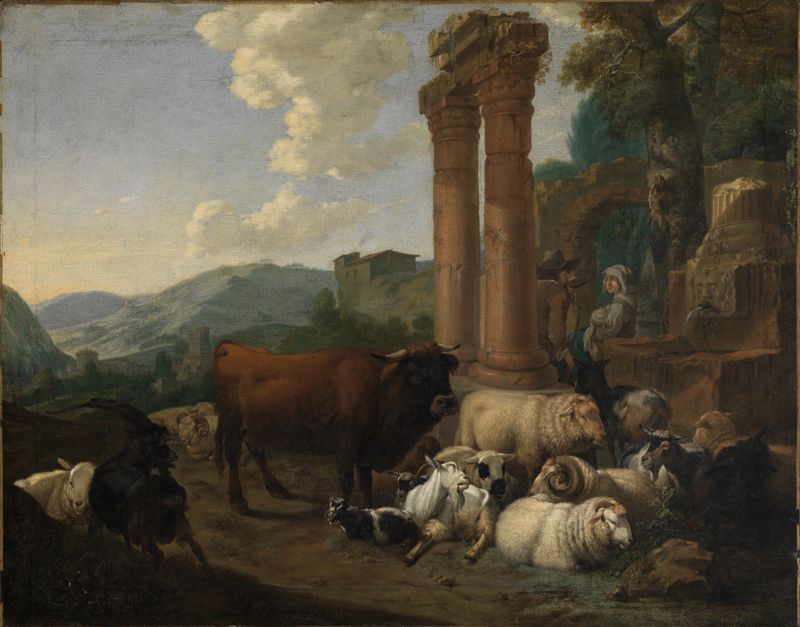
Hirtenszene in römischer Ruinenlandschaft
Johann Heinrich Roos
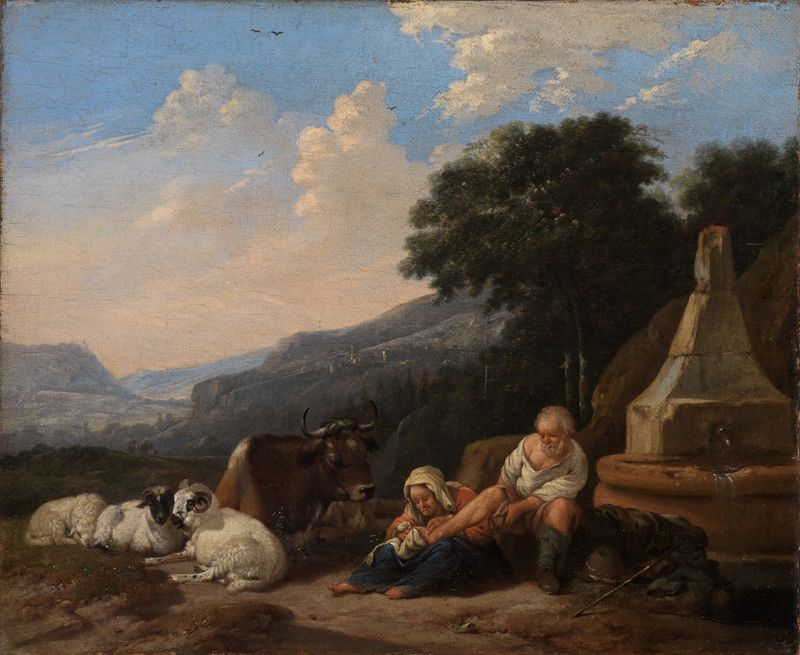
Berglandschaft mit Hirten am Brunnen
Johann Heinrich Roos
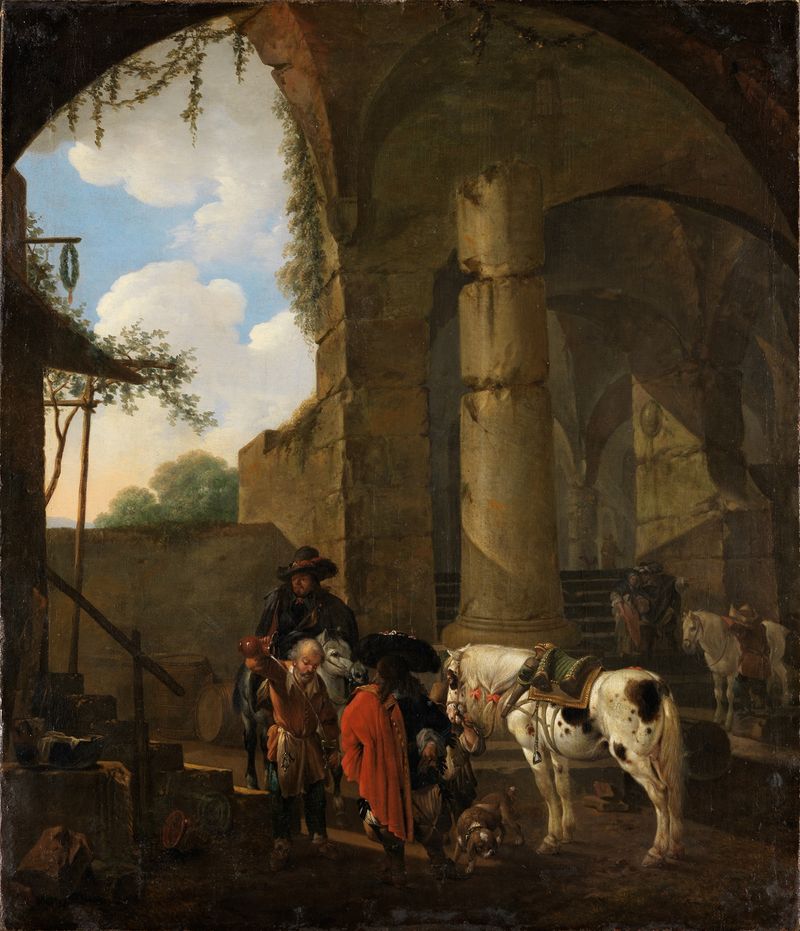
Osteria in römischer Ruine
Johann Heinrich Roos
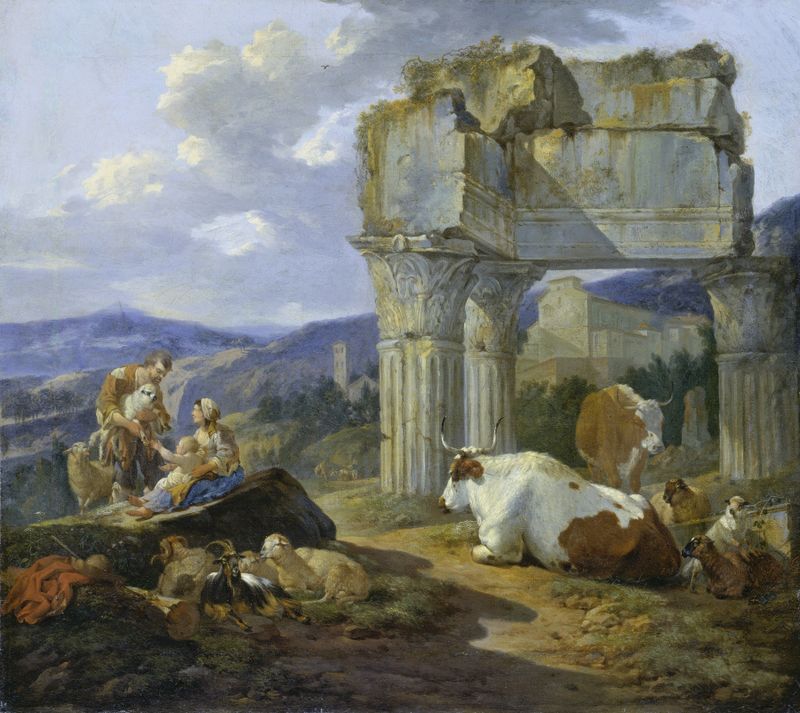
Shepherd’s Family at the Ruins of the Temple of Vespasian
Johann Heinrich Roos
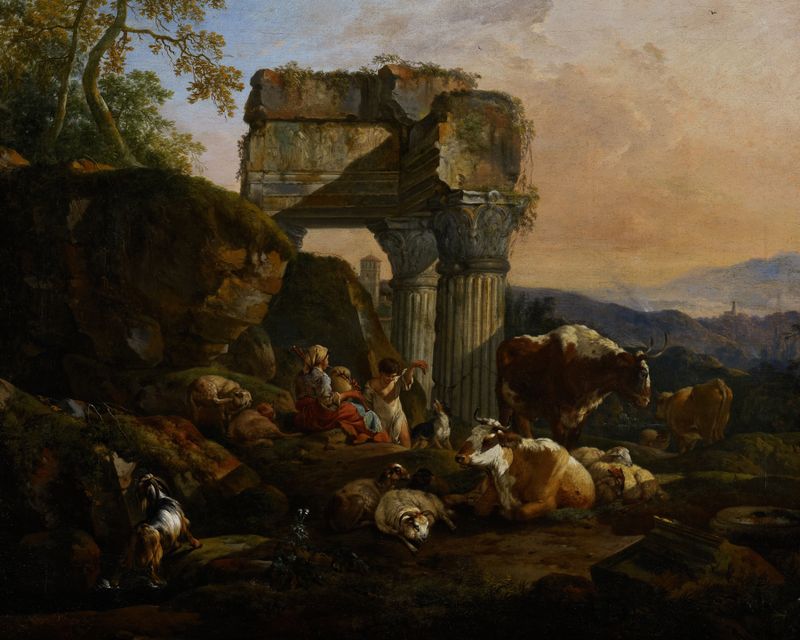
Roman Landscape with Cattle and Shepherds
Johann Heinrich Roos
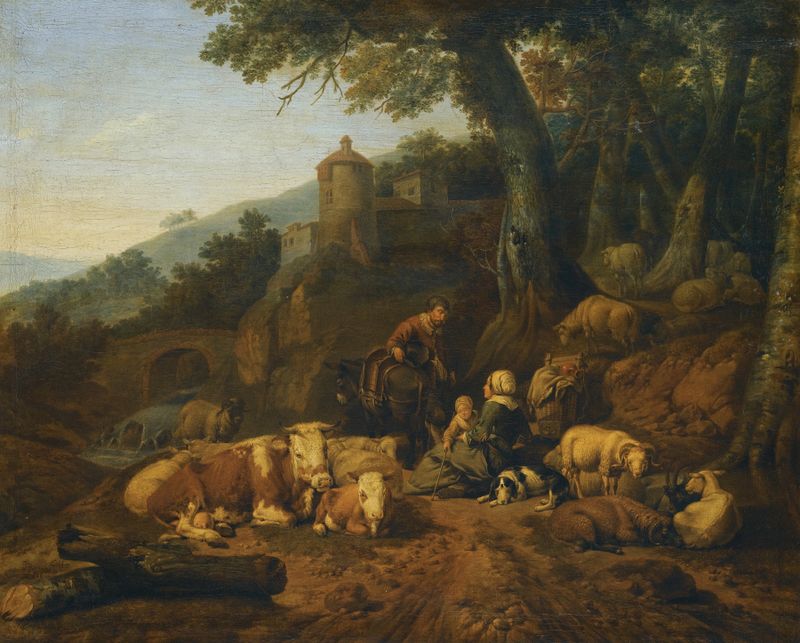
A Landscape With Drovers And Their Flock At Rest
Johann Heinrich Roos
Landscape
Johann Heinrich Roos
Herdersjongen met een bok spelend
Johann Heinrich Roos





