
Herdersjongen met een bok spelend — History & Facts
What if beauty was never meant to be finished? In a world suspended between reality and dream, the ephemeral becomes a canvas for the imagination. Look to the left at the young shepherd boy, his face a study of innocence and joy as he plays with a goat amidst a lush, tranquil landscape. The gentle brushstrokes bring life to the scene, with soft greens and rich earth tones blending to create a harmonious backdrop. Notice how the light dances across the foliage, illuminating the boy’s tousled hair and the goat’s playful demeanor, lending a sense of vibrancy and warmth to the moment. Beneath the surface, contrasts emerge—between youth and the burdens of adulthood, between the carefree spirit and the responsibilities of shepherding.
The goat, often a symbol of mischief, seems to embody the wildness of nature, while the boy’s laughter hints at a fleeting innocence soon to be lost. This intricate interplay invites viewers to reflect on their own experiences of joy intertwined with the inevitability of time. During the years 1641 to 1685, Johann Heinrich Roos thrived in the German art scene, shaped by the Baroque movement’s emphasis on emotion and realism. Painted amidst a burgeoning interest in pastoral themes, Herdersjongen met een bok spelend captures not just a moment in time, but also an exploration of youthful dreams against the backdrop of an ever-changing world, echoing the artist's own aspirations in the realm of landscape painting.
More Artworks by Johann Heinrich Roos
Browse all →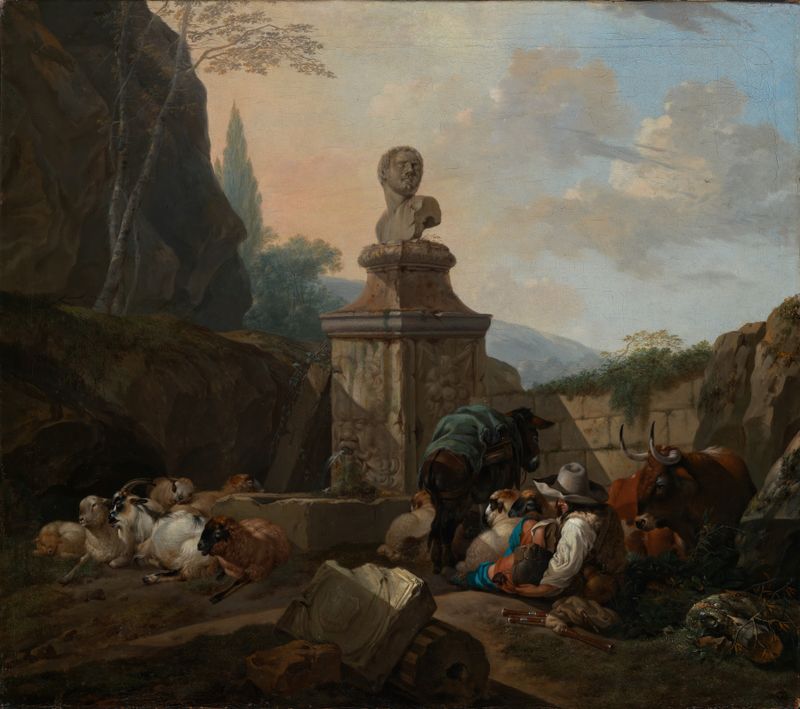
Ruhender Hirt und Herde an römischem Brunnen
Johann Heinrich Roos
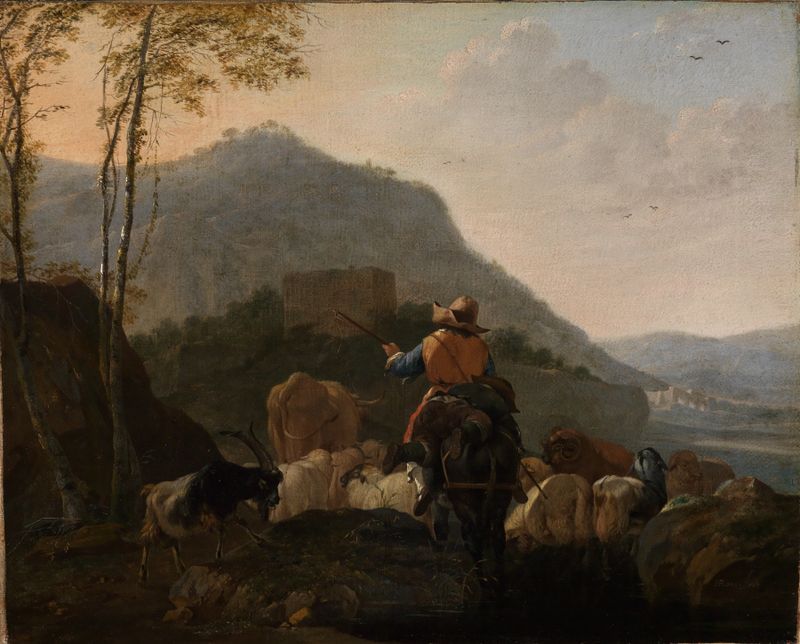
Ausziehende Hirten mit ihrer Herde in südlicher Berglandschaft
Johann Heinrich Roos
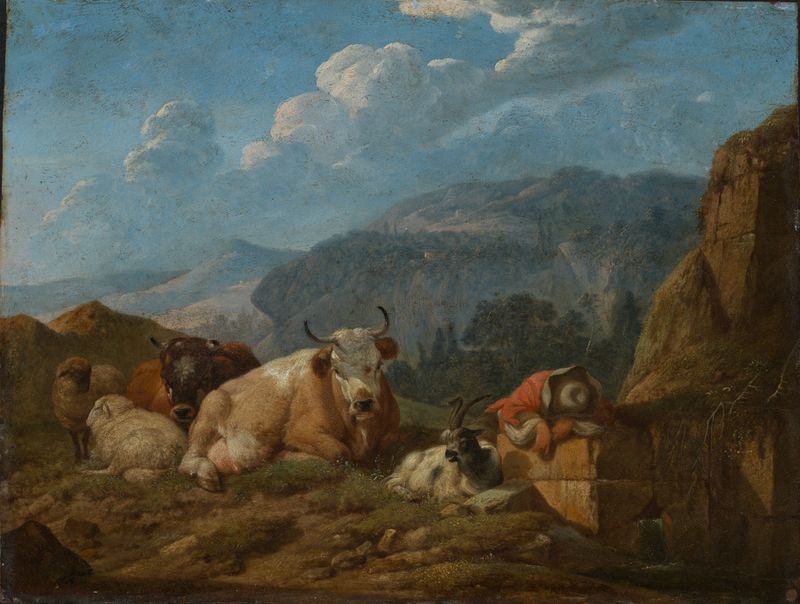
Italienische Berglandschaft
Johann Heinrich Roos
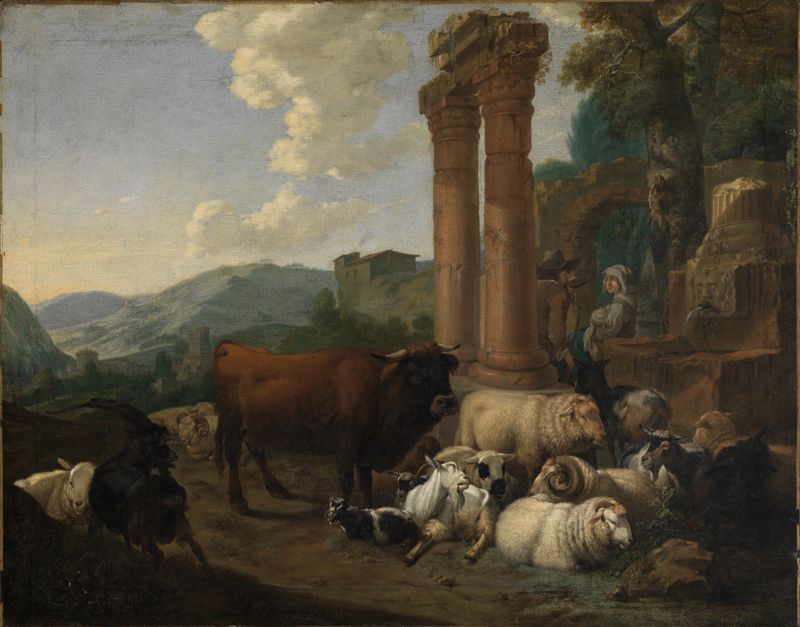
Hirtenszene in römischer Ruinenlandschaft
Johann Heinrich Roos
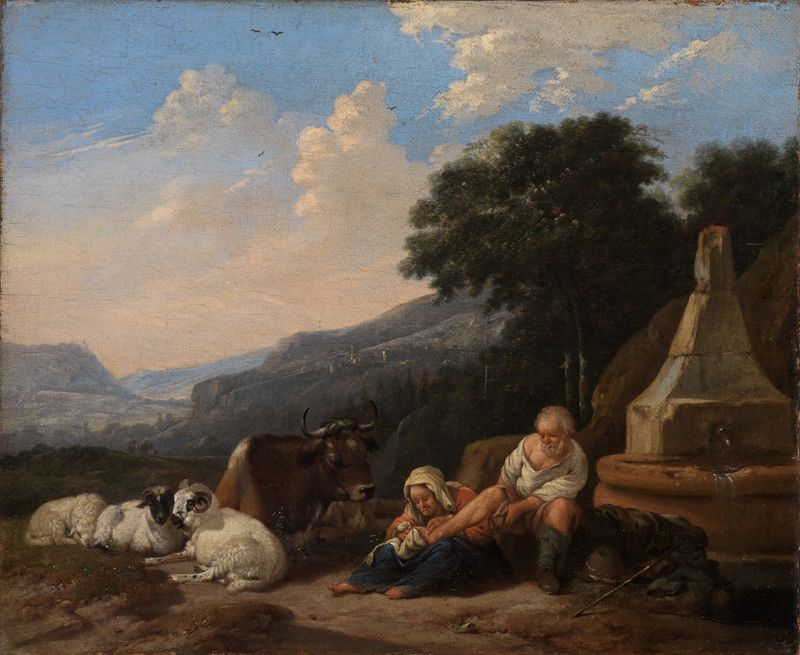
Berglandschaft mit Hirten am Brunnen
Johann Heinrich Roos
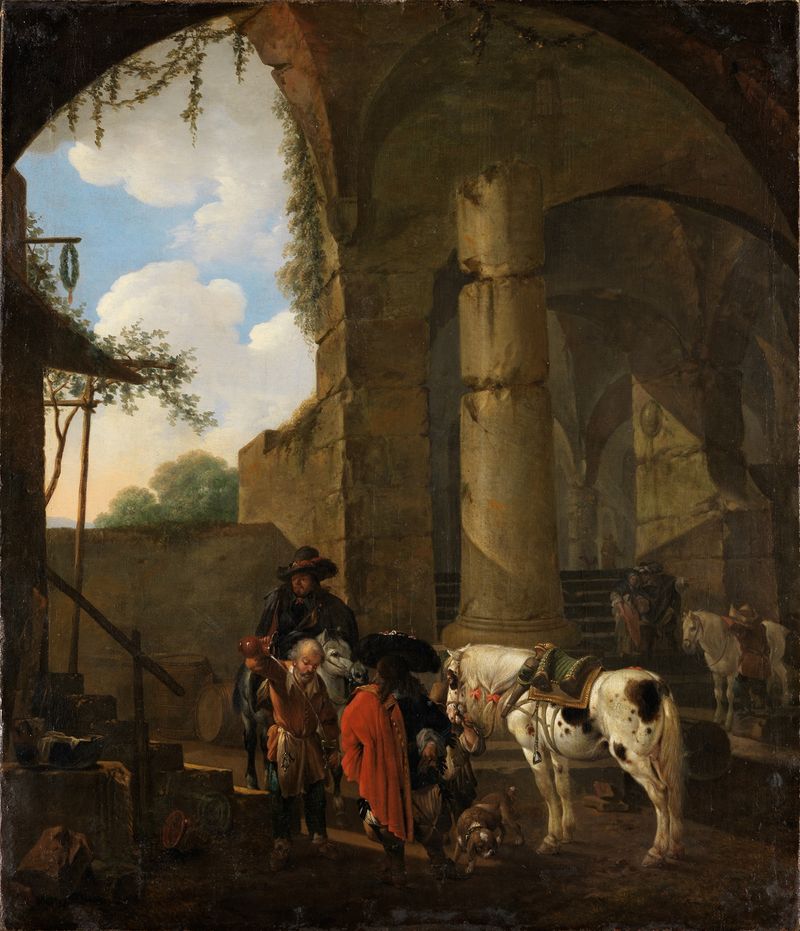
Osteria in römischer Ruine
Johann Heinrich Roos
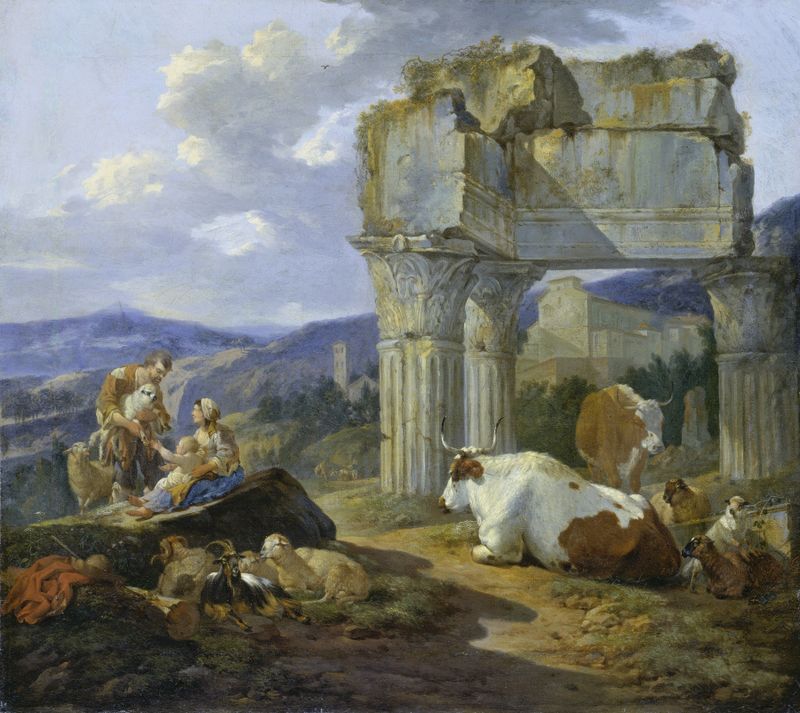
Shepherd’s Family at the Ruins of the Temple of Vespasian
Johann Heinrich Roos
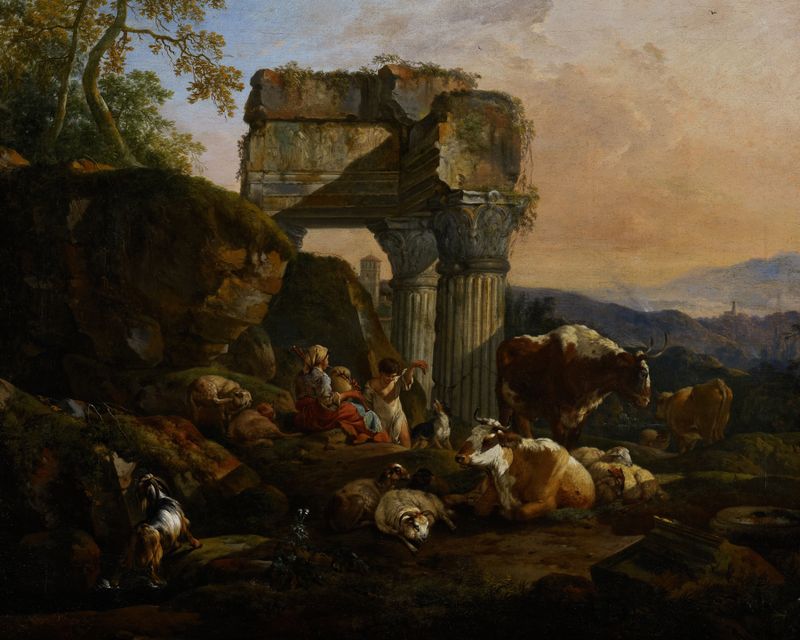
Roman Landscape with Cattle and Shepherds
Johann Heinrich Roos
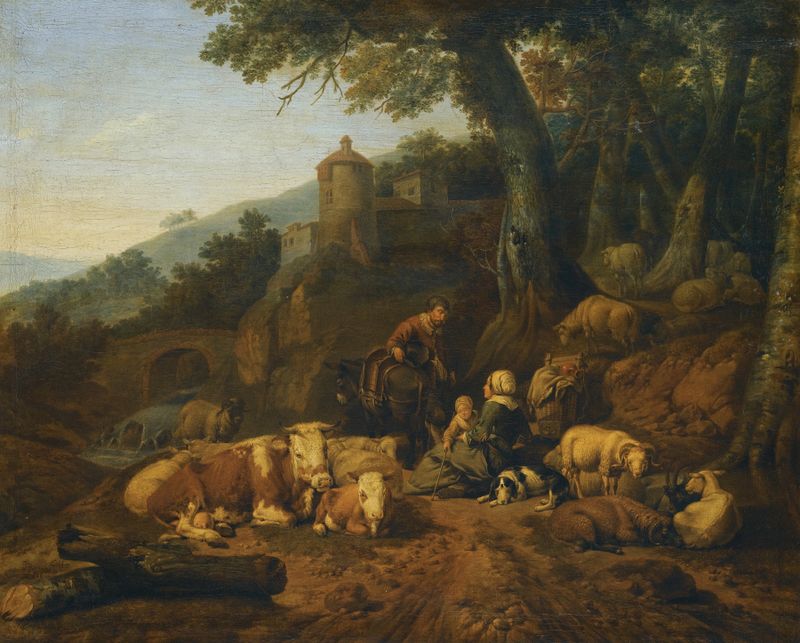
A Landscape With Drovers And Their Flock At Rest
Johann Heinrich Roos
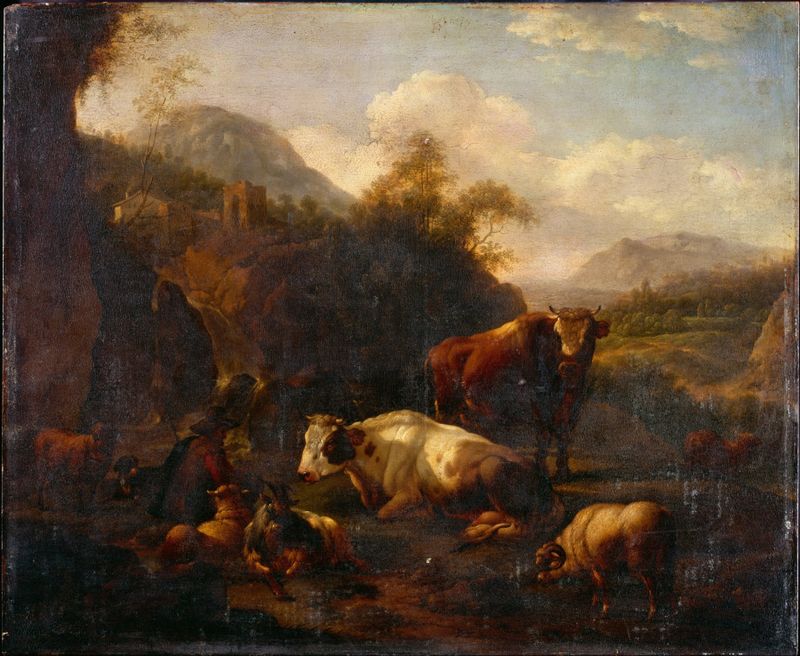
Landscape
Johann Heinrich Roos





