
Ruhender Hirt und Herde an römischem Brunnen — History & Facts
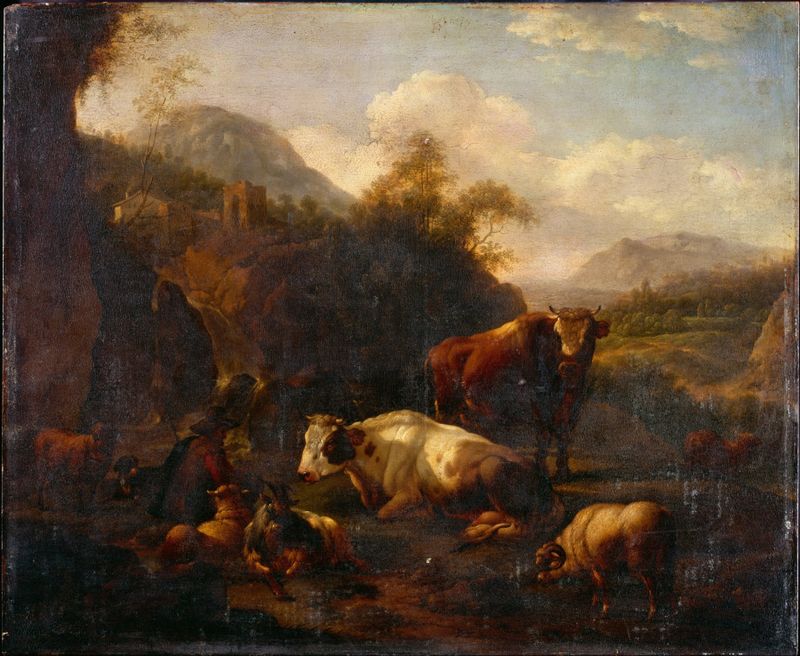
When did color learn to lie? In the silence of a sunlit afternoon, shadows dance beneath the ancient architecture, revealing secrets held within the hues of earth and sky. Focus on the serene figure of the shepherd to the left, resting against the worn stone of the Roman fountain. Notice how the light gently caresses his weathered features, casting soft shadows that echo the tranquility surrounding him. The palette of warm ochres and cool blues creates a harmonious balance, inviting you to linger in this pastoral haven where time seems suspended. Yet, the interplay of light and shadow hints at a deeper narrative.
The soft outlines of the sheep, their woolly forms nearly blending into the dusky ground, evoke a sense of vulnerability and reliance on the shepherd. The contrasting solidity of the fountain symbolizes permanence, while the fleeting moment captured in the figure's repose suggests the transient nature of peace amid an ever-changing world. Johann Heinrich Roos painted this scene around 1670, during a period marked by the rise of Dutch landscapes and naturalism in art. Residing in Rome, he was influenced by the tranquility of the Italian countryside and the historical echoes of classical architecture.
It was a time when artists sought to capture not just the beauty of nature, but the relationship between humanity and the serene landscapes they inhabit, a theme that resonates powerfully in this work.
More Artworks by Johann Heinrich Roos
Browse all →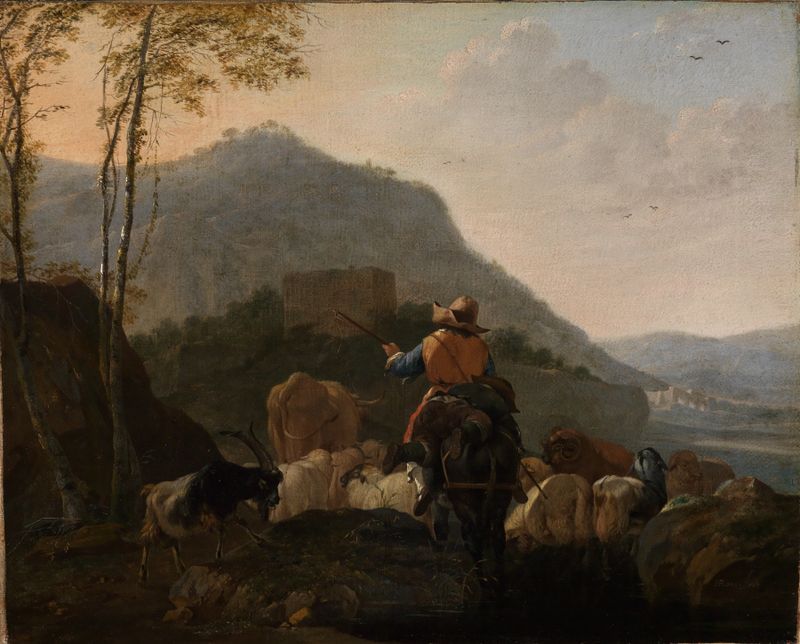
Ausziehende Hirten mit ihrer Herde in südlicher Berglandschaft
Johann Heinrich Roos
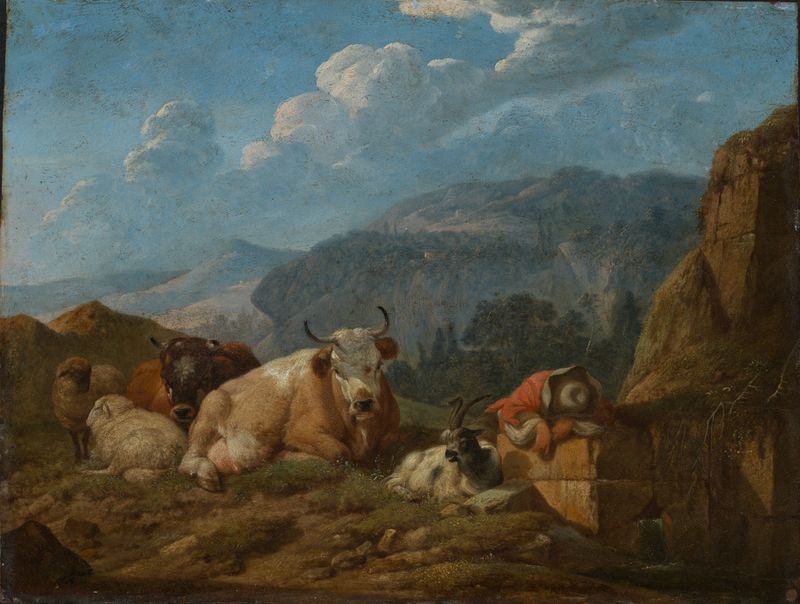
Italienische Berglandschaft
Johann Heinrich Roos
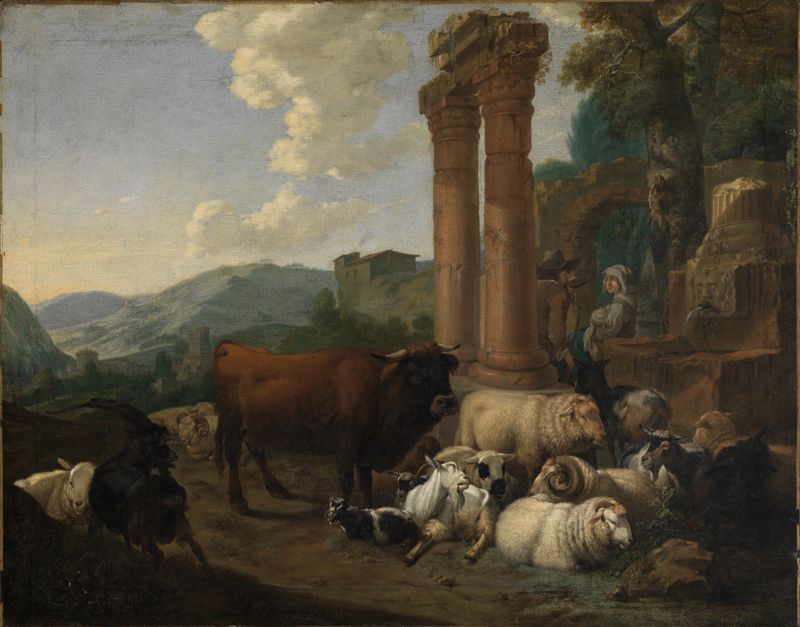
Hirtenszene in römischer Ruinenlandschaft
Johann Heinrich Roos
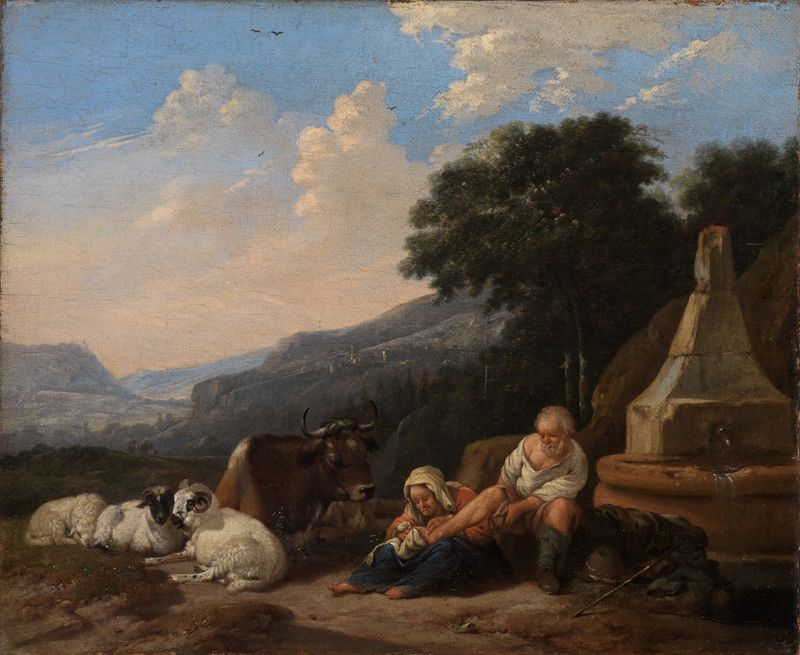
Berglandschaft mit Hirten am Brunnen
Johann Heinrich Roos
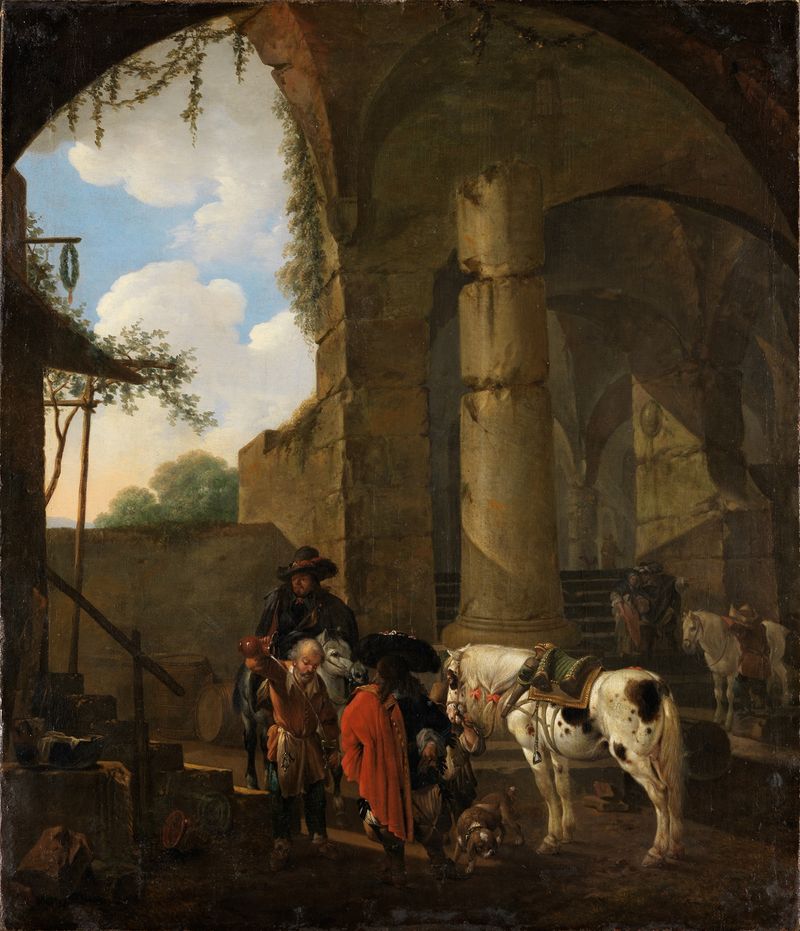
Osteria in römischer Ruine
Johann Heinrich Roos
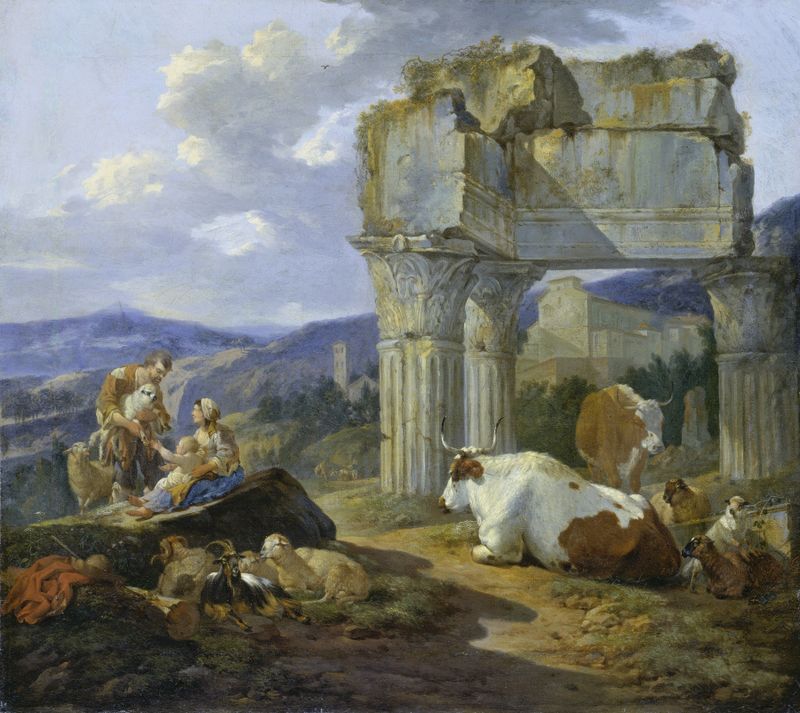
Shepherd’s Family at the Ruins of the Temple of Vespasian
Johann Heinrich Roos
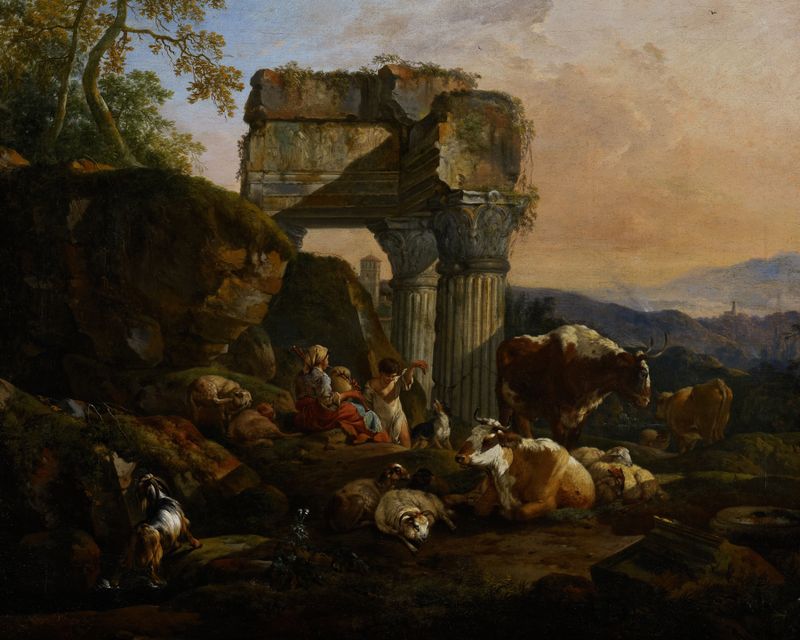
Roman Landscape with Cattle and Shepherds
Johann Heinrich Roos
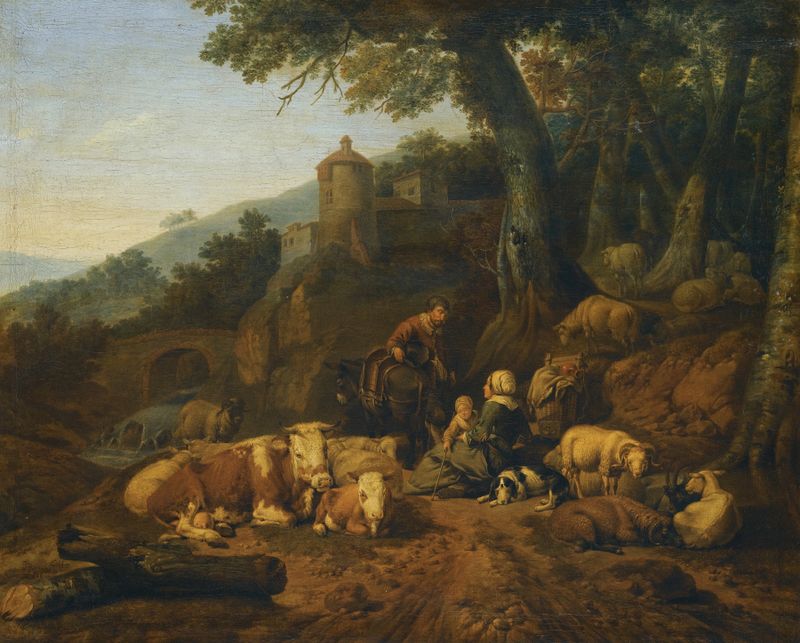
A Landscape With Drovers And Their Flock At Rest
Johann Heinrich Roos
Landscape
Johann Heinrich Roos
Herdersjongen met een bok spelend
Johann Heinrich Roos





