
Italienische Berglandschaft — History & Facts
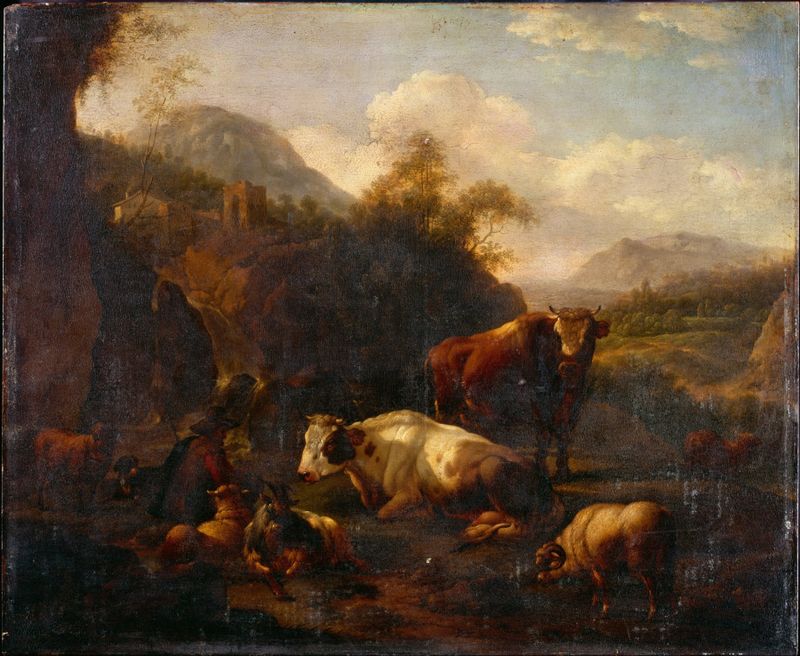
As you gaze upon this serene landscape, consider the unseen violence that shapes nature's beauty, reminding us that tranquility often conceals turmoil. Focus on the sweeping contours of the rolling hills, where greens and browns intertwine, inviting your gaze deeper into the painting. Notice how the light cascades through the clouds, illuminating the peaks with an ethereal glow, while darker shadows lurk in the valleys below. This delicate interplay of light and shadow creates a contrast that speaks to the duality of existence, enticing the viewer to explore both visible and hidden depths. Hidden within the idyllic scenery lies an emotional tension, as the rough brushwork hints at nature's ferocity behind its outward calm.
The jagged mountain ridges, bold and imposing, provoke a sense of awe and danger. These subtle yet powerful details suggest that the landscape is a living entity, shaped by the violence of storms and erosion, reminding us that beauty often emerges from chaos and strife. In 1668, Johann Heinrich Roos painted this landscape during a time of heightened interest in nature within the art world, particularly in Germany. The artist was drawn to the Italian countryside, which provided fresh inspiration and allowed him to blend the serenity of rural life with a profound appreciation for the sublime power of the natural world.
His unique approach to landscapes reflected both personal exploration and the broader transition of 17th-century art towards realism and emotional depth.
More Artworks by Johann Heinrich Roos
Browse all →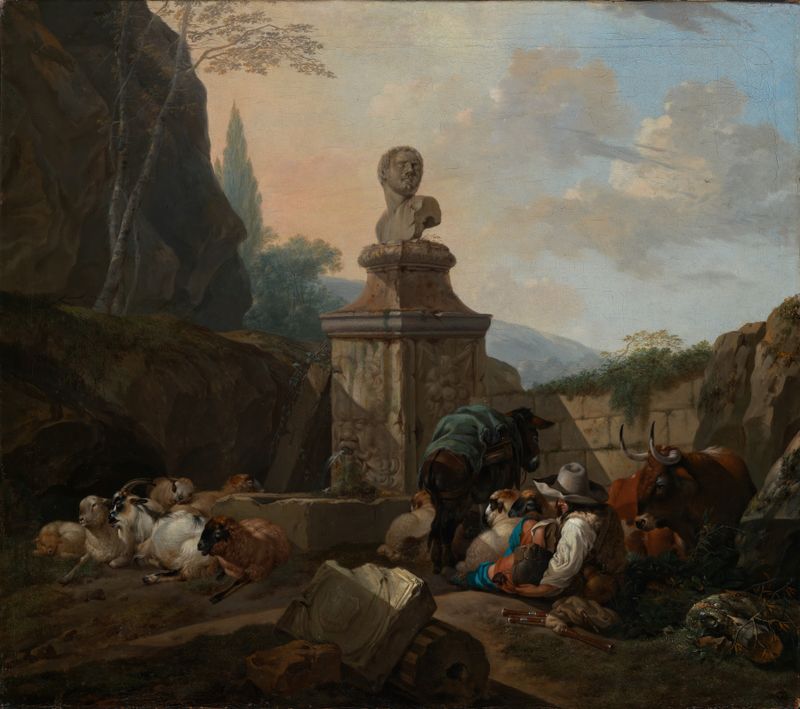
Ruhender Hirt und Herde an römischem Brunnen
Johann Heinrich Roos
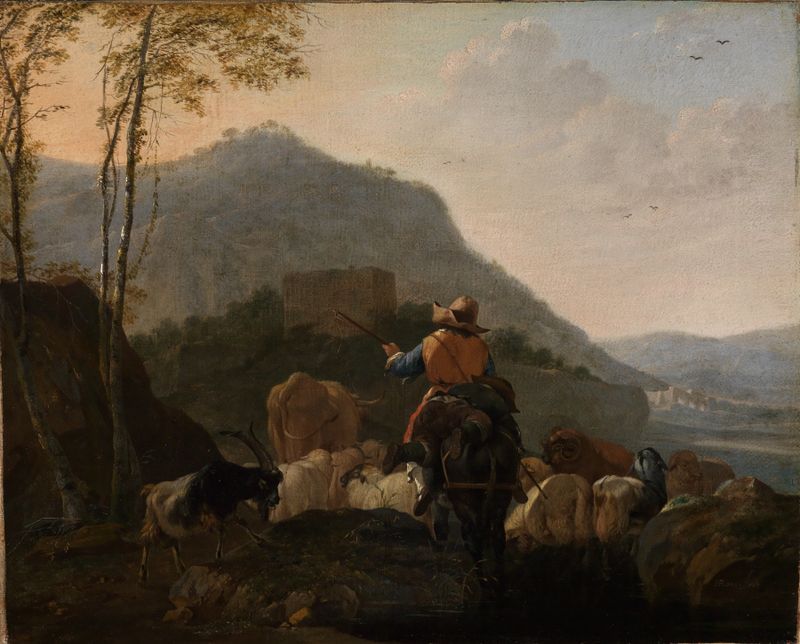
Ausziehende Hirten mit ihrer Herde in südlicher Berglandschaft
Johann Heinrich Roos
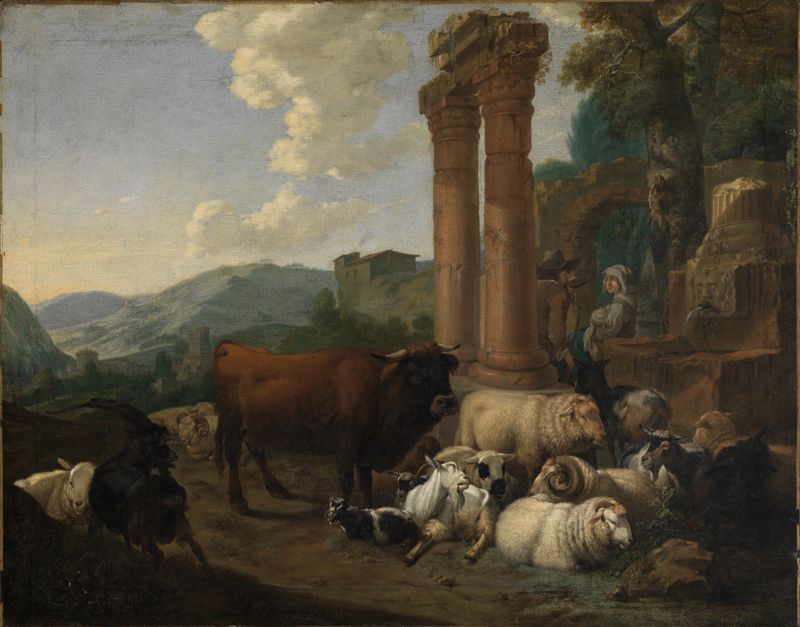
Hirtenszene in römischer Ruinenlandschaft
Johann Heinrich Roos
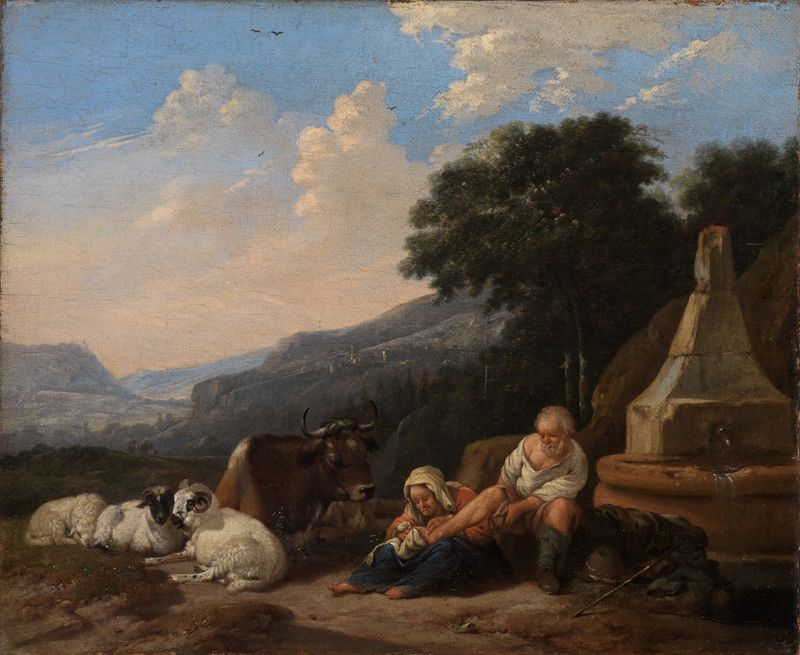
Berglandschaft mit Hirten am Brunnen
Johann Heinrich Roos
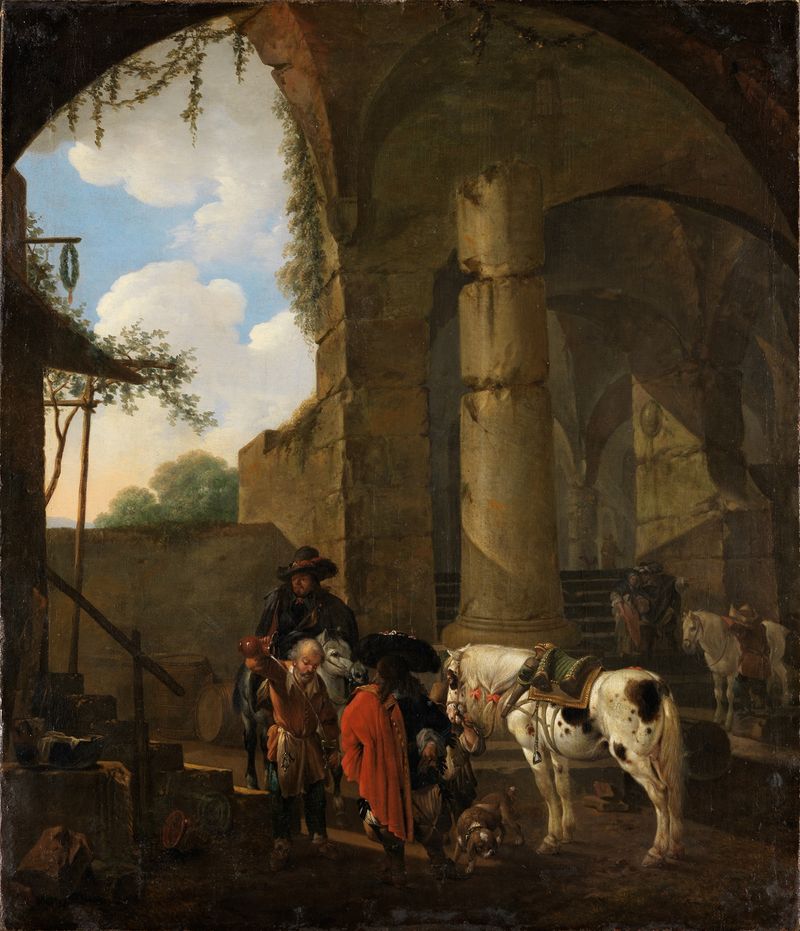
Osteria in römischer Ruine
Johann Heinrich Roos
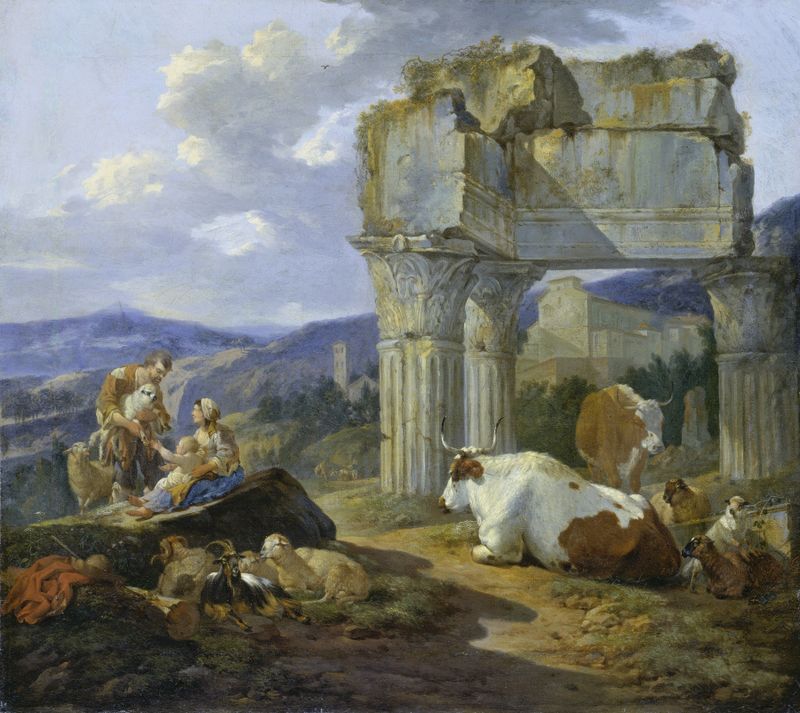
Shepherd’s Family at the Ruins of the Temple of Vespasian
Johann Heinrich Roos
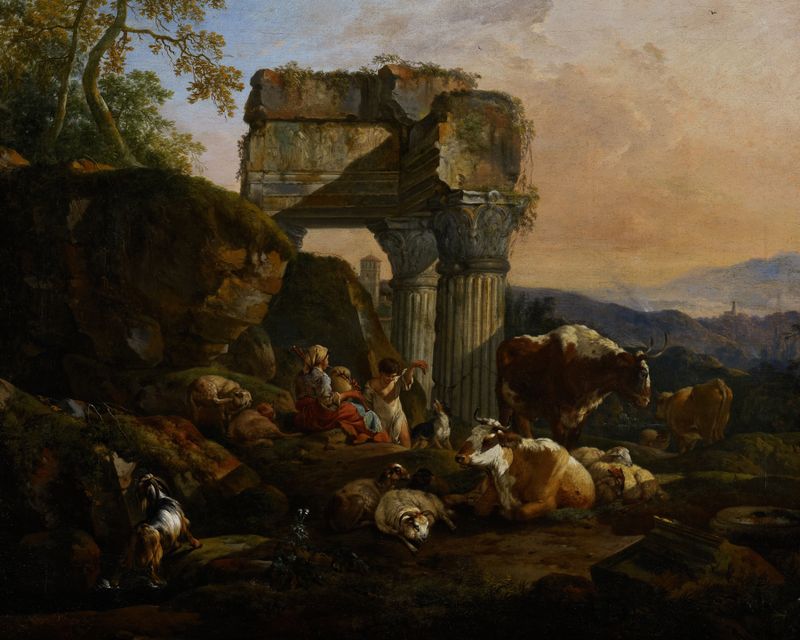
Roman Landscape with Cattle and Shepherds
Johann Heinrich Roos
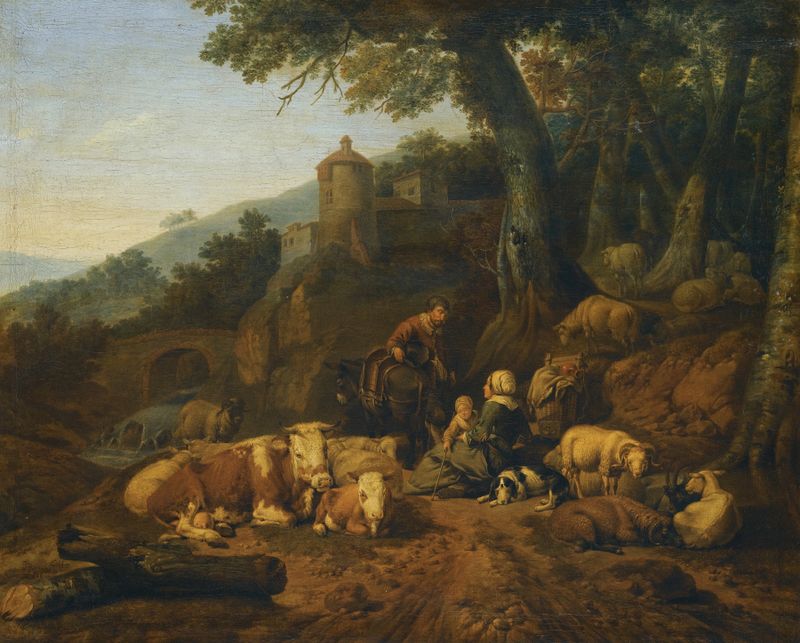
A Landscape With Drovers And Their Flock At Rest
Johann Heinrich Roos
Landscape
Johann Heinrich Roos
Herdersjongen met een bok spelend
Johann Heinrich Roos





