
Hirtenszene in römischer Ruinenlandschaft — History & Facts
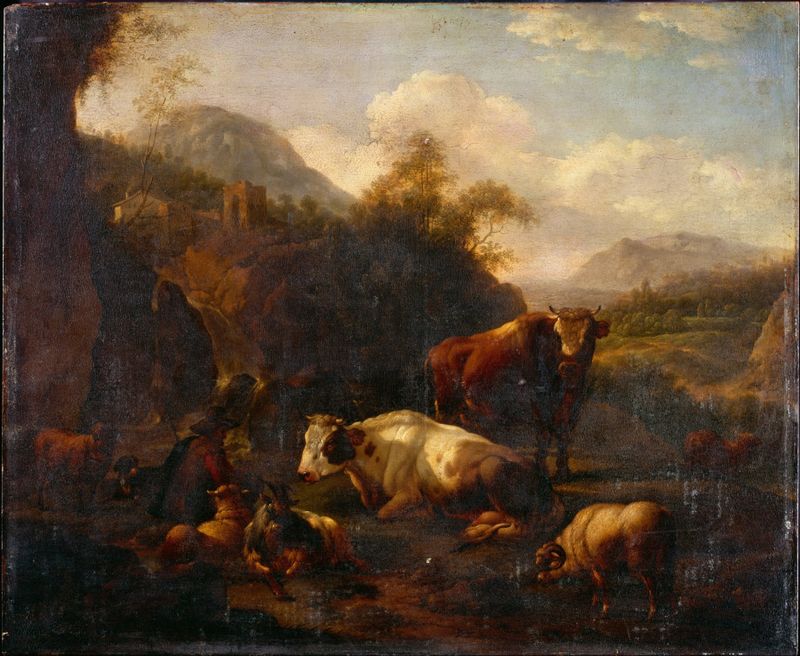
Can beauty exist without sorrow? In Hirtenszene in römischer Ruinenlandschaft, we encounter a pastoral landscape that intertwines joy and melancholy, echoing the duality of human experience itself. Look towards the center of the composition where shepherds gather amid the remnants of classical architecture. Notice how the warm golden hues of the setting sun illuminate the ruins, casting long shadows that stretch across the verdant grasses and grazing sheep. The delicate interplay of light and shadow enhances the texture of both the ancient stone and the soft woolen coats, inviting the viewer to appreciate the harmony between nature and history.
The figures, rendered with gentle strokes, communicate a sense of calm as they inhabit this tranquil yet poignant space. Beneath the bucolic surface lies an emotional tension, as the crumbling ruins signify the passage of time and the fragility of both beauty and existence. The shepherds, with their humble demeanor, embody a profound faith in their pastoral life, juxtaposed against the grandeur of the ruins that once represented civilization’s peak. This contrast between the fleeting nature of human life and the enduring remnants of history evokes a deeper contemplation on the cycles of life, loss, and resilience. In 1660, Roos painted this work during a period when pastoral scenes were gaining popularity in Dutch and Flemish art.
Residing in Rome, he was influenced by the classical monuments around him, capturing the intersection of nature and history. This was a time of transitions in art, as the Baroque movement began to flourish, and Roos’s work reflects both an appreciation for the sublime beauty of the landscape and a reflection on the inevitability of decay and the passage of time.
More Artworks by Johann Heinrich Roos
Browse all →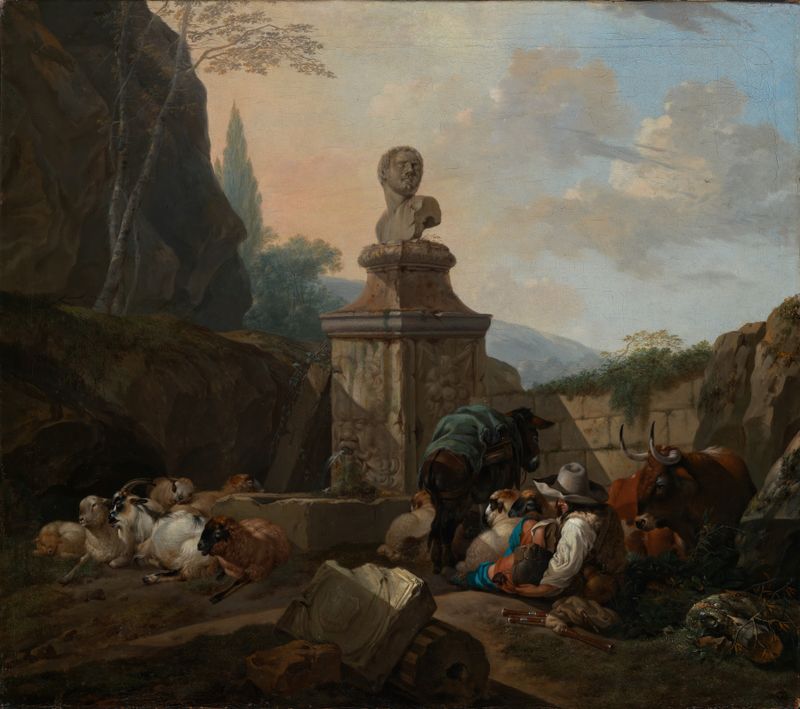
Ruhender Hirt und Herde an römischem Brunnen
Johann Heinrich Roos
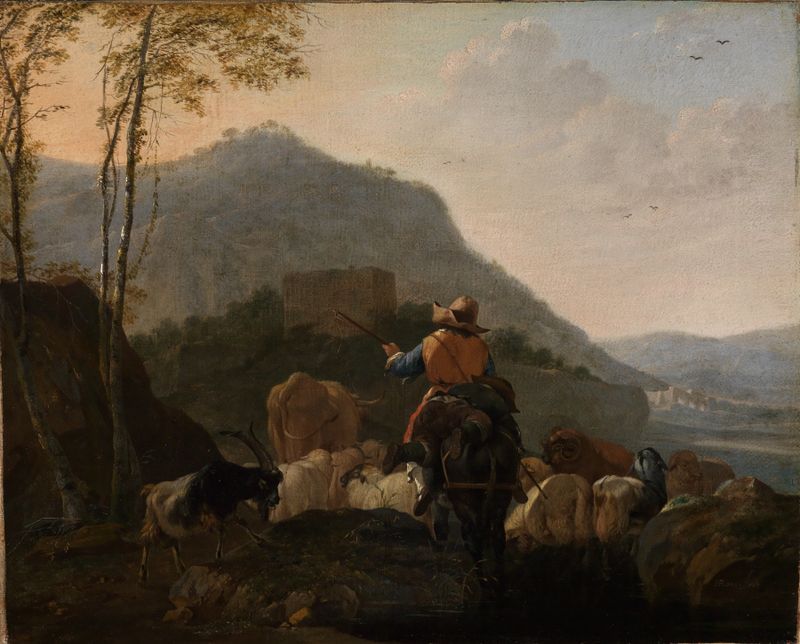
Ausziehende Hirten mit ihrer Herde in südlicher Berglandschaft
Johann Heinrich Roos
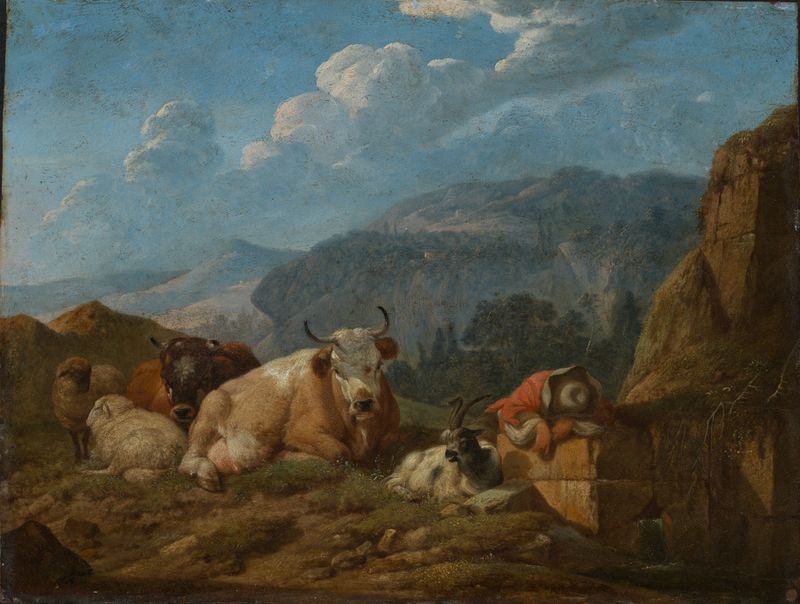
Italienische Berglandschaft
Johann Heinrich Roos
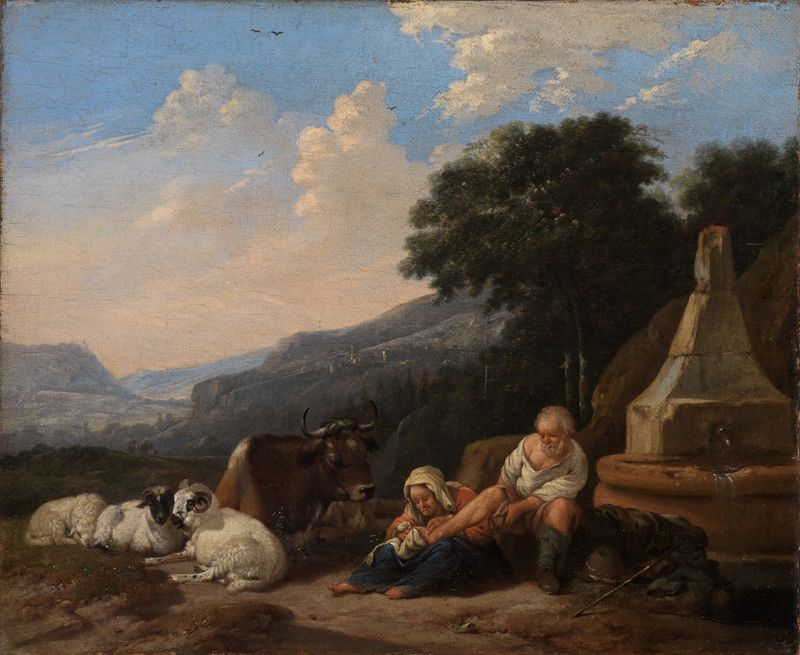
Berglandschaft mit Hirten am Brunnen
Johann Heinrich Roos
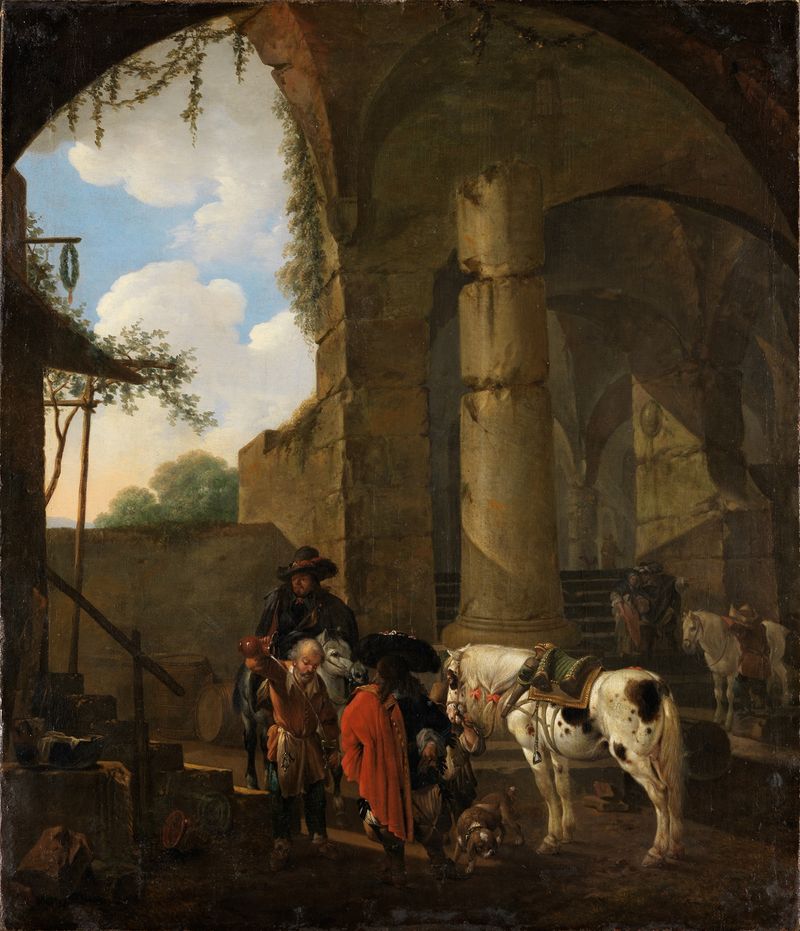
Osteria in römischer Ruine
Johann Heinrich Roos
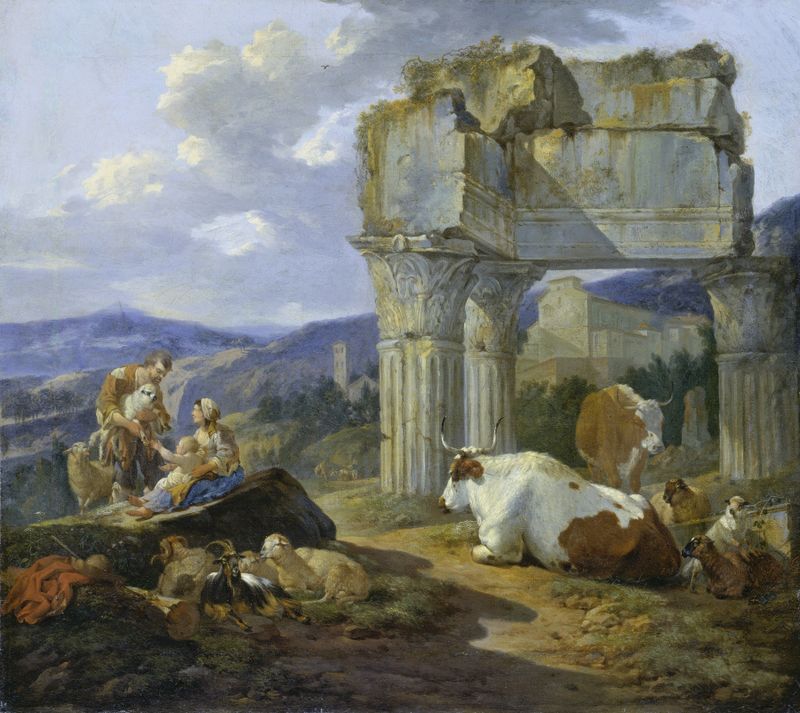
Shepherd’s Family at the Ruins of the Temple of Vespasian
Johann Heinrich Roos
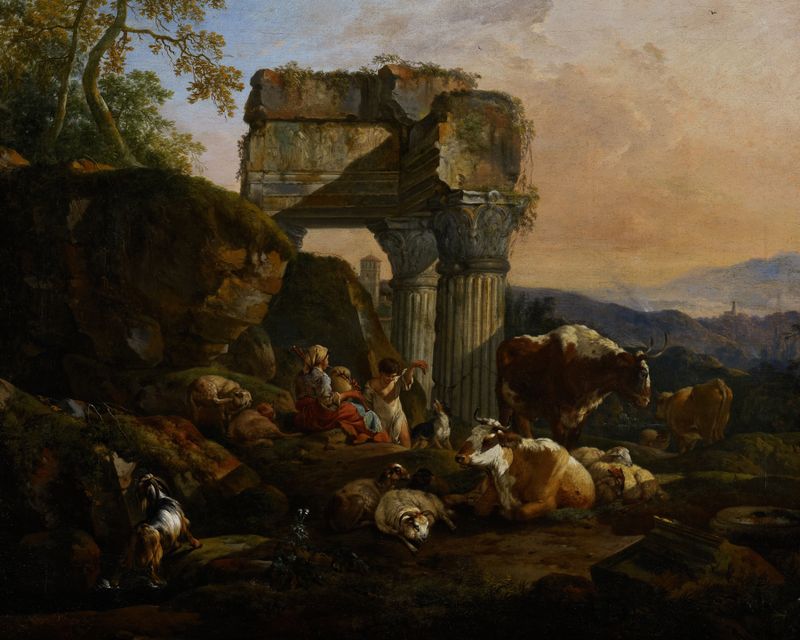
Roman Landscape with Cattle and Shepherds
Johann Heinrich Roos
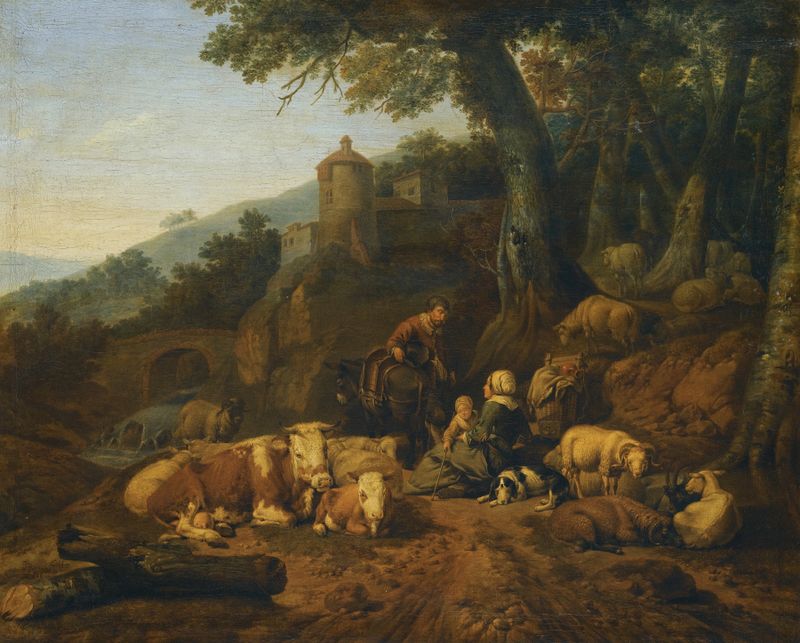
A Landscape With Drovers And Their Flock At Rest
Johann Heinrich Roos
Landscape
Johann Heinrich Roos
Herdersjongen met een bok spelend
Johann Heinrich Roos





