
Shepherd’s Family at the Ruins of the Temple of Vespasian — History & Facts
In the fleeting passage of time, mortality looms like a shadow, whispering reminders of what was, and what will never be again. Look to the left, where the gentle figures of a shepherd and his family are nestled against the crumbling archway of the Temple of Vespasian. The sun's golden rays illuminate their modest clothing, contrasting sharply with the ancient stonework that surrounds them. The soft earth tones of their skin and garments evoke a sense of warmth in the midst of decay.
Notice how the light dances upon the ruins, creating a play of shadow and form that encapsulates both intimacy and desolation. The juxtaposition of life and ruin resonates deeply within the scene. The shepherd, with his tender gaze toward his children, anchors the composition, suggesting continuity amidst loss. The ruins symbolize not only the passage of time but also the fragility of human aspiration.
Each detail—the cracked stones, the verdant greenery reclaiming the space—tells a story of nature’s resilience, hinting at the cycles of life and death that bind us all. Created in 1674, the artist found himself amidst a time of significant historical and artistic shifts in Europe, marked by the backdrop of Baroque dynamism. Roos, residing in Germany, sought to blend the pastoral with the monumental, reflecting a burgeoning interest in capturing the interplay between humanity and its environment. This artwork speaks to his desire to immortalize fleeting moments, urging viewers to contemplate their own legacies against the backdrop of history.
More Artworks by Johann Heinrich Roos
Browse all →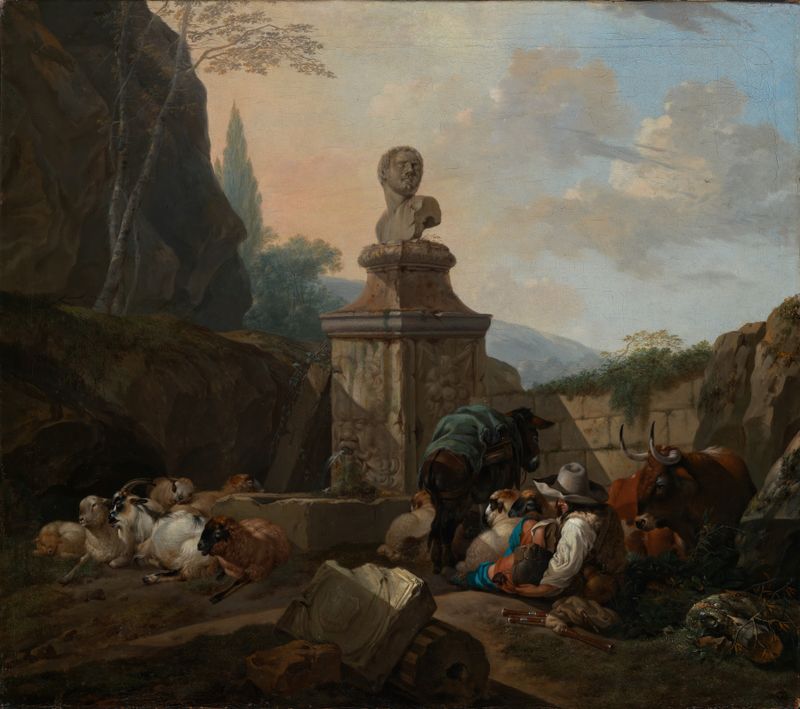
Ruhender Hirt und Herde an römischem Brunnen
Johann Heinrich Roos
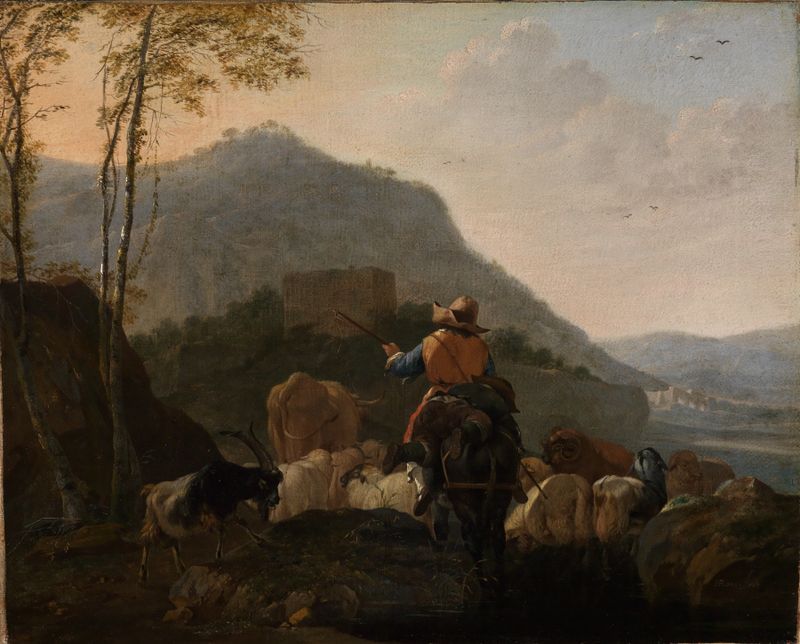
Ausziehende Hirten mit ihrer Herde in südlicher Berglandschaft
Johann Heinrich Roos
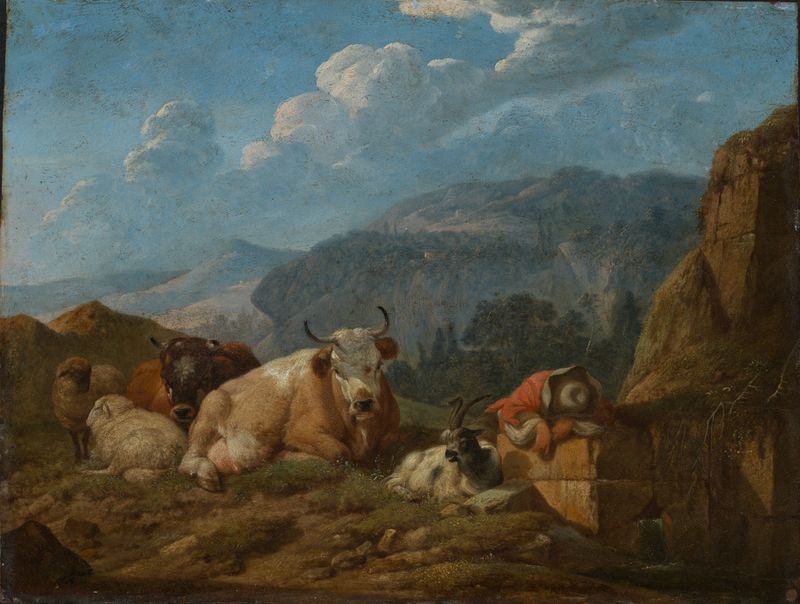
Italienische Berglandschaft
Johann Heinrich Roos
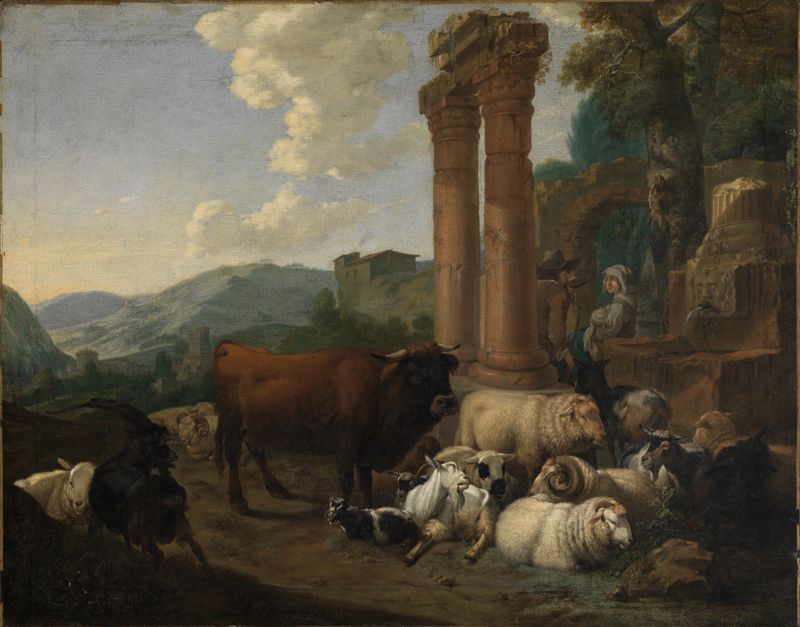
Hirtenszene in römischer Ruinenlandschaft
Johann Heinrich Roos
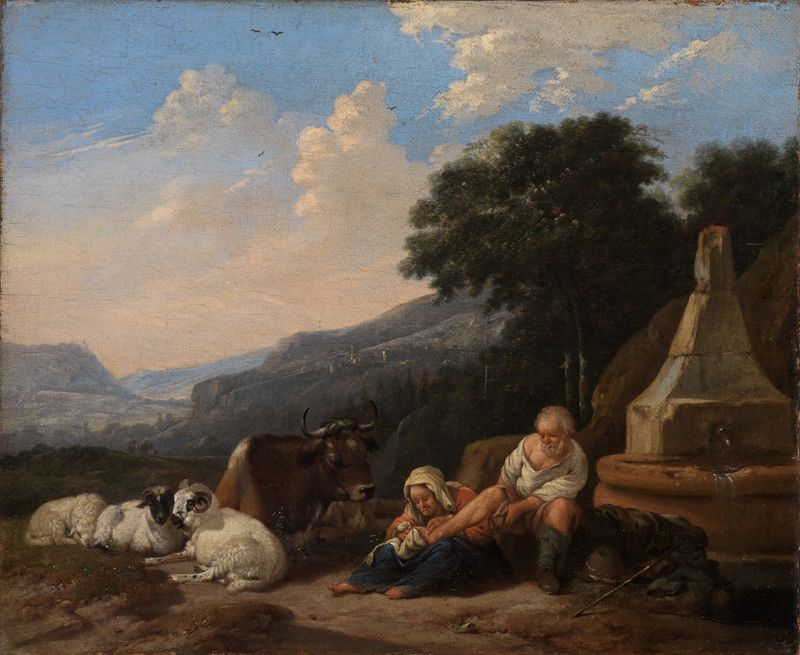
Berglandschaft mit Hirten am Brunnen
Johann Heinrich Roos
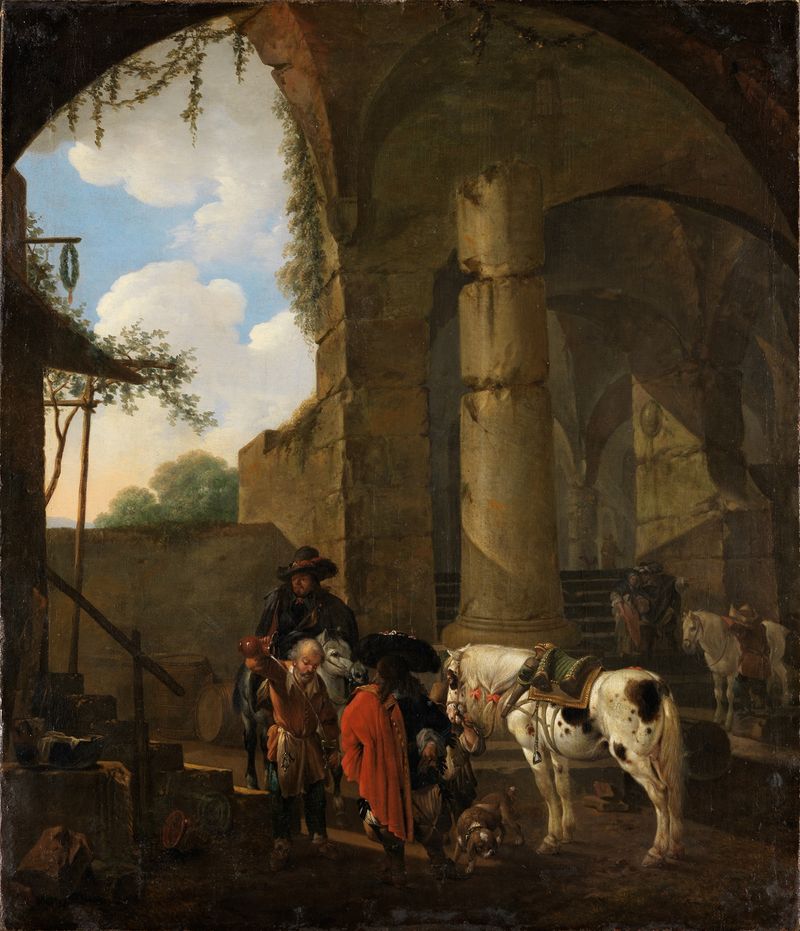
Osteria in römischer Ruine
Johann Heinrich Roos
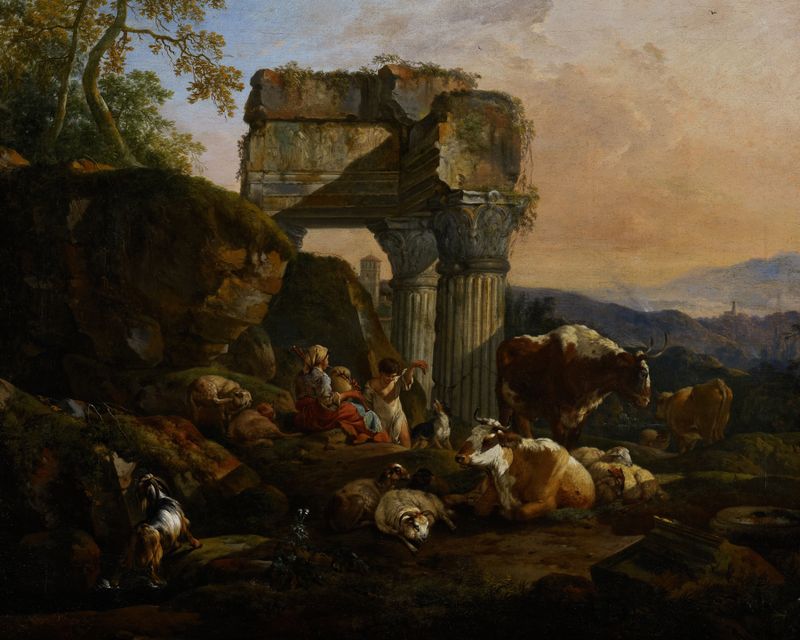
Roman Landscape with Cattle and Shepherds
Johann Heinrich Roos
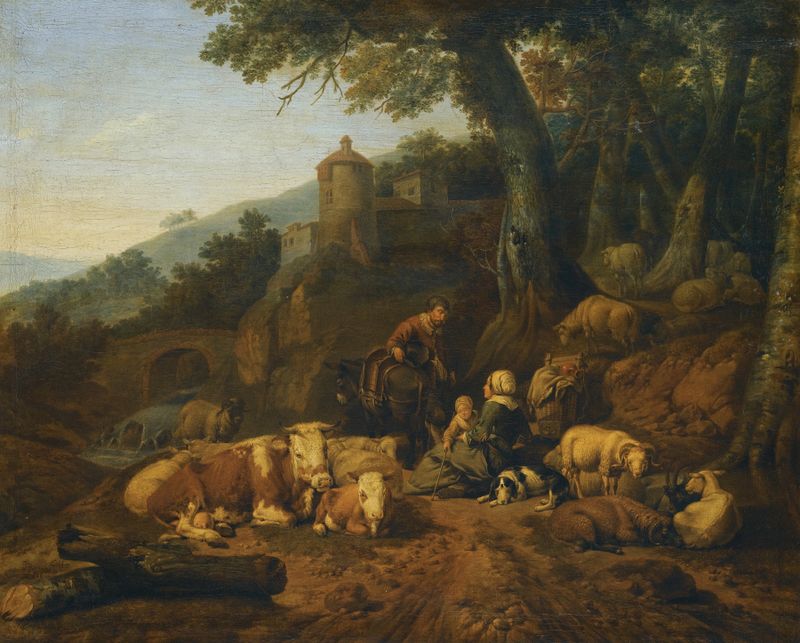
A Landscape With Drovers And Their Flock At Rest
Johann Heinrich Roos
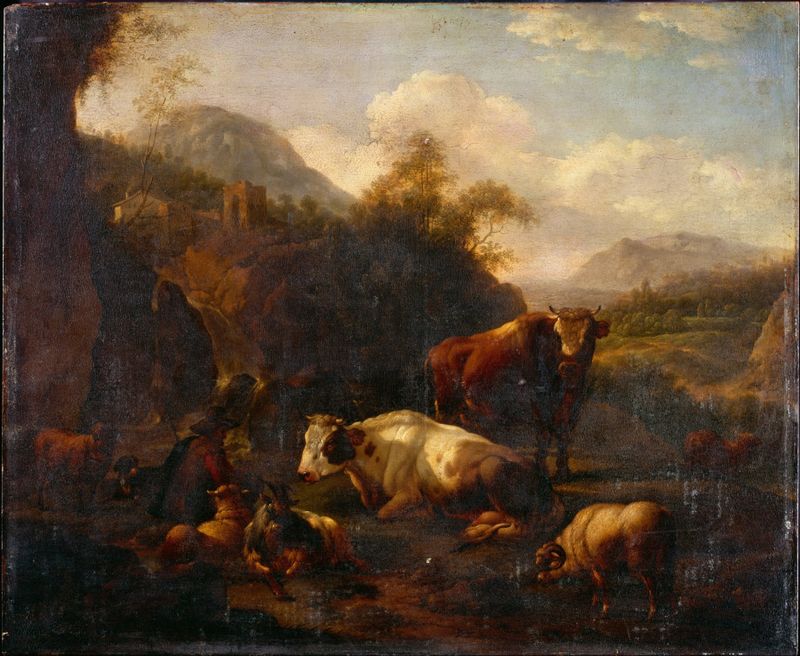
Landscape
Johann Heinrich Roos
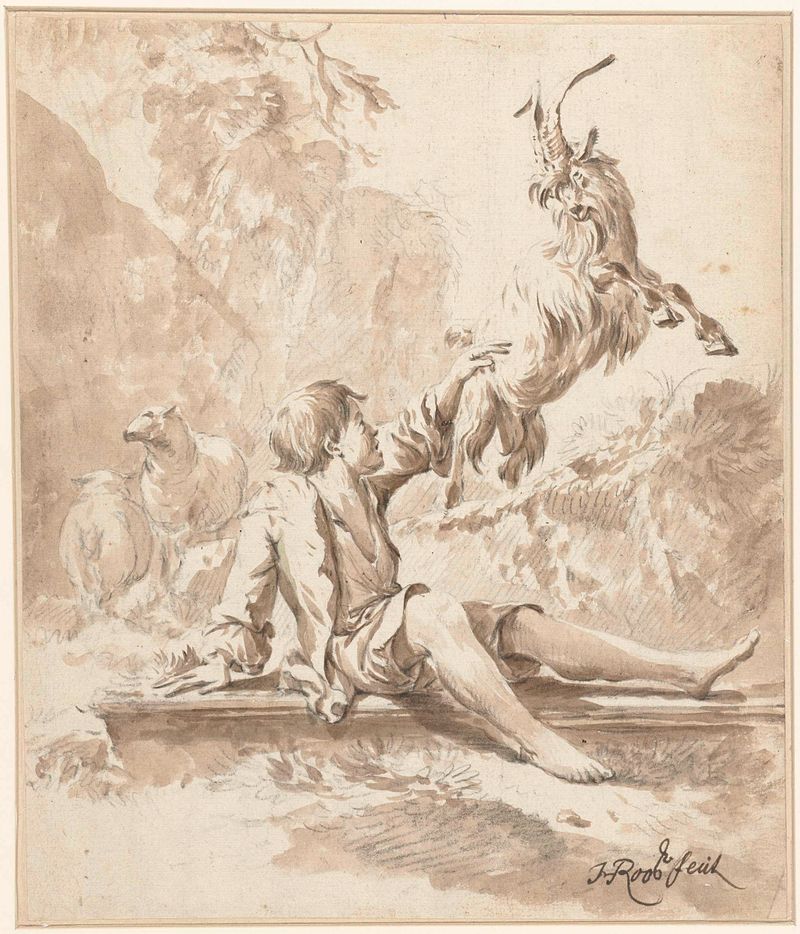
Herdersjongen met een bok spelend
Johann Heinrich Roos





