
Osteria in römischer Ruine — History & Facts
Can paint confess what words never could? In Osteria in römischer Ruine, silence speaks volumes, inviting you into a world where time stands still, echoing with the stories of the past. Look to the left at the crumbling stone archways, their weathered surfaces bathed in soft, golden light. The vibrant greens of the surrounding foliage contrast sharply against the ruins, drawing your eye to the delicate interplay of nature reclaiming its space alongside human remnants. Notice how the composition frames the rustic osteria, a simple tavern nestled within the ancient architecture, as if it were a sanctuary amidst decay. Within the stillness of this scene lies a rich tapestry of contrasts: the abandonment of ruins juxtaposed with the inviting warmth of the osteria, suggesting a fleeting moment of refuge.
The presence of diners, mere silhouettes against the backdrop, hints at life and camaraderie but remains shrouded in a veil of nostalgia. This subtle tension between solitude and community is palpable, creating an atmosphere that lingers long after the first glance. Johann Heinrich Roos painted this work around 1670 during a time of significant artistic transition in Europe. Living in Italy, he was deeply influenced by the art of the Baroque period while also embracing the emerging Rococo style.
The world was evolving, and so too were artists’ perspectives, as they began exploring themes of nature, ruin, and the passage of time. Roos’ painting reflects both personal introspection and the broader cultural shift occurring in the art world.
More Artworks by Johann Heinrich Roos
Browse all →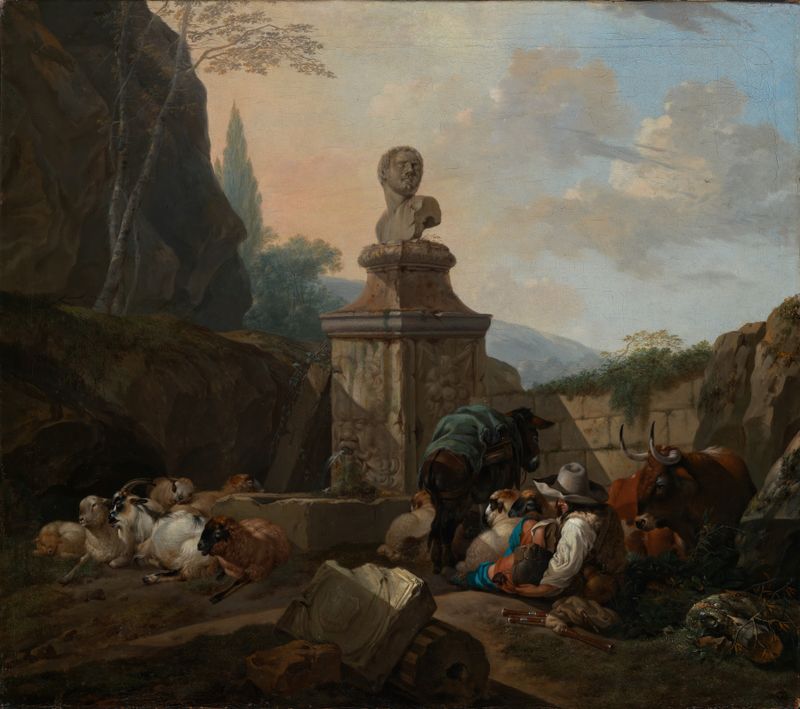
Ruhender Hirt und Herde an römischem Brunnen
Johann Heinrich Roos
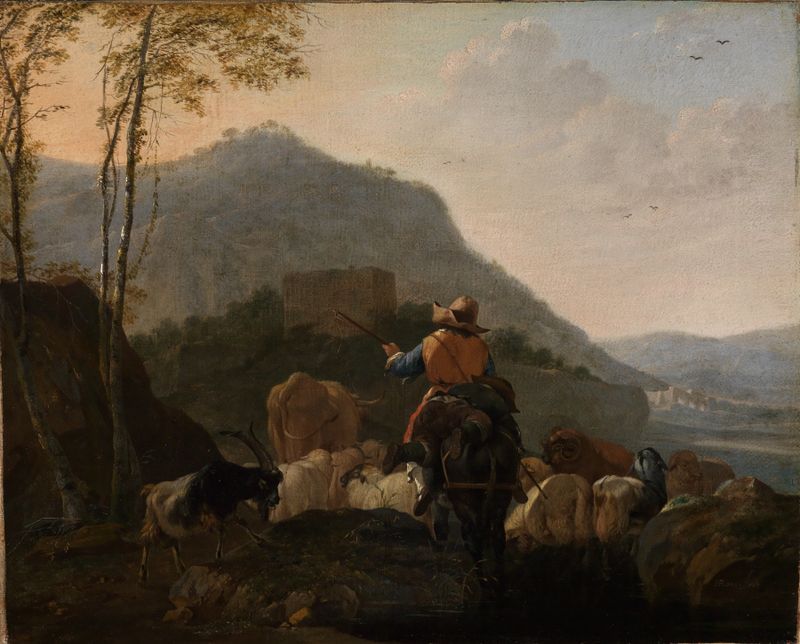
Ausziehende Hirten mit ihrer Herde in südlicher Berglandschaft
Johann Heinrich Roos
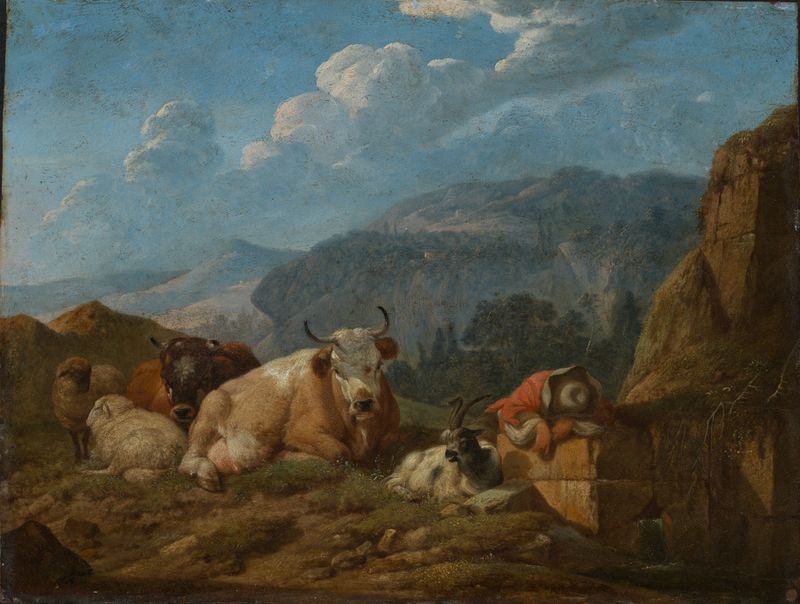
Italienische Berglandschaft
Johann Heinrich Roos
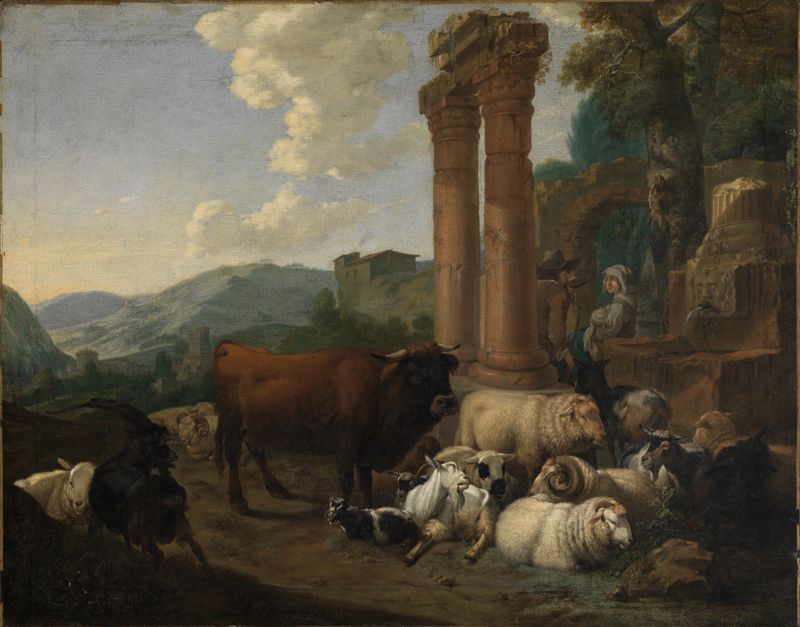
Hirtenszene in römischer Ruinenlandschaft
Johann Heinrich Roos
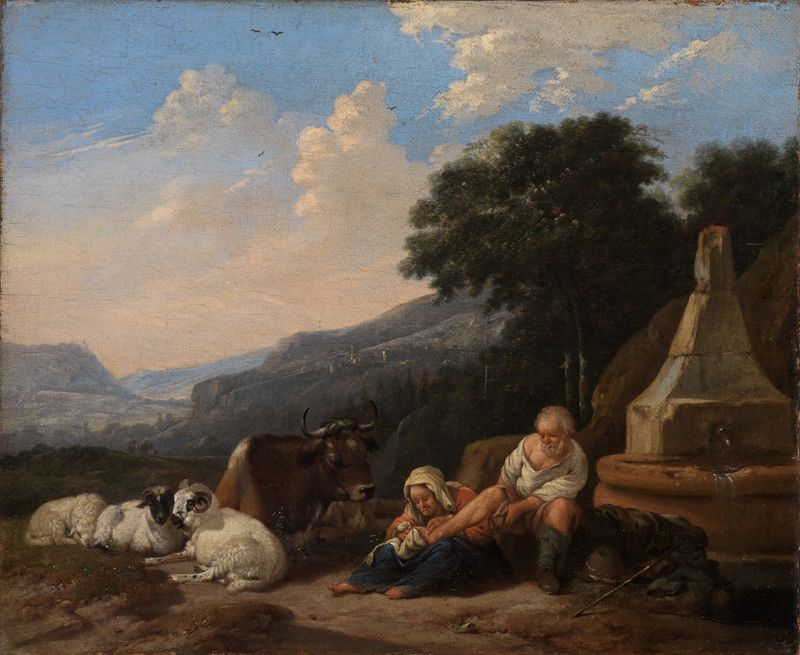
Berglandschaft mit Hirten am Brunnen
Johann Heinrich Roos
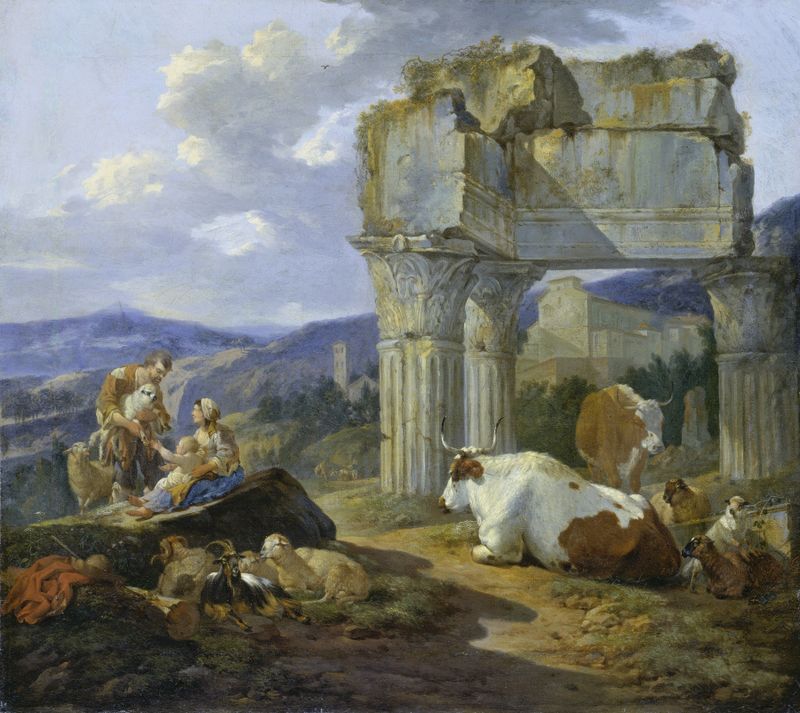
Shepherd’s Family at the Ruins of the Temple of Vespasian
Johann Heinrich Roos
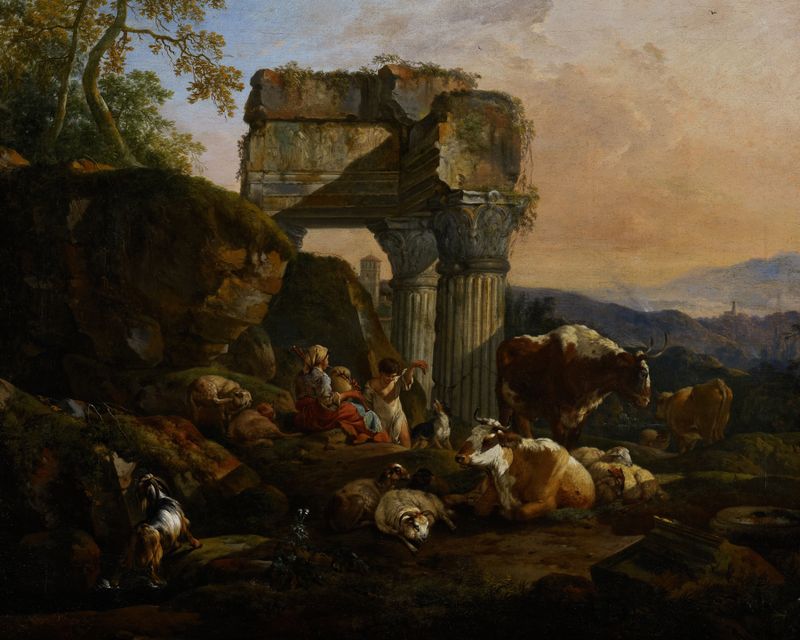
Roman Landscape with Cattle and Shepherds
Johann Heinrich Roos
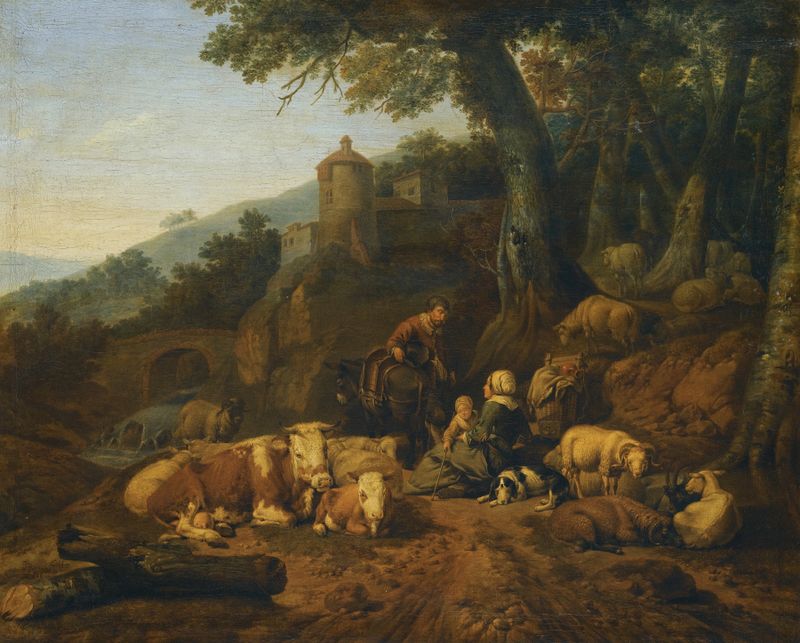
A Landscape With Drovers And Their Flock At Rest
Johann Heinrich Roos
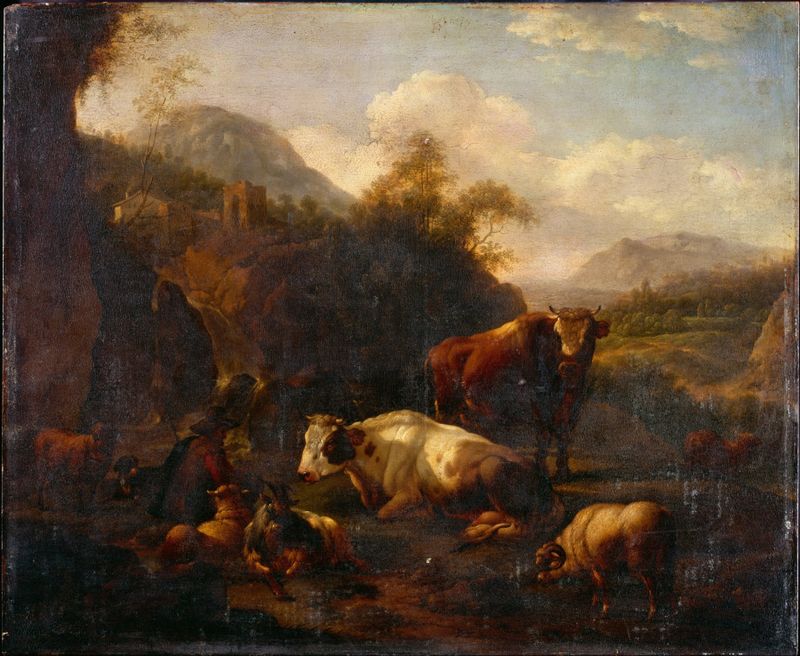
Landscape
Johann Heinrich Roos
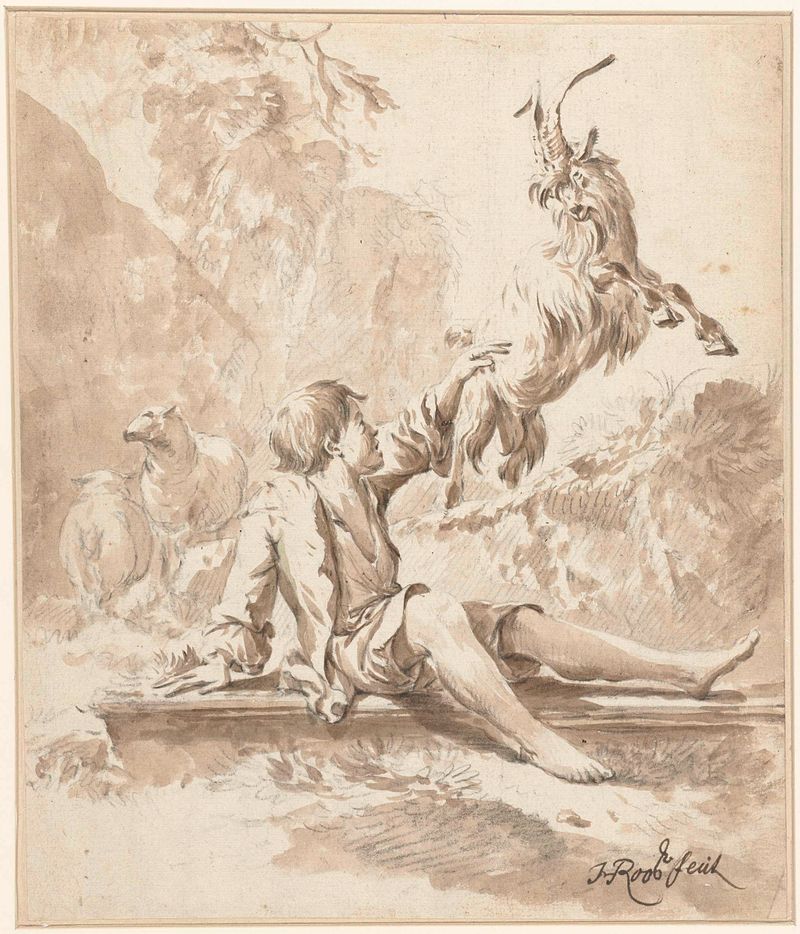
Herdersjongen met een bok spelend
Johann Heinrich Roos
More Architecture Art
Browse all →
The statue of Liberty
Frédéric Auguste Bartholdi

View of Houses in Delft, Known as ‘The Little Street’
Johannes Vermeer

View of Houses in Delft, Known as ‘The Little Street’
Johannes Vermeer

The Cathedral in Rouen. The portal, Grey Weather
Claude Monet

The yellow house
Vincent van Gogh

The Church in Auvers-sur-Oise, View from the Chevet
Vincent van Gogh