
Berglandschaft mit Hirten am Brunnen — History & Facts
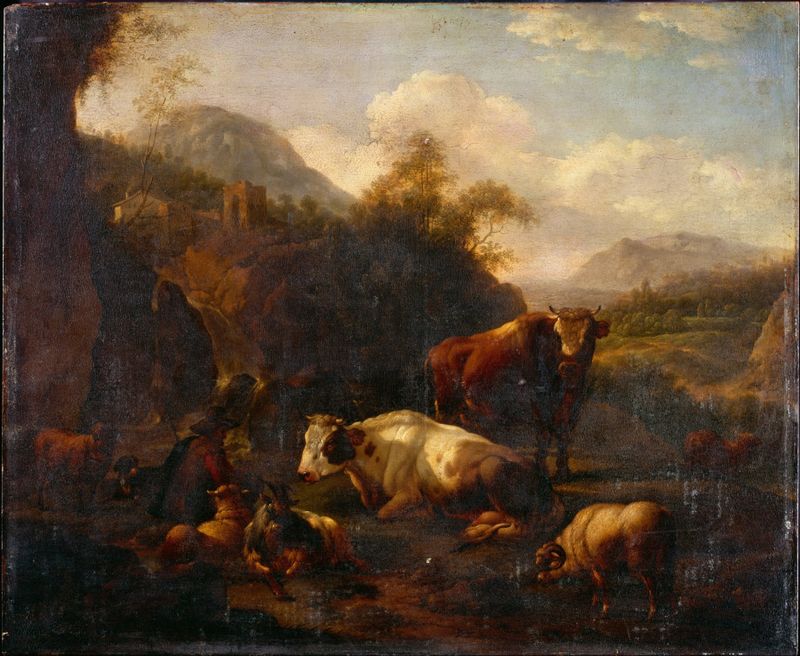
Is this a mirror — or a memory? The essence of ecstasy lies not in the clarity of the moment but in the ethereal landscapes that awaken our senses and stir our souls. Focus on the foreground; the serene presence of a shepherd and his flock beckons your eye. Notice how the lush greens of the grass meld seamlessly into the earthy browns of the shepherd's attire, grounding him in the landscape. The shimmering water of the well reflects dappled sunlight, infusing the scene with vitality.
The artist’s skillful brushstrokes create layers of depth, inviting the viewer to wander into the mountainous backdrop, where soft blues and grays suggest both distance and the weight of the skies above. Beneath this pastoral tranquility lies a complex interplay of light and shadow, revealing a deeper narrative. The juxtaposition of the shepherd's humble existence against the grandeur of nature hints at the eternal struggle between man and his environment. The well, bubbling with life, serves as a symbol of sustenance and hope, while the rugged terrain stands as a reminder of challenges faced.
Each element in this landscape resonates with the themes of survival and fulfillment, creating a tapestry rich with emotional significance. In the late 17th century, Johann Heinrich Roos created this work in Germany, during a period marked by the Baroque movement’s celebration of nature’s beauty and complexity. At this time, the artist was deeply influenced by both the realities of rural life and the emerging appreciation for landscape painting as a distinct genre. This piece captures not only the physical landscape but the spirit of an era, grounding the viewer in both history and a profound appreciation for the natural world.
More Artworks by Johann Heinrich Roos
Browse all →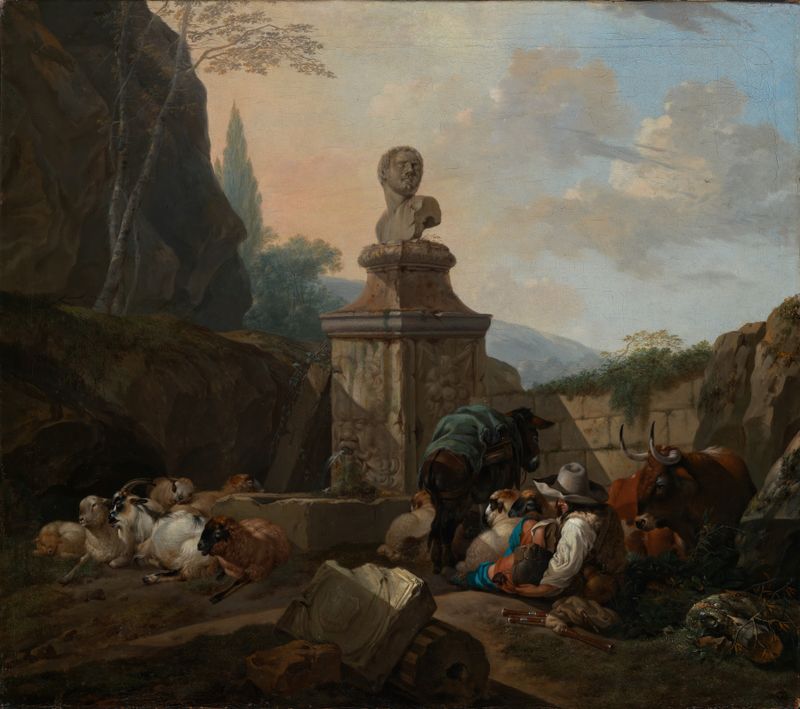
Ruhender Hirt und Herde an römischem Brunnen
Johann Heinrich Roos
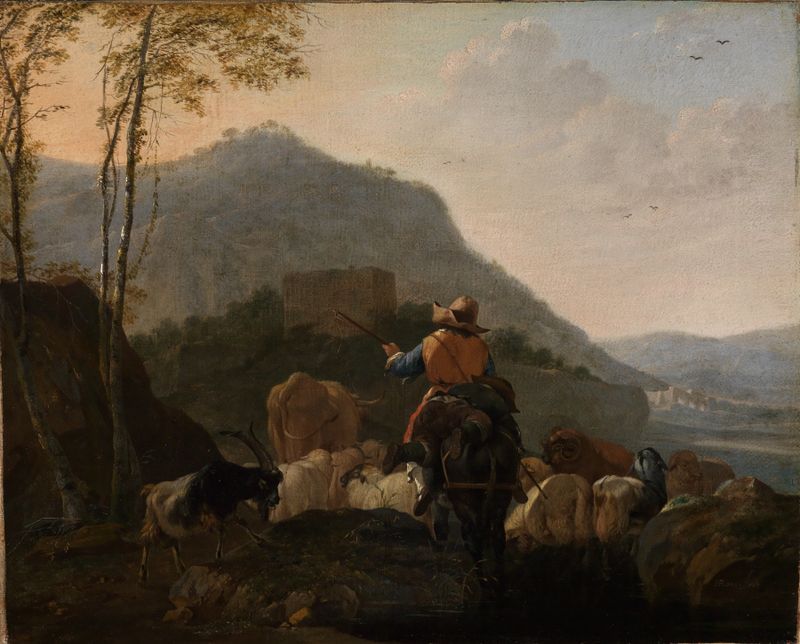
Ausziehende Hirten mit ihrer Herde in südlicher Berglandschaft
Johann Heinrich Roos
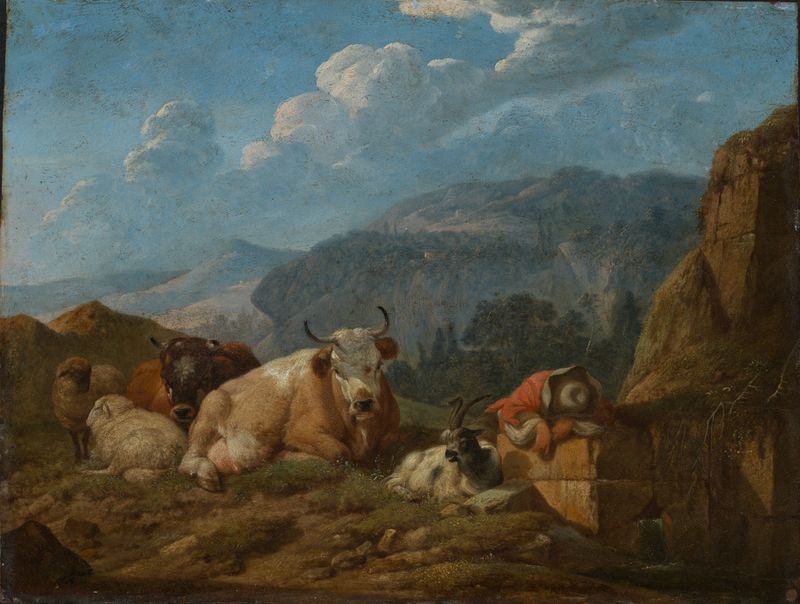
Italienische Berglandschaft
Johann Heinrich Roos
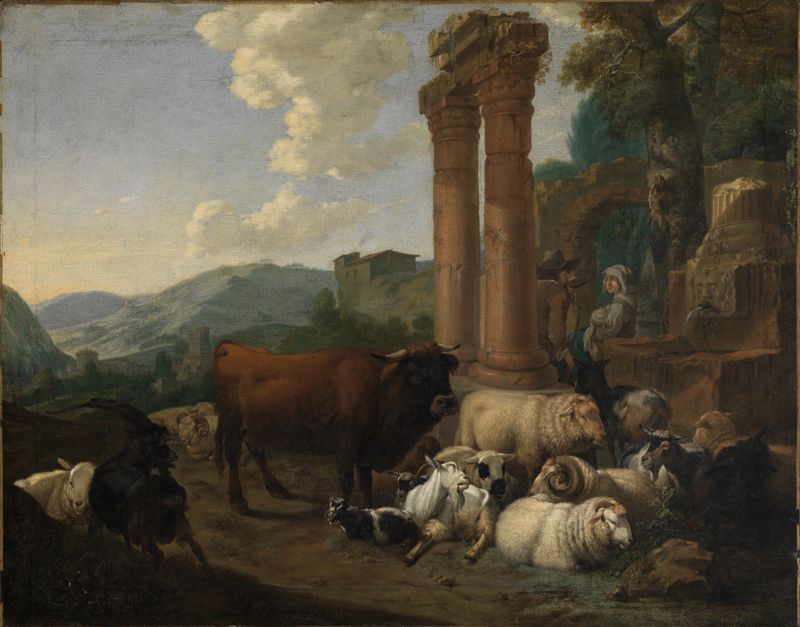
Hirtenszene in römischer Ruinenlandschaft
Johann Heinrich Roos
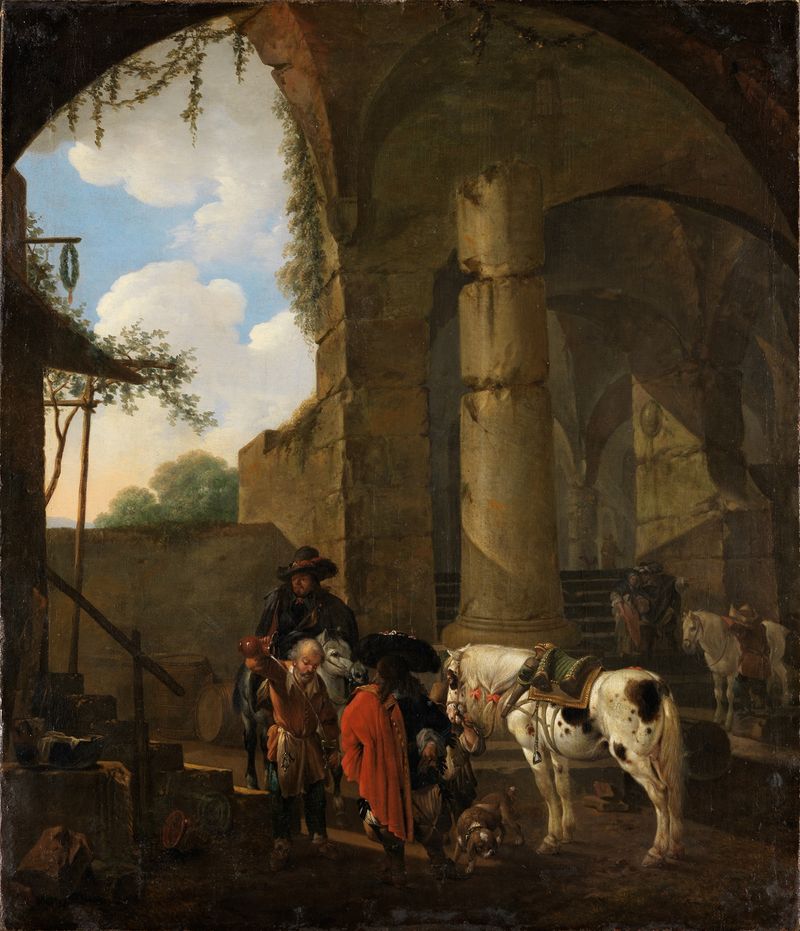
Osteria in römischer Ruine
Johann Heinrich Roos
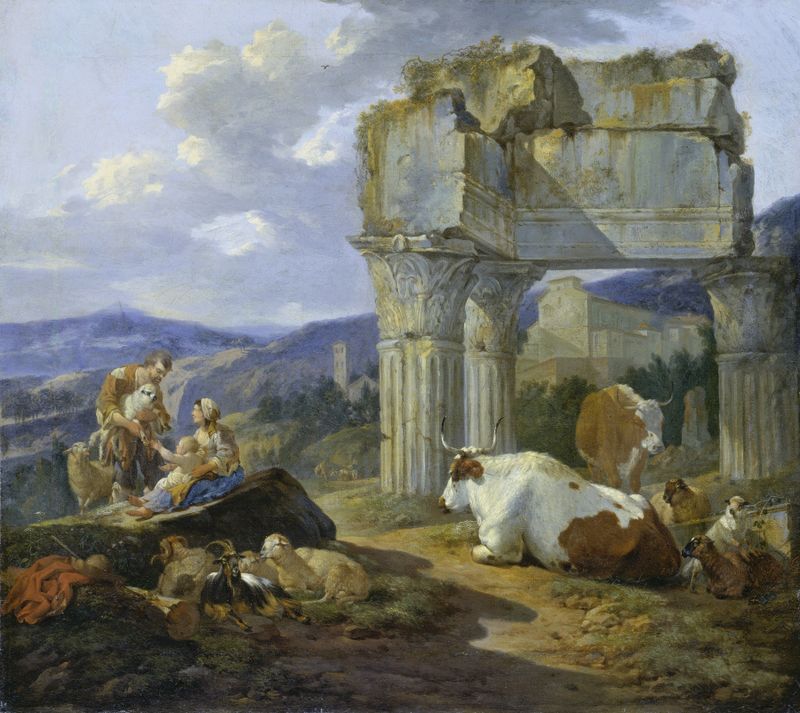
Shepherd’s Family at the Ruins of the Temple of Vespasian
Johann Heinrich Roos
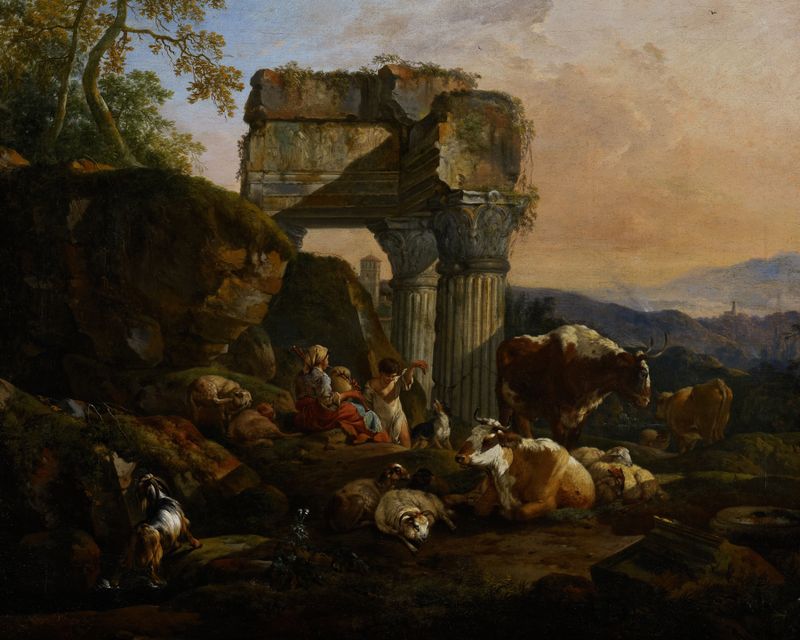
Roman Landscape with Cattle and Shepherds
Johann Heinrich Roos
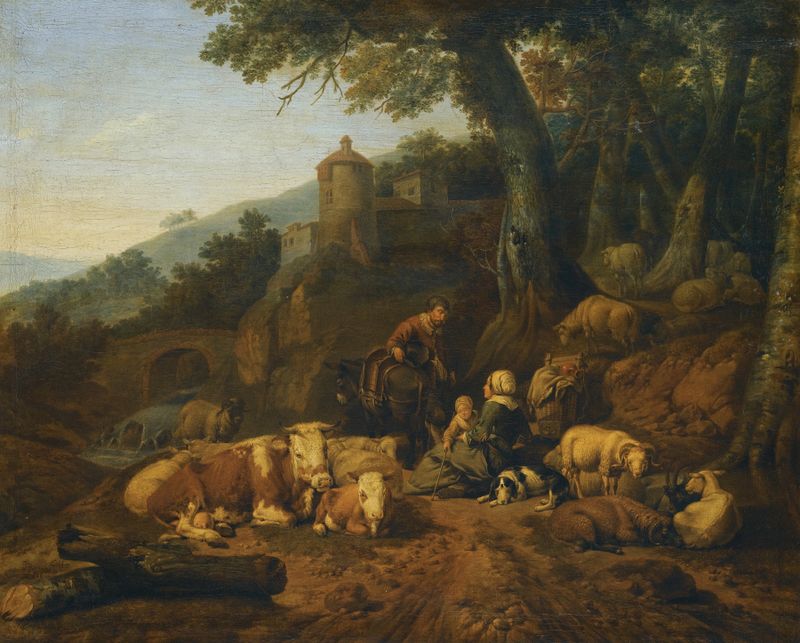
A Landscape With Drovers And Their Flock At Rest
Johann Heinrich Roos
Landscape
Johann Heinrich Roos
Herdersjongen met een bok spelend
Johann Heinrich Roos





