
Autumn — History & Facts
When did color learn to lie? In a world where hues can both reveal and conceal, Autumn beckons us to contemplate the nature of reflection—both literal and metaphorical. Focus on the vibrant tapestry of colors that envelop the canvas. Look to the left, where golden yellows and fiery reds intertwine, swirling in a dance that mirrors the season’s transition. Notice how the brushstrokes vary—some bold and expressive, while others whisper softly across the surface.
The contrast between light and shadow creates a rhythm that invites the viewer deeper, echoing the fleeting essence of autumn itself. As you delve further into the painting, consider the juxtaposition of warmth and chill. The warmth of the sun-drenched leaves stands in stark contrast to the encroaching cool shadows, embodying the tension between life and decay. Hidden within the intricate layers are reflections of both the beauty and transience of nature.
Each leaf tells a story, perhaps a memory of summer's vibrancy, now fading yet still holding onto life’s subtle joys. During an uncertain period in the late 19th century, William Hart created this work, likely in response to both personal and artistic challenges. As a member of the Hudson River School, he sought to capture the American landscape’s majesty, navigating through an era of shifting artistic ideals. Autumn serves as a testament to his mastery and resilience, reflecting a natural world that is as complex and layered as the artist’s own journey.
More Artworks by William Hart
Browse all →
Cattle on the River
William Hart
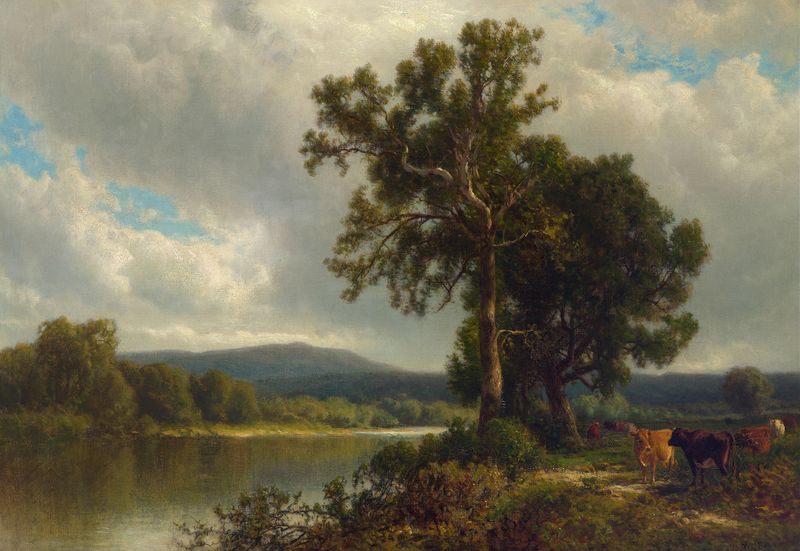
Scene at Napanoch
William Hart
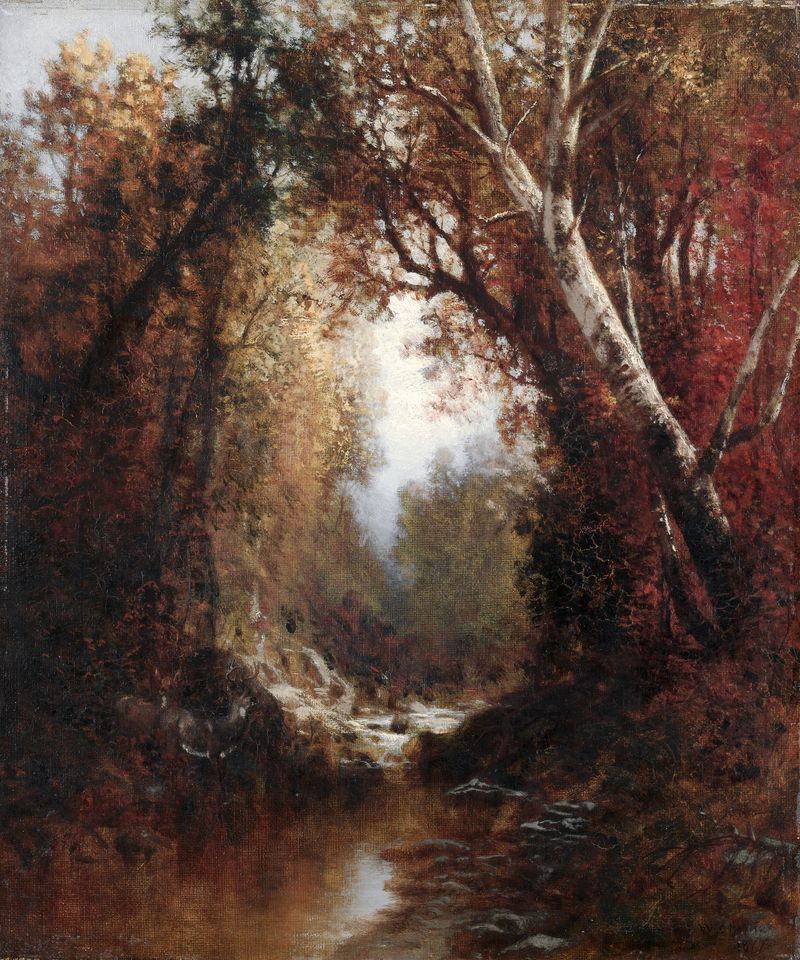
Autumn Scene in the Adirondacks
William Hart
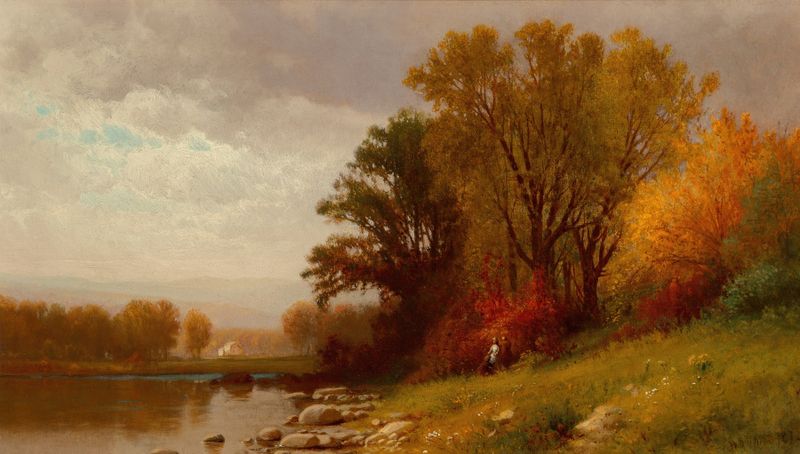
A Fall Day
William Hart
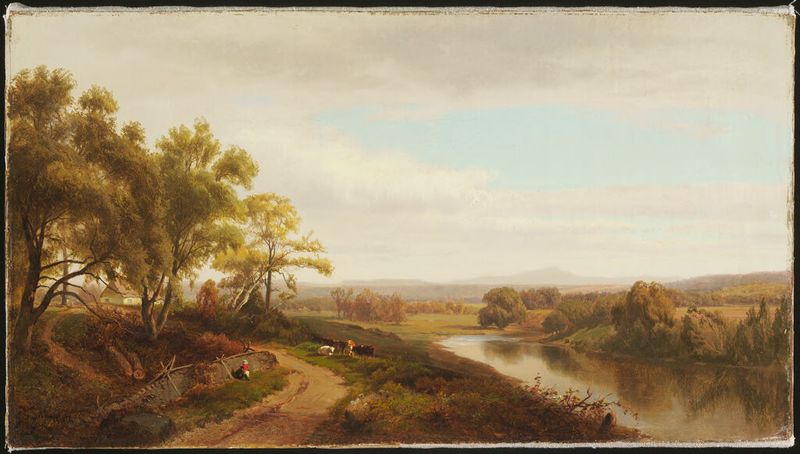
Valley of the Bedford
William Hart

Autumn
William Hart
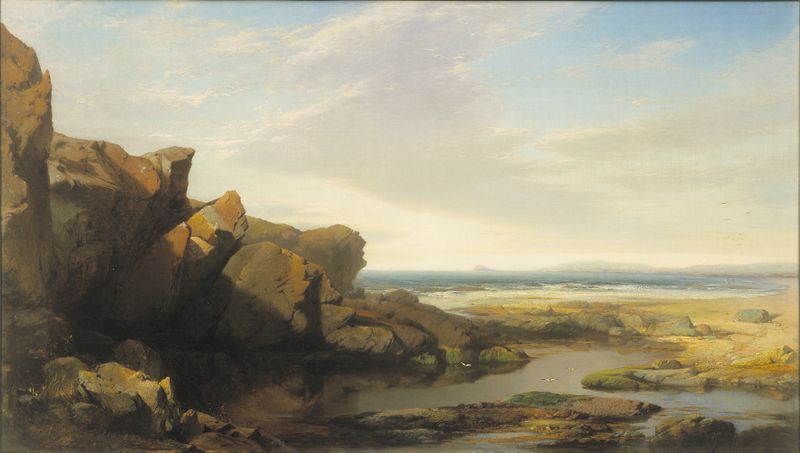
Pools by the Seaside
William Hart

Bennington, Vermont
William Hart
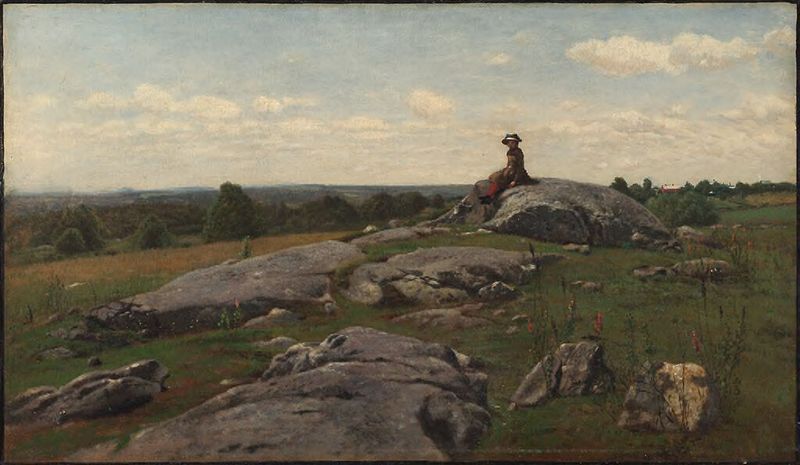
Young Girl in a Rocky Field
William Hart

The Joy of Autumn
William Hart





