The Joy of Autumn — History & Facts
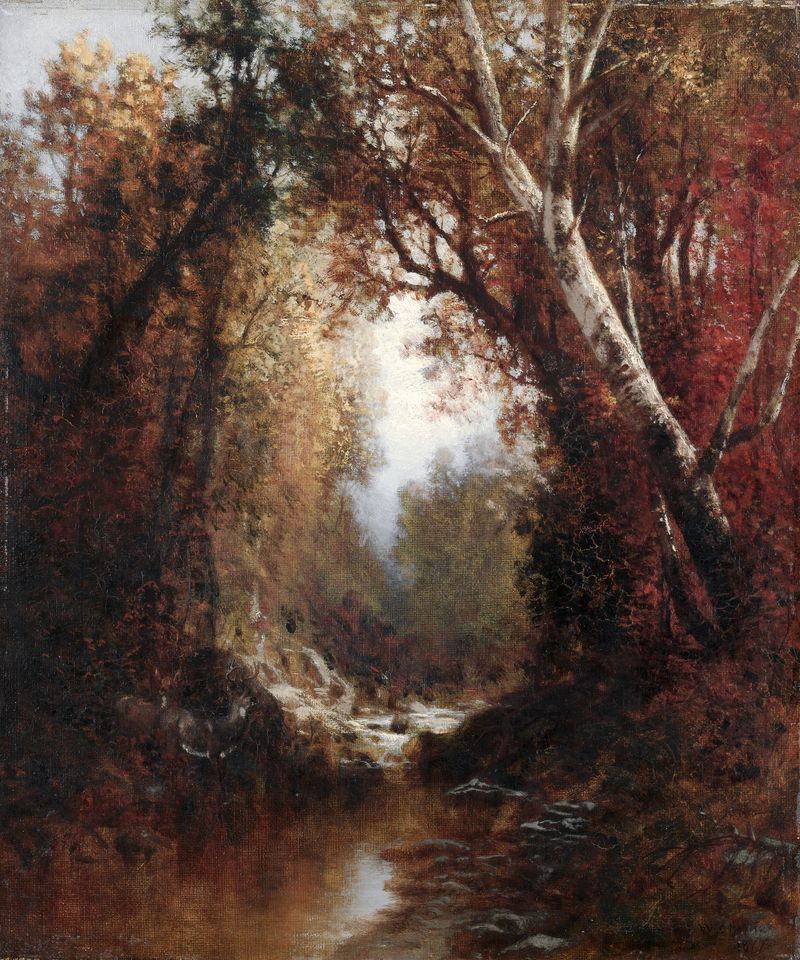
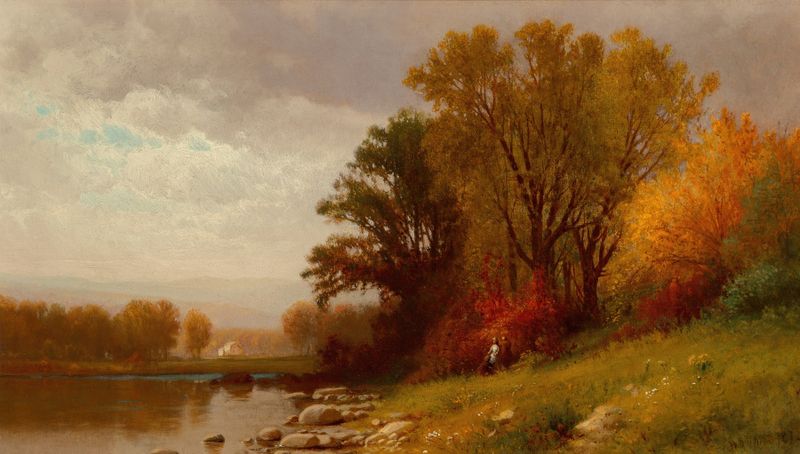
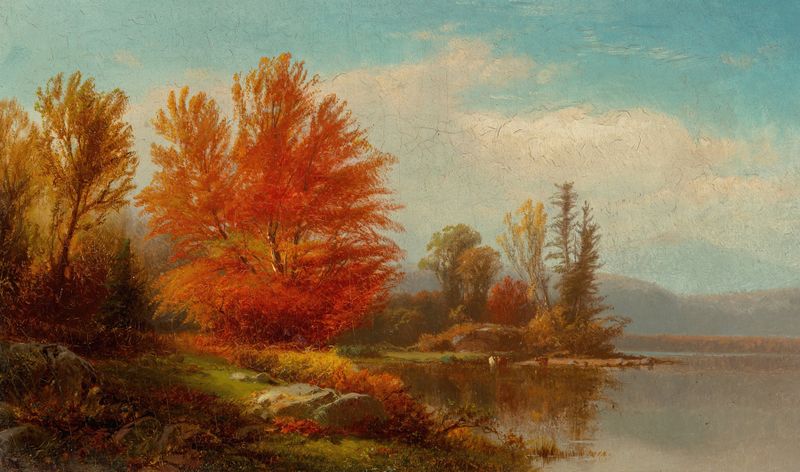
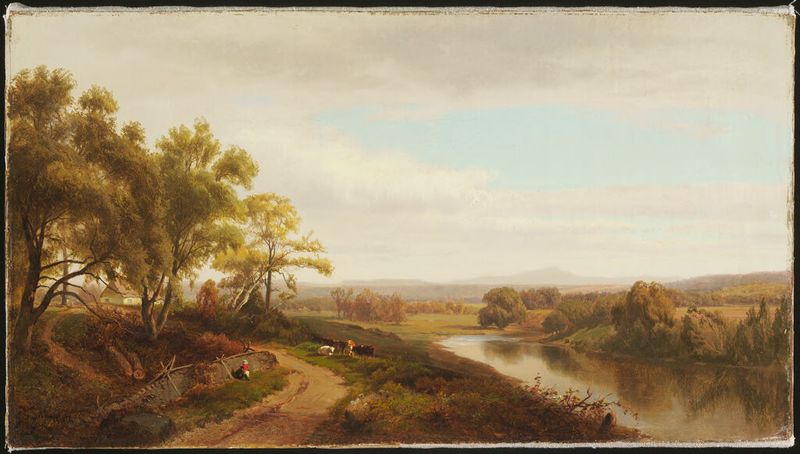
What if beauty was never meant to be finished? In The Joy of Autumn, nature reveals its intricate dance of life and decay, each brushstroke a moment suspended in time. Look closely at the rich palette of oranges and yellows that dominate the canvas, drawing your eye to the vibrant foliage. Focus on the interplay between light and shadow; notice how the soft sunlight filters through the leaves, casting a warm glow on the forest floor. The meticulous details of falling leaves and the gentle sway of branches invite you to wander deeper into the scene, where each element harmonizes to create a tranquil yet fleeting experience. Yet, beneath this serene tableau lies a tension.
The brilliance of autumn's colors hints at the impending stillness of winter, suggesting that beauty is inherently ephemeral. The juxtaposition of life and decay whispers of betrayal—a betrayal by time itself, which renders joyous moments transient. Every leaf that dances to the ground carries a silent farewell, a reminder that even in beauty, there exists a shadow of sadness. William Hart created this piece during a period of transition in American art, between 1861 and 1897.
This was a time marked by the rise of the Hudson River School and an increasing focus on capturing the beauty of the American landscape. Hart, as part of this movement, sought to evoke emotion and reflect the changing seasons, while also navigating personal challenges that influenced his view of nature’s splendor.