Scene at Napanoch — History & Facts
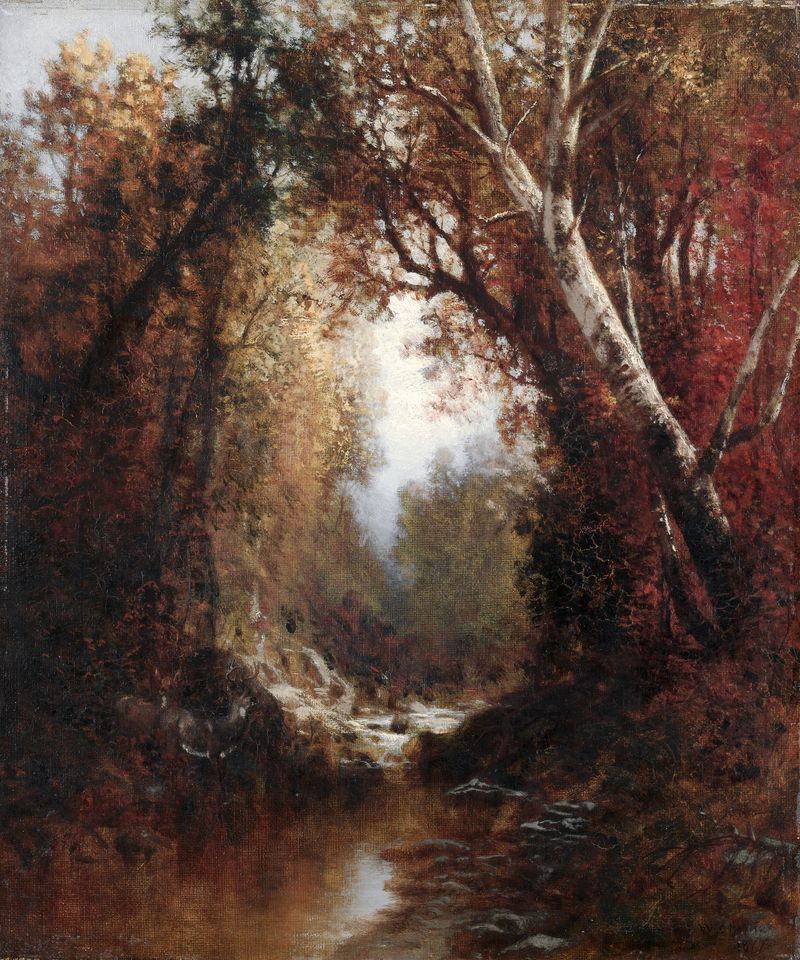
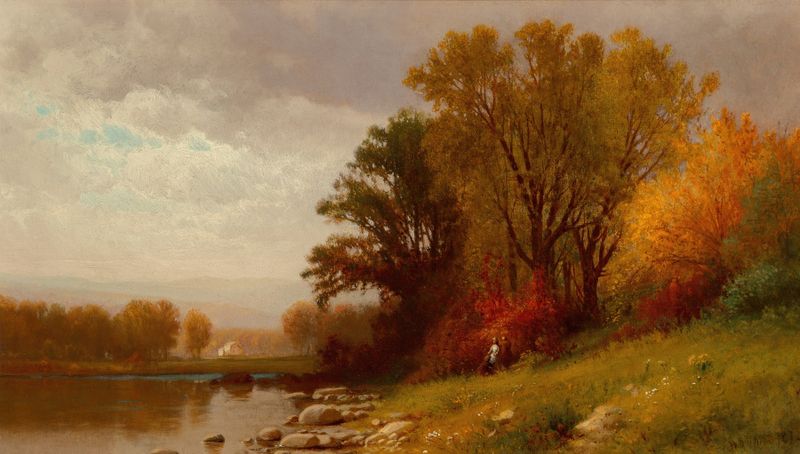
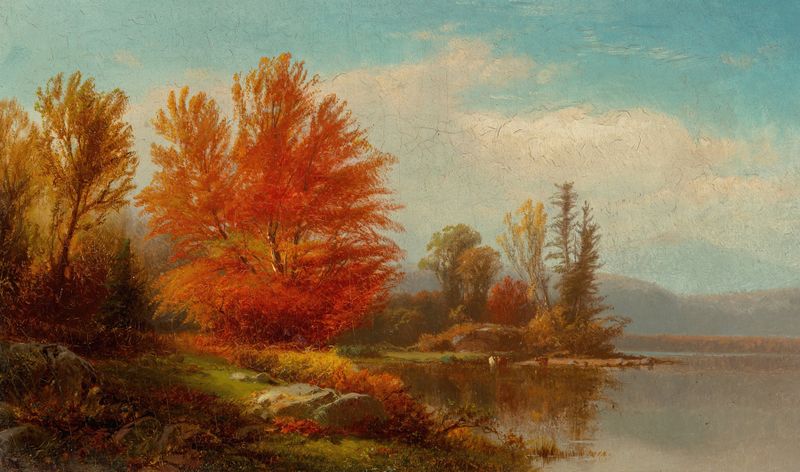
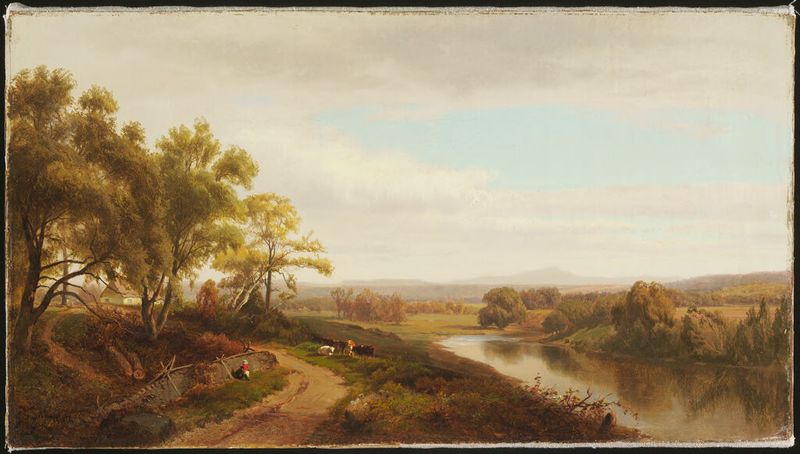
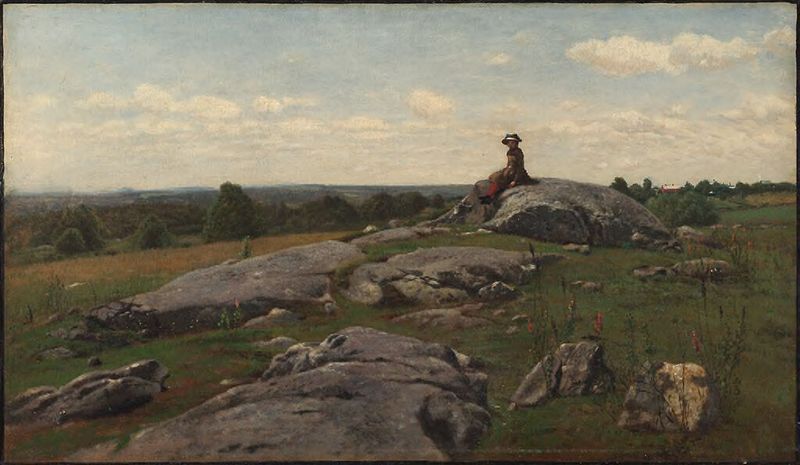
What if beauty was never meant to be finished? In the embrace of nature, the notion of decay intertwines with the sublime, revealing a landscape that breathes life yet hints at its inevitable fading. Look to the foreground, where patches of vibrant wildflowers burst forth against a backdrop of rich, textured foliage. The artist's brushstrokes dance across the canvas, capturing the lush greens and earthy browns of this moment in time. Notice how light filters through the trees, casting a gentle glow that accentuates the delicate curve of the hills.
The overall composition draws the eye into a tranquil harmony, yet beneath this beauty lies an unsettling tension—an awareness of nature’s impermanence. Deep within the work, contrasts emerge. The vibrant life of the flowers hints at the cycles of growth, while the shadowy recesses in the background evoke a sense of lurking decay. This duality invites contemplation of not just the scene, but also our relationship with nature and the passage of time.
The sheer vividness of the colors against muted earth tones suggests a fleeting moment caught between vibrancy and decline, a reminder that beauty is often layered with complexity. In 1883, William Hart painted Scene at Napanoch during a period rich with American landscape exploration. Living in the Hudson River Valley, he was deeply influenced by the Romantic ideals of nature, as well as a growing appreciation for the American countryside. This work mirrors the transitional shift in art, where the grandeur of nature began to be celebrated alongside its ephemeral beauty, reflecting both Hart's personal journey and the broader artistic currents of his time.