Young Girl in a Rocky Field — History & Facts
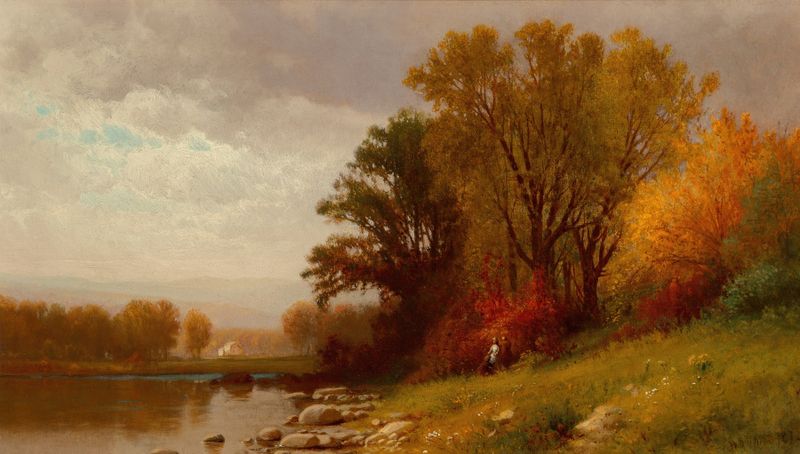
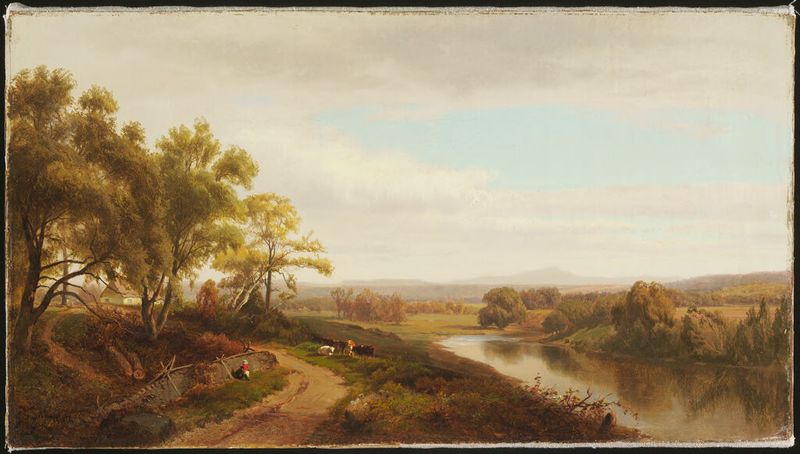
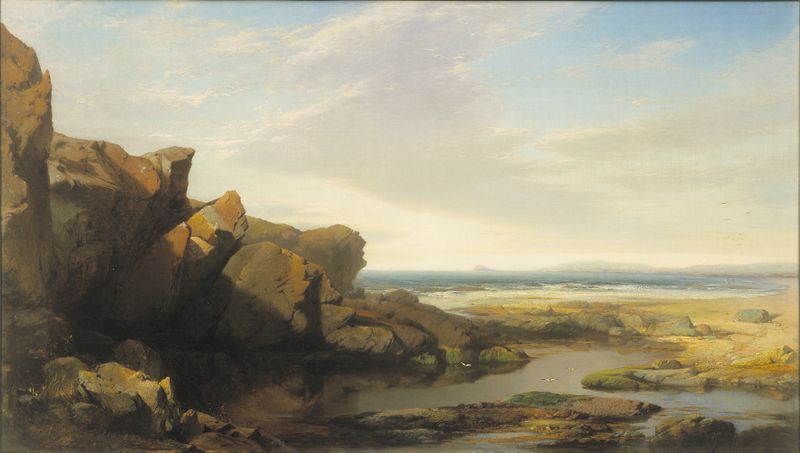
Could a single brushstroke hold eternity? In Young Girl in a Rocky Field, the essence of childhood reverberates through a delicate composition that invites contemplation on innocence and the ephemeral nature of youth. Look to the left at the girl, her soft, flowing dress dancing in harmony with the windswept grasses. The light cascades from above, illuminating her figure while casting shadows that play gently across the rocky terrain. Notice how Hart employs a palette of earth tones, the muted greens and browns grounding the scene, yet the girl's bright attire transcends the natural landscape, symbolizing purity amidst ruggedness.
Every stroke breathes life into the canvas, making her the vibrant heart of the tableau. Digging deeper, the juxtaposition of the girl and her harsh surroundings offers a poignant commentary on resilience and vulnerability. The rocky field, often seen as a desolate and unforgiving space, contrasts with the girl's innocent joy, suggesting a struggle between hope and hardship. This tension becomes a dialogue about the human experience, where beauty flourishes in the least likely places.
The viewer feels the weight of the girl's gaze, an unspoken yearning that resonates with anyone who has ever felt small in a vast world. In the 1860s, this work emerged as part of William Hart’s exploration of American landscapes and the lives intertwined within them. At this time, Hart was living in New York, where the art scene was shifting towards a greater appreciation for realism and everyday subjects. The nation was undergoing significant changes, and his painting reflects both an embrace of nature's rugged beauty and the innocence of childhood, encapsulating a moment in time that bridges the personal and the universal.