Cattle on the River — History & Facts
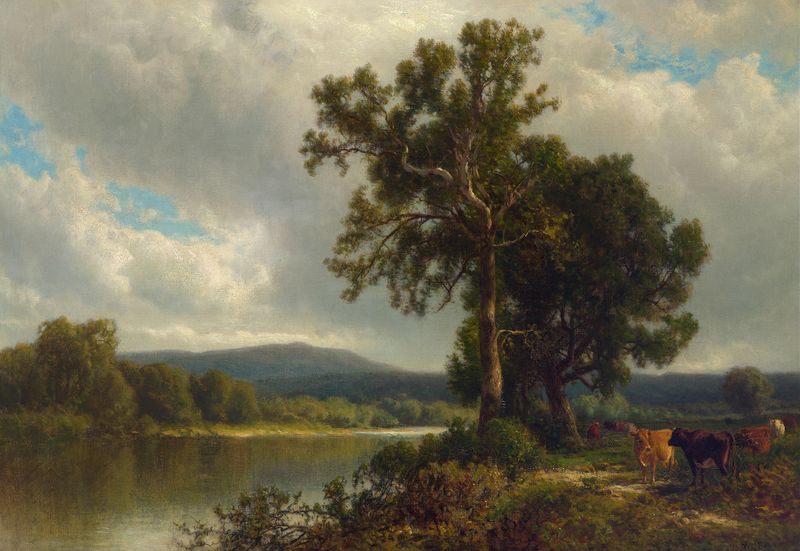
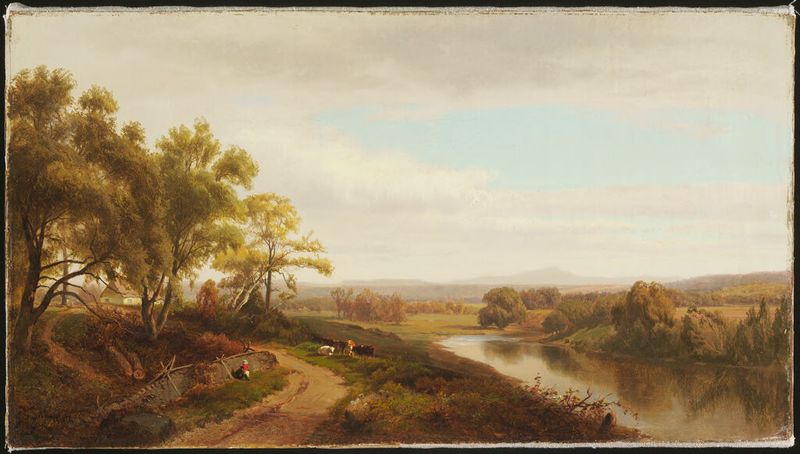
In the stillness of a moment, the essence of loneliness emerges profoundly in an artwork that captures more than just a landscape. Look to the center of the canvas where a gentle river winds its way through an expansive meadow, flanked by the silhouettes of grazing cattle. Notice how the soft hues of blues and greens blend seamlessly, creating a tranquil atmosphere that invites you in. The play of light dances across the river's surface, reflecting the golden rays of a low-hanging sun, while shadows stretch towards the viewer, imbuing the scene with a sense of depth and contemplation. Beneath the surface of this pastoral beauty lies an emotional tension.
The solitary figures of the cattle, each lost in their own world, echo a profound sense of isolation within nature’s embrace. Their stillness contrasts sharply with the flowing river, suggesting a moment frozen in time where solitude reigns. This juxtaposition serves as a poignant reminder of the quiet moments we often overlook amidst the chaos of daily life. In 1880, William Hart painted this evocative scene amid a burgeoning American art movement that sought to celebrate the beauty of the natural world.
Living in New York, he was influenced by the Hudson River School, which emphasized landscapes filled with emotional depth and atmospheric effects. During this period, American artists began to explore themes of identity and environment, leading to works that resonate with a deep sense of place and introspection.