Bennington, Vermont — History & Facts
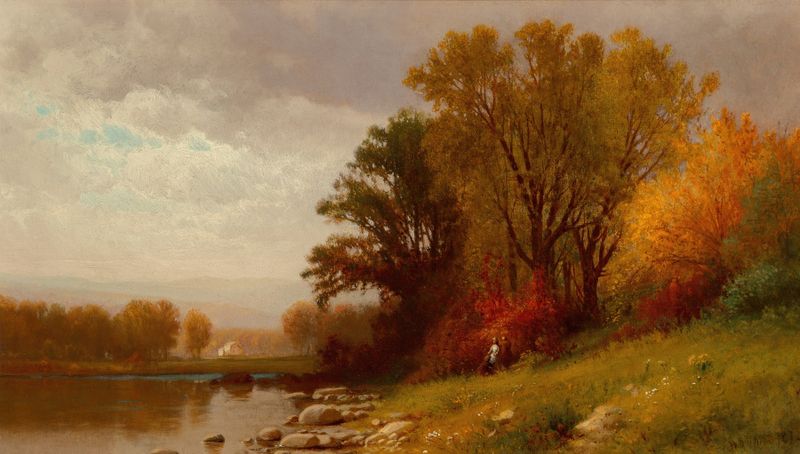
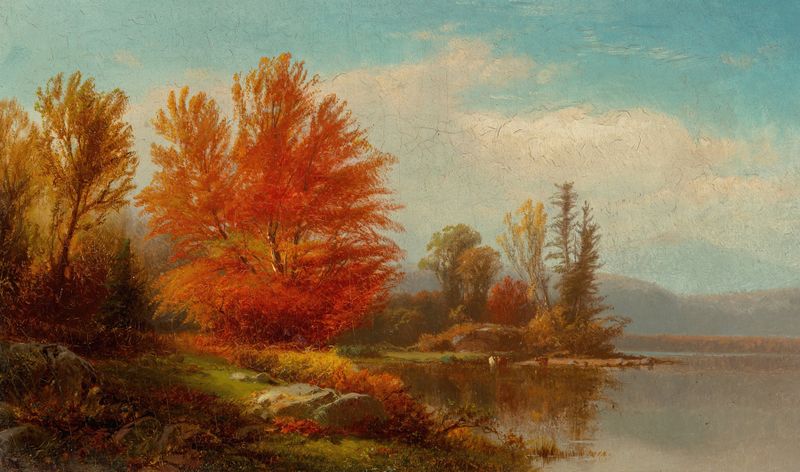
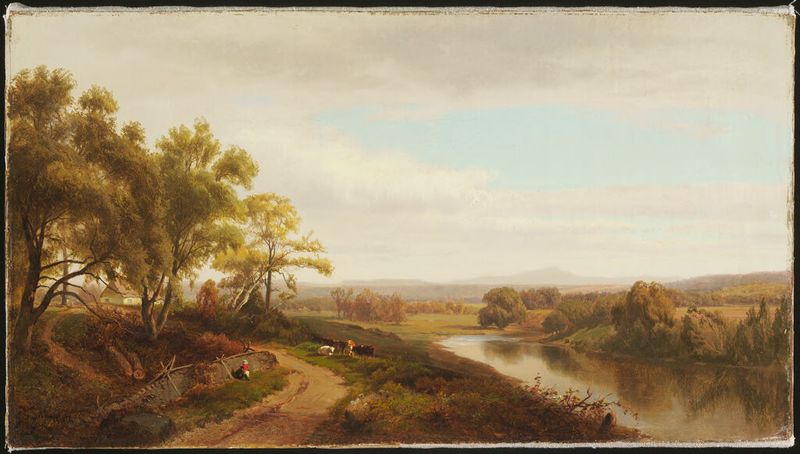
In the hushed embrace of nature, amidst the gentle undulations of hills and the whispering winds, lies a truth waiting to be discovered. Look to the left at the vibrant autumn foliage, where fiery reds and warm oranges dance in harmonious contrast against the cool, tranquil blues of the sky. The meticulous attention to detail in the trees draws you in, urging your gaze to wander towards the small village nestled below, its quaint structures bathed in the golden glow of late afternoon sunlight. Notice how the light interacts with the landscape, creating an ethereal quality that enhances the serene stillness, while the artist’s brushstrokes convey a palpable sense of harmony and balance. Beneath the idyllic surface lies a poignant juxtaposition; the serenity of pastoral life contrasts sharply with the fleeting nature of time.
The painted village, a symbol of tranquility, evokes nostalgia for a simpler existence, as it quietly persists against the backdrop of nature’s relentless cycles. Here, the viewer is invited to reflect on permanence and transience, where each vibrant hue represents not just a season, but the echoes of memories, both personal and collective. In 1872, William Hart created this piece during a period of burgeoning interest in American landscape painting. Living in the heart of the Hudson River School movement, he sought to capture the beauty of the natural world, reflecting both the changing times and his own deep appreciation for the landscapes of New England.
This artwork emerged as a testament to the American spirit, anchoring itself in the moment yet reaching towards the universality of human experience.