
Baby Talk — History & Facts
The first thing that draws the eye in Baby Talk is the hush of intimacy between mother and child, suspended in a moment of gentle play. The oval frame cradles the scene, focusing our gaze on the woman’s poised, almost whispered gesture as she leans toward the infant. Pale light washes over patterned kimonos and soft mats, while the baby’s gaze meets the mother’s in a silent exchange that needs no translation.
The setting is lush with detail: wisteria drapes from above, and the screen behind them hints at a garden just out of reach, suggesting a world both private and connected to nature. The careful placement of a rattle and a small toy on the floor signals the everyday reality of the scene, grounding its tenderness. Created in 1908, this work belongs to a period when Western artists like Helen Hyde found inspiration in Japanese aesthetics, particularly the ukiyo-e woodblock tradition. Hyde, an American artist, became known for her sensitive portrayals of Japanese domestic life, often focusing on women and children.
Works like Baby Talk were collected by Western audiences who were captivated by Japonisme—the fascination with Japanese art and design that swept Europe and America in the late nineteenth and early twentieth centuries. Today, the piece resides in the Smithsonian American Art Museum, a reminder of how cross-cultural encounters shaped both art and the way we see the world. Look again at the mother’s attentive posture, and you’ll sense how much of a story can be told in a single, quiet moment.
More Artworks by Helen Hyde

Moonlight on the Viga Canal) - HH (monogram) LCCN0065
Helen Hyde
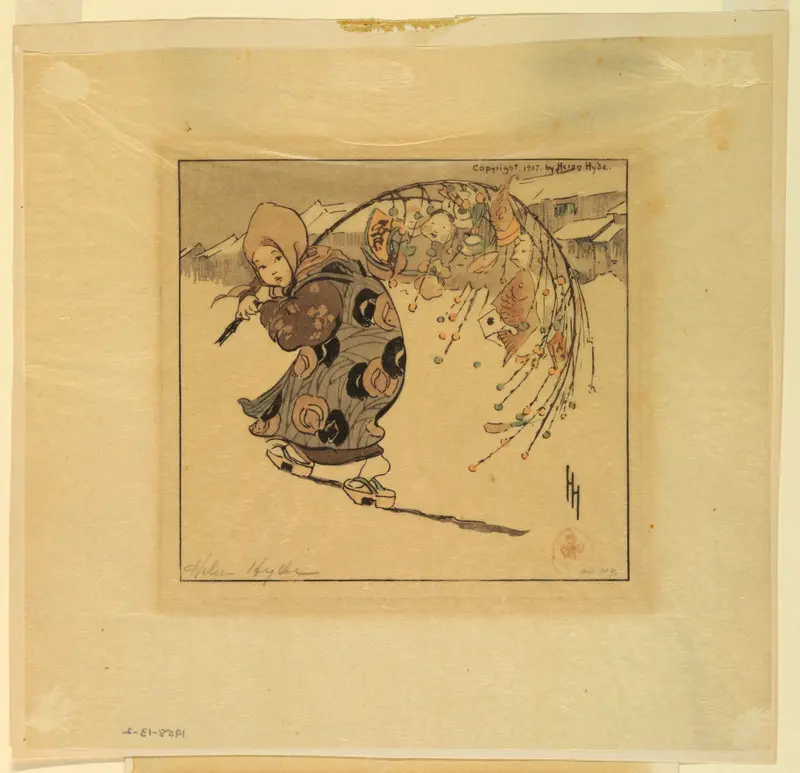
Print, The Good Luck Branch
Helen Hyde
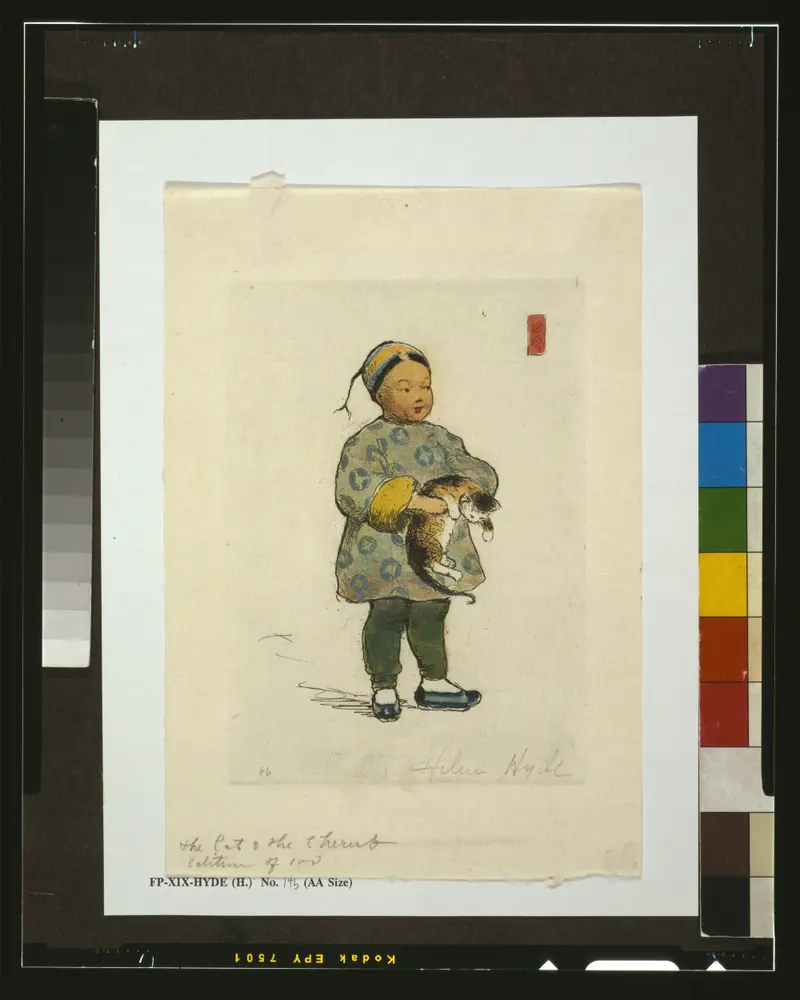
The cat and the cherub LCCN200367
Helen Hyde

Hon(orable Mr) cat - HH (monogram). LCCN200367
Helen Hyde
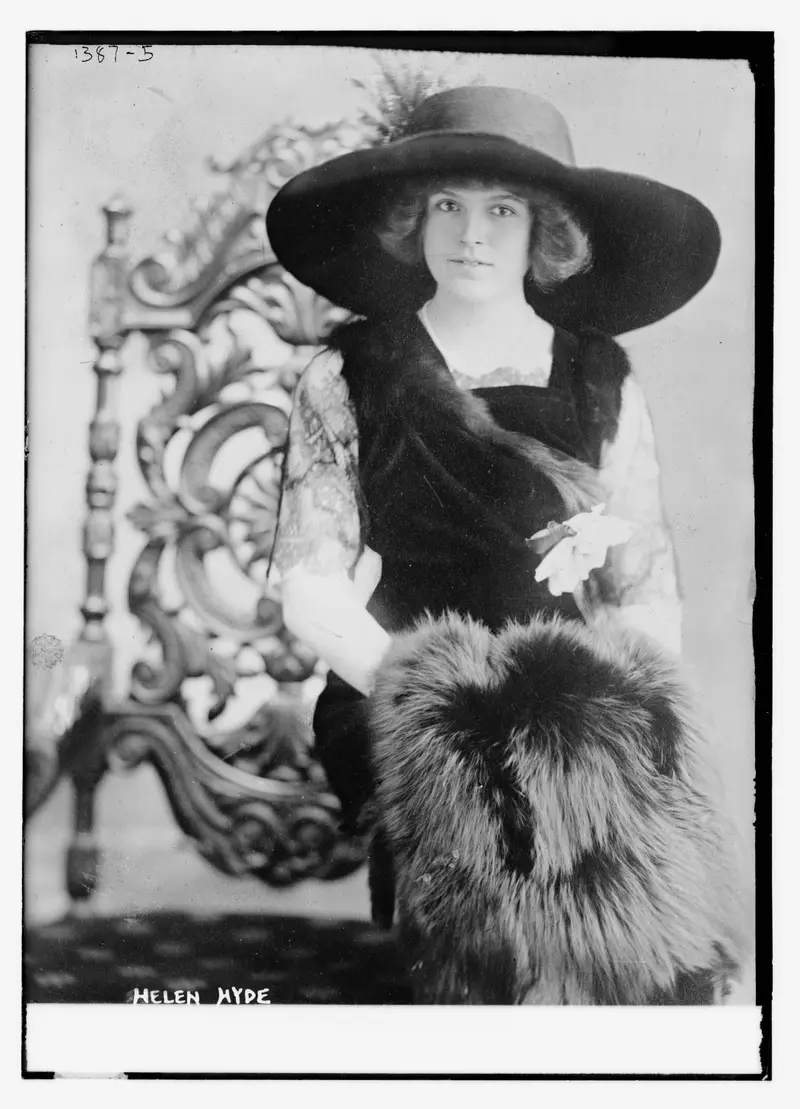
Helen Hyde LCCN201468
Helen Hyde
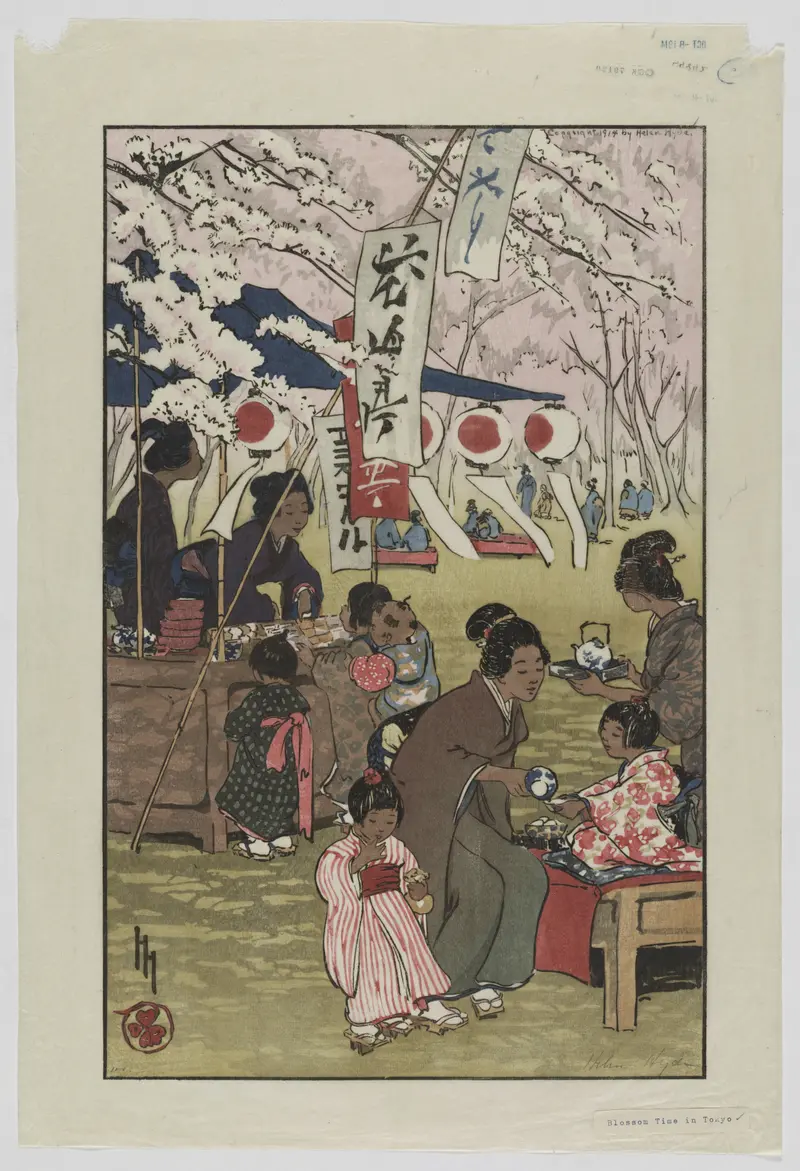
Blossom time in Tokyo) - HH (monogram) LCCN0065
Helen Hyde
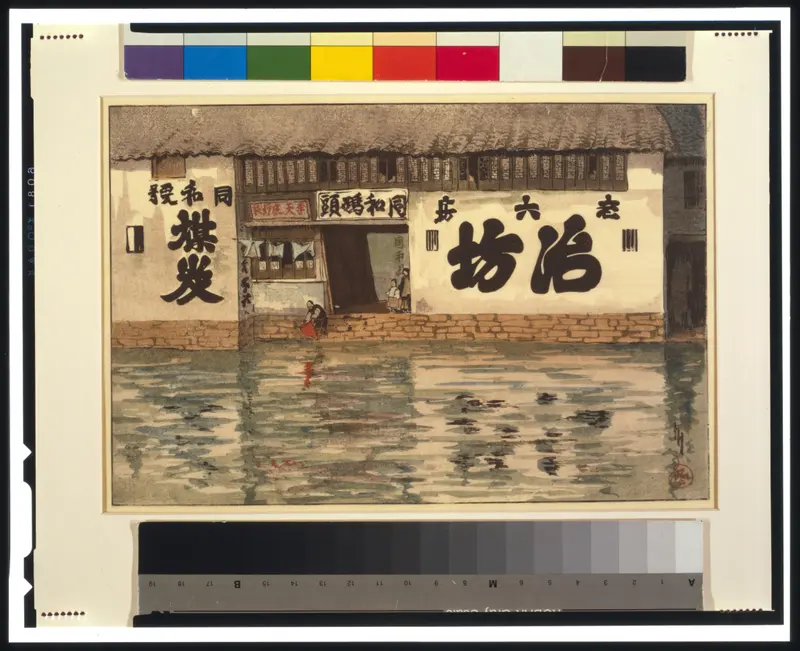
The sauce-pan shop) - HH (monogram) LCCN0065
Helen Hyde

New Year's Day in Tokyo
Helen Hyde
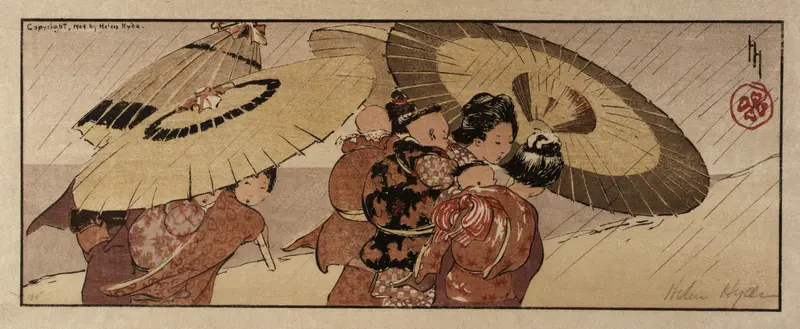
A Summer Shower
Helen Hyde
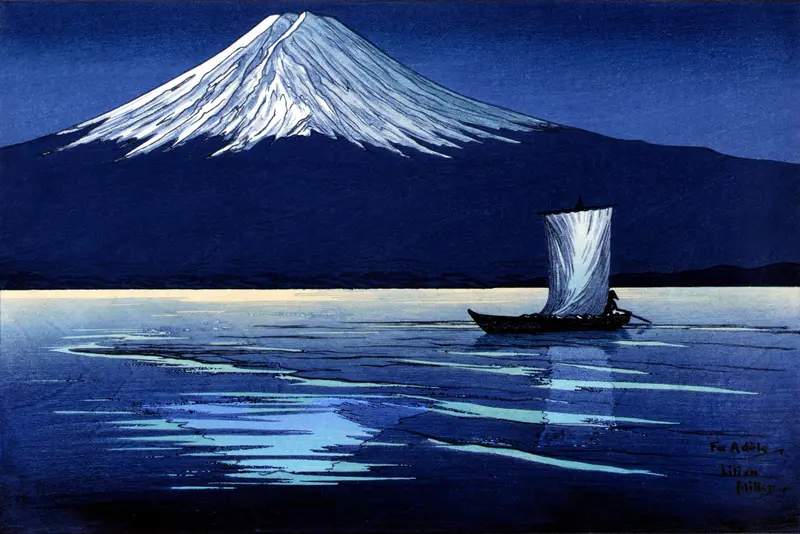
Moonlight on Mt. Fuji
Helen Hyde
More Genre Scene Art

Banquet of the Officers of the St George Civic Guard
Frans Hals

Rembrandt and Saskia in the Scene of the Prodigal Son
Rembrandt van Rijn

Bal du moulin de la Galette
Pierre-Auguste Renoir

Quadrille at the Moulin Rouge
Henri de Toulouse-Lautrec

A Burial at Ornans
Gustave Courbet

When Will You Marry?
Paul Gauguin