
Baker’s Falls — History & Facts
When did color learn to lie? In a world where vibrant hues often mask the truth, one can only wonder how faith intertwines with nature's palette. Look to the left at the cascading waters, swirling with shades of blue and green that seem almost ethereal. The play of light on the surface mirrors the shifting emotions and depths of a serene wilderness. Notice how the white foam of the falls punctuates the tranquil scene, drawing the eye through the composition with a sense of movement that feels alive.
The soft, muted earth tones in the foreground ground the chaotic energy above, creating a harmonious balance between the tumultuous falls and the stillness of the surrounding landscape. Delve deeper into the contrasts at play here: the dynamic force of the water juxtaposed with the steadfastness of the rocks, which stand resilient against the currents. Each detail, from the delicate foliage to the rough textures of the stones, speaks of a quiet faith in nature's resilience and beauty. The interplay of light and shadow further embodies an emotional tension, suggesting a dialogue between the seen and the unseen, the transitory and the eternal. Created between 1821 and 1822, this piece emerged during a transformative period for its creator.
John Hill, active in England at the time, was part of a burgeoning movement that embraced landscape painting as a vehicle for personal and spiritual reflection. The early 19th century saw a shift towards Romanticism, where artists sought to capture not just the physical world, but the emotional resonance it evoked, making this work a pivotal exploration of faith through nature’s lens.
More Artworks by John Hill
Browse all →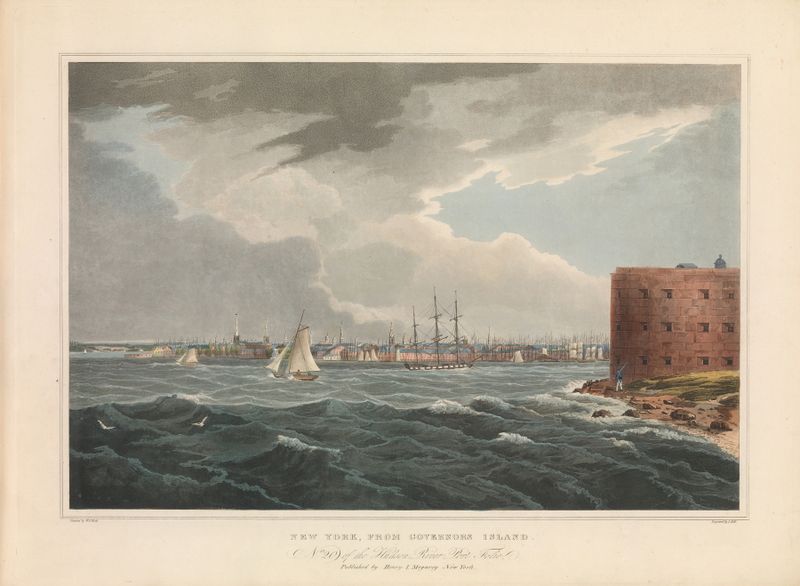
New York from Governor’s Island
John Hill

West Point
John Hill
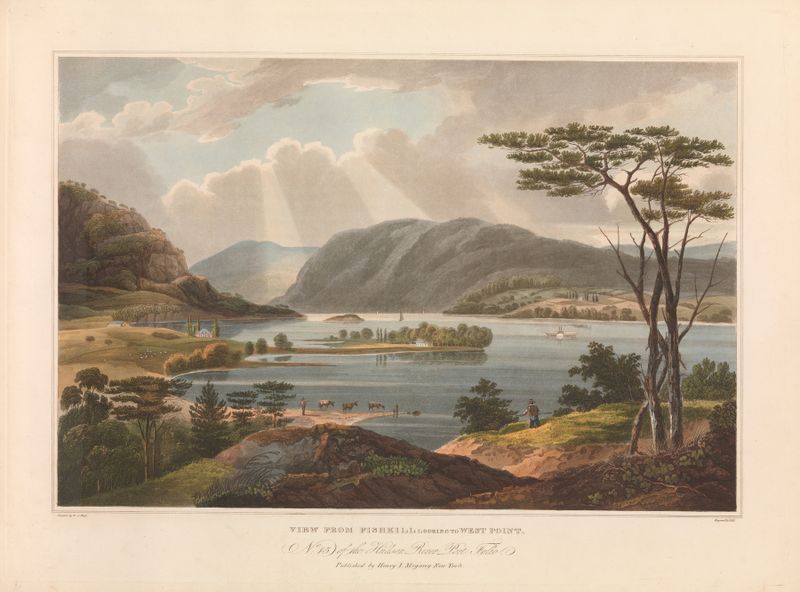
View from Fishkill Looking To West-Point
John Hill

View Near Hudson
John Hill
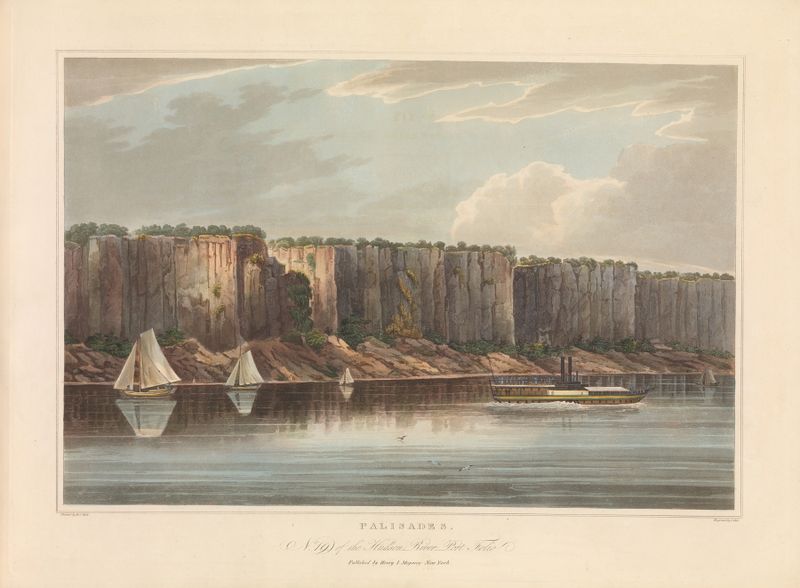
The Palisades
John Hill
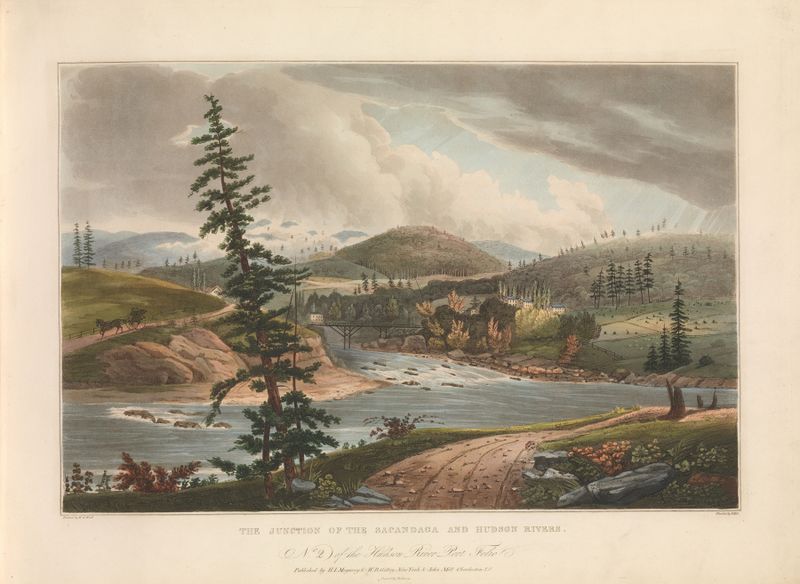
Junction of the Sacandaga and Hudson Rivers
John Hill
City Hall
John Hill

North-West Front, Cassiobury
John Hill

Glenns Falls
John Hill

His Majesty’s Frigate ‘Endymion’
John Hill





