
City Hall — History & Facts
Can beauty exist without sorrow? In City Hall, John Hill captures a moment where truth and grandeur intertwine, echoing the complexities of human experience. Look to the left at the towering spires that reach toward an expansive sky; they seem to pierce the very fabric of the atmosphere. The precise lines and careful shading draw the eye upward, creating a sense of aspiration and permanence. Notice how light dances along the stone façade, illuminating intricate details with a warm glow, while the shadows deepen in the crevices, hinting at the melancholy hidden beneath the surface of the idyllic scene. Within the architectural majesty lies a contrast between the bustling life of the city and the stillness of the building's presence.
The figures in the foreground, small yet purposeful, seem to move toward the hall, embodying ambition or perhaps a longing for connection to something larger. Each step resonates with the weight of unspoken dreams, as if the very stones beneath them hold the echoes of history and hope. This tension between movement and stasis invites the viewer to contemplate the relationship between progress and the inevitable passage of time. In 1826, Hill created this work during a period of rapid growth in American cities, reflecting both optimism and unease.
As urban centers flourished, he aimed to capture the essence of civic pride alongside the underlying complexities of society. This was an era when the relationship between art and urban identity began to evolve, and Hill's depiction of City Hall stands as a testament to that dynamic shift.
More Artworks by John Hill
Browse all →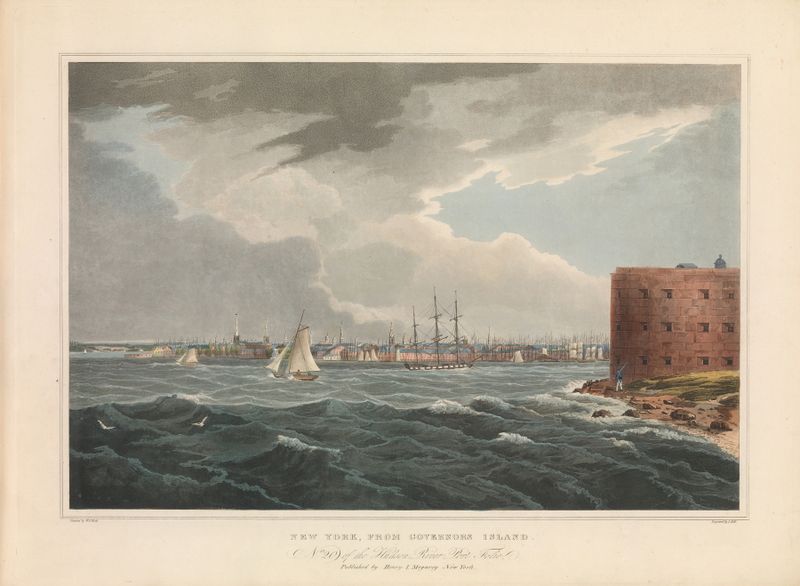
New York from Governor’s Island
John Hill

West Point
John Hill
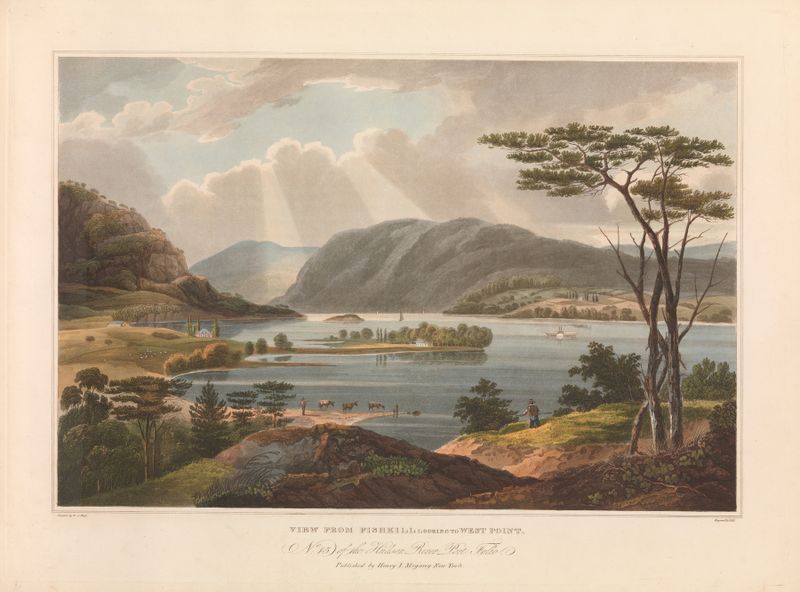
View from Fishkill Looking To West-Point
John Hill

View Near Hudson
John Hill
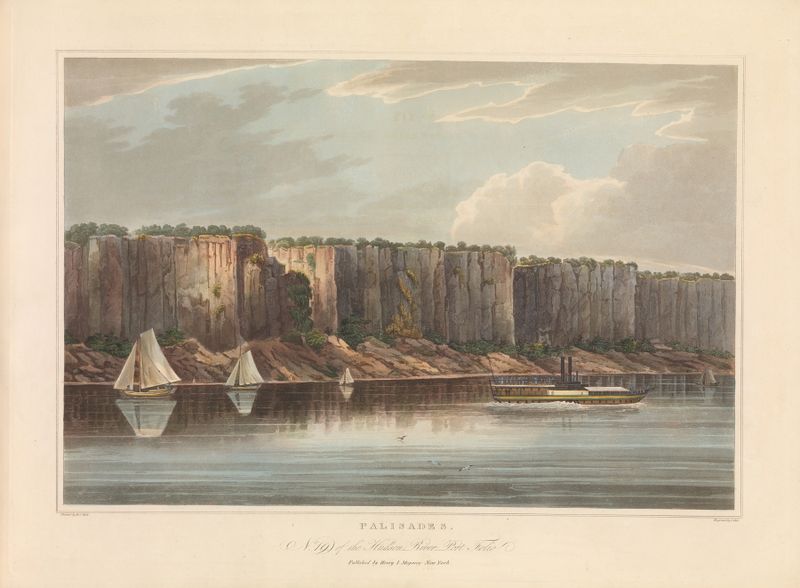
The Palisades
John Hill
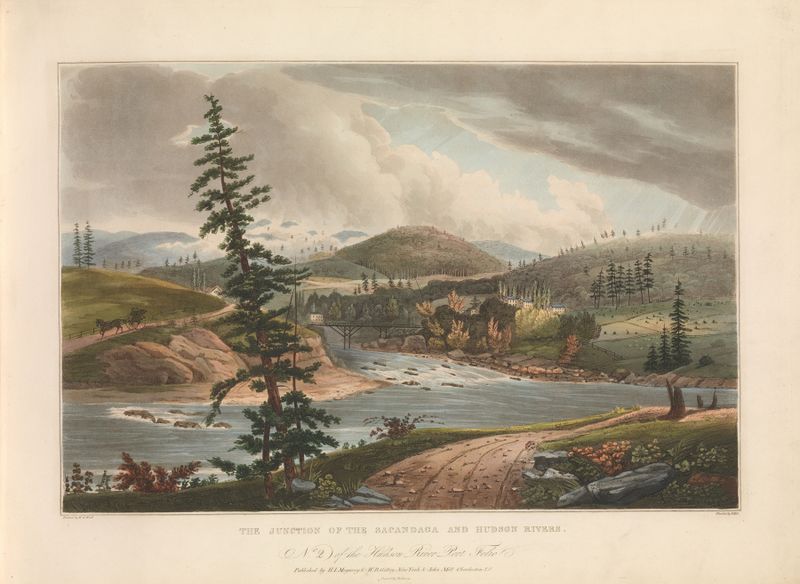
Junction of the Sacandaga and Hudson Rivers
John Hill

North-West Front, Cassiobury
John Hill

Glenns Falls
John Hill

His Majesty’s Frigate ‘Endymion’
John Hill
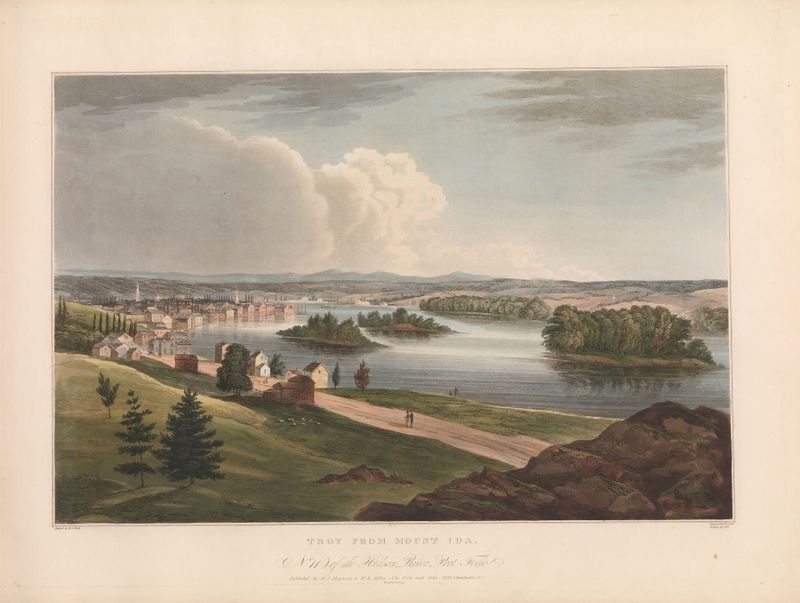
Troy from Mount Ida
John Hill
More Architecture Art
Browse all →
The statue of Liberty
Frédéric Auguste Bartholdi

View of Houses in Delft, Known as ‘The Little Street’
Johannes Vermeer

View of Houses in Delft, Known as ‘The Little Street’
Johannes Vermeer

The Cathedral in Rouen. The portal, Grey Weather
Claude Monet

The yellow house
Vincent van Gogh

The Church in Auvers-sur-Oise, View from the Chevet
Vincent van Gogh