
The Palisades — History & Facts
What secret hides in the quiet of the canvas? The Palisades evokes an unsettling stillness that invites contemplation and fear. Look to the left at the imposing cliffside, sheer rock faces towering above the river below. The soft hues of misty greens and grays blend seamlessly, while the violent contrast of dark shadows suggests an impending storm. Notice how the light dances across the water's surface, shimmering in defiance of the menacing cliffs, drawing the viewer deeper into this tranquil yet ominous landscape.
The composition invites a sense of vulnerability, creating a fragile balance between beauty and danger. Beneath the apparent serenity lies a palpable tension. The cliffs, majestic yet foreboding, symbolize the duality of nature’s grandeur and its capacity for destruction. The river, winding through the jagged rocks, serves as a metaphor for life's journey, fraught with unseen perils.
Shadows loom, evoking a haunting sense of fear, as if the viewer is standing at the precipice of something unknown, ready to plunge into the depths of uncertainty. Created between 1821 and 1822, this work emerged during a period of transition for its creator, who was deeply influenced by the Romantic movement. Hill's exploration of landscapes aligned with contemporary artists' fascination with nature's sublime power. As the United States was undergoing significant growth and change, his painting represented a moment of introspection — a reflection on humanity's frail existence amidst the awe-inspiring yet terrifying forces of the natural world.
More Artworks by John Hill
Browse all →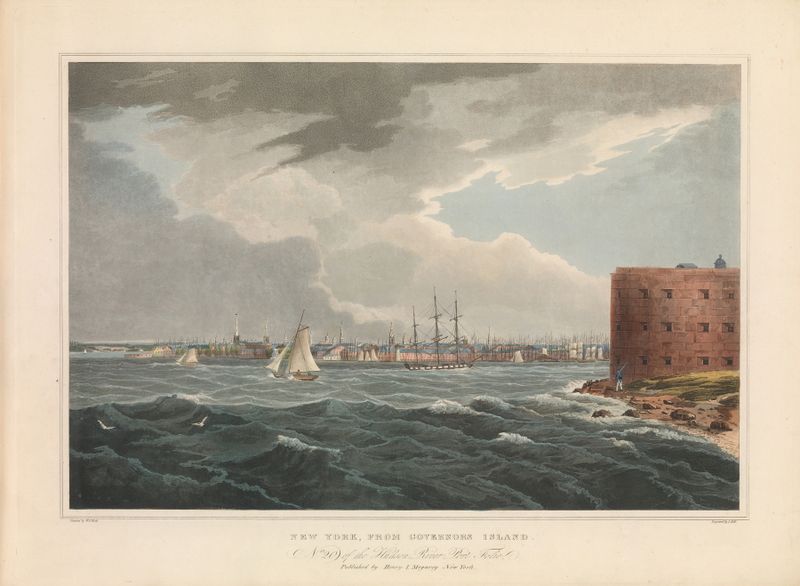
New York from Governor’s Island
John Hill

West Point
John Hill
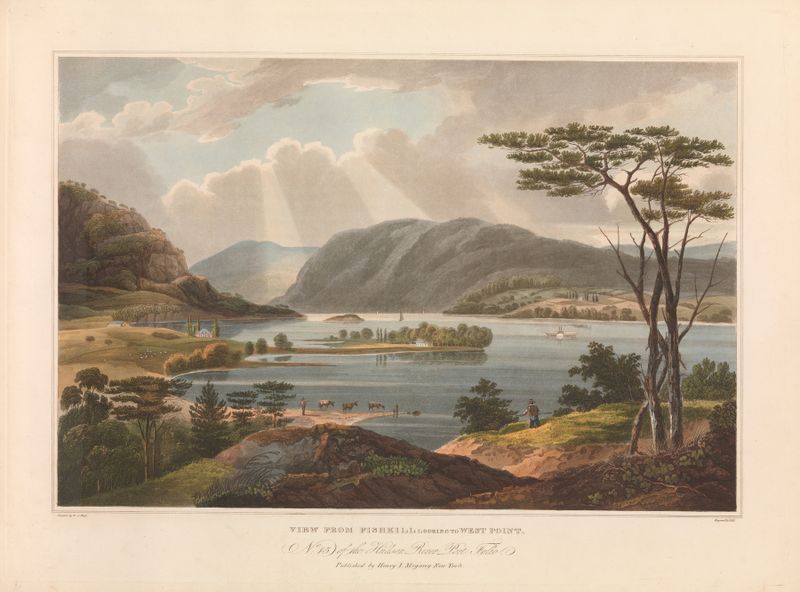
View from Fishkill Looking To West-Point
John Hill

View Near Hudson
John Hill
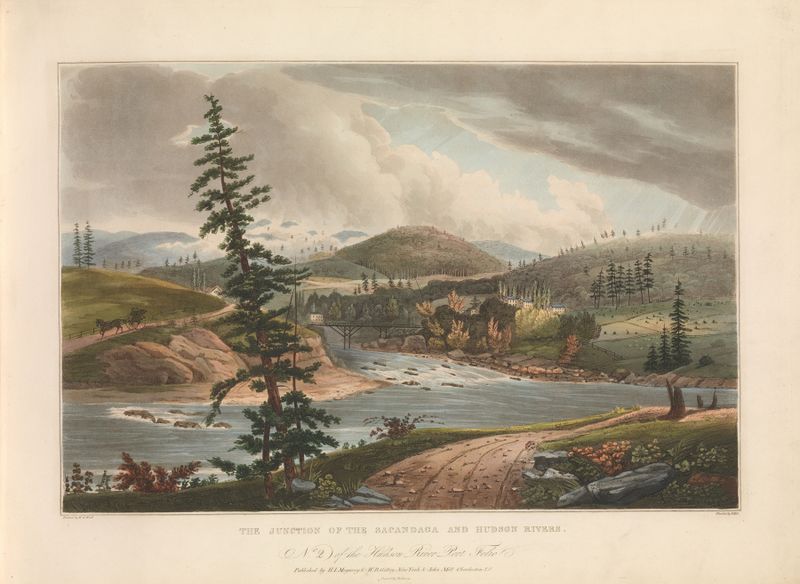
Junction of the Sacandaga and Hudson Rivers
John Hill
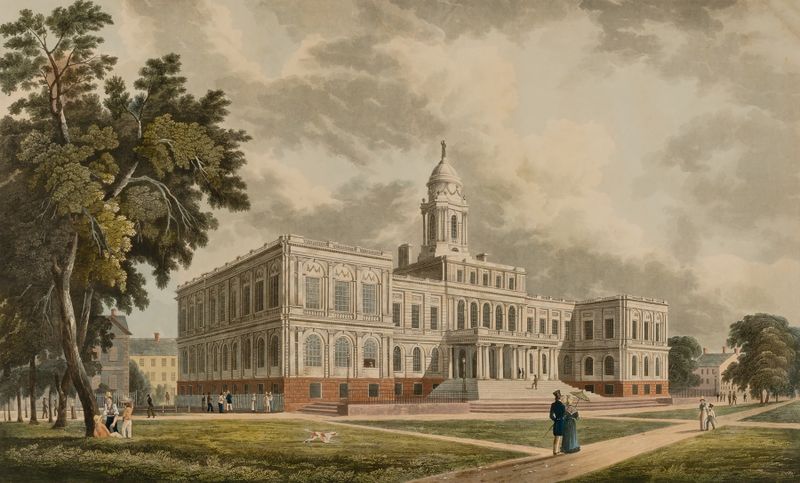
City Hall
John Hill

North-West Front, Cassiobury
John Hill

Glenns Falls
John Hill

His Majesty’s Frigate ‘Endymion’
John Hill
Troy from Mount Ida
John Hill





