
Basket of Apples and Peaches — History & Facts
Basket of Apples and Peaches stands out among the still lifes of the Spanish Golden Age for its remarkable restraint and purity. Unlike the lavish displays of fruit and luxury goods popular in Dutch still life, Francisco de Zurbarán here presents a humble arrangement that has puzzled scholars: was this painted for a monastic patron, or as a quiet meditation on earthly abundance? The exact commission remains unknown, but the painting’s austere beauty has led some to speculate it was intended for a religious setting, reflecting the artist’s close ties to the Carthusian order in Seville. At first glance, the scene is deceptively simple: a basket brimming with apples and peaches rests on a plain ledge, bathed in a clear, focused light that seems to sanctify the fruit. The apples, with their subtle blemishes, and the peaches, softly blushed and fuzzy, are rendered with a realism that invites contemplation.
The composition is spare—no insects, no scattered leaves, no elaborate tableware—just the fruit, the basket, and the play of light and shadow. This restraint recalls the quiet dignity of Zurbarán’s religious paintings, such as his Saint Serapion, where the focus is on the essential. In contrast to the exuberant still lifes of Juan Sánchez Cotán, with their dramatic hanging fruits and vegetables, Zurbarán’s approach is meditative, inviting the viewer to reflect on simplicity and sufficiency. The physical history of Basket of Apples and Peaches is less documented than many of Zurbarán’s religious works.
Its medium is still debated—some suggest oil on canvas, others propose panel—reflecting the uncertainties that often surround still lifes of this period. While there is no record of its original patron, the painting’s style places it firmly in Zurbarán’s Seville years, around 1630, when he was at the height of his powers. Today, this work is celebrated as a rare example of Zurbarán’s foray into still life, a genre he approached with the same gravity and clarity as his saints and martyrs.
Its survival offers a glimpse into the quieter, contemplative side of Spanish Baroque painting.
More Artworks by Francisco de Zurbarán
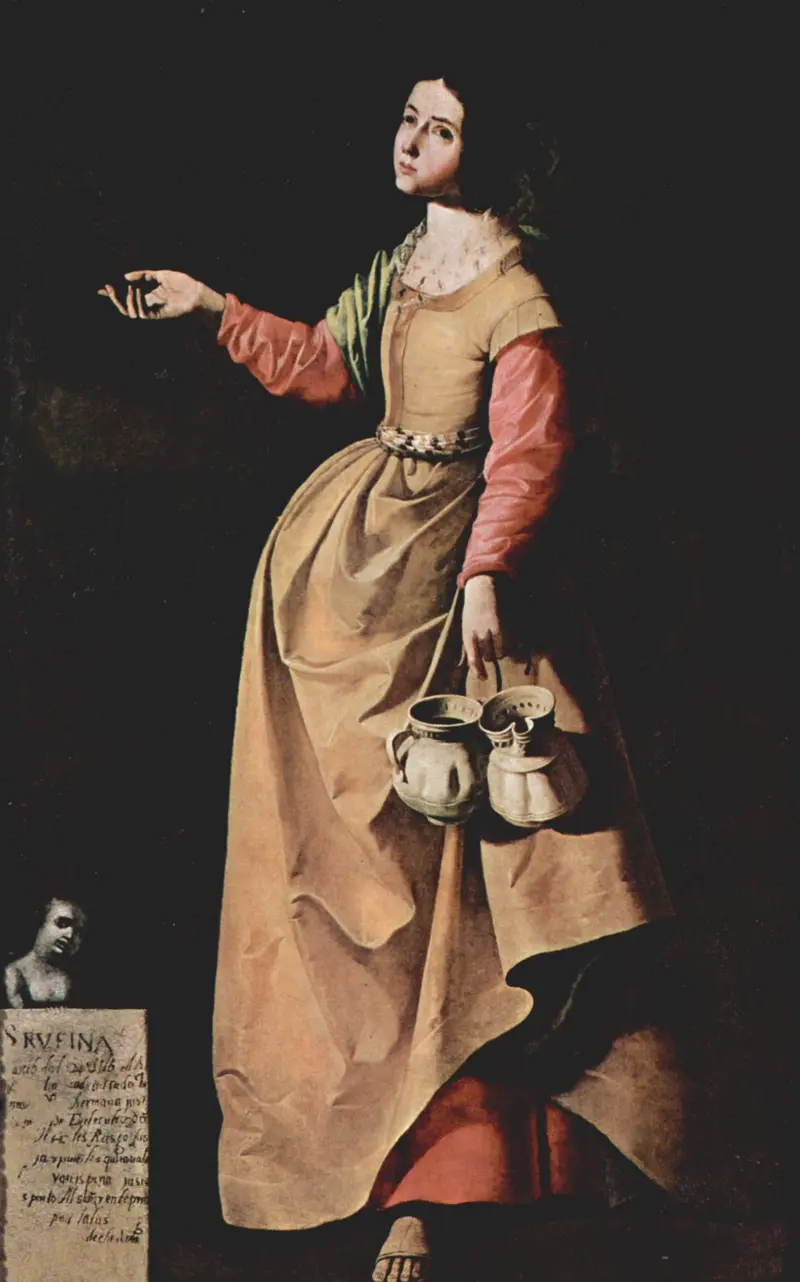
Saint Rufina
Francisco de Zurbarán
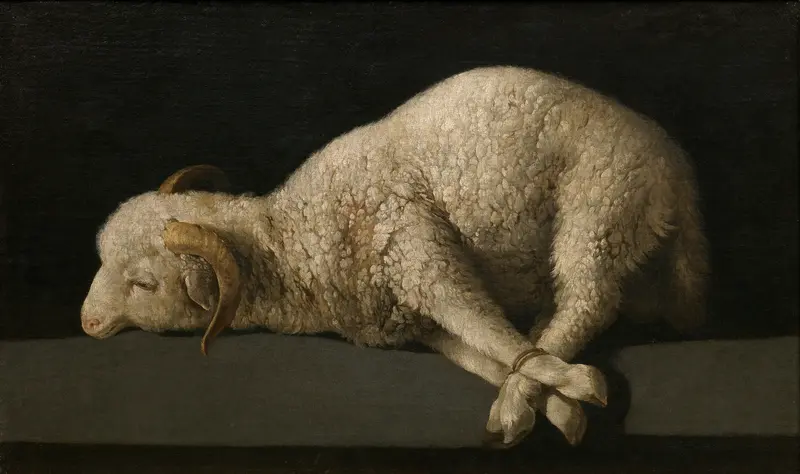
Agnus Dei
Francisco de Zurbarán
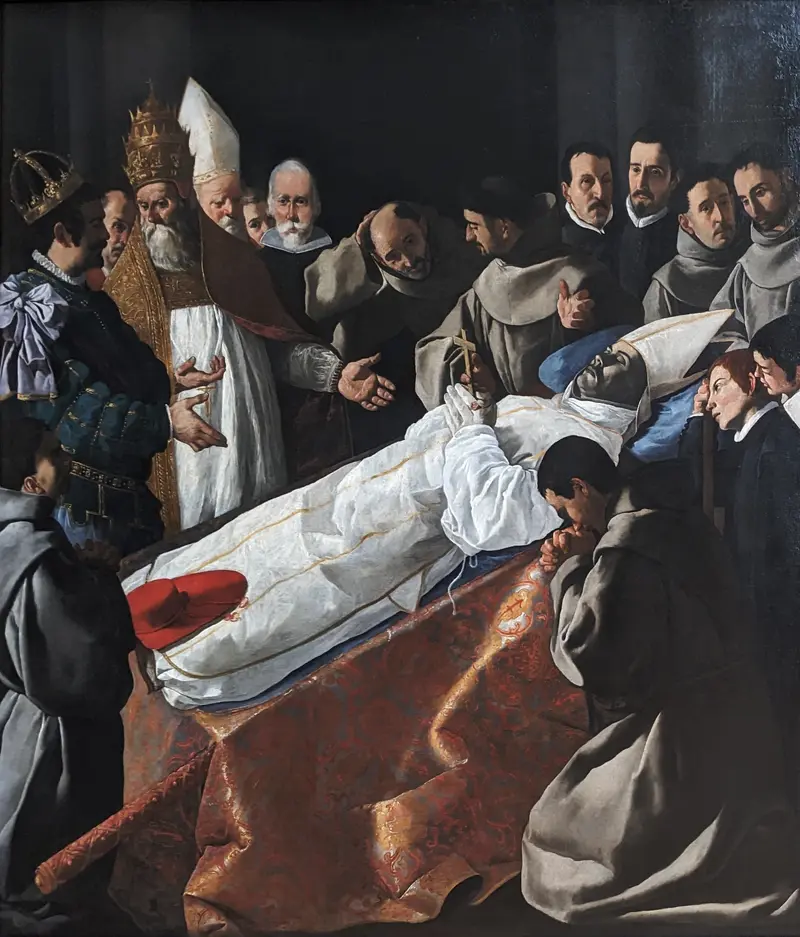
Saint Bonaventure's Body Lying in State
Francisco de Zurbarán
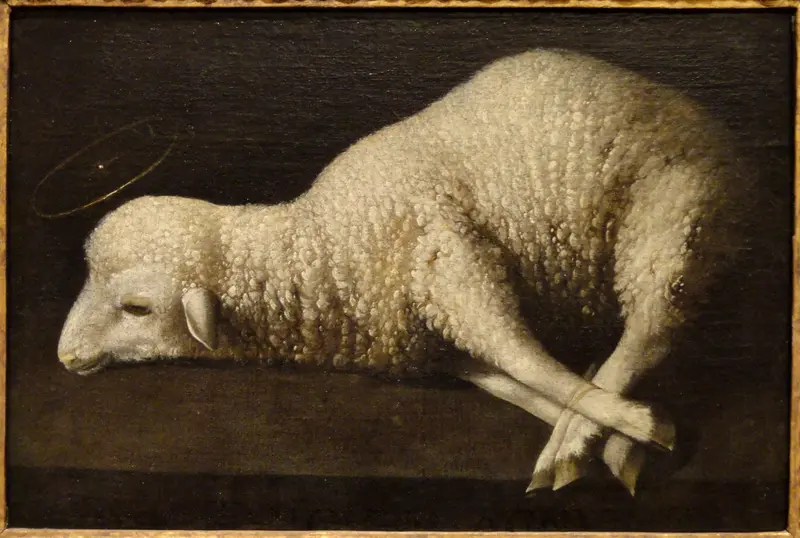
The Lamb of God
Francisco de Zurbarán

Adoration of the Magi
Francisco de Zurbarán
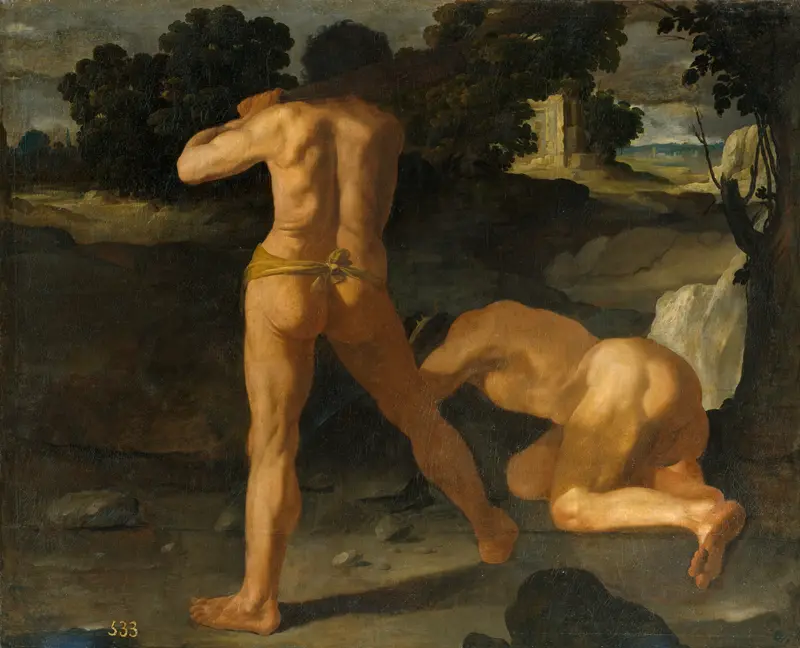
Hercules defeats King Geryon
Francisco de Zurbarán
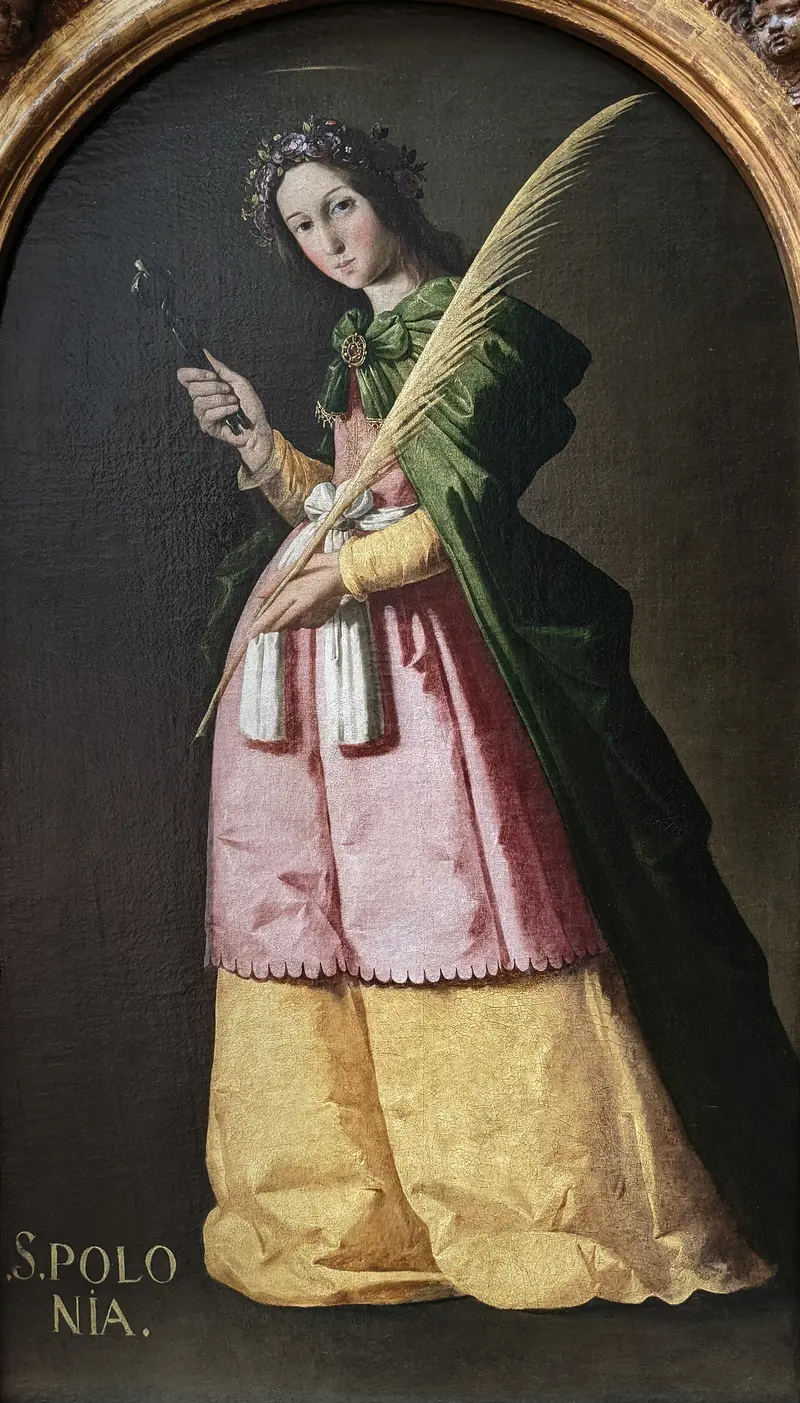
Saint Apollonia
Francisco de Zurbarán
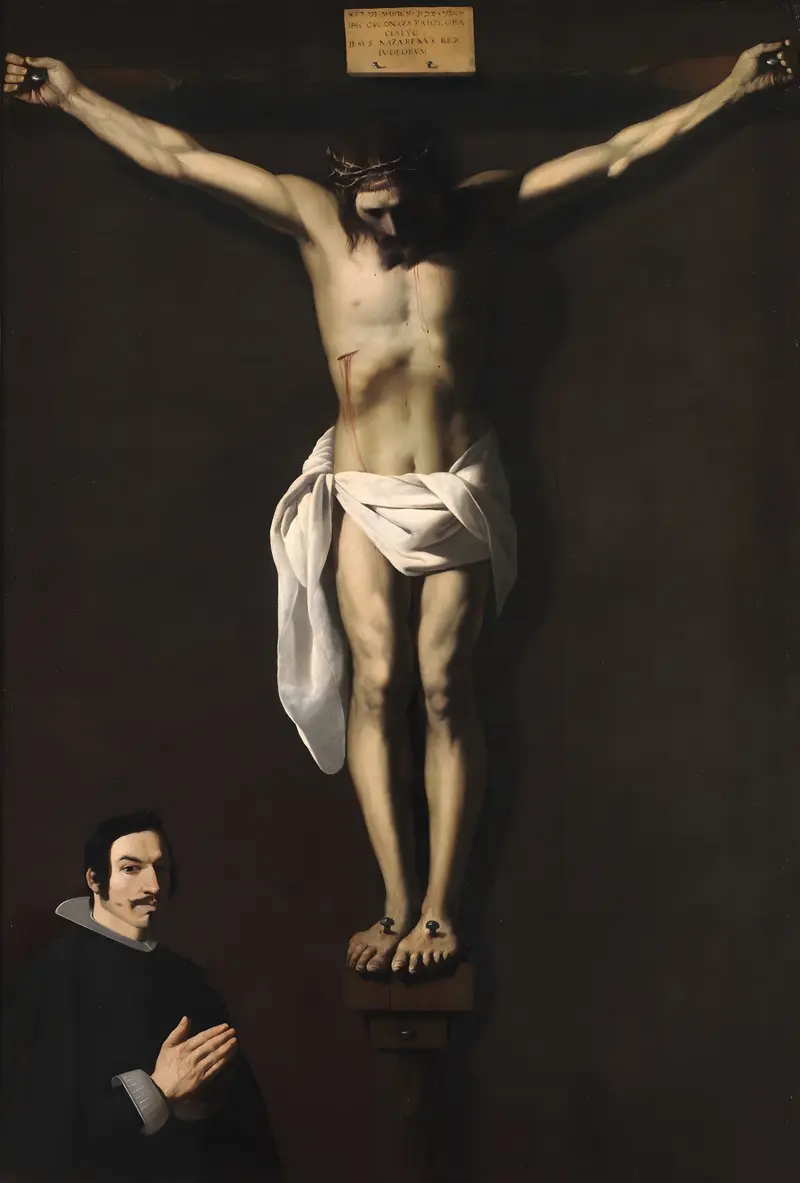
The Crucified Christ with a Donor
Francisco de Zurbarán
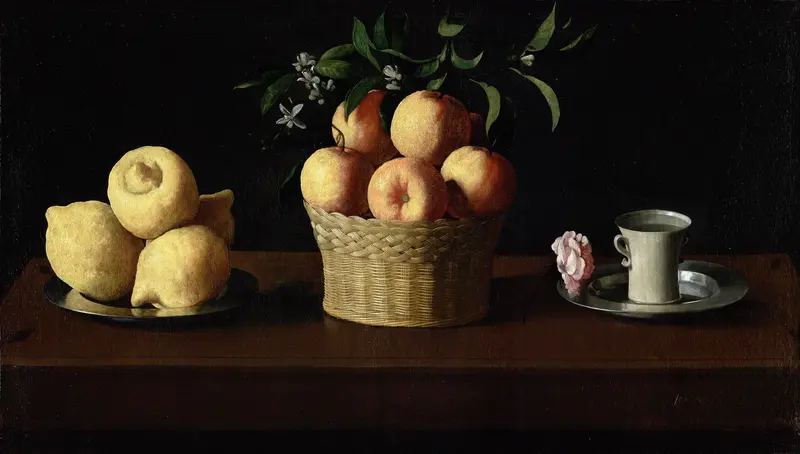
Still Life with Lemons, Oranges and a Rose
Francisco de Zurbarán
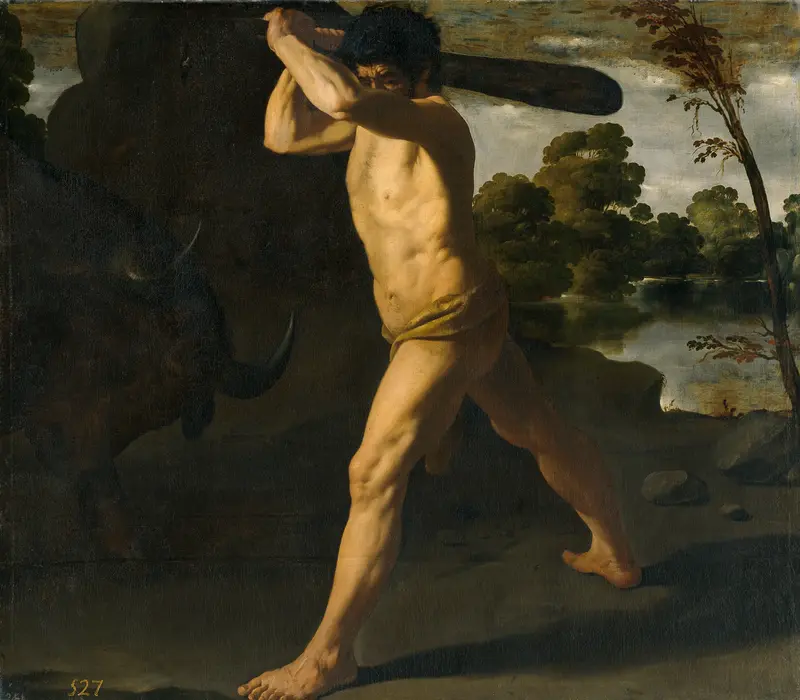
Hercules and the Cretan Bull
Francisco de Zurbarán





