
The Lamb of God — History & Facts
The animal’s creamy fleece is rendered with extraordinary precision, each curl and tuft catching the light that falls from the upper left, creating a striking contrast against the deep, shadowed background. The composition is starkly simple: the lamb fills most of the frame, isolated on a dark table or ledge, with no other objects or landscape to distract from its form. The artist’s brushwork is meticulous, especially in the detailed texture of the wool, while the background is smoothly painted, almost velvety in its darkness.
The lamb’s body curves gently, and the careful modeling of shadow and light gives a sense of weight and volume, emphasizing both vulnerability and dignity. A subtle shadow beneath the animal anchors it to the surface, while the muted palette of whites, creams, and browns heightens the somber mood. No blood or overt signs of violence are present, yet the tied legs and the lamb’s passive pose evoke a sense of sacrifice.
The background is a uniform, deep brown-black, with no visible texture or variation except for subtle brush marks near the top edge. The lamb’s ear on the left side of the painting droops downward, its inner edge softly shadowed. The animal’s nose and mouth are delicately outlined, with a faint shadow beneath the muzzle.
The lower left corner of the painting is darker than the rest, blending almost seamlessly into the background. The table or ledge on which the lamb lies is a flat, unadorned surface, its front edge catching a narrow band of light. The hooves are painted with a muted gray, and the tied cords around the legs are rendered with a few swift, fine lines.
The right edge of the lamb’s body is softly blended into the background, with the fur gradually dissolving into shadow.
Sources: San Diego Museum of Art, record 1947.36 · Wikidata Q22963641 · Image source (Wikimedia Commons)
More Artworks by Francisco de Zurbarán
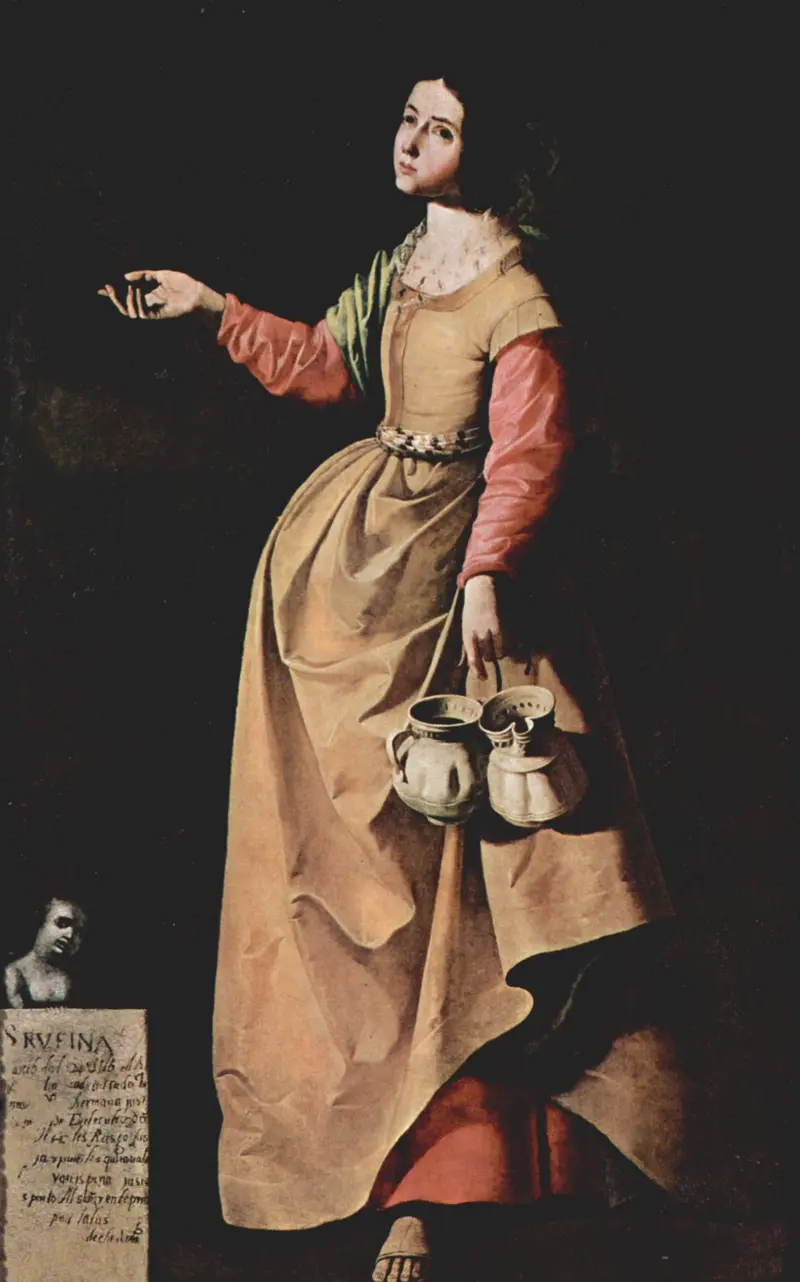
Saint Rufina
Francisco de Zurbarán
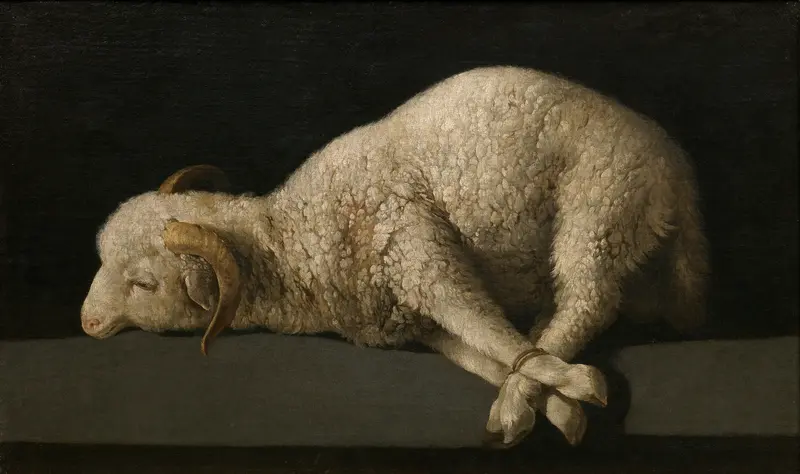
Agnus Dei
Francisco de Zurbarán
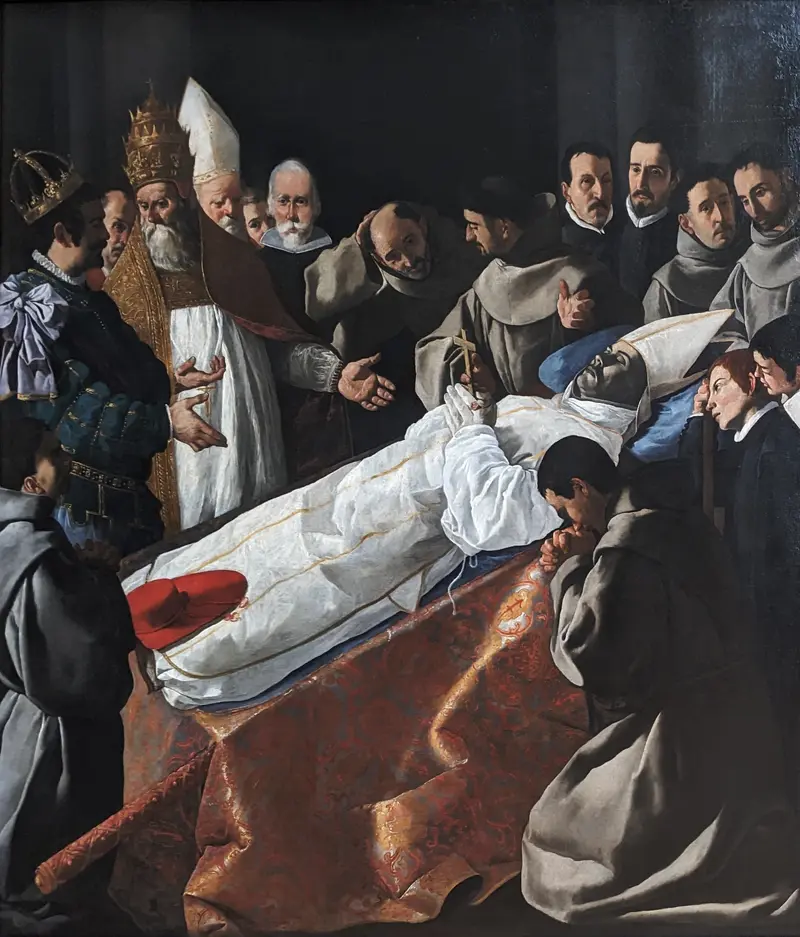
Saint Bonaventure's Body Lying in State
Francisco de Zurbarán

Adoration of the Magi
Francisco de Zurbarán
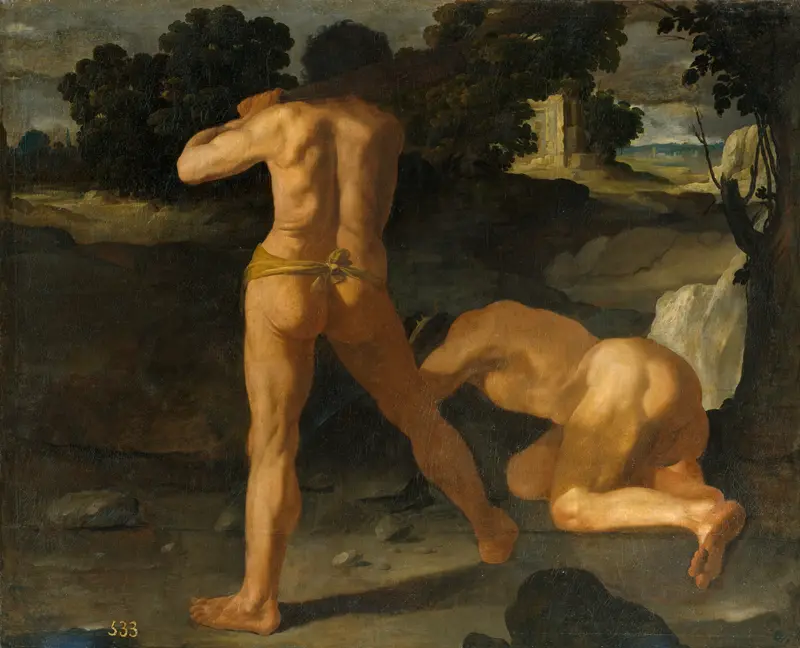
Hercules defeats King Geryon
Francisco de Zurbarán
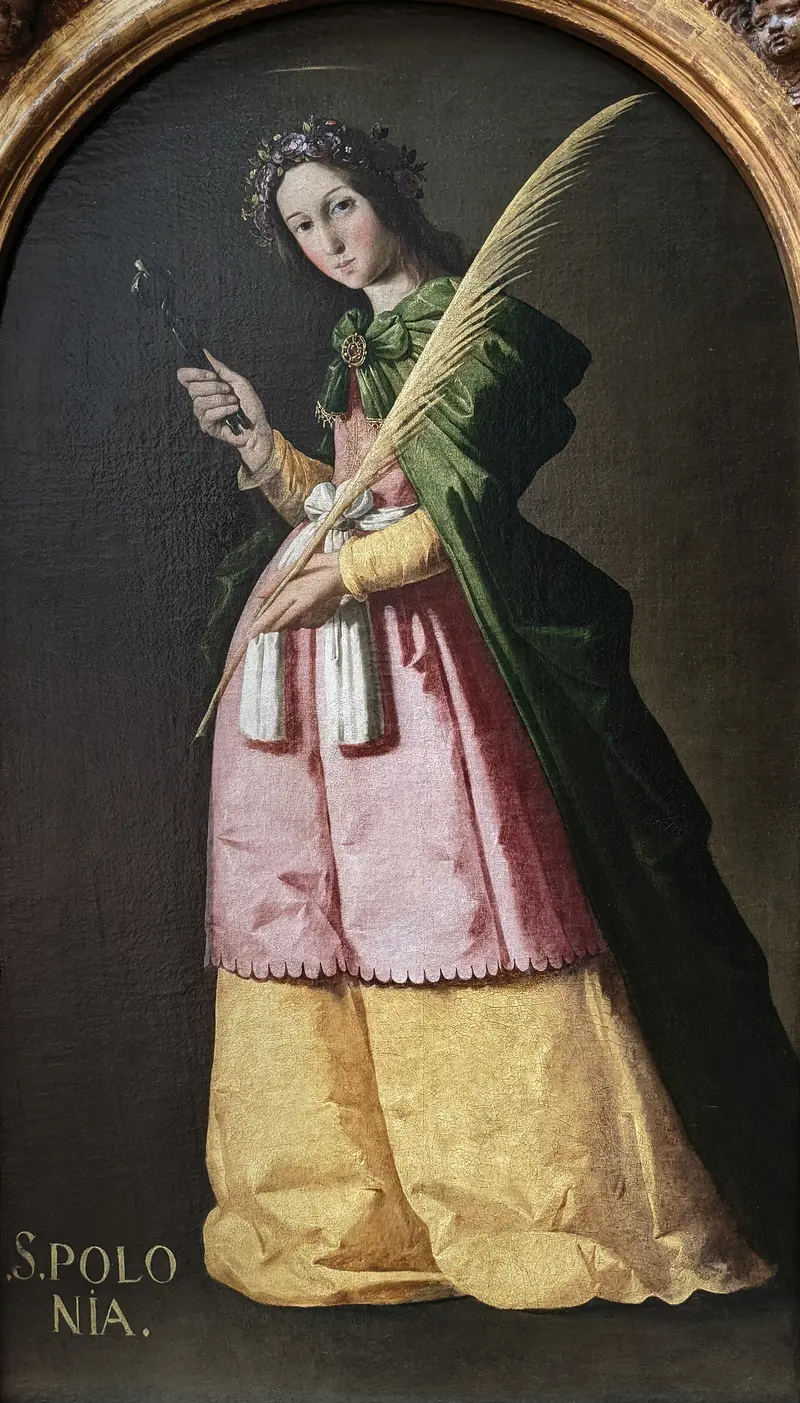
Saint Apollonia
Francisco de Zurbarán
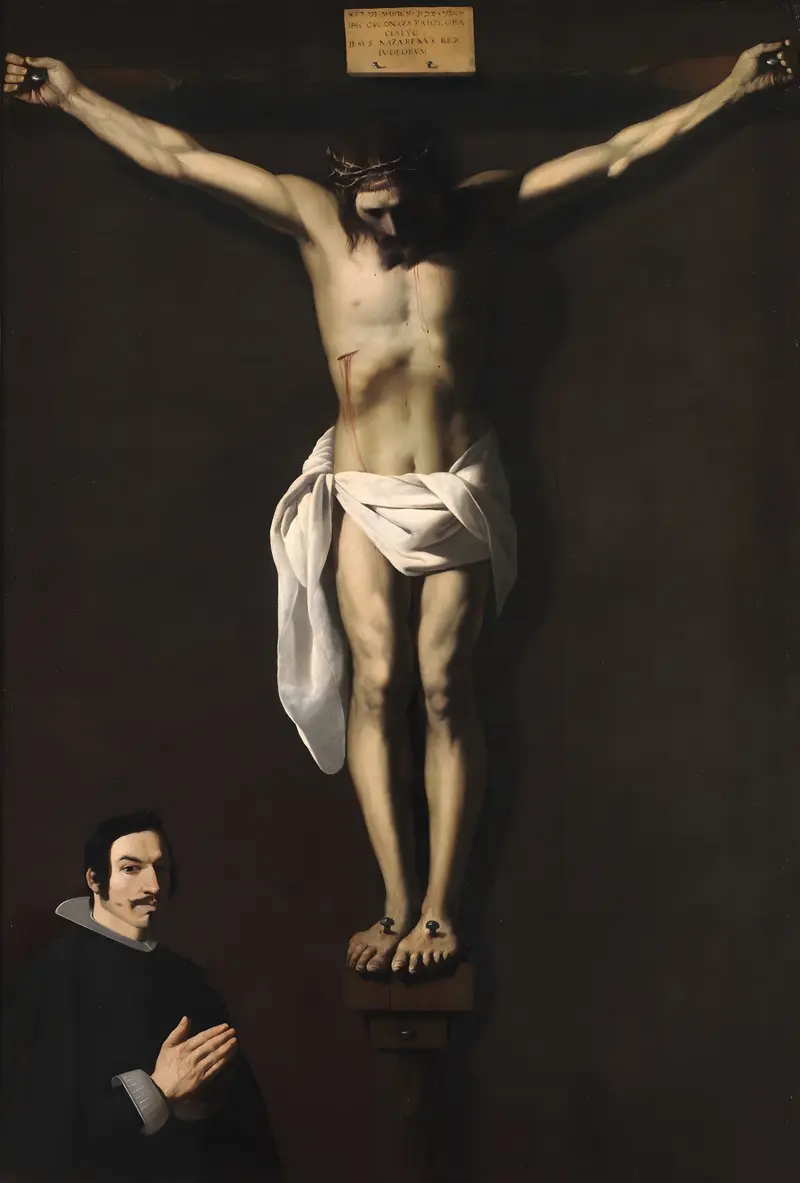
The Crucified Christ with a Donor
Francisco de Zurbarán
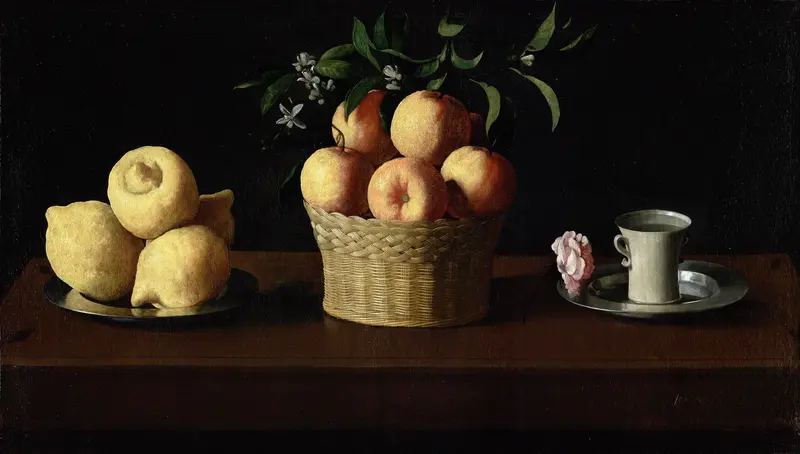
Still Life with Lemons, Oranges and a Rose
Francisco de Zurbarán
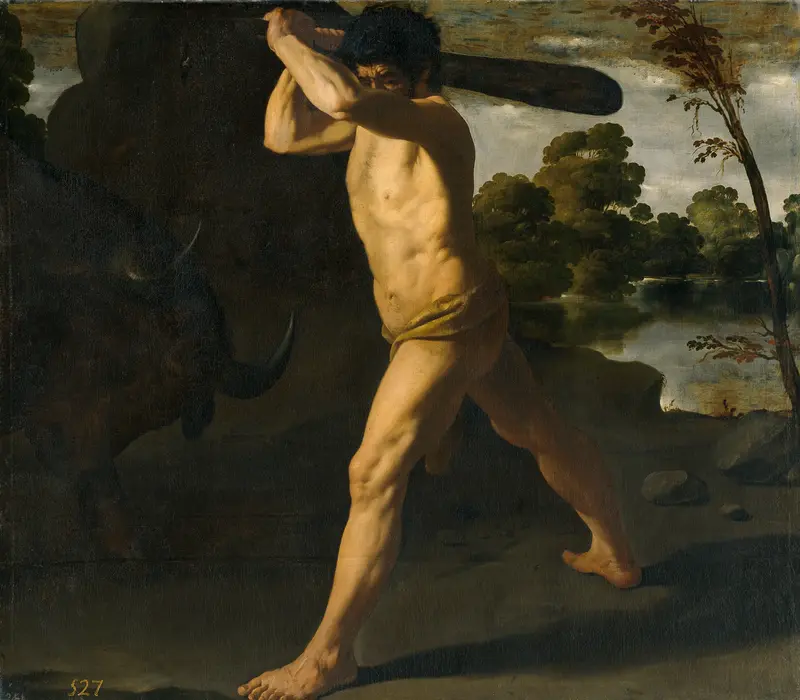
Hercules and the Cretan Bull
Francisco de Zurbarán
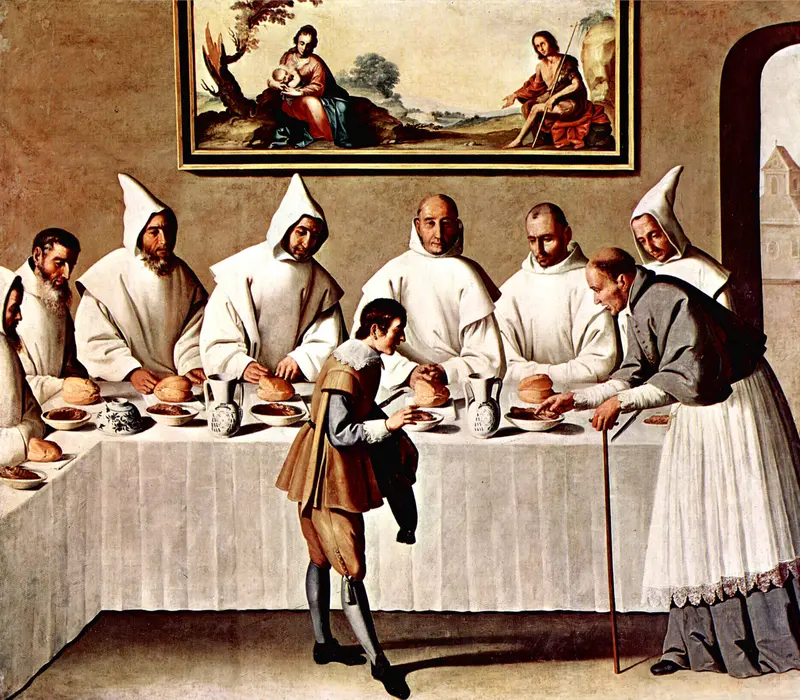
Saint Hugh in the Carthusian Refectory
Francisco de Zurbarán





