
Battle of Pharsalus and the Beheading of Pompey — History & Facts
A tangle of horses, banners, and armored men surges across the panel, pulling the viewer into the chaos and calculation of a world-defining clash. The painter’s eye lingers on the energy of the melee, but it is the chilling quiet at the right edge—a small, grim gathering under the trees—that holds the final word. Swords flash and spears bristle, but the true center of gravity is the moment of reckoning: a fallen figure, isolated and surrounded, as fate closes in.
The dense layering of bodies and weapons is not just for spectacle; it is a visual maze, leading the eye from the fever of battle to the cold aftermath. Painted between circa 1456 and 1465, Battle of Pharsalus and the Beheading of Pompey by Apollonio di Giovanni belongs to a world where history and legend were pressed into service for the ambitions of cities and families. In fifteenth-century Florence, such narrative panels were prized for their ability to turn ancient stories into mirrors for contemporary power and virtue. The painter’s hand is unmistakable in the decorative patterning of horse trappings and the stylized, almost theatrical gestures—details that would have spoken to viewers fluent in both chivalric romance and civic rivalry.
Today, as the painting hangs in the Museum of Fine Arts, Boston, it asks us to look again: not just at the clash of armies, but at the cost of ambition, played out in the shadows at the edge of the field.
More Artworks by Apollonio di Giovanni
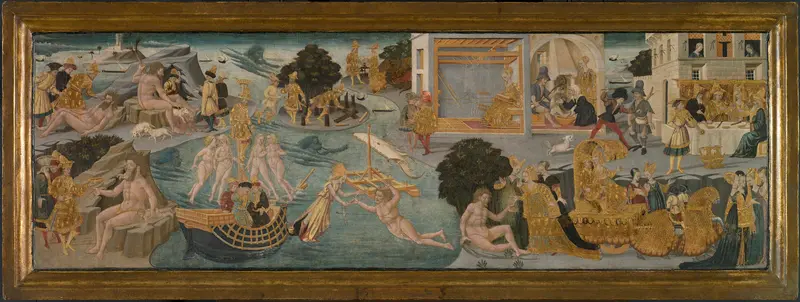
The Adventures of Ulysses
Apollonio di Giovanni
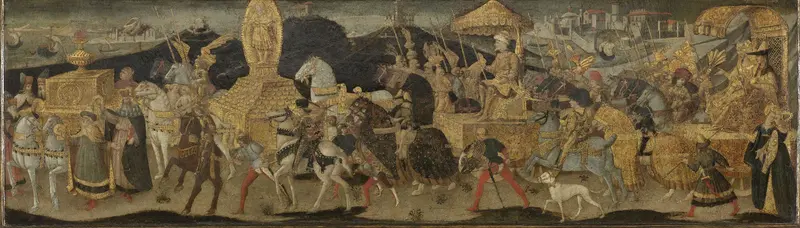
Darius Marching to the Battle of Issus
Apollonio di Giovanni
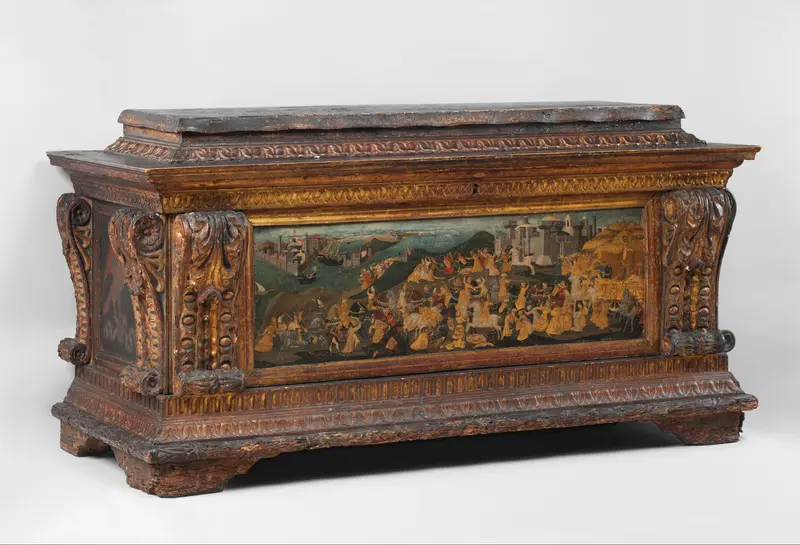
Cassone with painted front panel depicting the Conquest of Trebizond
Apollonio di Giovanni
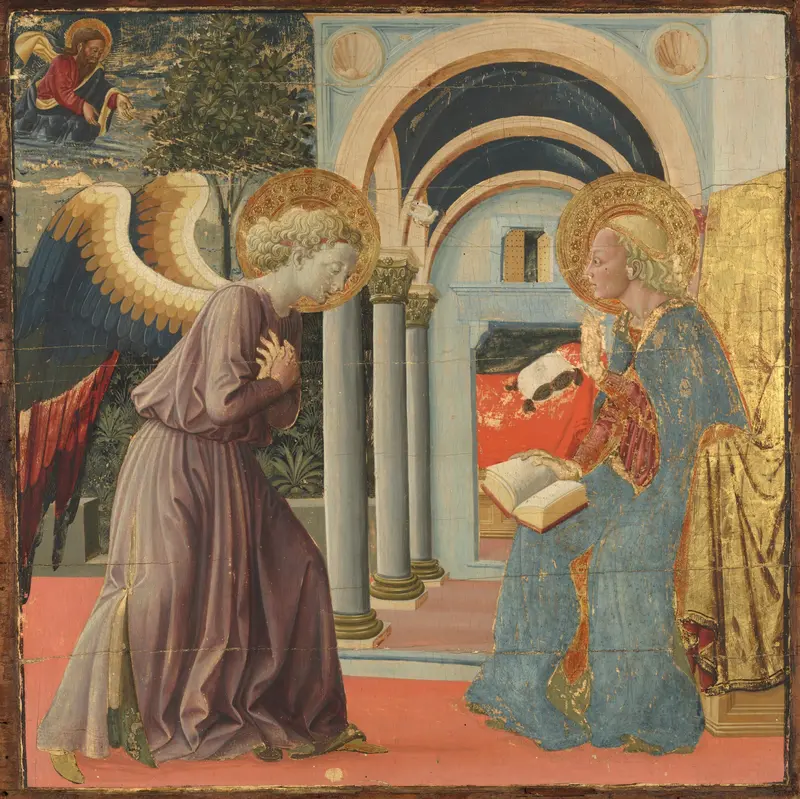
The Annunciation
Apollonio di Giovanni
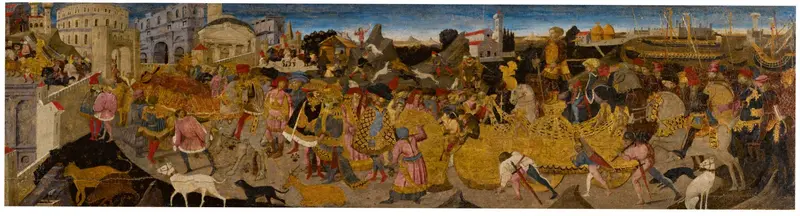
The Triumph of Marcus Furius Camillus
Apollonio di Giovanni
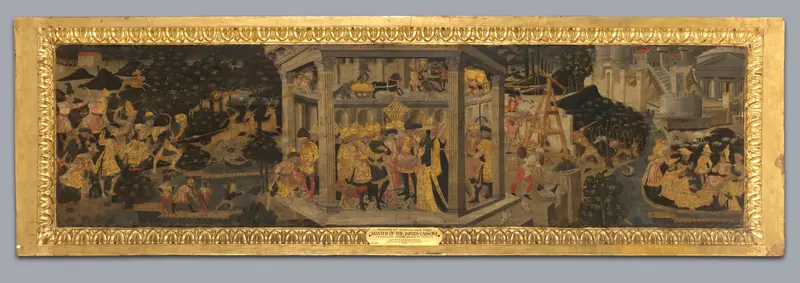
Aeneas at Carthage
Apollonio di Giovanni
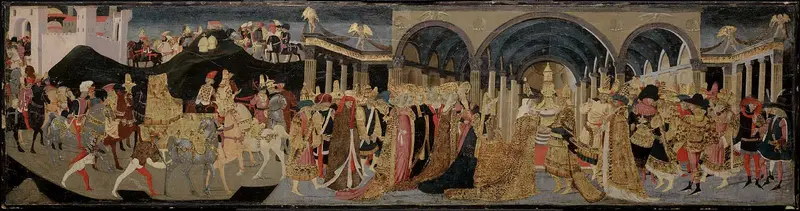
Meeting of Solomon and the Queen of Sheba
Apollonio di Giovanni
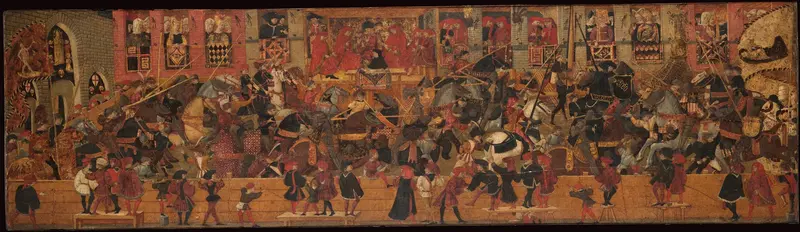
Tournament in the square of Santa Croce, Florence
Apollonio di Giovanni
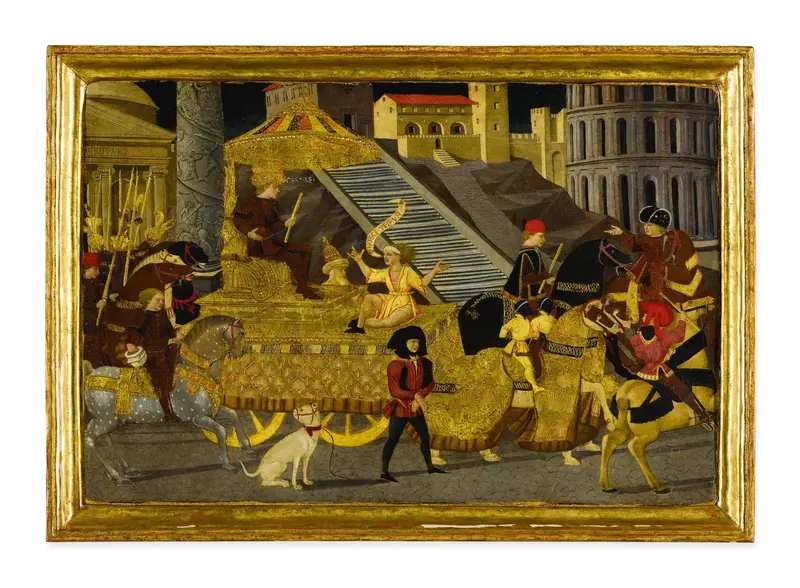
Triumph of Julius Caesar
Apollonio di Giovanni

The Shipwreck of Aenea
Apollonio di Giovanni





