
Darius Marching to the Battle of Issus — History & Facts
Gold shimmers across every surface, drawing the eye into a world of ceremony and spectacle. The procession unfolds in a long, narrow band, each figure caught in the act of movement—horses prance, banners flutter, and attendants stride with purpose. At the heart of the scene, a regal figure sits enthroned beneath a canopy, surrounded by a retinue ablaze with gilded costume and ornament.
The painter, Apollonio di Giovanni, invites us to linger over the intricate details: the delicate hands of the women, the rhythmic repetition of spears, the almost theatrical presentation of an altar and a statue of Apollo carried at the front. Light picks out the gold leaf, making the pageantry feel both precious and remote, as if we are peering into a memory of ancient grandeur. This panel, painted between 1450 and 1455, once adorned a cassone—a marriage chest—transforming a household object into a stage for epic history. Such works were prized in fifteenth-century Italy, where wealthy families commissioned scenes from classical or biblical legend to celebrate virtue, lineage, and learning.
Here, the source tells us, are Darius, king of Persia, his mother Sisygambis, and his wife Stateira, all making their way to the fateful Battle of Issus. The painting’s blend of Persian pomp and Florentine style reflects a world where the past was always present, and myth was woven into the fabric of daily life. Look again at the lavish costumes and the careful choreography of the figures—the story of power and loss is written in every fold and gesture.
More Artworks by Apollonio di Giovanni
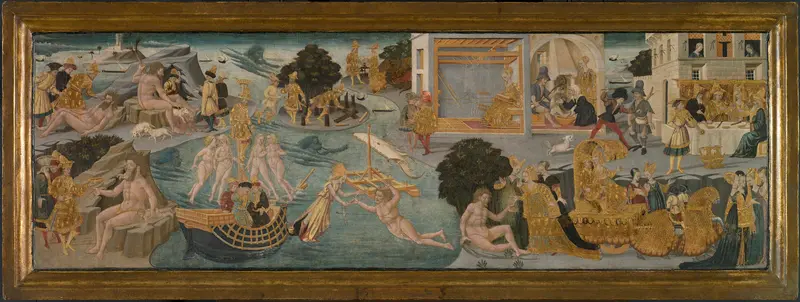
The Adventures of Ulysses
Apollonio di Giovanni
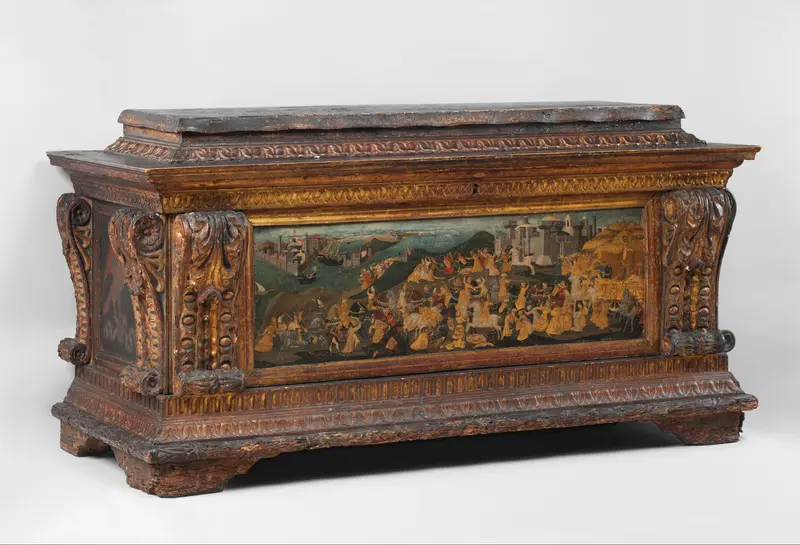
Cassone with painted front panel depicting the Conquest of Trebizond
Apollonio di Giovanni
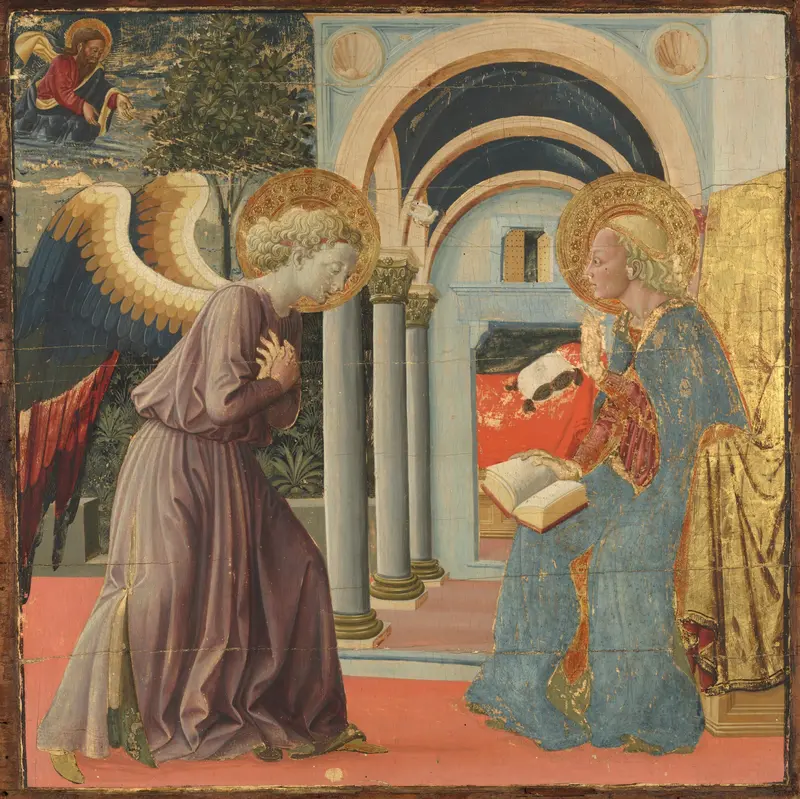
The Annunciation
Apollonio di Giovanni
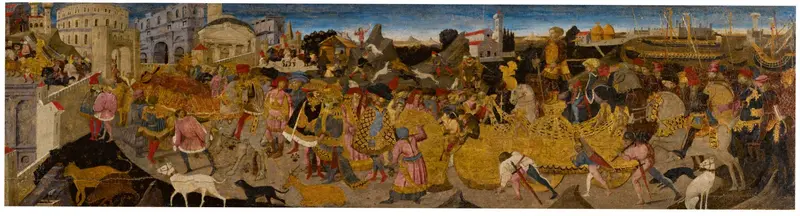
The Triumph of Marcus Furius Camillus
Apollonio di Giovanni
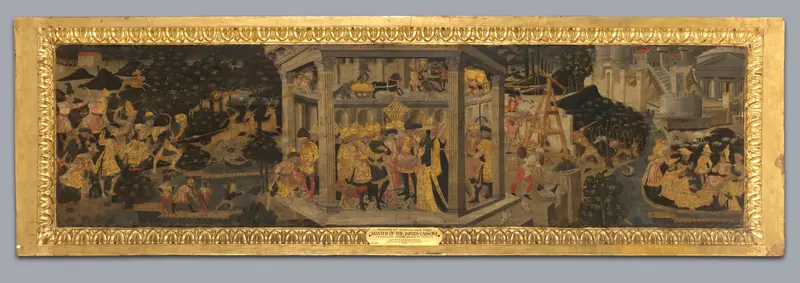
Aeneas at Carthage
Apollonio di Giovanni
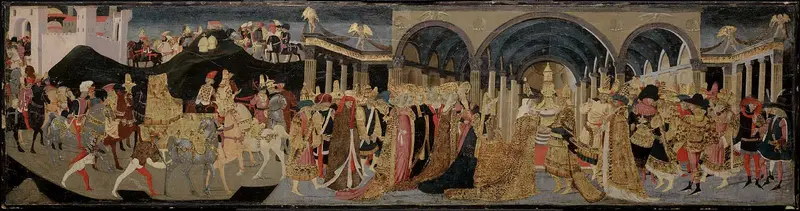
Meeting of Solomon and the Queen of Sheba
Apollonio di Giovanni
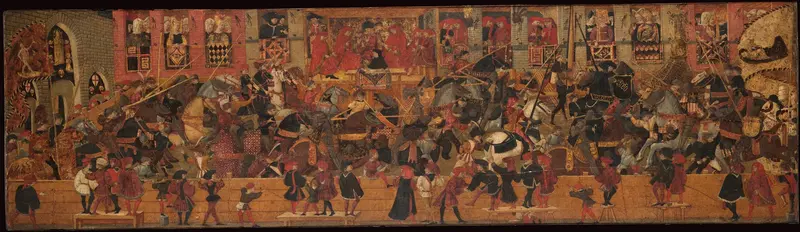
Tournament in the square of Santa Croce, Florence
Apollonio di Giovanni
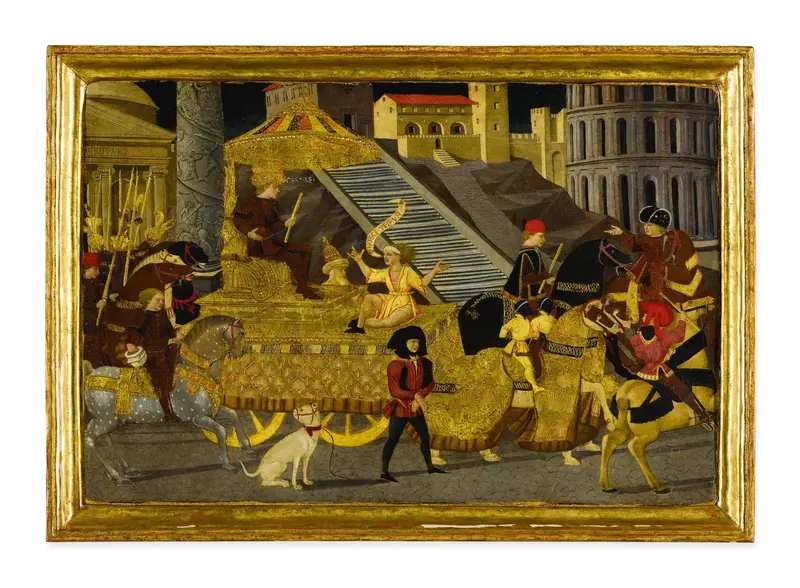
Triumph of Julius Caesar
Apollonio di Giovanni

The Shipwreck of Aenea
Apollonio di Giovanni
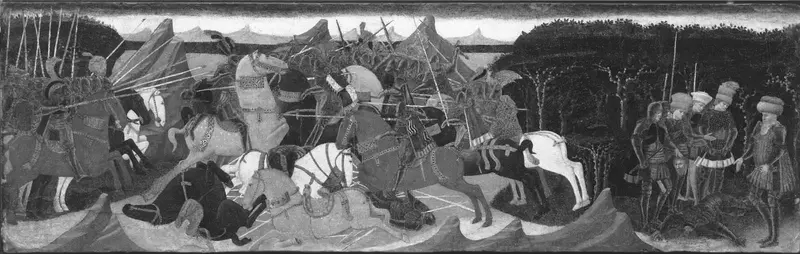
Battle of Pharsalus and the Beheading of Pompey
Apollonio di Giovanni





