
The Shipwreck of Aenea — History & Facts
The eye is immediately caught by the chaos of ships tossed and shattered, sails and oars flying in all directions, as if the sea itself were a stage for mythic catastrophe. In The Shipwreck of Aenea, Apollonio di Giovanni orchestrates a visual drama that unfolds across the entire panel, inviting the viewer to read the story from left to right as if turning the pages of an illuminated manuscript. Gold leaf flashes from the costumes and vessels, not just for splendor but to mark out the figures of power and fate—gods, heroes, and the doomed.
The painter sets the disaster at the very center, where the violence of the waves and the desperate gestures of the figures create a vortex of movement, contrasting with the calm, almost otherworldly landscapes that bookend the scene. Painted sometime between 1450 and 1460, this work belongs to a world where myth and history were woven into the fabric of daily life, especially in Florence, where such narrative panels often adorned the chests (cassoni) given to brides. The long, horizontal format and the crowded, episodic composition are hallmarks of the era’s storytelling ambitions: every gesture, every shimmering detail is a clue to the unfolding legend. The artist’s palette—deep blues, greens, and the insistent gleam of gold—sets a mood both enchanted and perilous, while the rainbow and distant city offer a promise of safety beyond the storm.
History has kept few traces of this particular painting’s early life, but its survival in the Yale University Art Gallery lets us step into the imagination of a Renaissance patron, who would have seen in it not just a tale of shipwreck, but a mirror of fortune’s unpredictable tides.
More Artworks by Apollonio di Giovanni
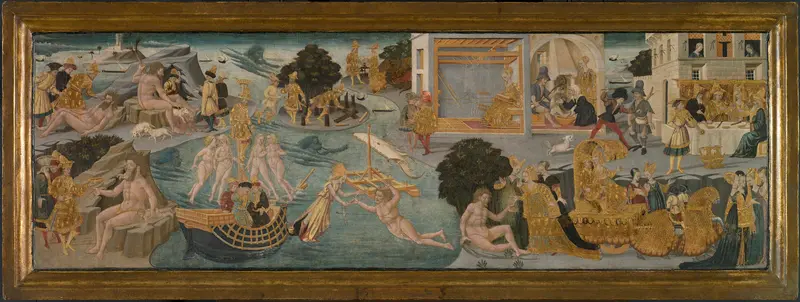
The Adventures of Ulysses
Apollonio di Giovanni
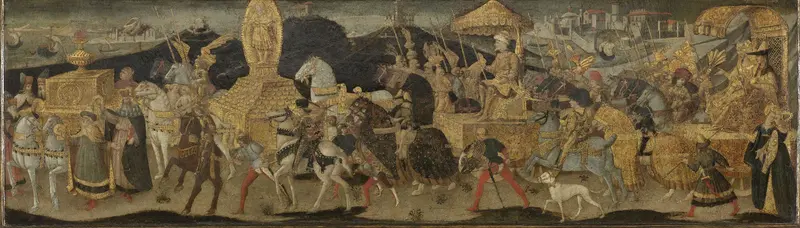
Darius Marching to the Battle of Issus
Apollonio di Giovanni
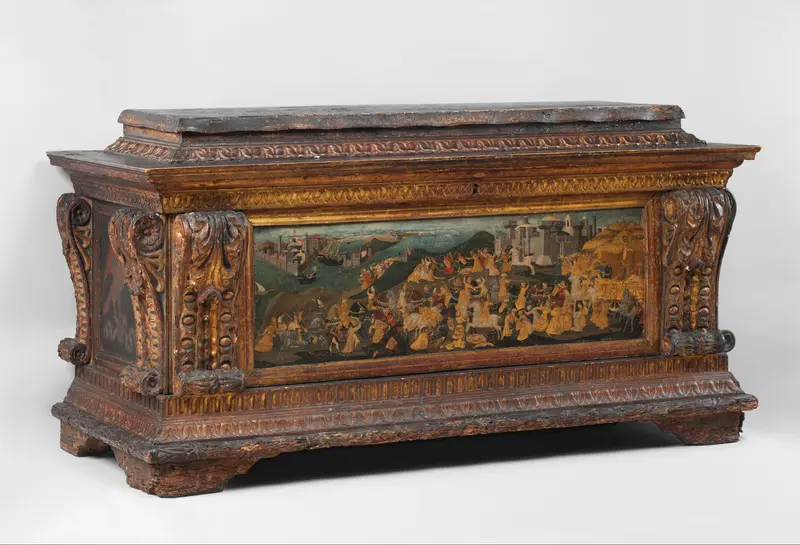
Cassone with painted front panel depicting the Conquest of Trebizond
Apollonio di Giovanni
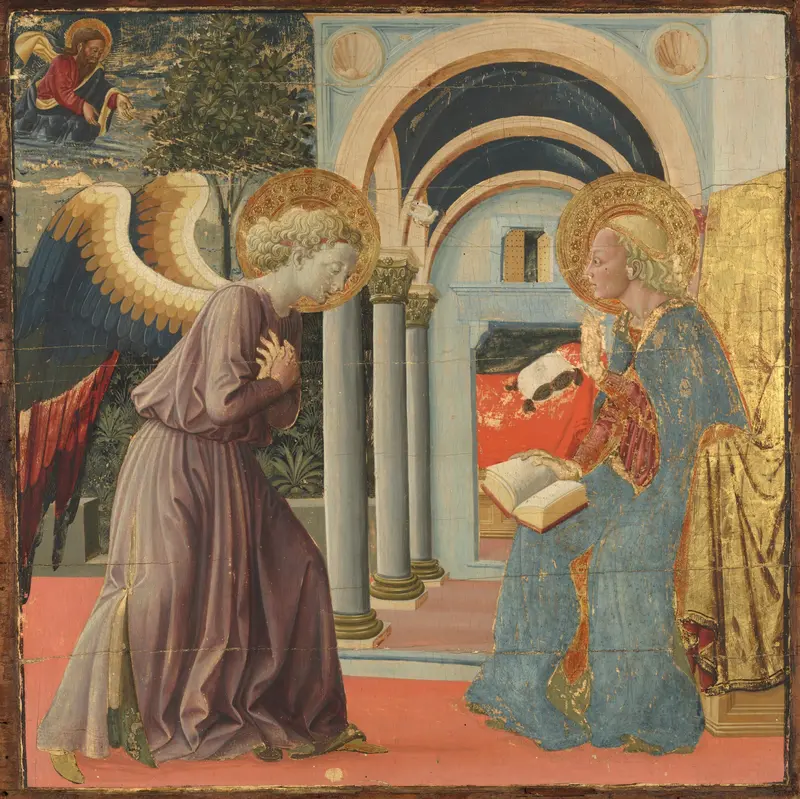
The Annunciation
Apollonio di Giovanni
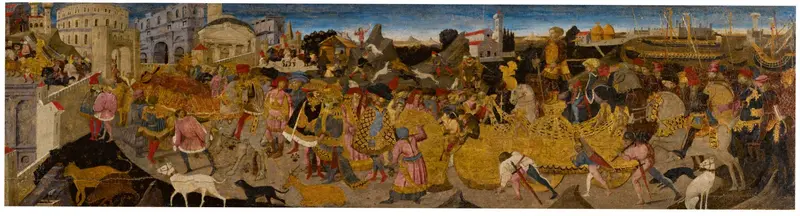
The Triumph of Marcus Furius Camillus
Apollonio di Giovanni
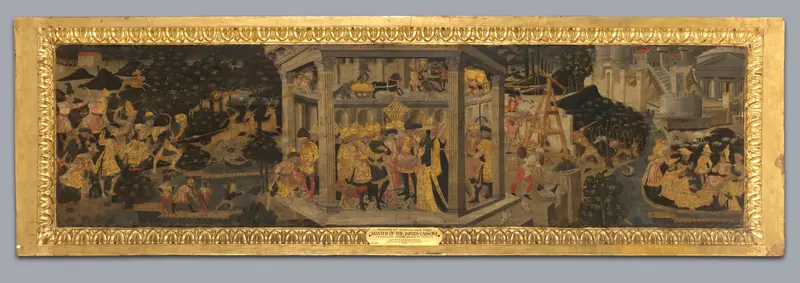
Aeneas at Carthage
Apollonio di Giovanni
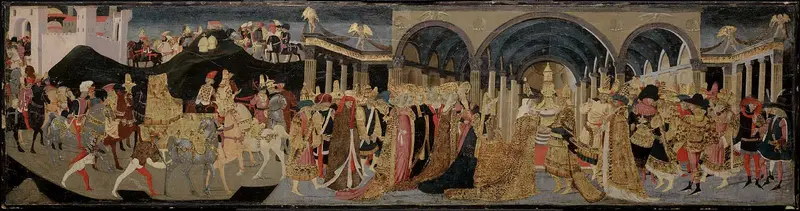
Meeting of Solomon and the Queen of Sheba
Apollonio di Giovanni
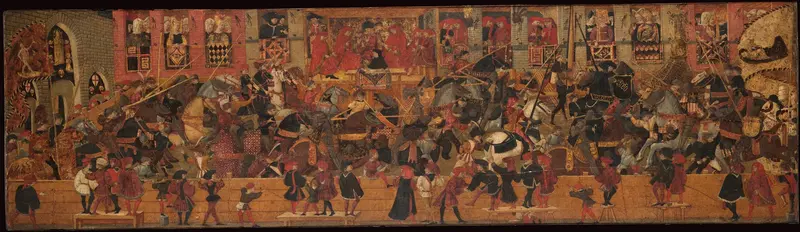
Tournament in the square of Santa Croce, Florence
Apollonio di Giovanni
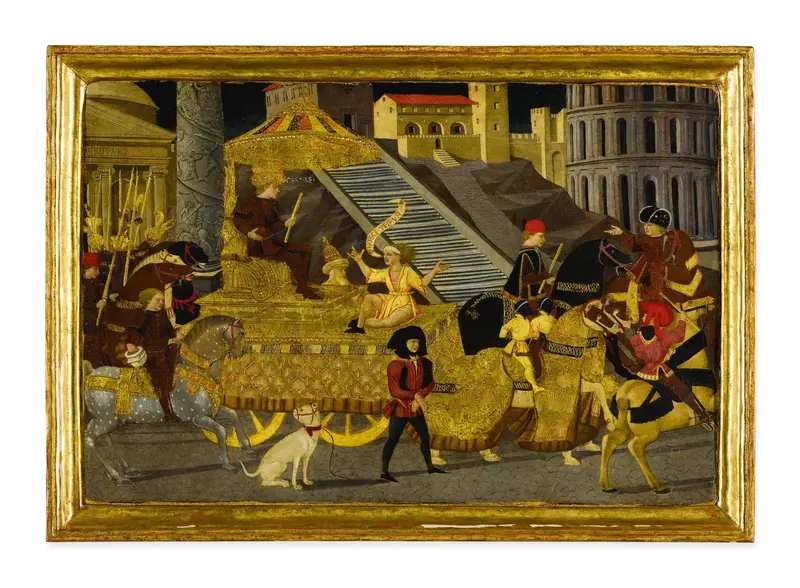
Triumph of Julius Caesar
Apollonio di Giovanni
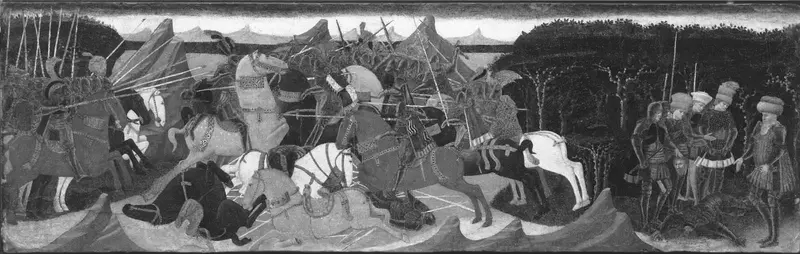
Battle of Pharsalus and the Beheading of Pompey
Apollonio di Giovanni





