
Cassone with painted front panel depicting the Conquest of Trebizond — History & Facts
What first catches the eye on this cassone is not its grand carved frame, but the riot of narrative packed into its painted panel—a miniature world of bustling figures, banners, and distant cities, all unfolding across a narrow strip of wood. The painter, Apollonio di Giovanni, has chosen a moment of high drama, where the sweep of armies and the clash of cultures are compressed into a single, continuous landscape. The winding road, alive with movement, draws the viewer’s gaze from fortress to fortress, past crowds in gold and crimson, their gestures a choreography of triumph and surrender.
The blue-green hills act as a stage, separating episodes and guiding the eye, while the palette’s flashes of gold leaf signal both wealth and victory. This cassone—a Florentine marriage chest made after about 1461—belongs to a world where painted furniture was as prized as panel paintings, and where such chests played a starring role in the rituals of family and alliance. In fifteenth-century Florence, these lavish objects were commissioned to celebrate marriages, their painted fronts telling tales of conquest, virtue, or romance meant to inspire and instruct the new household. The story here, rendered in a style both decorative and narrative, would have been a conversation piece for generations, its details inviting close inspection and retelling.
Though history has left few traces of this specific chest’s journey, its survival in a modern collection—donated to the Metropolitan Museum of Art and now shared openly—lets us step into the pageantry and ambitions of Renaissance Florence, one painted panel at a time.
More Artworks by Apollonio di Giovanni
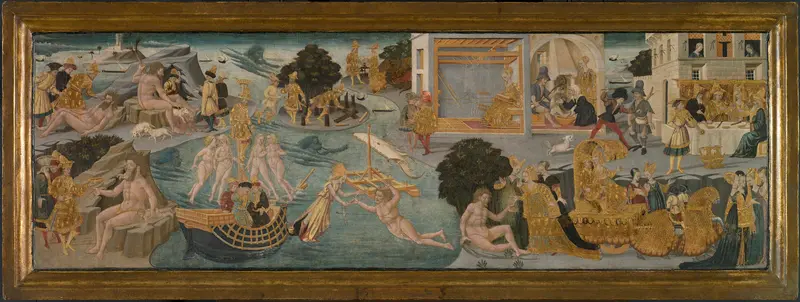
The Adventures of Ulysses
Apollonio di Giovanni
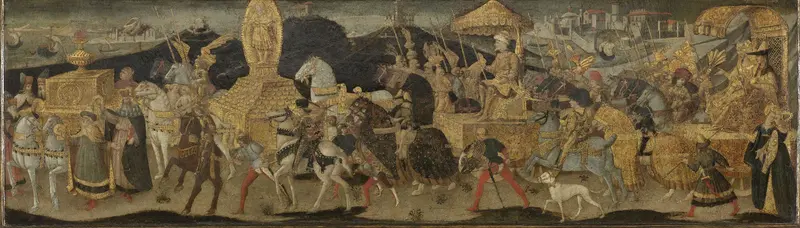
Darius Marching to the Battle of Issus
Apollonio di Giovanni
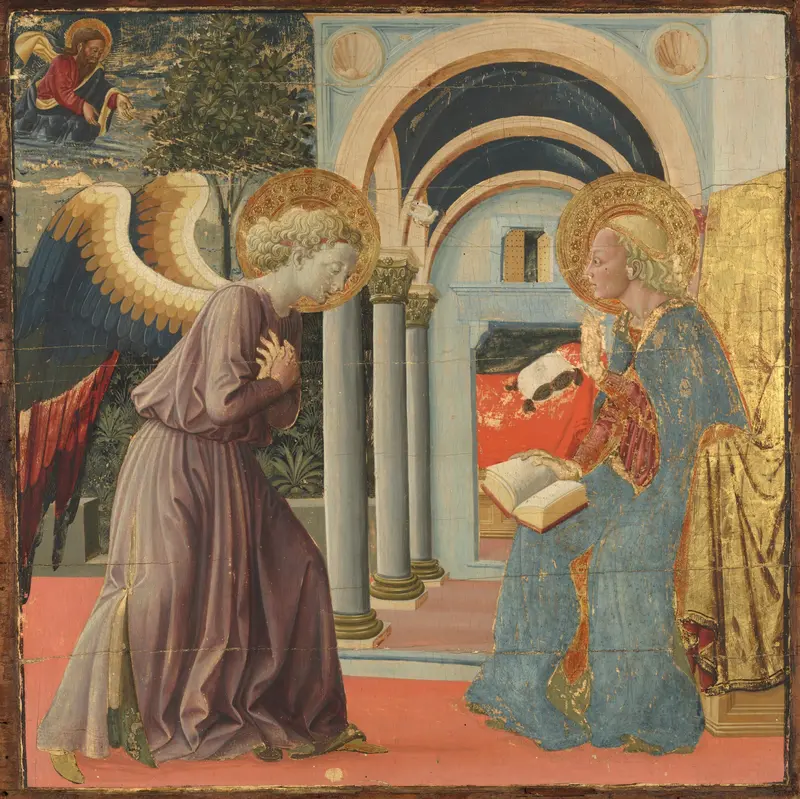
The Annunciation
Apollonio di Giovanni
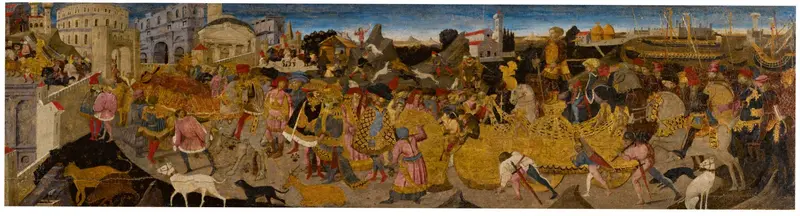
The Triumph of Marcus Furius Camillus
Apollonio di Giovanni
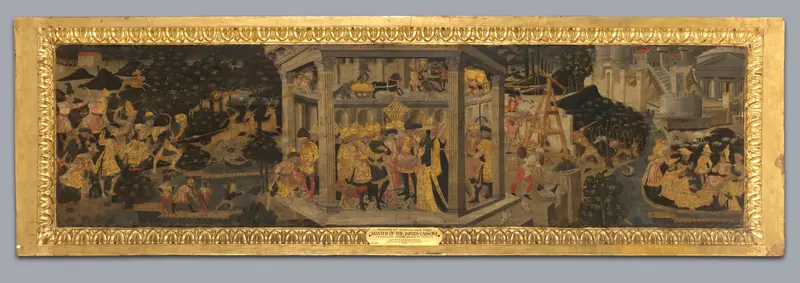
Aeneas at Carthage
Apollonio di Giovanni
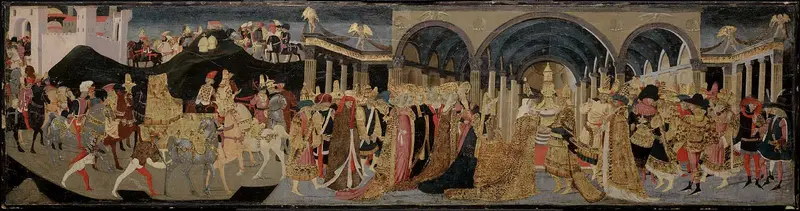
Meeting of Solomon and the Queen of Sheba
Apollonio di Giovanni
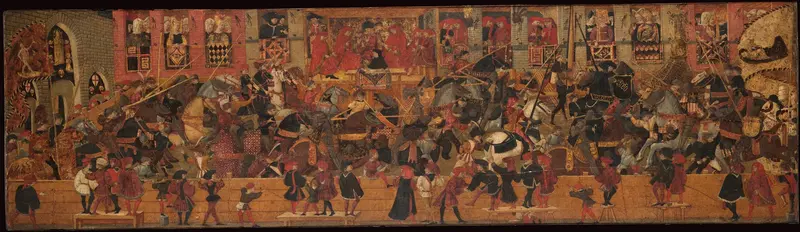
Tournament in the square of Santa Croce, Florence
Apollonio di Giovanni
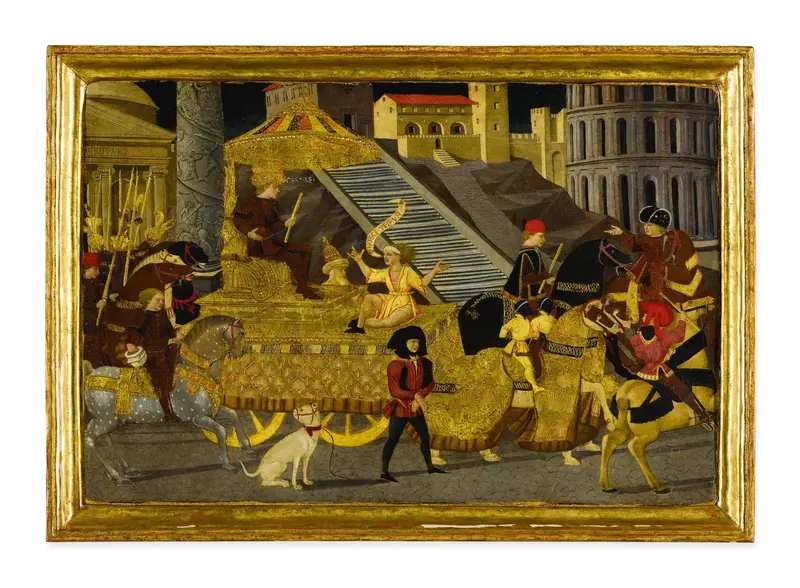
Triumph of Julius Caesar
Apollonio di Giovanni

The Shipwreck of Aenea
Apollonio di Giovanni
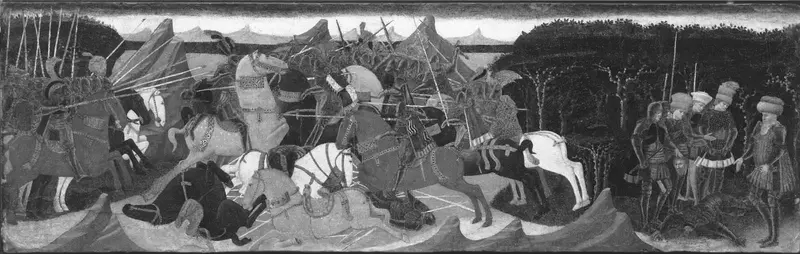
Battle of Pharsalus and the Beheading of Pompey
Apollonio di Giovanni





