
The Annunciation — History & Facts
What first catches the eye in The Annunciation is the hush that hangs between two figures: the angel Gabriel, wings unfurled and head bowed in reverence, and Mary, caught mid-turn with her hand raised in gentle surprise. The space between them is charged, the angel’s gesture of crossed hands echoing humility and awe, while Mary’s open book and poised finger suggest a moment interrupted—she is both present in her reading and suddenly swept up in the extraordinary. Light glances off the gold halos and the blue of Mary’s robe, guiding the viewer’s gaze from Gabriel’s entrance to the dove descending above, a visual thread that ties heaven and earth.
The architecture frames the encounter with its cool arches, giving the scene a sense of depth and solemnity, while the distant figure in the upper left—perhaps God the Father—watches over the unfolding mystery. Painted in 1455, this work stands at the crossroads of late Gothic and early Renaissance Florence, a time when artists like Apollonio di Giovanni were experimenting with perspective, narrative detail, and luminous color. Annunciation scenes such as this were often commissioned for private devotion or small chapels, intended to inspire meditation on the moment when the divine enters the everyday. The use of gold leaf and the careful rendering of textiles and architecture speak to the value placed on these images, both as objects of beauty and as aids to prayer.
Little is recorded about the specific journey of this panel, now in the Yale University Art Gallery, but its survival allows us to witness a world in which the miraculous was made tangible through paint and gilding. The quiet drama of this encounter invites the viewer to linger, tracing the lines of communication between angel and mortal, and perhaps to imagine what it would mean to be addressed by the divine.
More Artworks by Apollonio di Giovanni
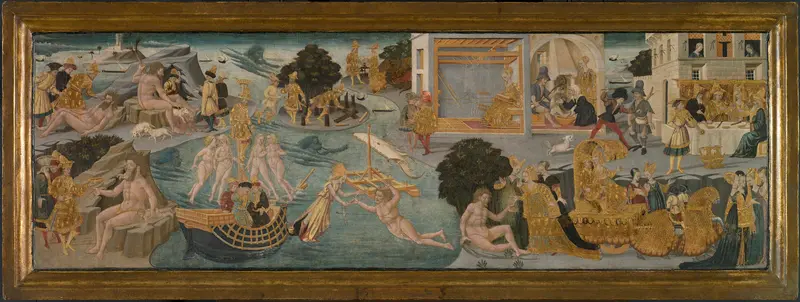
The Adventures of Ulysses
Apollonio di Giovanni
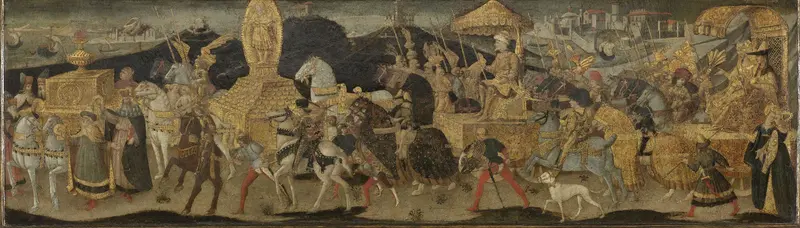
Darius Marching to the Battle of Issus
Apollonio di Giovanni
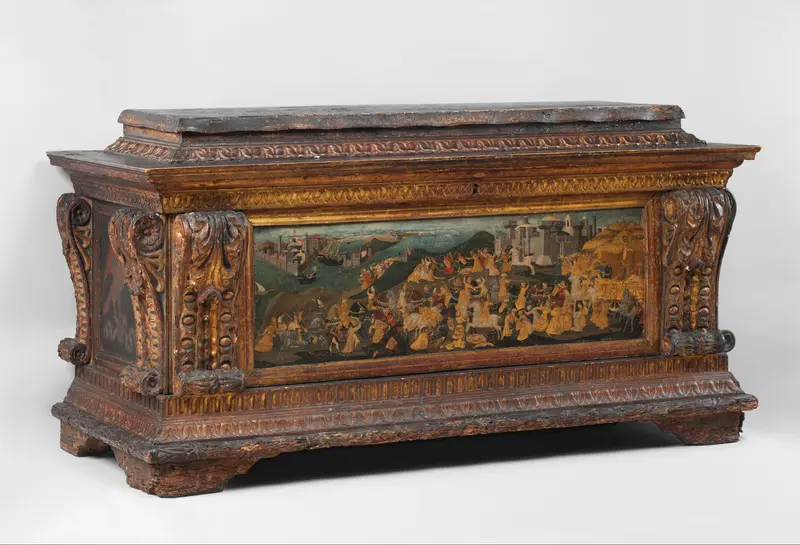
Cassone with painted front panel depicting the Conquest of Trebizond
Apollonio di Giovanni
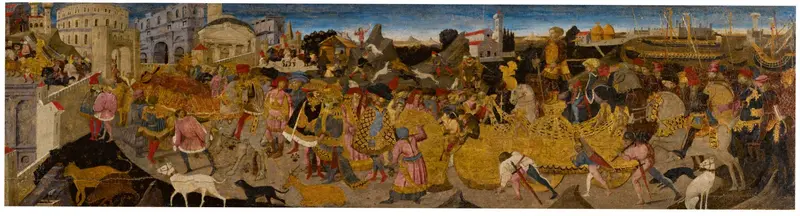
The Triumph of Marcus Furius Camillus
Apollonio di Giovanni
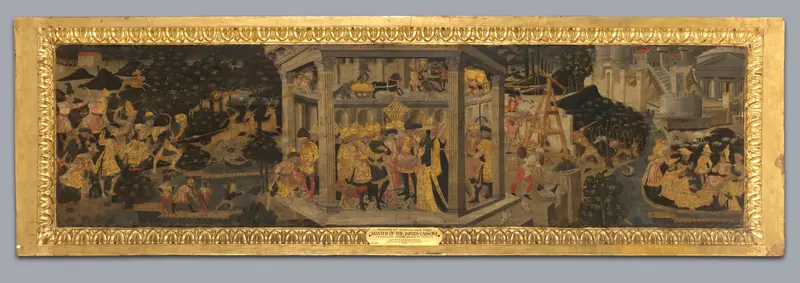
Aeneas at Carthage
Apollonio di Giovanni
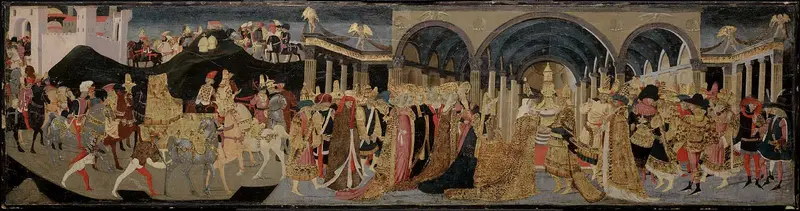
Meeting of Solomon and the Queen of Sheba
Apollonio di Giovanni
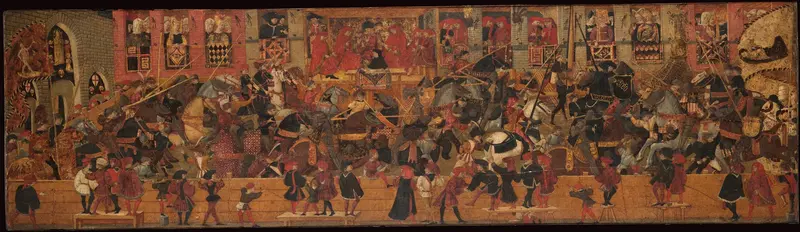
Tournament in the square of Santa Croce, Florence
Apollonio di Giovanni
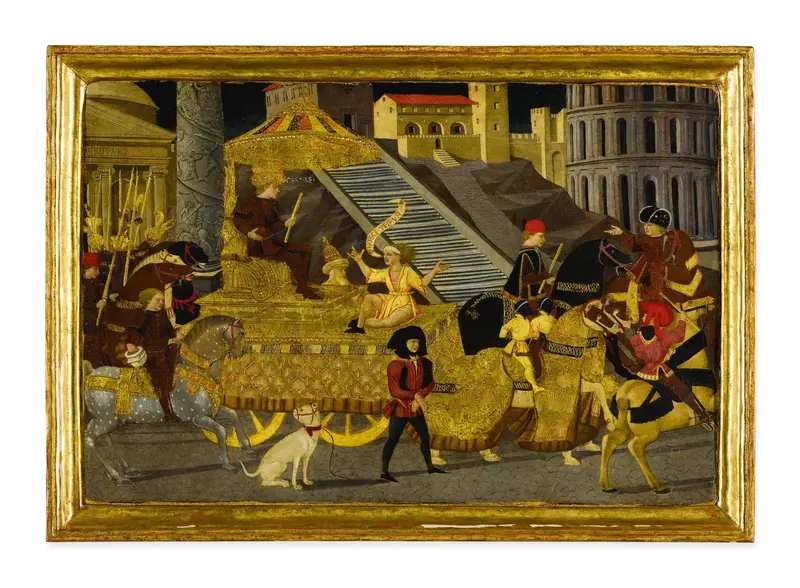
Triumph of Julius Caesar
Apollonio di Giovanni

The Shipwreck of Aenea
Apollonio di Giovanni
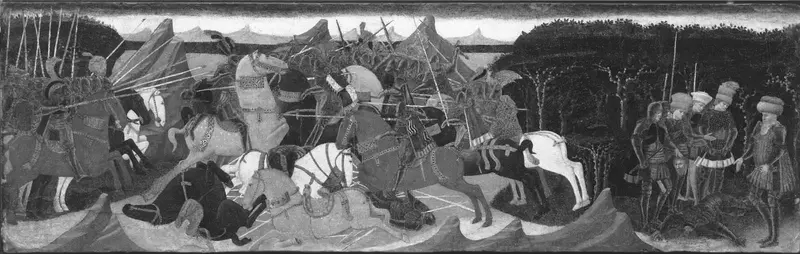
Battle of Pharsalus and the Beheading of Pompey
Apollonio di Giovanni





