
Bauer — History & Facts
What grips the eye first in Bauer is the electric intensity of its color—an eruption of green, red, yellow, and blue that seems to pulse from the sitter’s face. The man’s gaze, hollow and shadowed, is framed by wild, curling hair rendered in thick, swirling strokes. Every furrow in his brow and every wrinkle in his cheek is carved out with the brush, the lines exaggerated and rhythmic, as if the artist were tracing the very currents of thought and memory beneath the skin.
The background, a cool field of turquoise, pushes the face forward, isolating it in a kind of psychological spotlight. This is not a portrait that flatters or soothes; it insists on the raw presence of the sitter, his life written in color and gesture. Painted around 1912, this work stands at the crossroads of Expressionism, a movement that swept through Europe with its promise to reveal inner truths through bold, non-naturalistic means. Artists like Alexej von Jawlensky—a Russian émigré working in Germany—sought to break with the conventions of portraiture, using color as a direct language of emotion.
While little is recorded about this specific painting’s journey before its appearance in the Christie’s collection, its style is a testament to an era when painters turned their attention to ordinary people, often workers or peasants, and elevated their presence to something monumental. The world that produced Bauer was one of upheaval and experimentation, and the painting’s fierce palette still dares the viewer to meet its gaze head-on.
More Artworks by Alexej von Jawlensky

Murnau
Alexej von Jawlensky
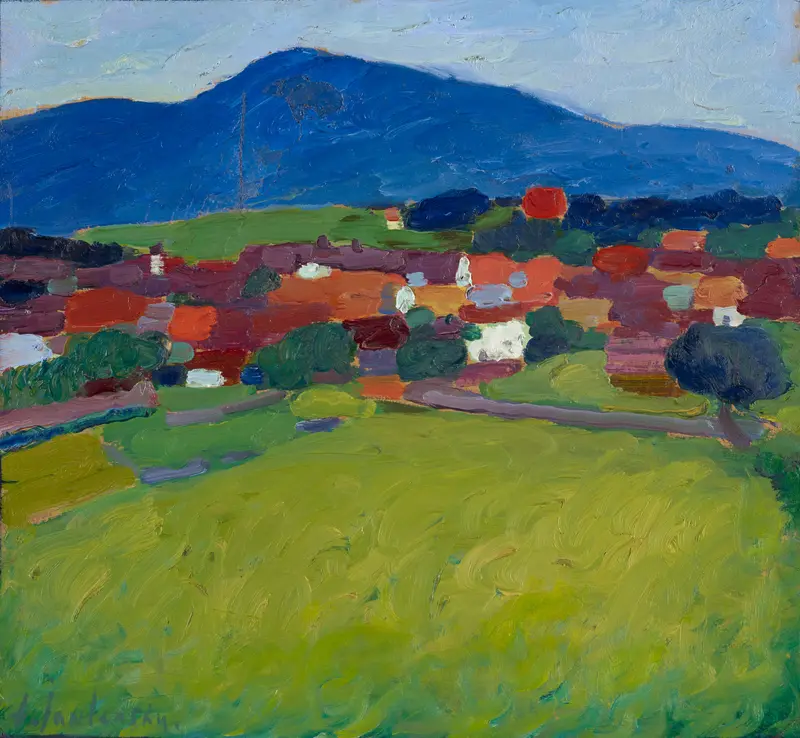
The Village Of Murnau
Alexej von Jawlensky
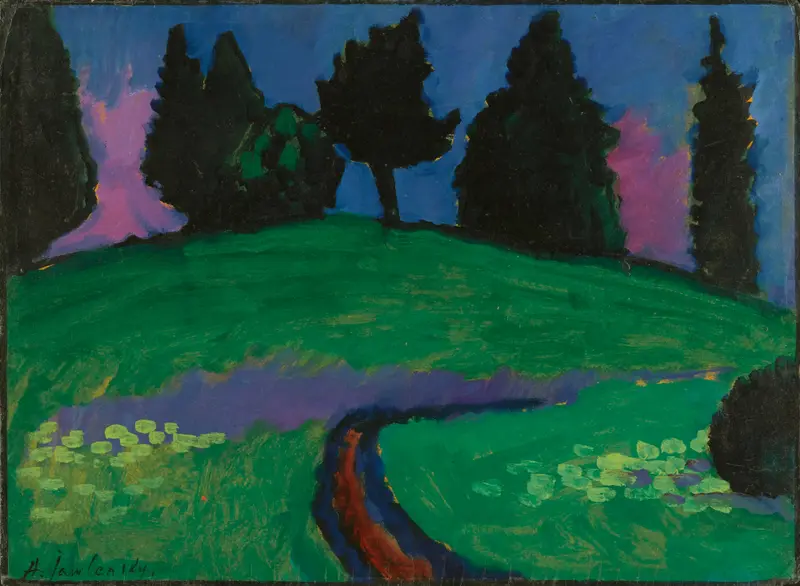
Dunkle Bäume über Grünem Hang (Dark Trees Over Green Slope)
Alexej von Jawlensky
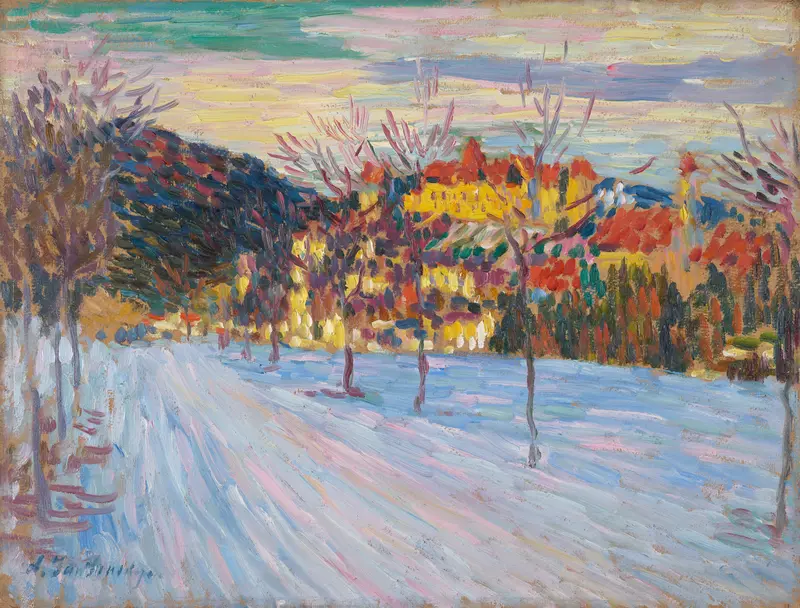
Füssen
Alexej von Jawlensky
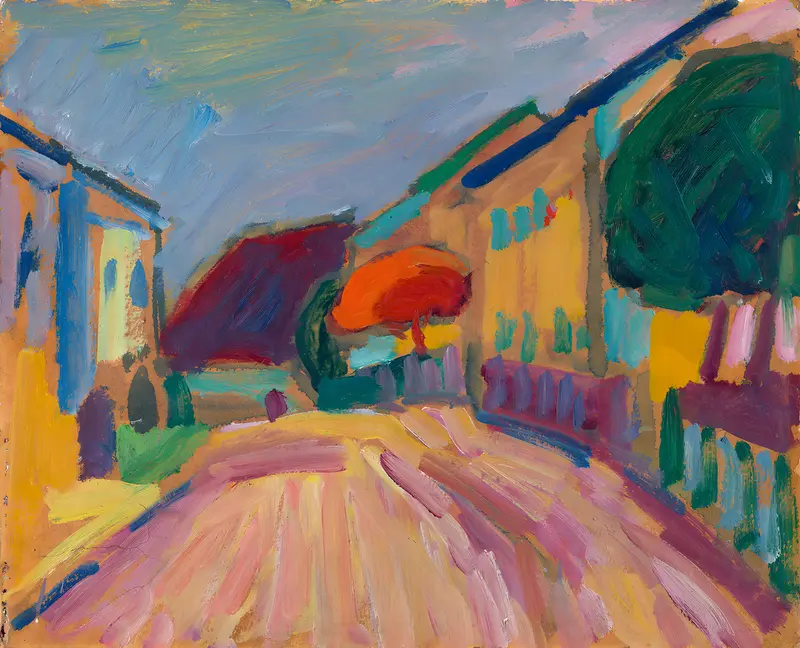
Sketch from Murnau
Alexej von Jawlensky
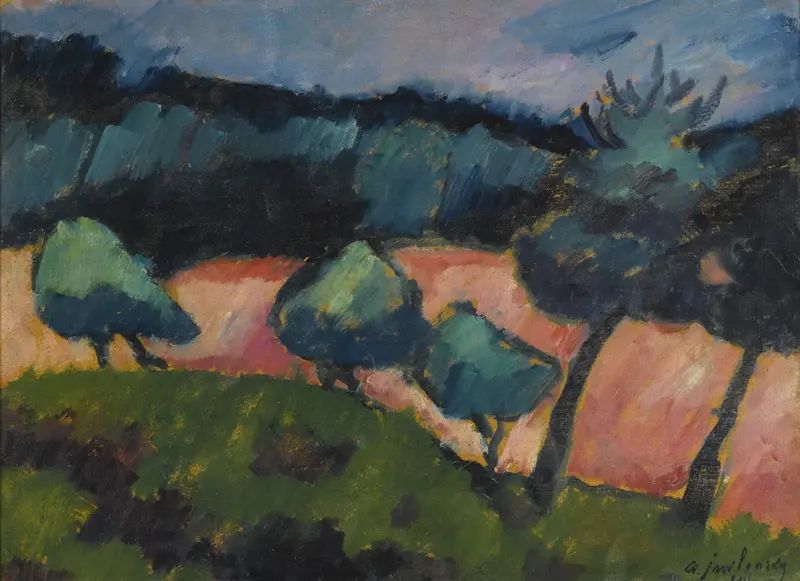
Bäume und Dünen in Prerow (Trees and dunes in Prerow)
Alexej von Jawlensky
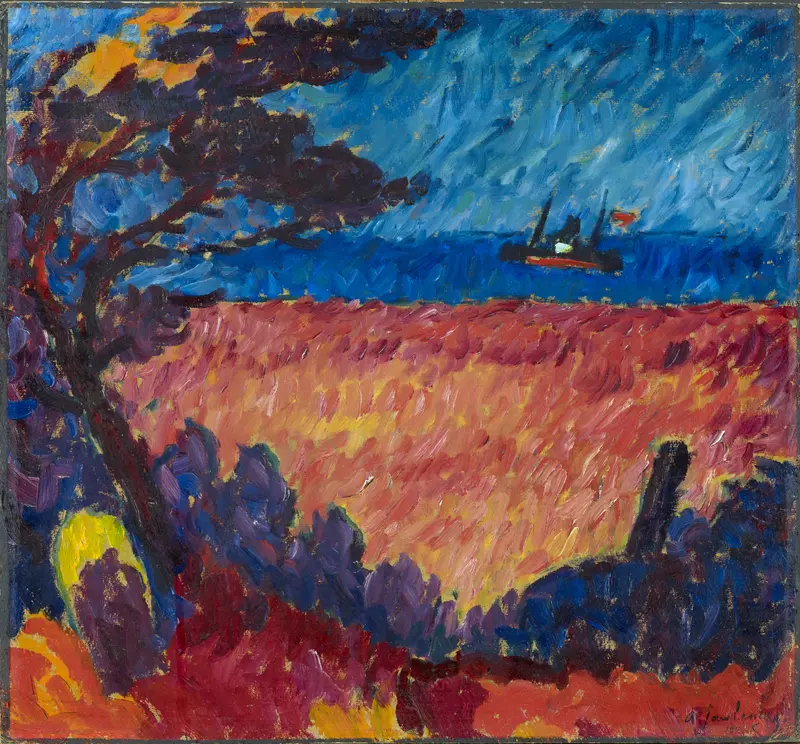
At The Baltic Sea
Alexej von Jawlensky
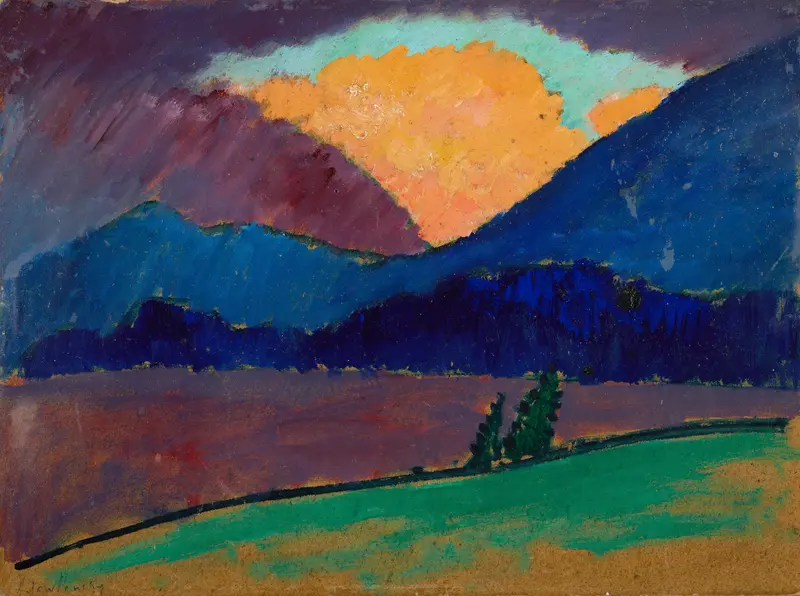
Summer evening in Murnau
Alexej von Jawlensky
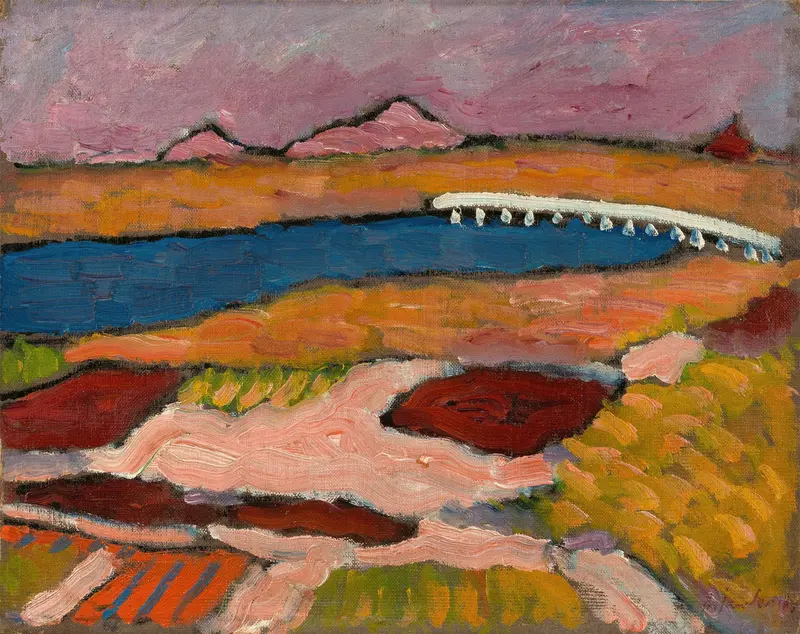
Prerow (Darß), Pommern
Alexej von Jawlensky
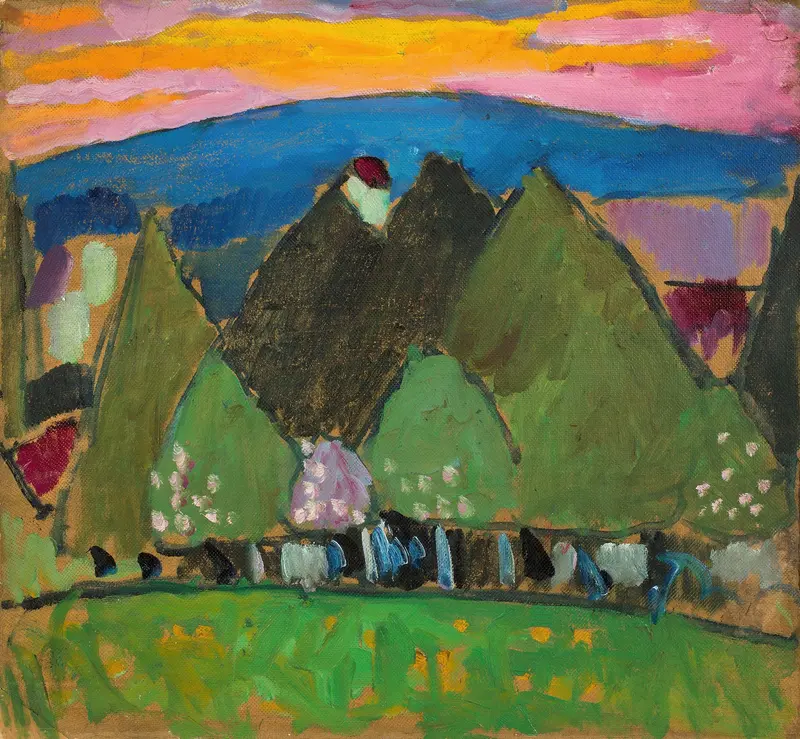
Landschaft mit Bäumen
Alexej von Jawlensky





